Tag Archives: Jack Gescheidt

California Sanctioned Slaughter Will Eradicate Catalina Island Deer

“Sham restoration sets a deadly precedent for California’s wildlife” – In Defense Of Animals
/Users/amgraef7/Library/Containers/com.microsoft.Word/Data/tmp/Content.MSO/2D523464.tmp

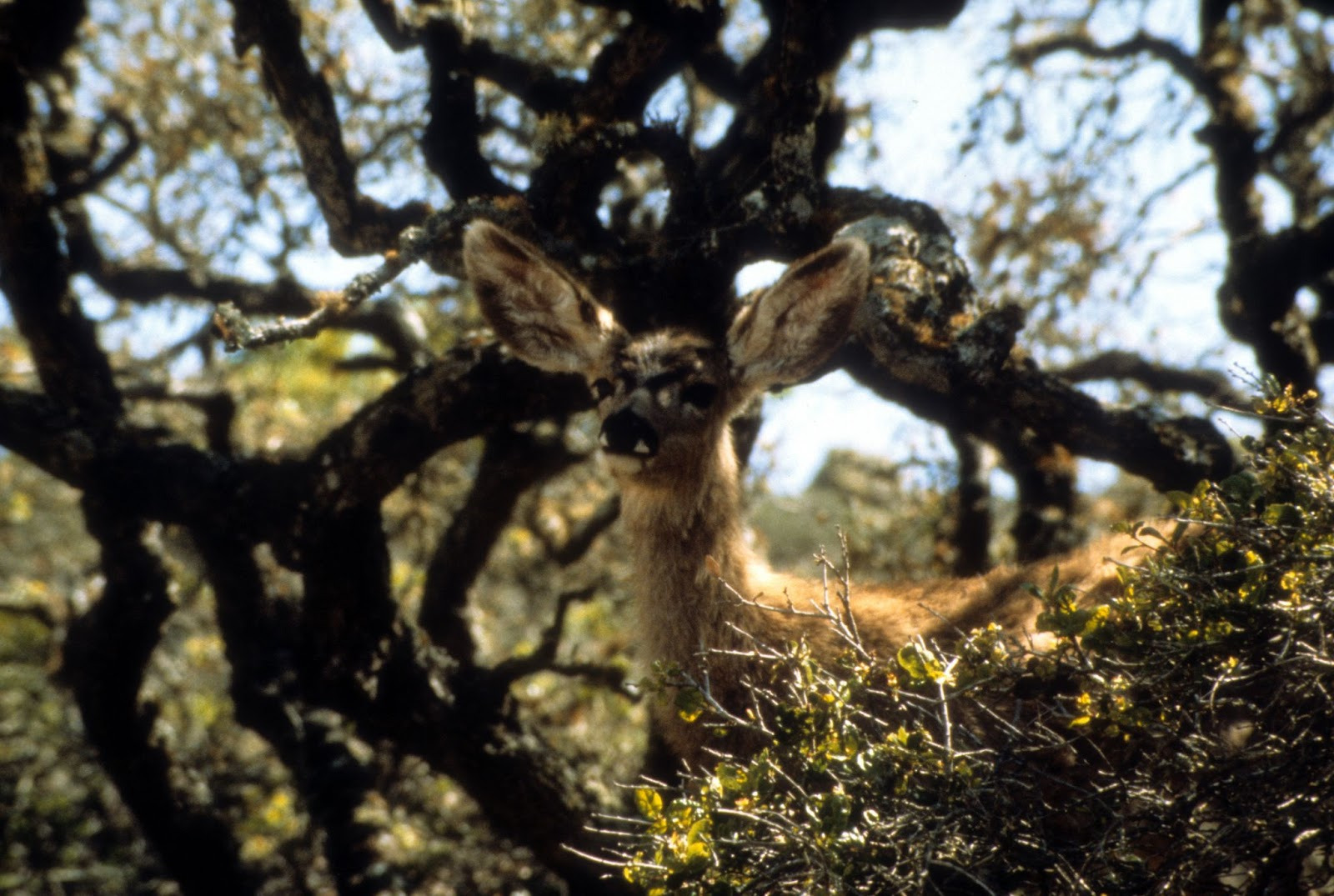
Mule deer fawn on the Channel Islands. Photo: NPS

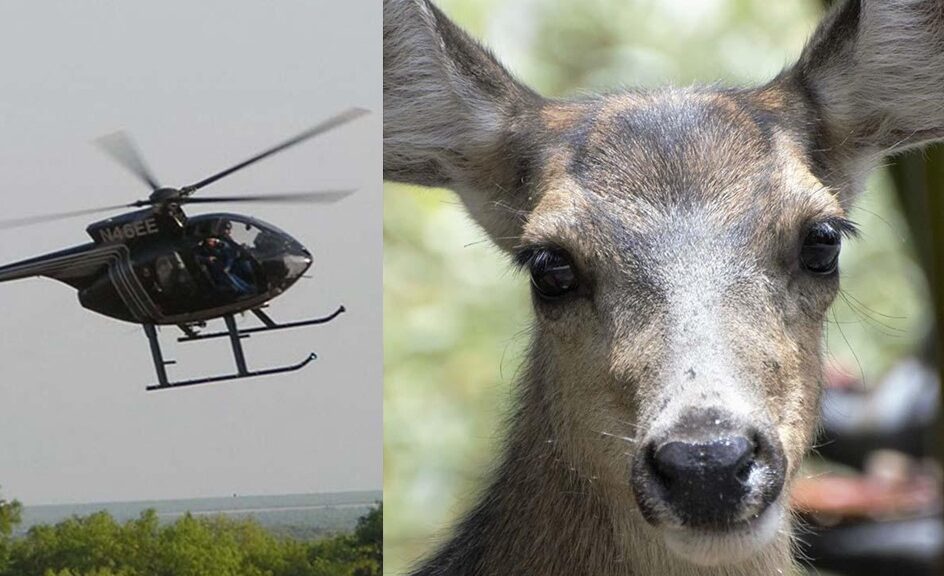
CATALINA ISLAND, Calif. (Feb. , 2026) — In Defense of Animals is expressing profound outrage and sorrow following the California Department of Fish and Wildlife’s (CDFW) decision to approve the Catalina Island Conservancy’s deadly, controversial, and unpopular plan to eradicate the island’s entire mule deer population. Despite widespread public opposition and a previous victory that forced the abandonment of a helicopter-gunning scheme, state officials have now greenlit a ground-based massacre that will pay professional sharpshooters to hunt down and kill every one of the island’s deer.

Opposition being ignored

This decision ignores the pleas of thousands of residents and the objections of Los Angeles County Supervisor Janice Hahn, who previously led the Los Angeles County Board of Supervisors to oppose the Conservancy’s killing plan. It also disregards the expert caution of L.A. County Fire Chief Anthony Marrone, who has stated that removing the deer could actually increase fire risks by allowing vegetation fuel loads to grow unchecked — directly contradicting the Conservancy’s primary justification for the slaughter.

“Today is a dark day for California’s wildlife and a betrayal of the public trust,” said Lisa Levinson, Campaigns Director for In Defense of Animals. “The Conservancy has rebranded a massacre as ‘restoration,’ swapping helicopters for ground squads to make the bloodshed more palatable to the public. But the result is the same: the senseless violent death of a beloved herd that has lived peacefully on the island for a century. We are heartbroken that the state has chosen bullets over biology and compassion.”

Mule Deer Generations On Island

Mule deer have been living on Catalina Island for over one hundred years and have integrated into the ecosystem. Despite this, the approved plan allows the Conservancy to hire private contractors to systematically kill the deer over several years, beginning with a fenced “pilot zone” of 10 acres near the Airport in the Sky before expanding to a 105-acre zone and eventually the entire island. While the Conservancy claims, without scientific proof, that the deer threaten native plants and increase fire danger, In Defense of Animals argues these claims are ideologically driven rather than actually proven.

Jack Gescheidt, Wildlife Consultant for In Defense of Animals, condemned the approval as a symptom of a larger industry problem.

This plan is a sad product of the restoration industry, which often expends huge sums of public dollars to exterminate entire species under the tragically ironic guise of ‘conservation,’” said Gescheidt. “The mule deer integrated into Catalina Island’s ecosystem decades ago. Scapegoating them for climate change and drought-driven vegetation loss is scientifically dishonest. It is madness to authorize and finance wildly expensive and bloody animal extermination campaigns that do nothing to solve the larger ecological problem that is being ignored — the climate crisis. Just leave the deer alone.”

Deer Being Blamed

In Defense of Animals notes that the deer are being blamed for ecological changes driven primarily by human development and climate change. The Conservancy aims to protect “native” vegetation; yet the deer have lived peacefully on Catalina Island for nearly 100 years without suddenly threatening the entire ecosystem. No third-party scientific studies have validated the group’s “invasive” claims.

Furthermore, the Conservancy has made wild, inaccurate estimates of the mule deer population to justify the slaughter. Their estimate of 1,700-2,000 deer was based on a 2021 spotlight survey that extrapolated data from a small subset to the entire island. Islanders, who live nearest the deer, estimate the population is actually between 400 and 800. 

“These exaggerations are typical of the ‘exterminate-to-restore’ mentality that falls back on controlling, managing and almost always killing wild plants and animals,” added Gescheidt.
/Users/amgraef7/Library/Containers/com.microsoft.Word/Data/tmp/Content.MSO/E811EC12.tmp

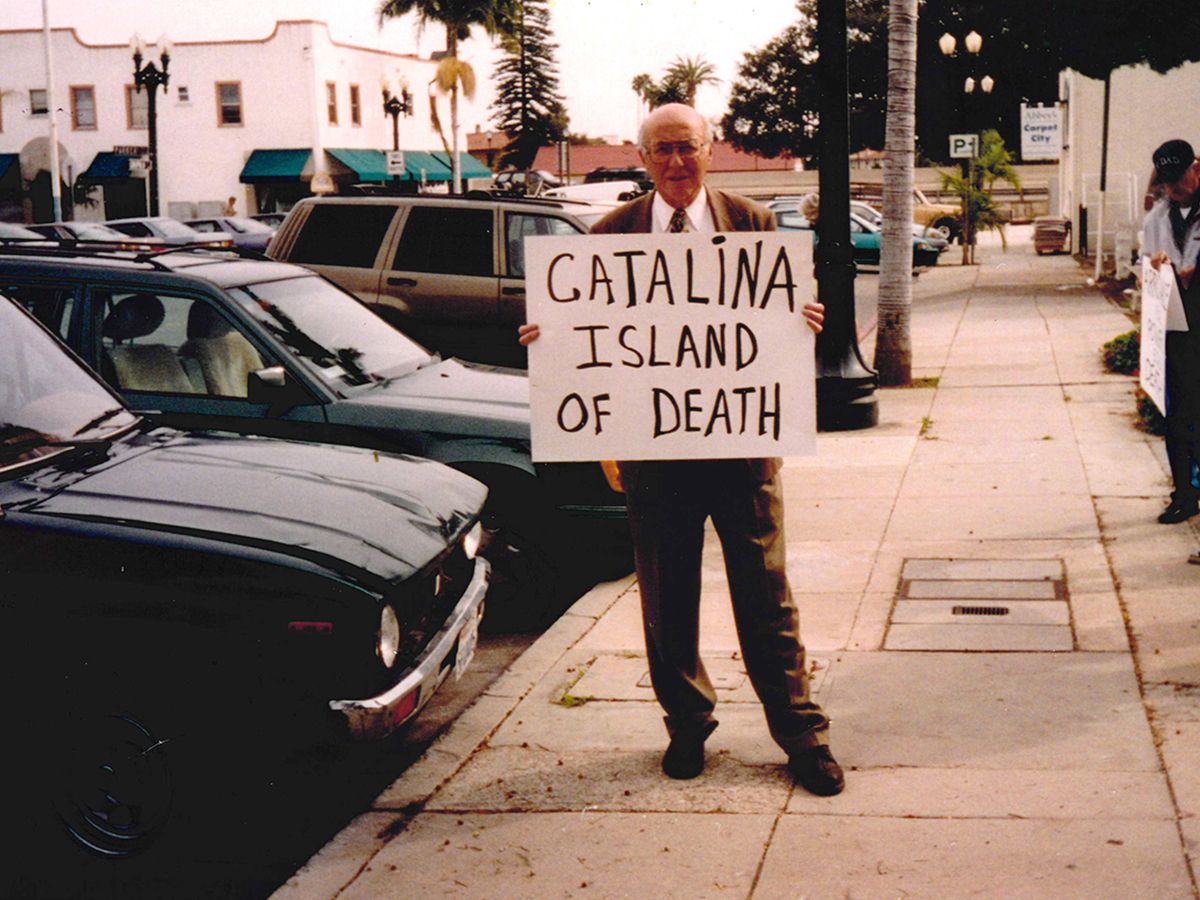
In Defense of Animals has long championed the rights of wildlife on Catalina Island. Photo: In Defense of Animals

In Defense of Animals has been defending the Catalina Island wildlife for years. It is part of the island’s citizen group, The Coalition to Save Catalina Island Deer with the joint aim of protecting the island’s wild mule deer from any killing or interference, including hunting or sterilization. Over 13,600 In Defense of Animals supporters wrote to the California Department of Fish and Wildlife, Governor Gavin Newsom, and other officials asking them to oppose this brutal plan. 

In Defense of Animals is now calling on its supporters to voice their continued opposition to the Conservancy and state officials.

Levinson called for further action, saying, “We urge the public to keep contacting state officials to tell them this lethal, sham ‘restoration’ sets a deadly precedent for wildlife management across the state.”

For the Silo, Jack Gescheidt.
California Elk Killing Fence Finally Being Removed

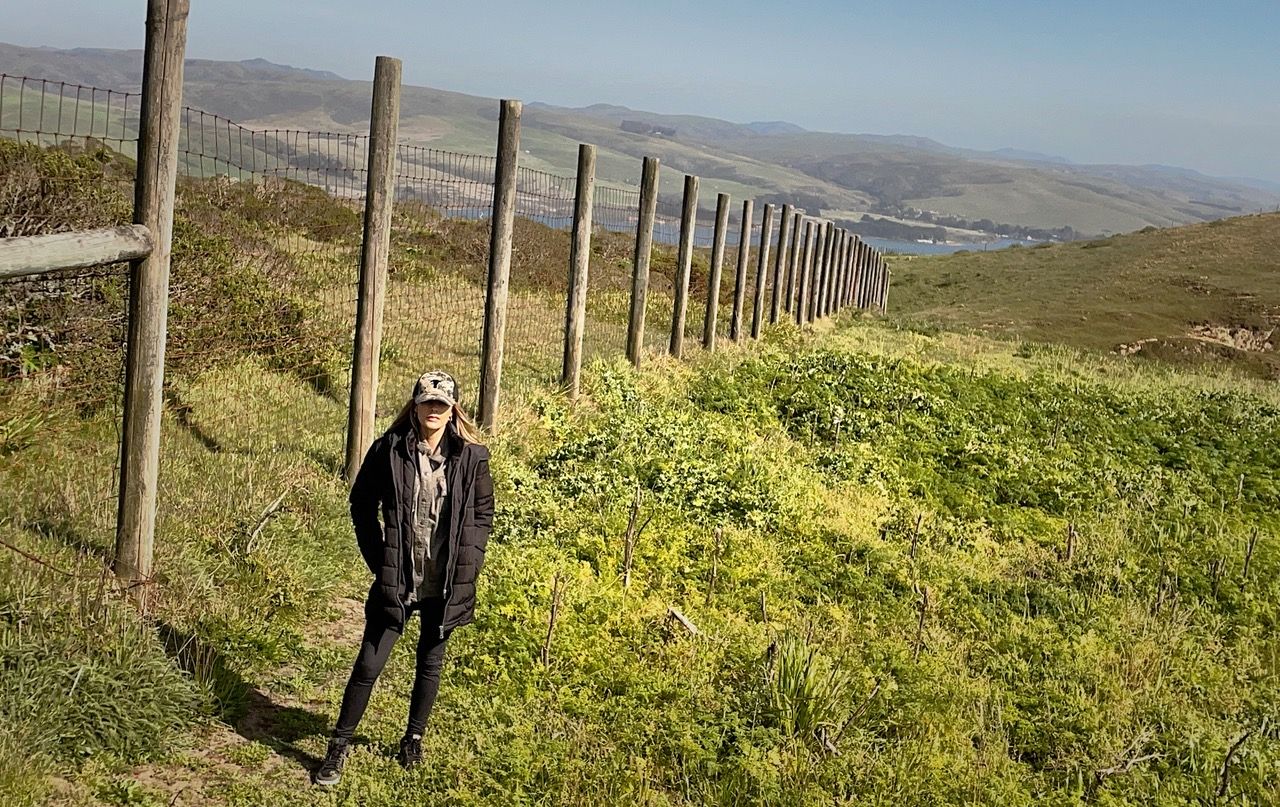
Monterey, Calif. (Sept, 2024)  After years of campaigning to free Tule elk at Point Reyes National Seashore, In Defense of Animals applauds the California Coastal Commission’s (CCC) speedy approval of America’s National Park Service’s (NPS) proposal to dismantle the deadly, infamous, 8-foot-tall,/ 2.4 m, 2-3-mile/ 3.2-4.8 km long fence confining them.  

Over 475 Elk Died Over A Decade Due To Fence- Many More Suffered With Poor Health

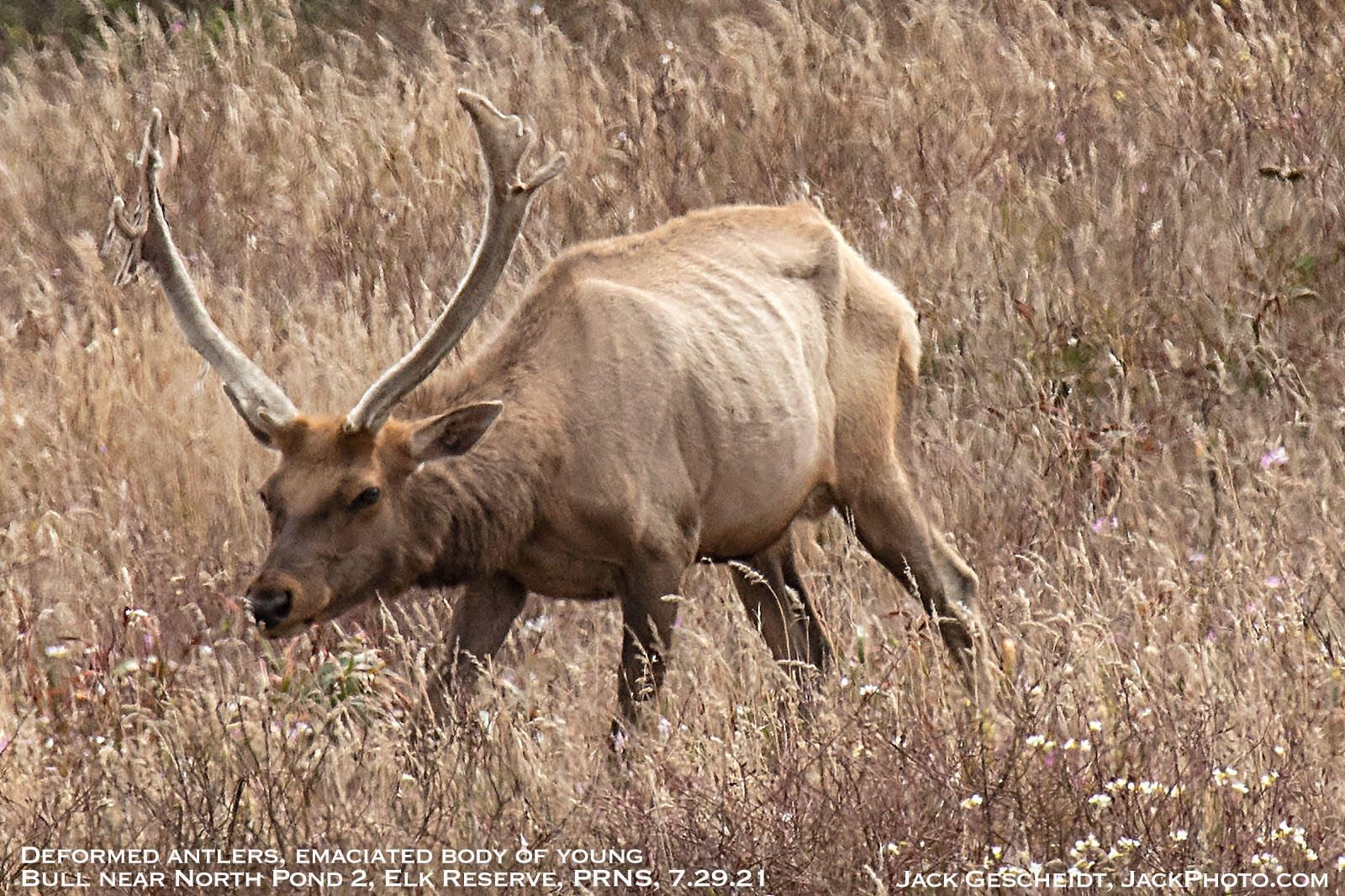
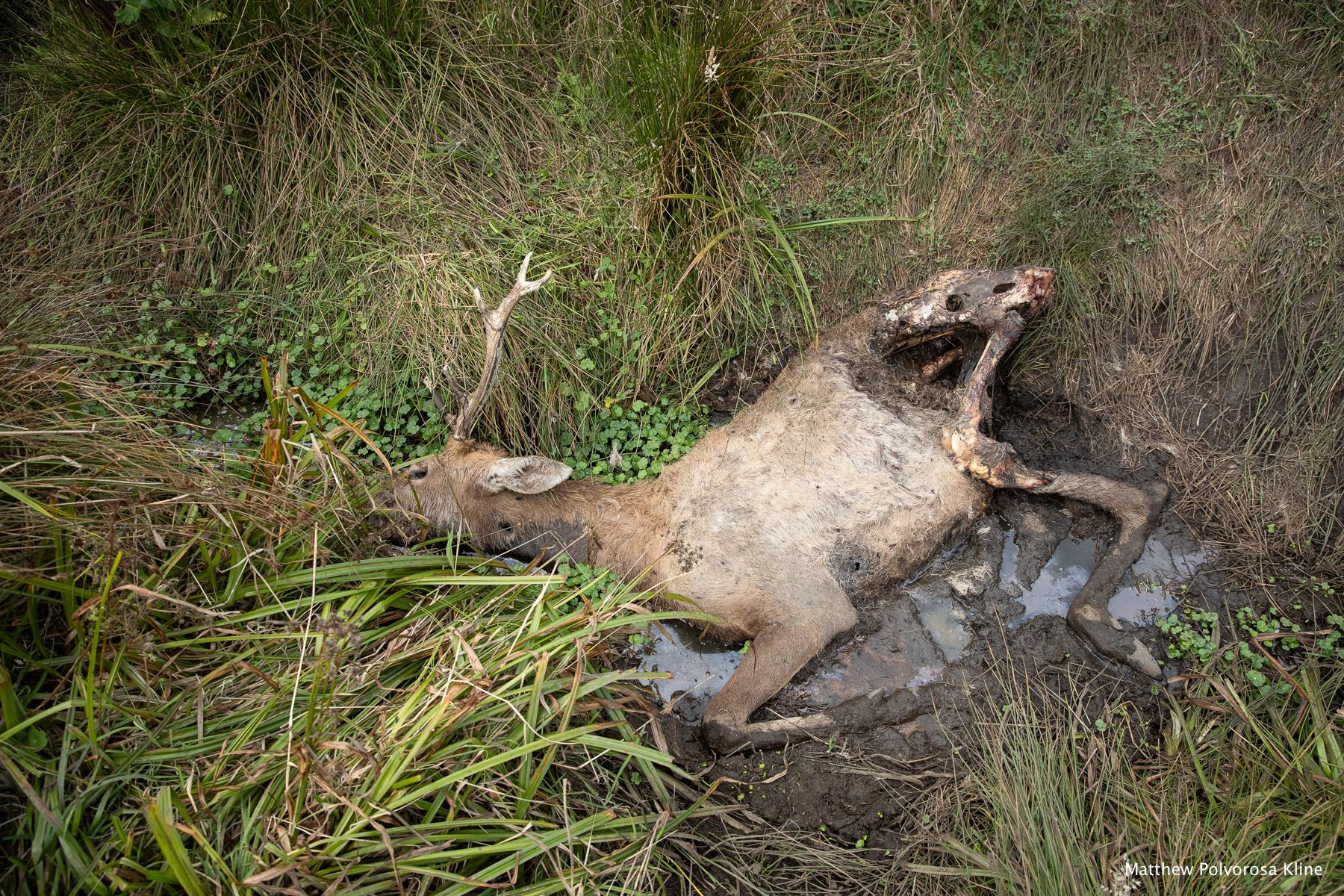
The wire and wooden post barrier fence was built to keep elk in, and away from for-profit beef and dairy ranches which lease land from the public and, in return, pollute the Seashore park and sentence hundreds of elk to starve and die of thirst by restricting the movement of these wild animals in a national park. Over 475 Tule elk died over a decade as a result of the fence, a larger number of these gentle, plant-eating ungulates than is currently still held captive inside the fenced compound, called a “Reserve,” despite its deadly effect on Tule elk.

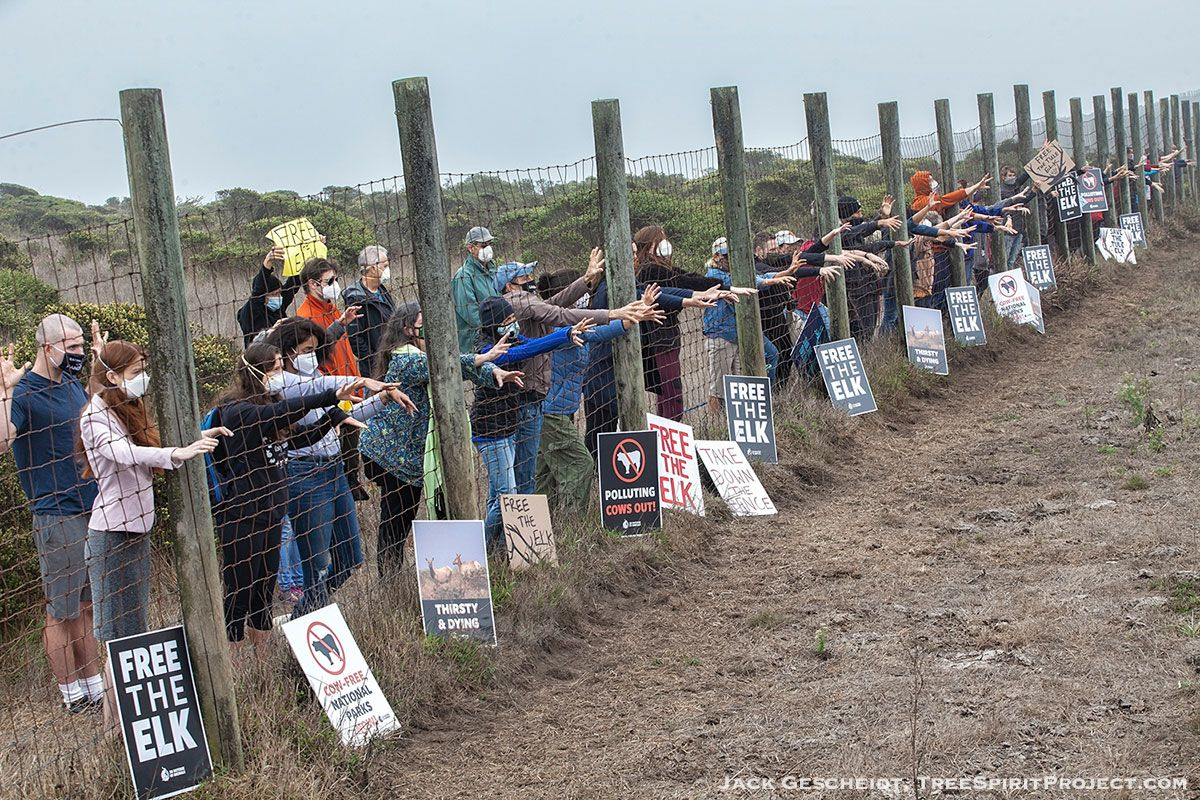
After years of animals rights and citizen activist demonstrations and pressure, in June 2023 the NPS finally relented and officially reversed its position on a 45-year-old park policy that kept this Tule elk herd confined to the drought-stricken Tomales Point, the northernmost peninsula of the popular San Francisco Bay Area national park unit.  The recent vote, technically speaking, is a CCC concurrence with a “negative determination” assessment of no significant environmental impact caused by removing the 45-year-old fence as part of the new “Tomales Point Area Plan” (TPAP).

This bureaucratic hurdle, much easier to clear than an 8-foot-tall fence, is part of a years-long process that has been underway since June 2023, in accordance with the National Environmental Policy Act (NEPA). The CCC’s approval on Sept. 12 will allow the NPS to continue its process to dismantle the fence, which in turn will allow the elk inside the Reserve to wander south of the fence line, into other, wetter areas of the park’s full 71,000 acres. Their current home, the Reserve, by comparison, is only 2,600 acres.

Their fence-down freedom will, both quickly and over time, improve the health of the herd.

And, significantly, reduce the number of painful, slow elk deaths from thirst and starvation during California’s hot, dry summer and autumn seasons. 

With the fence dismantled, the elk will also be able to mix and mate with elk from the park’s other two herds. The two other herds are less restricted in their movements — although they, and all of the park’s approximately 700 elk, are still affected and negatively impacted by the contiguous, privately-owned, beef and dairy cow ranches. These businesses lease over one-third of Point Reyes from the public — and keep it fenced off to public access too, even though the public owns the land.  

Thousands of beef and dairy cows (who are confined and used themselves) pollute even more of the seashore’s land, water and air every year (and every day) with millions of pounds of manure and methane. 

Activists are delighted that the fence removal process is finally underway. 

Jack Gescheidt, Tule elk consultant for the international animal protection organization, In Defense of Animals, said, “It’s a treat, for once, to not have to testify at a Coastal Commission meeting about how destructive, polluting and cruel some policy or regulation is. We activists want the fence down. The public wants the fence down. The Park Service now wants the fence down. And now the Commission has approved this major improvement to a public park.”

Gescheidt added, “And we hope the NPS [America’s National Park Service CP] follows through with the fence removal before the end of the year. We offer volunteer help with the historic fence-dismantling work!”

In Defense of Animals’ Tule Elk Campaign works tirelessly to not just free the Tule elk at Point Reyes National Seashore, but to also re-wild all 71,000 acres of Point Reyes to wild animals, by finally ousting the private beef and dairy ranches which are this beloved national park’s major source of land degradation, water contamination and air pollution. These businesses were paid millions of dollars for their land in the 1960s, and had agreed to leave by 1987, but have resisted doing so ever since. www.idausa.org/elk 

In Defense of Animals is an international animal protection organization based in California with over 250,000 supporters and a 41-year history of fighting for animals, people, and the environment through education and campaigns as well as hands-on rescue facilities in India, South Korea, and rural Mississippi. www.idausa.org 

Featured image: Bonnie-Jill Laflin at Pt. Reyes Elk Reserve by Jack Gescheidt/Tree Spirit Project.