Tag Archives: Human Resources

Why Good is the New Average in Today’s Workforce

A growing paradox is reshaping the 2026 workforce: strong performers are still losing their jobs. According to a January 2026 HR Dive survey, nearly 50 percent of companies expect layoffs in Q1, even as most plan to hire selectively for growth roles, exposing a market where competence alone no longer protects careers. Strategic growth advisor and ‘The CodeBreaker Mindset‘ author Chitra Nawbatt warns this moment marks the rise of a “competence trap,” where professionals optimize output while organizations quietly reprice value around speed, adaptability, and influence. The result is a workforce operating by outdated rules in a system that has already moved on. Below are more of her insights.

How to Stay Relevant in 2026

man-10077810_640.jpg

Across industries, a growing number of professionals share the same uneasy feeling: despite strong performance and proven competence, job security feels increasingly fragile. That anxiety is not imagined. The rules of work are shifting in plain sight, and the changes are cutting through roles that once felt insulated from disruption.

Layoffs

Layoffs are no longer limited to underperformers or redundant teams. They are appearing in the middle of organizational charts, within core functions, and among employees who were recently labeled essential. According to strategic growth advisor Chitra Nawbatt, author of The CodeBreaker Mindset: The Unwritten Rules for Success,” this signals a deeper structural change in how companies define value.

“Competence used to buy you time,” Nawbatt explains. “In 2026, competence is table stakes. The market is rewarding a different set of behaviors, and many professionals are still playing by the old rules.”

This shift is often mischaracterized as a simple story about machines replacing people. In reality, the more immediate force is organizational redesign. Companies are flattening decision layers, reducing bureaucracy, and repricing labor around speed and adaptability.

Reuters already reported that Amazon was preparing additional corporate job cuts as part of an effort to streamline its structure and remove management layers, even as it continues to invest selectively in priority roles tied to long term strategy.

“The narrative is convenient,” says Nawbatt. “Blaming technology masks the harder truth. Many organizations are still figuring out how to operate efficiently in a volatile environment, and people get caught in that recalibration.”

Data shows a contradiction

Data from HR leaders underscores the contradiction. A January 2026 survey cited by HR Dive found that nearly half of companies expect layoffs will likely occur in the first quarter, while most also plan to hire selectively for roles tied to growth initiatives.

This dual track of hiring and cutting reveals why performance reviews alone no longer predict job security. The system itself is changing faster than individual output can keep up.

Rise of the CodeBreaker


Nawbatt describes the professionals who thrive in this environment as CodeBreakers. The term does not refer to rule breakers for their own sake, but to people who understand that success is governed by both written rules and unwritten ones.

“Written rules tell you how things are supposed to work,” she says. “Unwritten rules tell you how decisions actually get made when pressure hits. In periods of reorganization, the unwritten rules are what determine who stays and who goes.”

Based on her work advising leaders and teams across multiple industries, Nawbatt outlines five shifts that separate those who remain relevant from those who become interchangeable.

1. Stop optimizing and start reading patterns

Efficiency can feel reassuring in unstable times, but it can also be misleading. Nawbatt emphasizes that productivity without direction often leads professionals deeper into roles that are quietly being deprioritized.

“The winners are not the busiest people,” she notes. “They are the ones who can see where budgets are tightening, where automation is accelerating, and where their work is becoming easier to replace.”

2. Treat unwritten rules as the real operating system

Most professionals are trained to follow job descriptions and formal processes. During restructurings, however, informal dynamics take over. Who is protected, which narratives leadership repeats, and how risk is managed become far more important than stated policies.

“When written and unwritten rules diverge,” Nawbatt says, “the people who notice early have options. Everyone else is reacting.”

3. Build a nonlinear value stack

The traditional career ladder assumed stability and long time horizons. In today’s environment, resilience comes from a portfolio of relevance that spans skills, relationships, and credibility across contexts.

“You are not competing for a seat anymore,” Nawbatt explains. “You are trying to become a node in an ecosystem. The goal is to create value that travels with you when structures change.”

4. Focus on information quality, not quantity

Modern organizations are saturated with dashboards, metrics, and opinions. According to Nawbatt, the ability to distinguish data driven insight from perception driven or manipulation driven narratives is becoming a defining leadership skill.

“Clarity is power,” she says. “The person who can say what is true, what is assumed, and what is being spun becomes indispensable when decisions must be made under uncertainty.”

5. Replace ladders with loops

Career progress in 2026 is less linear and more iterative. Learning, testing, building proof, and compounding impact now matter more than waiting for titles or recognition.

“High performers often get stuck waiting to be noticed,” Nawbatt observes. “CodeBreakers build evidence. They create work that can be demonstrated, taught, and scaled.”

A Market That No Longer Rewards Comfort

If this moment feels uncomfortable, that discomfort may be the point. The market has stopped rewarding stability for its own sake. The professionals most likely to thrive are those who confront change early and adjust with intention.

AI will continue to improve. Organizations will continue to thin. The defining question is not whether people can outwork machines, but whether they can outgrow outdated playbooks.

As Nawbatt puts it, “The CodeBreaker mindset is not about fear. It is about clarity. It is about understanding how systems really work and moving with discernment when those systems shift.”

Sources

For the Silo, Devyn Kerns.

How To Present New Ideas To Your Intimidating Boss

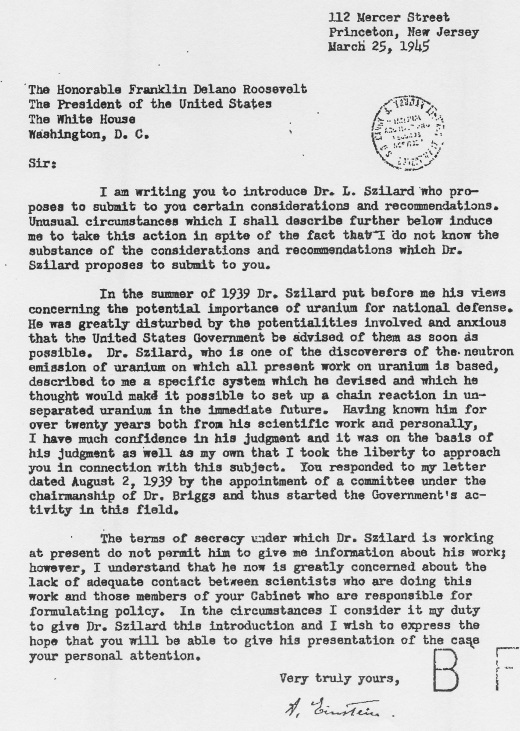
Not all ideas are 'shot down' by an intimidating boss- Albert Einstein's formal letter paved the way to American atom bomb research.
Not all ideas are ‘shot down’ by an intimidating boss- Albert Einstein’s formal letter paved the way to American atom bomb research.

Everyone says they want innovation in their organization, but when an ambitious employee offers it to a Boss or CEO, for example, the idea is often shot down, says Neal Thornberry, Ph.D., faculty director for innovation initiatives at the Naval Postgraduate School in California. There has to be a way of getting your ideas accepted, right? 

“Senior leaders often miss the value-creating potential of a new concept because they either don’t take the time to really listen and delve into it, or the innovating employee presents it in the wrong way,” says Thornberry, who recently published “Innovation Judo,” (www.NealThornberry.com), based on his years of experience teaching innovation at Babson College and advising an array of corporate clients, from the Ford Co. and IBM to Cisco Systems. 

Neal Thornberry: " Innovation should be presented as opportunities, not ideas. Opportunities have gravitas while ideas do not!”
Neal Thornberry: ” Innovation should be presented as opportunities, not ideas. Opportunities have gravitas while ideas do not!”

Thornberry outlines a template for innovation that works:

1 Intention: Once the “why” is answered, leaders have the beginnings of a legitimate roadmap to innovation’s fruition. This is no small task and requires some soul searching.

“I once worked with an executive committee, and I got six different ideas for what ‘innovation’ meant,” he says. “One wanted new products, another focused on creative cost-cutting, and the president wanted a more innovative culture. The group needed to agree on their intent before anything else.”

2 Infrastructure: This is where you designate who is responsible for what. It’s tough, because the average employee will not risk new responsibility and potential risk without incentive. Some companies create units specifically focused on innovation, while others try to change the company culture in order to foster innovation throughout.  “Creating a culture takes too long,” Thornberry says. “Don’t wait for that.”

3 Investigation: What do you know about the problem? IDEO may be the world’s premier organization for investigating innovative solutions. Suffice to say that the organization doesn’t skimp on collecting and analyzing data. At this point, data collection is crucial, whereas brainstorming often proves to be a waste of time if the participants come in with the same ideas, knowledge and opinions that they had last week with no new learning in their pockets.

4 Ideation: The fourth step is also the most fun and, unfortunately, is the part many companies leap to. This is dangerous because you may uncover many exciting and good ideas, but if the right context and focus aren’t provided up front, and team members cannot get on the same page, then a company is wasting its time. That is why intent must be the first step for any company seeking to increase innovation. Innovation should be viewed as a set of tools or processes, and not a destination.

If you’re gonna ‘demo’ your idea you better have practiced and perfected your routine before showing your boss-

5 Identification: Here’s where the rubber meets the road on innovation. Whereas the previous step was creative, now logic and subtraction must be applied to focus on a result. Again, ideas are great, but they must be grounded in reality. An entrepreneurial attitude is required here, one that enables the winnowing of ideas, leaving only those with real value-creating potential.

“Innovation without the entrepreneurial mindset is fun but folly,” Thornberry notes.

6 Infection: Does anyone care about what you’ve come up with? Will excitement spread during this infection phase? Now is the time to find out. Pilot testing, experimentation and speaking directly with potential customers begin to give you an idea of how innovative and valuable an idea is. This phase is part selling, part research and part science. If people can’t feel, touch or experience your new idea in part or whole, they probably won’t get it. This is where the innovator has a chance to reshape their idea into an opportunity, mitigate risk, assess resistance and build allies for their endeavor.

7 Implementation/Integration: While many talk about this final phase, they often fail to address the integration part. Implementation refers to tactics that are employed in order to put an idea into practice. This is actually a perilous phase because, in order for implementation to be successful, the idea must first be successfully integrated with other activities in the business and aligned with strategy. An innovation, despite its support from the top, can still fail if a department cannot work with it.

For the Silo, Neil Thornberry.

Working 9 to 5? Think about the best times to approach your boss.

Neal Thornberry, Ph.D., is the founder and CEO of IMSTRAT, LLC a consulting firm that specializes in helping private and public sector organizations develop innovation strategies. A respected thought leader in innovation, Thornberry is a highly sought-after international speaker and consultant. He  also serves as the faculty director for innovation initiatives at the Center for Executive Education at the Naval Postgraduate School in Monterey, Calif. Thornberry, author of “InnovationJudo:Disarming Roadblocks & Blockheads on the Path to Creativity, holds a doctorate in organizational psychology and specializes in innovation, corporate entrepreneurship, leadership and organizational transformation.

AI Aggregates, But Dyslexia Innovates

The rise of AI is truly remarkable. It is transforming the way we work, live, and interact with each other, and with so many other touchpoints of our lives. However, while AI aggregates, dyslexic thinking skills innovate. If used in the right way, AI could be the perfect co-pilot for dyslexics to really move the world forward. In light of this, Virgin and Made By Dyslexia have launched a brilliant campaign to show what is possible if AI and dyslexic thinking come together. The film below says it all.

As the film shows, AI can’t replace the soft skills that index high in dyslexics – such as innovating, lateral thinking, complex problem solving, and communicating.

If you ask AI for advice on how to scale a brand that has a record company – it offers valuable insights, but the solution lacks creative instinct and spontaneous decision making. If I hadn’t relied on my intuition, lateral thinking and willingness to take a risk, I would have never jumped from scaling a record company to launching an airline – which was a move that scaled Virgin into the brand it is today.

Together, dyslexic thinkers and AI are an unstoppable force, so it’s great to see that 72% of dyslexics see AI tools (like ChatGPT) as a vital starting point for their projects and ideas – according to new research by Made By Dyslexia and Randstad Enterprise. With help from AI, dyslexics have limitless power to change the world, but we need everyone to welcome our dyslexic minds. If businesses fail to do this, they risk being left behind. As the Value of Dyslexia report highlighted, dyslexic skillsets will mirror the World Economic Forum’s future skills needs by end of this year (2025). Given the speed at which technology and AI have progressed, this cross-over has arrived two years earlier than predicted.

Image: Sarah Rogers/MITTR

With all of this in mind, it’s concerning to see a big difference between how HR departments think they understand and support dyslexia in the workplace, versus the experience of dyslexic people themselves.

 The new research also shows that 66% of HR professionals believe they have support structures in place for dyslexia, yet only 16% of dyslexics feel supported in the workplace. It’s even sadder to see that only 14% of dyslexic employees believe their workplace understands the value of dyslexic thinking. There is clearly work to be done here.

To empower dyslexic thinking in the workplace (which has the two-fold benefit of bringing out the best in your people and in your business), you need to understand dyslexic thinking skills. To help with this, Made By Dyslexia is launching a workplace training course later this year on LinkedIn Learning – and you can sign up for it now. The course will be free to access, and I’m delighted that Virgin companies from all across the world have signed up for it – from Virgin Australia, to Virgin Active Singapore, to Virgin Plus Canada and Virgin Voyages. It’s such an insightful course, designed by experts at Made By Dyslexia to educate people on how to understand, support, and empower dyslexic thinking in the workplace, and make sure businesses are ready for the future.

It’s always inspiring to see how Made By Dyslexia empowers dyslexics, and shows the world the limitless power of dyslexic thinking. If businesses can harness this power, and if dyslexics can harness the power of AI – we can really drive the future forward.  Richard Branson, Founder at Virgin Group.

5 tips to Make sure first year Students transition from high school to Biz school

How to succeed in business school: Five tips for first year students


ST. CATHARINES, Ont. – The start of university can be intimidating enough for most first-year students. But business students face an extra set of challenges as they balance their coursework with gaining work and extra-curricular experience to help take them from campus to career. Freaked Out First Year University Student

From co-op work placements to mock interviews and networking breakfasts, the business school experience is designed to help students gain professional polish, acquire leadership skills and learn the foundations of management, accounting and entrepreneurship.

So how can new students and their parents make sure they are ready to take advantage of the available opportunities? These five tips will make sure first year students are ready for the transition from high school to business school:

  1. Be prepared (Textbook not required)

There’s is no need to read your textbooks cover-to-cover over the summer. Instead, spend some time getting comfortable with all that is available at your future school- both offline and online.

Spend a day on campus before the first day of class and figure out where your classes will be held. Don’t forget to attend your orientation. Most schools will offer a faculty specific orientation in the days leading up to the first day of classes.

And do your research online. Follow your business school on Facebook, Twitter and Instagram. Figure out the online registration system, how to access your student email and the online learning platforms. These online tools will be used throughout the academic year so access them early so you don’t miss any emails or messages.

  1. Going to University is your full-time job

While University doesn’t pay you a regular paycheck, it does pay you in grades. At the end of your degree, you will be able to use your straight A’s as currency to get a great job.

Everything you learned at your summer job about responsibility, punctuality and honesty can be used in business school.  So, impress your professor just like you would your boss. Show up to class. Stay on top of your assignments and hand them in on time.

  1. Get involved (and stay involved)

Want to stand out at a job interview? Join a business student club. These clubs focus on everything from accounting to marketing and every subject area in between.  Joining a club is a great way to make new friends and apply coursework to real life situations.

One key tip: it’s not enough to sign up and attend the occasional meetings. If you really want to have an experience that stands out on your resume, get involved on the executive team, attend a case competition or organize an event. You’ll have an experience you’ll never forget and something unique to mention during a job interview.

  1. Make friends (with everyone)

We guarantee that you’ll make friends in your classes and in residence. But don’t forget to build meaningful relationships with faculty, staff and upper year students. They can become important mentors who can help point you to on-campus resources and introduce you to new connections. Plus, if you know your career centre staff they’ll be sure to recommend you to employers who are hiring students.

Do you want to guarantee straight A’s on group projects? One successful strategy we’ve seen Goodman students use is to have a group of friends from different concentrations. When it comes time to write that paper, you’ll have every subject area covered, from HR to entrepreneurship.

  1. Ask for help

It’s a new school, a new environment and new friends. This is a big transition and it’s normal for there to be ups and downs during your first year. Fortunately, your university has resources available to help you succeed. From study skill workshops to mental health resources, there is a lot of support available to you on-campus.

If you need any type of help, talk to your academic advisor or a professor as early as possible. Don’t put your academic career at risk; there are people available to help you get through any type of problem you encounter. For the Silo, Don Cyr, dean of the Goodman School of Business at Brock University.

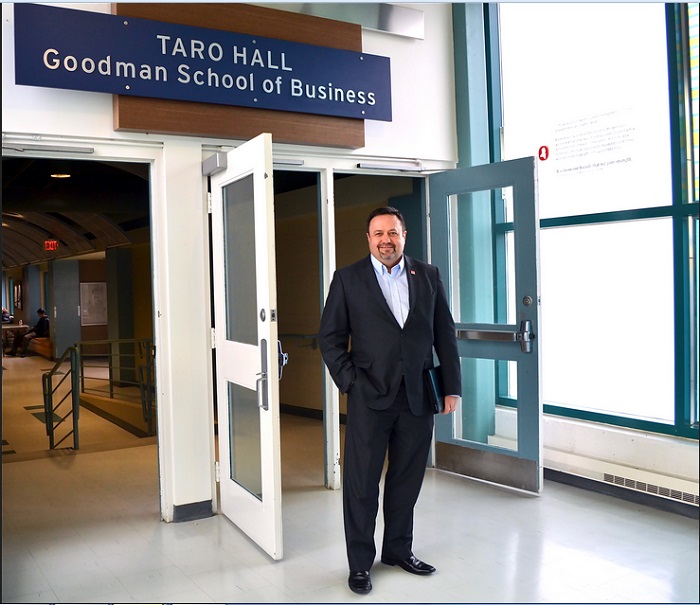
Don Cyr, dean of the Goodman School of Business at Brock University


About the Goodman School of Business:

Based at Brock University in St. Catharines, Ont., the Goodman School of Business is one of only eight schools in Ontario that is accredited by the Association to Advance Collegiate Schools of Business International. The Goodman School of Business is home to more than 2,600 undergraduate students, 450 graduate students and has 7,000 alumni worldwide.