Tag Archives: Federal Communications Commission

United States Focused On Helping African Nations Develop Space Programs

Inaugural U.S.-Africa Technical and Regulatory Space Training Meeting

December, 2025. Senior Bureau Official (SBO) in the Bureau of African Affairs Ambassador Jonathan Pratt convened today’s U.S.-Africa Technical and Regulatory Space Training Meeting, the first in a series of technical and regulatory trainings in the leadup to the NewSpace Africa Conference April 20-23, 2026 in Libreville, Gabon.

SBO Pratt conveyed that the United States aims to empower African nations to create locally owned, financially sound, and internationally-aligned space programs – not dependent, opaque, or controlled by outside actors.

This meeting represented the first step in the United States deepening space diplomacy on the African continent, now with more than 60 satellites in orbit.  Representatives agreed to work more closely together to advance responsible exploration in space and collaborate transparently and openly. 

Participating in the meeting were representatives from the following African space agencies: Senegal, Angola, Mauritius, Djibouti, Nigeria, Kenya, Botswana, Gabon, Ethiopia, Namibia, Rwanda, and Egypt.  The meeting also included representatives from the Department of War, Department of Commerce, and the Federal Communications Commission.

Supplemental

With a total of 13 satellites each, South Africa and Egypt have the largest number of satellites in orbit in Africa, while Nigeria also launched a total of seven satellites, according to a report by Statista.

Take a look at the list of African countries with the most satellites in orbit as of August 2024:

countrynumber of satellites
South Africa13
Egypt13
Nigeria7
Algeria6
Morocco3

Since the statistics were published, Morocco launched two more nanosatellites, bringing the total number of satellites to five.

The report also noted that 12 other African countries had satellites in space, namely Kenya, Angola, Ethiopia, Rwanda, Djibouti, Ghana, Mauritius, Senegal, Tunisia, Sudan, Uganda, and Zimbabwe.

South Africa was the first country on the continent to build and launch a satellite, called SUNSAT-1, in 1998.
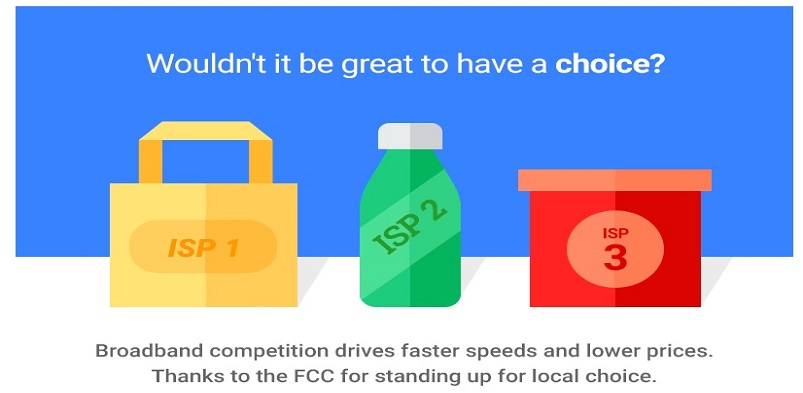
FCC Promoted American Broadband Competition And Net Neutrality

In late 2014- early 2015, the FCC stood up for more competition and more choice in local broadband. This is a critical step in making faster, cheaper Internet available for all Americans.

You may have heard that the Federal Communications Commission (FCC) just put in place rules to protect ‘net neutrality.’ That’s big news. But there was another important decision today to help keep the Internet competitive and open — and while it’s getting less attention, it may be just as important. As part of its agenda to encourage meaningful competition in high speed broadband for Americans, the FCC supported allowing cities to make their own decisions about investing in new broadband networks. More needs to be done to drive innovation in bigger, faster broadband, but this was a good step.
Canadian ISP client

While the FCC’s net neutrality rules can help prevent Internet access providers from relegating some applications to a “slow lane,” this move alone won’t lead to a world where every consumer has an ultra fast connection to the entire Internet. That’s going to take more competition and innovation in new broadband networks.

It’s been nearly five years since we offered to build a fiber-optic network in one U.S. city as an experiment — and as we’ve expanded Google Fiber into a business, we’ve seen firsthand how faster speeds can improve lives and give cities new platforms for economic development. Google is not the only one innovating in this area. Along with investments by other private providers, cities like Lafayette, LA and Chattanooga, TN have been investing in their own networks and developing public-private partnerships to that end.

The FCC decided that it’s important for users to be able to control their own Internet connections and for communities to make their own choices to suit their local needs for broadband. While it may not make sense for most governments to operate broadband networks themselves, we think faster, better broadband for all Americans is too important to remove an option for deployment.

Thank Chairman Wheeler and the FCC for supporting local choice and competition in broadband networks: https://takeaction.withgoogle.com/thank-the-fcc     For the Silo, Derek Slater Google Inc.

P.S. If you want to learn more about the ingenuity of cities supporting broadband investment and competition, check out Next Century Cities.

Supplemental- Test if your Internet Service Provider is “throttling down” your internet connection speed. (requires Java plug-in installed)

How competitive is the Canadian Residential Broadband Market?  ( Essay from 2009- has anything improved since?)