Tag Archives: economic growth

Let’s Transform Canada’s AI Research Into Real World Adoption

October, 2025 – Canada has world-class strength in AI research but continues to fall short in widespread adoption, according to a new report from the C.D. Howe Institute. On the heels of the federal government’s announcement of a new AI Strategy Task Force, the report highlights the urgent need to bridge the gap between research excellence and real-world adoption.

In “AI Is Not Rocket Science: Ideas for Achieving Liftoff in Canadian AI Adoption,” Kevin Leyton-Brown, Cinda Heeren, Joanna McGrenere, Raymond Ng, Margo Seltzer, Leonid Sigal, and Michiel van de Panne note that while Canada ranks second globally in top-tier AI researchers and first in the G7 for per capita publications, it is only 20th in AI adoption among OECD countries. “This matters for the economy as a whole, because such knowledge translation is a key vehicle for productivity growth,” the authors say. “It is terrible news, then, that Canada experienced almost no productivity growth in the last decade, compared with a rate 15 times higher in the United States.”

The authors argue that new approaches to knowledge translation are needed because AI is not “rocket science”: instead of focusing on a single industry sector, the discipline develops general-purpose technology that can be applied to almost anything. This makes it harder for Canadian firms to find the right expertise and for academics to sustain ties with industry. Existing approaches – funding academic research, directly subsidizing industry efforts through measures such as SR&ED and superclusters, and promoting partnerships through programs like Mitacs and NSERC Alliance – have not solved the problem.

Four ideas to help firms leverage Canadian academic strength to fuel their AI adoption include: a concierge service to match companies with experts, consulting tied to graduate student scholarships, “research trios” that link AI specialists with domain experts and industry, and a major expansion of AI training from basic literacy to dedicated degrees and continuing education. Drawing on their experiences at the University of British Columbia, the authors show how local initiatives are already bridging gaps between academia and industry – and argue these models should be scaled nationally.

“Canada’s unusual strength in AI research is an enormous asset, but it’s not going to translate into real-world productivity gains unless we find better ways to connect AI researchers and industrial players,” says Kevin Leyton-Brown, professor of computer science at the University of British Columbia and report co-author. “The challenge is not that AI is too complicated – it’s that it touches everything. That means new models of partnership, new incentives, and new approaches to education.”

AI Is Not Rocket Science- 4 Ideas in Detail

Idea 1: A Concierge Service for Matchmaking

We have seen that it is hard for industry partners to know who to contact when they want to learn more about AI. Conversely, it is at least as hard for AI experts to develop a broad enough understanding of the industry landscape to identify applications that would most benefit from their expertise. Given the potential gains to be had from increasing AI adoption across Canadian industry, nobody should be satisfied with the status quo.

We argue that this issue is best addressed by a “concierge service” that industry could contact when seeking AI expertise. While matchmaking would still be challenging for the service itself, it could meet this challenge by employing staff who are trained in eliciting the AI needs of industry partners, who understand enough about AI research to navigate the jargon, and who proactively keep track of the specific expertise of AI researchers across a given jurisdiction. This is specialized work that not everyone could perform! However, many qualified candidates do exist (e.g., PhDs in the mathematical sciences or engineering). Such staff could be funded in a variety of different ways: for example, by an AI institute; a virtual national institute focused on a given application area; a university-level centre like UBC’s Centre for Artificial Intelligence Decision-making and Action (CAIDA); a nonprofit like Mitacs; a provincial ministry for jobs and economic growth; or the new federal ministry of Artificial Intelligence and Digital Innovation.

Having set up an organization that facilitates matchmaking, it could make sense for the same office to provide additional services that speed AI adoption, but that are not core strengths of academics. Some examples include project management, programming, AI-specific skills training and recruitment, and so on. Overall, such an organization could be funded by some combination of direct government support, direct cost recovery, and an overhead model that reinvests revenue from successful projects into new initiatives.

Idea 2: Consultancy in Exchange for Student Scholarships

Many businesses that would benefit from adopting AI do not need custom research projects and do not want to wait a year or more to solve their problems. The lowest-hanging fruit for Canadian AI adoption is ensuring that industry is well informed about potentially useful, off-the-shelf AI technologies. We thus propose a mechanism under which AI experts would provide limited, free consulting to local industry. AI experts would opt in to being on a list of available consultants. A few hours of advice would be free to each company, which would then have the option of co-paying for a limited amount of additional consulting, after which it would pay full freight if both parties wanted to continue. The company would own any intellectual property arising from these conversations, which would thus focus on ideas in the public domain. If the company wanted to access university-owned IP, it could shift to a different arrangement, such as a research contract. This system would work best given a concierge service like the one we just described. The value offered per consulting hour clearly depends on the quality of the academic–industry match, and some kind of vetting system would be needed to ensure the eligibility of industry participants.

Why would an AI expert sign up to give advice to industry? All but the best-funded Canadian faculty working in AI report that obtaining enough funding to support their graduate students is a major stressor. Attempting to establish connections with industry is hard work, and such efforts pay off only if the industry partner signs on the dotted line and matching funds are approved. There is thus space to appeal to faculty with a model in which they “earn” student scholarships for a fixed amount of consulting work. For example, faculty could be offered a one- semester scholarship for every eight hours set aside for meetings with industry, meaning that one weekly “industry office hour” would indefinitely fund two graduate students. Consulting opportunities could also be offered directly to postdoctoral fellows or senior (e.g., post-candidacy) PhD students in exchange for fellowships. In such cases, trainees should be required to pass an interview, certifying that they have both the technical and soft skills necessary to succeed in the consulting role. The concierge service could help decide which industry partners could be routed to PhD students and which need the scarcer consulting slots staffed by faculty members.

The system would offer many benefits. From the industry perspective, it would make it straightforward to get just an hour or two of advice. This might often be enough to allow the company to start taking action towards AI adoption: there is a rich ecosystem of high-performance, reliable, and open-source AI tools; often, the hard part is knowing what tool to use in what way. Beyond the value of the advice itself, consulting meetings offer a strong basis for building relationships between academics and industry representatives, in which the academic plays the role of a useful problem solver rather than of a cold-calling salesperson. These relationships could thus help to incubate Mitacs/Alliance-style projects when research problems of mutual interest emerge (though also see our idea below about how restructuring such projects could help further).

For academics, the system would constitute a new avenue for student funding that would reward each hour spent with a predictable amount of student support. Furthermore, it would offer scaffolded opportunities to deepen connections with industry. The system would come with no reporting requirements beyond logging the time spent on consulting. The faculty member would be free to use earned scholarships to support any student (regardless, for example, of the overlap between the student’s research and the topics of interest to companies), increasing flexibility over the Mitacs/Alliance system, in which specific students work with industry partners. Students who self-funded via consulting would learn valuable skills and would expand their professional networks, improving prospects for post-graduation employment.

Finally, the system would also offer multiple benefits from the government’s perspective. It would generate unusually high levels of industrial impact per dollar spent (consider the number of contact hours between academia and industry achieved per dollar under the funding models mentioned in Section 3). All money would furthermore go towards student training. The system would automatically allocate money where it is most useful, directing student funding to faculty who are both eager to take on students and relevant to industry, all without the overhead of a peer-review process. And it would generate detailed impact reports as a side effect of its operations, since each hour of industry–academia contact would need to be logged to count towards student funding.

Idea 3: Grants for Research Trios

Our third proposal is an approach for expanding the Mitacs/Alliance model to make it work better for AI. Industry–academia partnerships leverage two key kinds of expertise from the academic side: methodological know-how for solving problems and knowledge about the application domain used for formulating such problems in the first place. In fields for which the set of industry partners is relatively small and relatively stable, it makes sense to ask the same academics to develop both kinds of expertise. In very general-purpose domains like AI, it holds back progress to ask AI experts to become domain experts, too. Instead, it makes sense to seek domain knowledge from other academics who already have it. We thus propose a mechanism that would fund “research trios” rather than bilateral research pairings. Each trio would contain an AI expert, an academic domain expert, and an industry partner. This approach capitalizes on the fact that there is a huge pool of academic talent outside core AI with deep disciplinary knowledge and a passion for applying AI. While such researchers are typically not in a position to deeply understand cutting-edge AI methodologies, they are ideally suited to serve as a bridge between researchers focused on AI methodologies and Canadian industrial players seeking to achieve real-world productivity gains. In our experience at UBC, the pool of non-AI domain experts with an interest in applying AI is considerably larger than the pool of AI experts. One advantage of this model is that projects can be initiated by the larger population of domain experts, who are also more likely to have appropriate connections to industry. Beyond this, involving domain experts increases the likelihood that a project will succeed and gives industry partners more reason to trust the process while a solution is being developed. The model meets a growing need for funding researchers outside computer science for projects that involve AI, rather than concentrating AI funding within a group of specialists. At the same time, it avoids the pitfall of encouraging bandwagon-jumping “applied AI” projects that lack adequate grounding in modern AI practices. Finally, it not only transfers AI knowledge to industry, but also does the same to both the domain expert and their students.

Idea 4: Greatly Expanded AI Training

As AI permeates the economy, Canada will face an increasing need for AI expertise. Today, that training comes mostly in the form of computer science degrees. Just as computer science split off from mathematics in the 1960s, AI is emerging today as a discipline distinct from computer science. In part, this shift is taking the form of recognizing that not every AI graduate needs to learn topics that computer science rightly considers part of its core, such as software engineering, operating systems, computer architecture, user interface design, computer graphics, and so on. Conversely, the shift sees new topics as core to the discipline. Most fundamental is machine learning. Dedicated training in AI will require a deeper focus on the mathematical foundations of probability and statistics, building to advanced topics such as deep learning, reinforcement learning, machine learning theory, and so on. Various AI modalities also deserve separate study, such as computer vision, natural language processing, multiagent systems, robotics, and reasoning. Training in ethics, optional in most computer science programs, will become essential.

Beyond dedicated training in the core discipline, we anticipate huge demand for broad-audience AI literacy training; for AI minors to complement other disciplinary specializations; for continuing education and “micro-credential” programs; and for executive education in AI. There is also a growing need for “AI Adoption Facilitators”: bridge-builders who can help established workers in medium-to-large organizations understand how data-driven tools could offer value in solving the problems they face. Training for this role would emphasize business principles and domain expertise, but would also require firmer foundations in machine learning and data science than are currently typical in those disciplines.

Read the full report via our friends at C.D. Howe Institute here.
How Canada Can Help Repair Today’s Global Trading System

The article below (Furthering the Benefits of Global Economic Integration through
Institution Building: Canada as 2024 Chair of CPTPP) was first published by the C.D. Howe Institute by Paul Jenkins and Mark Kruger.

Introduction

Over the last 10 to 15 years, the global economy has become fragmented. There are many reasons for this fragmentation – both economic and geopolitical. A particularly important factor has been the inability of the institutions that provide the governance framework for international trade and finance to adapt to the changing realities of the global economy.

This erosion is reflected in the cycles of outcome-based measures of globalization, such as trade-to-GDP ratios. Research indicates that the development of institutions that promote global integration is highly correlated with more rapid economic growth. To secure the benefits of economic integration, the international community should re-commit to a set of common rules. This should involve the renewal of existing institutions in line with current economic realities.


But institutional renewal alone is not sufficient. Nurturing and growing new institutions are also critical, especially ones reflecting the realities of today’s global economy. Most promising in this regard is the Comprehensive and Progressive Agreement for Trans-Pacific Partnership (CPTPP).


The CPTPP is seen as a “next generation” trade agreement. It takes World Trade Organization (WTO) rules further in several key areas, such as electronic commerce, intellectual property, and state-owned enterprises.
Expansion of CPTPP represents a unique opportunity to strengthen global trade rules, deepen global economic cooperation on trade and sustain an open global trading system. The benefits for Canada of an expanded CPTPP are further diversification of its export markets and deepened ties with countries in the Indo-Pacific region.

Trusted Policy Intelligence


The challenge to enabling broad-based accession to CPTPP is geopolitical, reflecting the rising aspirations of the developing world, the associated
heightened contest between democracy and autocracy, and the prioritization of security. Indeed, for many, today’s security concerns are at the forefront, trumping economic issues. We argue that recognition of the economic benefits
of global economic integration must also remain at the forefront, and that research presented in this paper shows that institutional building is at the core
of securing such benefits.


As 2024 Chair of the CPTPP Commission, Canada has an opportunity to play a leadership role, as it did in the creation of the Bretton Woods institutions 80 years ago, by again promoting global institution building, this time through the successful accession of countries to the CPTPP, both this year and over the long run.

  1. Cycles in Global Economic Integration
    Former US Fed Chair Bernanke points out that the process of global economic integration has been going on for centuries. New technologies have been a major force in linking economies and markets but the process has not been a smooth and steady one. Rather, there have been waves of integration, dis-integration, and re-integration.
    Before World War I, the global economy was connected by extensive international trade, investment, and financial flows. Improved transportation – steamships, railways and canals – and communication – international mail and the telegraph – facilitated this “first era of globalization.” The gold standard linked countries financially and promoted currency stability. Trade barriers were reduced by the adoption of standardized customs procedures and trade regulations. The movement of goods, capital, and people was relatively unrestricted.
    The outbreak of World War I frayed global economic ties and set the stage for a more fragmented interwar period. The Treaty of Versailles imposed
    punitive measures on Germany, exacerbating economic hardships. Protectionist policies, such as high tariffs and competitive devaluations, became widespread as countries prioritized domestic interests.
    The collapse of the gold standard further destabilized international finance. In contrast to the cooperation seen before the war, countries pursued economic nationalism and isolationism.
    Protectionism increased in the 1930s as a result of the dislocation caused by the Great Depression. In an attempt to shield domestic industries from foreign competition and address soaring unemployment, many countries imposed tariffs and trade barriers.
    The Smoot-Hawley Tariff Act in the United States exemplified this trend, triggering a series of beggar-thy-neighbour policies. These protectionist policies exacerbated the downturn and contributed to a contraction in international trade that worsened the severity and duration of the Great Depression.
    Mindful of the lessons of the 1930s, a more liberal economic order was established in the aftermath of World War II. The creation of the Bretton Woods Institutions – the International Monetary Fund (IMF), the World Bank and the General Agreement on Tariffs and Trade (GATT) – provided the principal mechanisms for managing and governing the global economy over the second half of the 20th century.
    Building on the GATT, the formation of the World Trade Organization in 1995 provided the institutional framework for overseeing international trade and settling disputes. China became the 143rd member of the WTO in 2001 and almost all global trade became subject to a common set of rules.
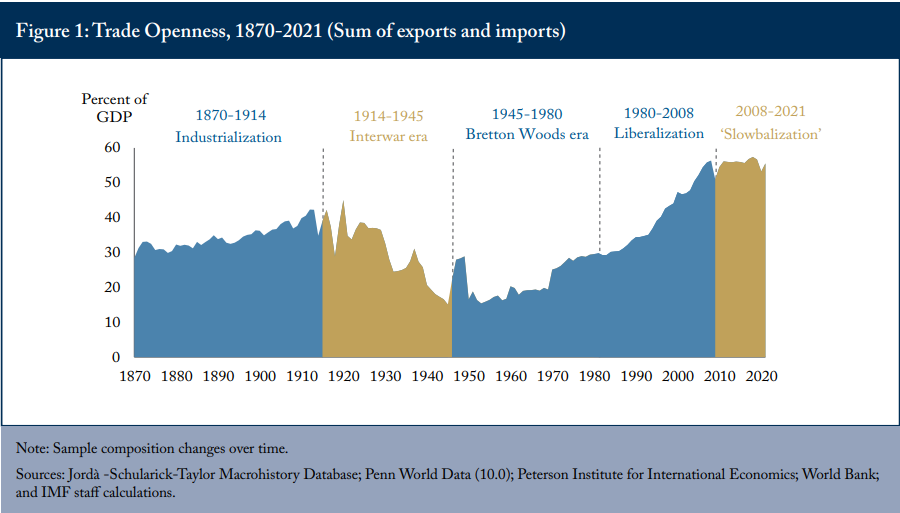
    The rise and fall of international economic governance are reflected in the cycles of outcome-based measures of globalization. Looking at trade openness, i.e., the sum of exports and imports as a percentage of GDP, the IMF divides the process of global integration into five periods: (i) the
    industrialization era, (ii) the interwar era, (iii) the Bretton Woods era, (iv) the liberalization era, and (v) “slowbalization” (Figure 1).
    Many factors have contributed to the plateauing of trade openness in the last 10 to 15 years. The fallout from the Global Financial Crisis was severe and the recovery was tepid. Brexit, with its inward-looking perspective, has disengaged the UK from Europe.
    Populist protectionism has led to “re-shoring” in an effort to address rising inequalities and labour’s falling share of national income. There has been far-reaching cyclical and structural fallout from COVID-19.
    And while the AI revolution portends significant opportunities, uncertainties over labour displacement abound.
    Geopolitics has also played a critical role. Security concerns have become more important, trumping economic issues in the eyes of many. This has led to multiple sanctions, along with export and investment controls, being imposed to protect national security interests.
    The IMF has carried out several modelling exercises that estimate the consequences of fragmentation if further trade and technology barriers were to be imposed. The studies employ a variety of assumptions regarding trade restrictions and technology de-coupling. In summary, the cost of further fragmentation ranges from 1.5 to 6.9 percent of global GDP. As with all modelling exercises, a degree of caution is warranted. At the same time, these studies should not be viewed as upper-bound estimates because they disregard many other transmission channels of global economic integration.
  2. De Jure and De Facto Globalization
    In assessing the evolution of globalization, however, it would be misleading to focus too narrowly on outcome-based measures such as the trade-to-GDP ratio depicted in Figure 1.
    The data compiled by KOF, a Swiss research institute, provide a more nuanced view of global economic integration. KOF constructs globalization
    indices that measure integration across economic, social, and political dimensions. Its globalization indices are among the most widely used in academic literature. KOF’s data set covers 203 countries over the period 1970 to 2021. Our focus here is on KOF’s economic indices.
    In terms of economic globalization, KOF looks at the evolution of finance as well as trade. Moreover, one of the unique aspects of KOF’s work is that it examines globalization on both de facto and de jure bases.
    KOF’s de facto globalization indices measure actual international flows and activities. In terms of trade, it includes cross-border goods and services flows and trading partner diversity. For financial globalization, its indices measure stocks of international assets and liabilities as well as cross-border payments and receipts.
    KOF’s de jure globalization indices try to capture the policies and conditions that, in principle, foster these flows and activities. For trade globalization,
    these include income from taxes on trade, non-tariff barriers, tariffs, and trade agreements. De jure financial globalization is designed to measure the institutional openness of a country to international financial flows and investments. Variables to measure capital account openness, investment restrictions and international agreements and treaties with investment provisions are included in these indices.
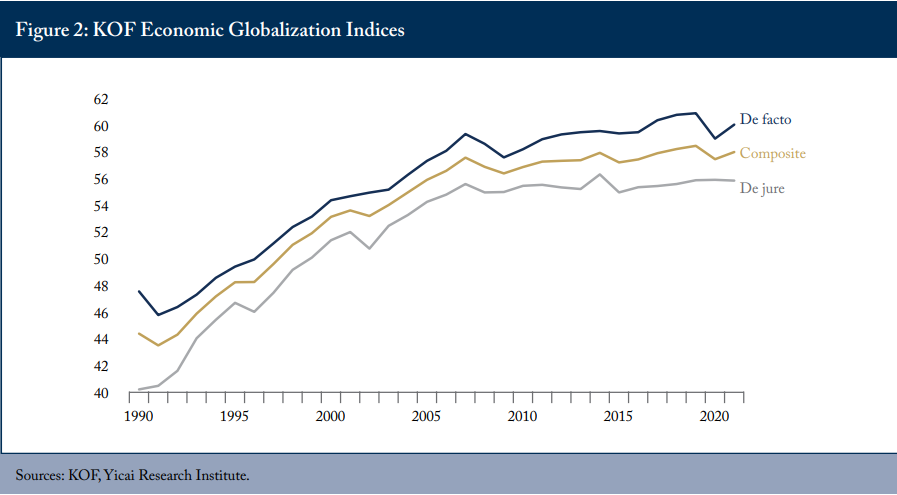
    The trends in KOF’s de facto and de jure economic globalization indices are shown in Figure 2. Both globalization measures increased rapidly from 1990
    until the Global Financial Crisis. Both measures subsequently plateaued. In 2020, as the global pandemic took hold, the de facto index plunged to its
    lowest level since 2011. In 2021, it recovered half of the distance it lost the previous year. The de jure index has essentially been flat for the last decade.
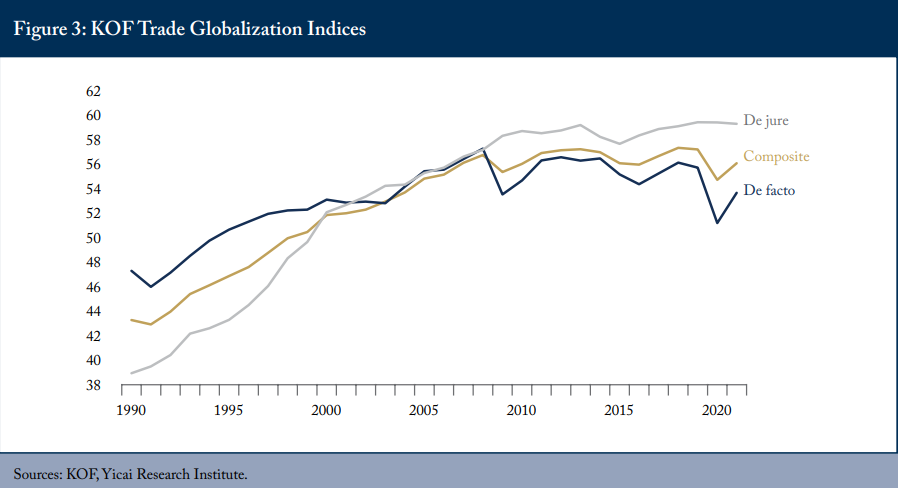
    There has been a sharp divergence between KOF’s de facto and de jure trade globalization measures in the last five years (Figure 3). By 2020, de facto trade globalization had dropped to a 25-year low. Although it recovered somewhat in 2021, it remains well below the average of the last decade. In contrast, de jure trade globalization levelled off after the Global Financial
    Crisis. It reached a modest new high in 2019 and has essentially remained there since then.
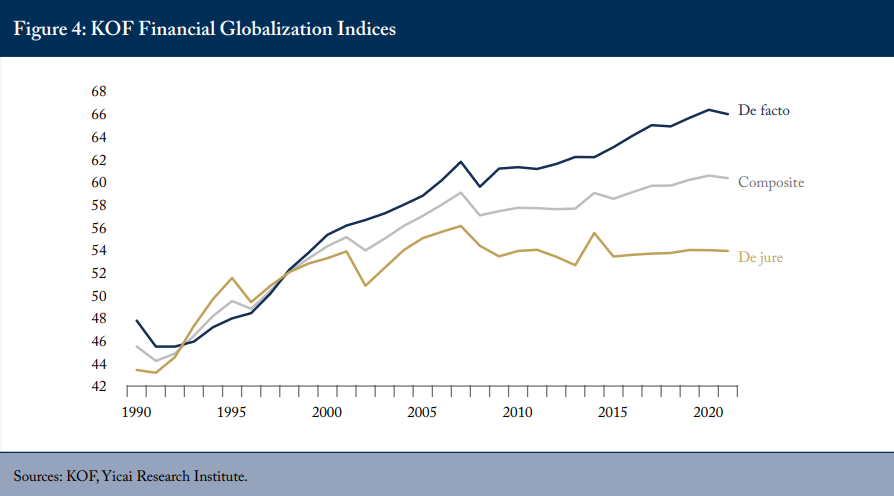
    The trends in financial globalization are almost the reverse of those of trade globalization. De facto financial globalization continued to increase through
    2020 and dipped slightly in 2021. De jure financial globalization has been essentially flat over the last two decades (Figure 4).
    The KOF researchers provide convincing econometric evidence that economic globalization supports per capita GDP growth. Importantly,
    their analysis shows that institutions matter. They demonstrate that the positive impact on growth from trade and financial globalization comes from
    institutional liberalization rather than greater economic flows. Through a series of panel regressions, the researchers show that it is the de jure trade and financial globalization indices that are correlated with more rapid per capita GDP growth. In contrast, there is no significant relationship between growth and the de facto indices.
    KOF’s conclusions are consistent with the work of Rodrik, Subramanian and Trebbi who examine the contributions of institutions, geography, and trade
    in determining relative income levels around the world. They find that institutional quality “trumps everything else.” Once institutions are controlled for, conventional measures of geography have weak effects on incomes and the contribution of trade is generally not significant.
    Thus, to recapture the economic benefits of free trade and open markets, countries need to recommit to finding ways to further de jure globalization; that is, putting in place the institutional building blocks in
    support of enhanced trade and financial integration.
  3. Geopolitical Realities
    Institutional reform, however, requires trust and mutual respect among partners. Many would argue that such trust and respect is in limited supply
    today, especially between the United States and China. The United States is willing to endure the costs of heightened protectionism to purportedly
    strengthen the resilience of its economy and secure greater political security. This has resulted in multiple sanctions, particularly in areas of digital technologies.
    In response, China, amongst other measures, has imposed export controls on critical minerals used in advanced technology in defence of its geopolitical goals.
    Yet, as discussed by Fareed Zakaria in a Foreign Affairs article, The Self-Doubting Superpower, China has become the second largest economy in the world richer and more powerful within an integrated global economic system; a system that if overturned would result in severely negative consequences for China.
    For the United States, its inherent strength has been its commitment to open markets and its vision of the world that has considered the interests of others. In many respects, it remains uniquely capable of playing the central role in sustaining the global economic system.
    Following a recent trip to China, Treasury Secretary Yellen stated that “the relationship between the United States and China is one of the most consequential of our time,” and that it “is possible to achieve an economic
    relationship that is mutually beneficial in the long-run – one that supports growth and innovation on both sides.”
    This means that the United States would need to accommodate China’s legitimate efforts to sustain a rising standard of living for its citizens, while
    deterring illegitimate ones. For China, it would mean a clear and abiding commitment to an open, rules-based global economic system.
    It appears that there is currently no clear path forward for this change in mindset, given what many see as insurmountable geopolitics in both the United States and China. Yet, history shows that achieving and sustaining long-term economic growth is in every country’s best interest, and that such growth is best secured through ongoing global economic integration.
  4. A Way Forward
    Recent discussions at the IMF’s Annual Meeting in Marrakech about IMF quota reform, including quota increases and realignment in quota shares to
    better reflect members’ relative positions in the global economy, are important signals of possible renewal.
    Similarly, calls to revamp the World Bank’s mandate, operational model, and ability to finance global public goods, such as climate transition, reflect a growing consensus that the Bretton Woods Institutions must change in the face of today’s realities.
    But institutional renewal alone is insufficient.
    Broad-based accession to the CPTPP represents a unique opportunity to strengthen global governance overall, and to address common challenges in ways that benefit both countries as well as the global economy.
    The CPTPP sets a high bar, requiring countries to:
  • eliminate or substantially reduce tariffs and other
    trade barriers;
  • make strong commitments to opening their markets;
  • abide by strict rules on competition, government
    procurement, state-owned enterprises, and
    protection of foreign companies; and
  • operate within, as well as help promote, a
    predictable, comprehensive framework in the critical
    area of digital trade flows.
    The United Kingdom formally agreed to join the
    CPTPP in July 2023. Once its Parliament ratifies
    the Agreement, the UK will join Australia, Brunei
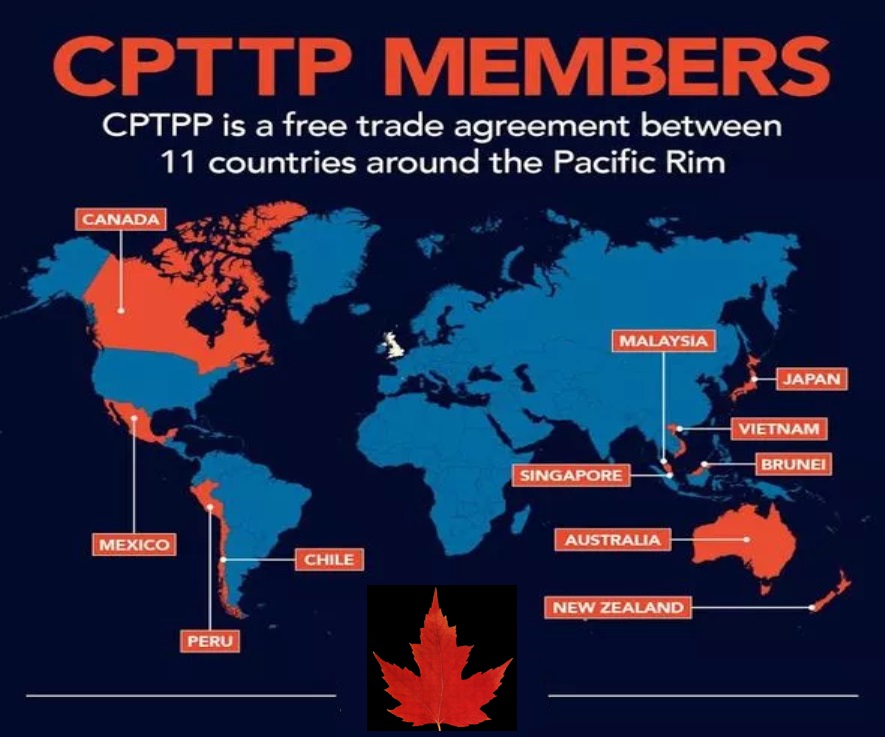
    Darussalam, Canada, Chile, Japan, Malaysia, Mexico,
    New Zealand, Peru, Singapore, and Vietnam in the
    trading block.
    Such a diverse membership clearly demonstrates
    that countries do not have to be geographically close
    to form an effective trading block.
    A half-dozen other countries have also applied
    to join the CPTPP, with China’s application having
    been the earliest received.
    Petri and Plummer estimate that joining the
    CPTPP would yield large economic benefits for
    China and the global economy. For the latter, the
    boost to global GDP would be in the order of $600
    billion annually. The United States in joining would
    gain preferential access to rapidly growing Pacific Rim
    markets. Much of the additional market access would
    come from China’s opening of its service sector.
    Industrial policy and state-owned enterprises,
    however, will continue to play a much larger role
    in China than they do in Western economies. The
    key for China is to demonstrate that a socialist
    market economy (i.e., one that has a mixed capitalist
    market and government-controlled economy) can be
    consistent with fair trade.
    The process of China joining the CPTPP will
    undoubtedly be time-consuming. It took 15 years of
    negotiations before China joined the WTO in 2001.
    This was five more years, on average, than it took
    those countries that joined after 1995.
    The challenge for Canada, and subsequent chairs,
    is to ensure that China’s entry maintains the high
    standards CPTPP members have met so far.
    Broad based accession to the CPTPP, including
    the United States and China, however, is best viewed
    Page 8 Verbatim
    Trusted Policy Intelligence
    as a long-term goal. China would need to undertake
    unprecedented reforms, involving complex political
    challenges, including Taiwan’s potential accession. For
    its part, the United States would need to step well
    back from its current mercantilist mind set, which
    risks worsening.

Canada as Chair in 2024

While efforts to renew existing global institutions to better reflect current economic realities are important, we see promoting broad accession to the CPTPP as the best means to turn today’s global economic fragmentation around.
At the heart of the global economic system is the open trading framework put in place at Bretton Woods in 1944. Many would see today’s fragmentation as becoming more acute, rather than getting better, due to geopolitical divisions.
But further fragmentation is no way to save the open, rules-based global trading system that has served so many countries so well for so long.


While restrictions reflecting legitimate security concerns are inevitable, an open, competitive trading system remains in the best interests of all countries.
As 2024 Chair of the CPTPP Commission, Canada has an opportunity to contribute to turning around the fragmentation of today’s global trading system and moving the global economy back along a path towards a
more open, rules-based trading system.


An important goal for Canada’s chairmanship would be to clarify the rules of accession. This would be a big step forward in sustaining expansion of CPTPP. While today’s geopolitical realities surrounding the applications of both China and Taiwan represent a particularly challenging area to advance, significant progress in other areas must be made. It should accelerate inclusion of Costa Rica, Uruguay, Ecuador, and Ukraine, all of whom have applied. And it should help move forward discussions with South Korea, Indonesia, Philippines, and Thailand, who have expressed interest in joining.


Over and above all that, however, at a more strategic level, Canada should also champion discussion and understanding of why building towards the long-run goal of broad accession to CPTPP is important. Open and inclusive institutions are at the core of providing the benefits of global economic integration to all countries.


Canada will also be Chair of the G7 Summit in 2025. This, along with the various ministerial and officials’ meetings leading up to the Summit, offers another critical avenue for Canada to take a leadership role in sustaining and promoting an open, rules-based global trading system.

    Ontario Results Of November Cap And Trade Program Auction

    NEWS from The Ministry of the Environment and Climate Change- Ontario has announced the results of the province’s fourth auction of greenhouse gas emission allowances, held Nov. 29, 2017.  A total of 20,898,000 current (2017) allowances were sold at a settlement price of $17.38 CAD and a total of 3,116,700 future (2020) greenhouse gas emission allowances were sold at a settlement price of $18.89 CAD. The auction generated an estimated $422,081,073 in proceeds, which by law will be invested in programs that will reduce greenhouse gas pollution and help families and businesses reduce their own emissions through the Climate Change Action Plan.

    Proceeds from the province’s carbon market auctions are funding programs in 2017-18 that help people and businesses across Ontario reduce pollution, including:
     $64 million to improve energy efficiency, reduce greenhouse gases and redirect savings into patient care at 98 hospitals across the province
     Up to $377 million to establish the Green Ontario Fund to help homeowners and businesses save money and fight climate change through programs and rebates
     Up to $657 million for repairs and improvements to social housing apartment buildings over five years, contingent on carbon market proceeds
     $200 million for public school energy improvements
     Up to $100 million to support municipalities in fighting climate change through projects such as renewable energy and energy efficiency improvements
     $93 million for cycling upgrades
     $25 million to establish the Low Carbon Innovation Fund to help create and commercialize new low-carbon technologies

    These recent investments build upon $100 million to help homeowners make home energy upgrades, $20 million to install a network of fast-charging electric vehicle stations, $92 million for social housing upgrades, nearly $100 million to help businesses adopt low-carbon technology, and $13 million to support clean economic growth in First Nations communities, $8 million to launch a new pilot program to help fund the purchase of electric school buses, over $1 million to improve ecosystem health in urban and rural communities across the province.

    The auction was administered by the Ministry of the Environment and Climate Change using services contracted by the Western Climate Initiative (WCI) Inc., with oversight from an independent market monitor to ensure the integrity of the process. The summary report of the results has been made available to the public.  For the Silo, Anna Milner.    Disponible en Français.

    QUOTES
    ” The goal of Ontario’s carbon market is to reduce greenhouse gas emissions from our largest
    sources of pollution. The proceeds generated are being invested into Ontario’s economy
    through programs and projects that will do even more to reduce greenhouse gases, and help
    people in their everyday lives.”
    – Chris Ballard
    Minister of the Environment and Climate Change

    QUICK FACTS
     On May 18, 2016, Ontario passed landmark climate change legislation that ensures the
    province is accountable for responsibly and transparently investing proceeds from the
    cap and trade program.
     The Climate Change Action Plan and the cap and trade program form the backbone of
    Ontario’s strategy to cut greenhouse gas pollution to 15 per cent below 1990 levels by
    2020.
     On September 22, 2017, Ontario signed a cap and trade linking agreement with Quebec
    and California. The linkage will become effective on January 1, 2018.
     After introducing its cap and trade program and putting a price on carbon, California’s
    economy grew at a pace that exceeded the growth of the rest of the U.S. economy.
     The number of jobs in California grew by almost 3.3 per cent in the first year and a half
    of the program, outstripping the national rate of job creation, which was 2.5 per cent over
    the same period.
     In the United States, the Regional Greenhouse Gas Initiative (RGGI) has invested more
    than $1.3 billion of auction proceeds since 2009 in programs that include energy
    efficiency, clean and renewable energy, greenhouse gas abatement and direct bill
    assistance.
     RGGI investments are projected to return more than $4.67 billion in lifetime energy bill
    savings to more than 4.6 million participating households and 21,400 businesses.


    Ontario takes actions to eliminate deficit- LCBO headquarters for sale, will end public funding of horseracing

    Ontario will end tax payers subsidy of horseracing and sell the LCBO headquarters in its efforts to combat the provinces deficit

    Ontario’s newest actions to eliminate the deficit are critical to job creation and economic growth, says Minister of Finance Dwight Duncan. The Ontario government is moving forward with a responsible plan to eliminate the deficit so that more jobs are created and the economy continues to grow.

    Since the introduction of the 2011 Budget, growth in the global economy has slowed. This means additional steps must be taken to slow down the rate of growth of government spending in order to keep the plan to eliminate the deficit on track.

    Ontario Finance Minister Dwight Duncan outlined today the next steps in the government’s plan to eliminate the deficit. These steps will give Ontarians better value for money and lead to improved public services.

    The LCBO headquarters, currently located on some of the most valuable, under-developed real estate in Canada, will be sold and redeveloped. A retail store will remain in the vicinity while the headquarters will be moved. The LCBO will realize ongoing savings and after the land is sold and a new, modern facility is built, it is expected to generate well over $200 million for taxpayers.

    The government will move to greater involvement of the private sector in ServiceOntario through a strengthened public-private partnership. This will deliver better value for money and improve customer service for families.

    Since 1998, Ontario taxpayers have been supporting horseracing with a subsidy of up to $345 million a year. The province will evaluate that subsidy given the need to continue to invest in health care and education.

    Minister Duncan reiterated that the government is on track to meet its deficit target this year, and said these new measures will help ensure the government stays on track to eliminate the deficit by 2017–2018.

    QUOTES
    “Eliminating the deficit is essential to continued economic growth and job creation. A strong economy supports the schools and hospitals families rely on. Our plan will eliminate the deficit by 2017–2018.”
    — Dwight Duncan, Minister of Finance

    QUICK FACTS
     The LCBO property currently includes head office space and a large warehouse dating from 1954. It also contains a flagship store, which will be redeveloped nearby.
     About two-thirds of ServiceOntario’s in-person service locations are already operated by private sector partners.
     With 17 locations, Ontario has more racetracks and provides more public funding than any other place in North America. The cost of the current horseracing subsidy would pay for over 27,800 hip or knee replacement surgeries or provide over 9 million hours of home care.

    LEARN MORE
    Read about the revitalization of Ontario Place. Read http://www.ontario.ca/en/initiatives/progressreport2011/index.htm

    FOR MEDIA INQUIRIES ONLY:
    Aly Vitunski, Minister’s Office, 416-325-9819
    Scott Blodgett, Ministry of Finance, 416-325-0324
    www.ontario.ca/finance-news
    *Disponible en français