Tag Archives: convertible

Collector Car Market’s Big Winners And Losers In 2025

Mecum

Part of what makes this hobby and the markets surrounding it so interesting is how organic and ever-changing they are. Tastes shift, new people start participating in the old car world, and prices adjust to reflect that. That’s why Hagerty updates our price guide four times per year.

Over the past 12 months, words like “cooling,” “softening,” or “more cautious” have dominated conversations about the market as a whole, but that doesn’t mean there weren’t big moves for certain individual vehicles. Below are the ones that moved the most up, and the most down, in 2025.

1948-52 Ford F-Series
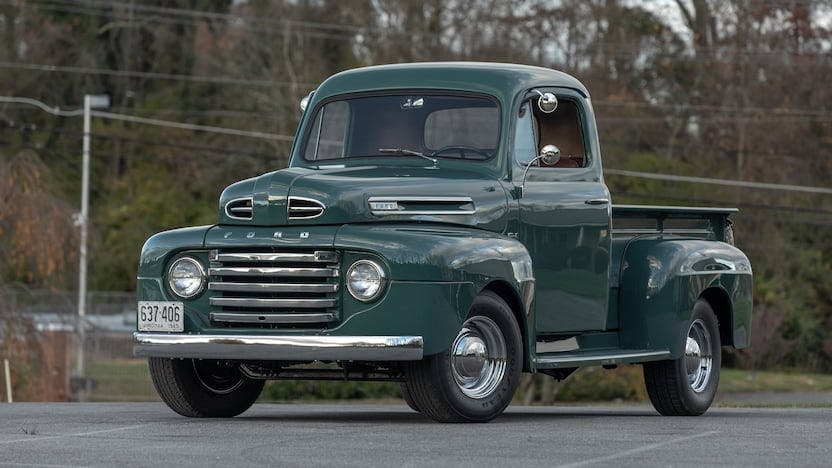
1949 Ford F1 pickup
Mecum

Median condition #2 change: -32%

These pickups were showroom rivals to GM’s Advanced Design line. They were also Ford’s first all-new postwar vehicles, as well as the very first F-Series, which has since become the most recognized and best-selling line of pickups out there.

The field of classic trucks, however, is a crowded one. Although these first-gen F-Series effectively doubled in value from 2015 to the early 2020s, they’ve been sliding since the beginning of 2024. The current median #2 value is $31,800 usd/ $43,887 cad, which is lower than it was at the beginning of 2019, before even adjusting for inflation.

1966-83 Fiat 1241983-85 Pininfarina Azzurra

Fiat 124 Sport Spider Pininfarina front three-quarter
Flickr/Gilles Péris y Saborit

Median condition #2 change: +45%

Fiat marketed attractive convertible models in the U.S. and Canada starting in the 1950s. They were typically lower-priced but less lively than the alternatives from Alfa Romeo. This trend continued into the 1960s with the 124 Spider, introduced in 1966. The handsome, Pininfarina-styled convertible started with a 1.5-liter twin-cam engine but displacement changed over the years, even if the basic styling and layout of the car didn’t. After Fiat left the U.S. market (for the first time) in ’83, Pininfarina picked up the mantle and sold the same basic car as the “Pininfarina Azzurra” for another few years. For decades, these svelte Fiats and Pininfarinas were one of the cheapest ways into motoring dolce vita, but prices have definitely gone up, especially this year.

This is less a story of big-dollar gains than it is one of percentages. In excellent condition, most Fiat-badged versions can be had in the low-$20K usd/ $27,600 cad range. The Pininfarina versions are rarer, supposedly better built, and have a more premium badge, but they still sit at $33K usd/ $45,540 cad in excellent condition. Few classic Italian drop-tops can be had for so little.

1951-57 Hudson Hornet

Median condition #2 change: -30%

Hornets are neat cars. They rode on Hudson’s unique “step-down” chassis that gave it a lower, sleeker profile and driving position than other American cars of their day, and despite the early models’ six-cylinder engines, Hornets regularly bested more powerful competition in early ’50s NASCAR racing.

But Hudson also became a defunct brand before many car enthusiasts were even born. Even with some star power as “Doc Hudson” in the Pixar movie Cars, the Hornet doesn’t have the staying power and wider cultural relevance as something like a Tri-Five Chevy, ’57 Thunderbird, or ’59 Cadillac. Hornet prices grew a bit during the early 2020s along with just about every other classic car, but have been falling since last year. The current median #2 value of $32,300 usd/ $44,577 cad is roughly the same as it was three years ago in pure dollar terms. Adjusted for inflation, though, the value is about where it was in 2013.

1985-91 Honda CRX

1991 honda crx si teal
Mecum

Median condition #2 change: +50%

Honda’s famous two-seater hatchback, the CRX, brought cheap and cheerful fun to enthusiasts across North America and became an icon of tuner culture. These little cars are definitely still cheerful, but they’re not so cheap anymore, as the supply of clean, unmodified, low-mileage examples has dwindled in front of higher demand.

Indeed, the CRX has made several of these “winner” lists from the Hagerty Price Guide in recent years, and since the beginning of 2020 the median condition #2 value is up by a whopping 168%. The desire for these pocket rockets is so strong that one of the 1988-91 cars in excellent shape is currently worth $45,500 usd/ $62,100 cad. That much money will almost buy you a brand new Civic Type R, which comes with exactly triple the horsepower as well as a warranty, but doesn’t come with the same old-school charm.

1984-91 Jeep Grand Wagoneer

Median condition #2 change: -28%

On the new car market, the love for pricey, premium luxury 4x4s in North America is as strong as ever. The roots of our affection for luxury SUVs go back a lot further, though, and Jeep’s 1984-91 Grand Wagoneer was the weapon of choice in the affluent suburbs and vacation towns of yuppie-era America.

Nostalgia for those woodgrain-clad boxes helped pull prices up in the late 2010s and values exploded during the early 2020s. In the gotta-have-it, pay-whatever-it-costs craziness of 2022, we even asked if a $154K usd/ $212.5 K cad Grand Wagoneer sale was “peak market insanity.” Yep, turns out it was. Sale prices have definitely come back down to earth since. The median #2 value for Grand Wagoneers at the end of 2025 is $45,900 usd/ $63,350 cad . At first glance that looks a lot higher than the $36,600 usd/ $49,680 cadit was at the beginning of 2020, but when you adjust for inflation the two numbers are within a hundred bucks of each other.

1979-1992 Mercedes-Benz G-Class (W460)

Mercedes-Benz

Median condition #2 change: +68%

Like the Grand Wagoneer in the ’80s, the Mercedes G-Wagens mostly serve as bougie-mobiles that don’t see anything rougher than a gravel driveway, but the earliest versions (aka the W460) were rugged and relatively simple off-roaders, sort of like a German Land Rover. Mercedes-Benz didn’t market the W460 in America, as we identified the three-pointed star with luxury and high-performance, whereas this was a spartan runabout with underpowered four-, five-, and six-cylinder gas or diesel engines. W460s are therefore pretty rare here.

Several huge sales over the past 12 months have been impossible to ignore, however, and it appears the W460 is gaining a big following. Current values vary widely depending on body style, engine, and model year. Certain hardtop wagon models can be had for under $40K usd/ $55.2 cad (exchange rate at time of posting) in excellent condition, while certain convertibles are nearly 90 grand. For the Silo, Andrew Newton.
Great Tips For Winter Storing Your Classic

The trees are almost bare and the evening arrives sooner each day. We all know what that means: It’s time to tuck away our classics into storage.

Just when you thought you’d heard every suggestion and clever tip for properly storing your classic automobile, along comes another recommendation—or two, or three or twelve 😉

As you can imagine, I’ve heard plenty of ideas and advice about winter storage over the years. Some of those annual recommendations are repeated here. And some have been amended—for example, the fragrance of dryer sheets is way more pleasing to noses than the stench of moth balls, and the fresh smell actually does a superior job of repelling mice.

Wash and wax

ferrari 458 wax
Sabrina Hyde

It may seem fruitless to wash the car when it is about to be put away for months, but it is an easy step that shouldn’t be overlooked. Water stains or bird droppings left on the car can permanently damage the paint. Make sure to clean the wheels and undersides of the fenders to get rid of mud, grease and tar. For added protection, give the car a coat of wax and treat any interior leather with a good conditioner.

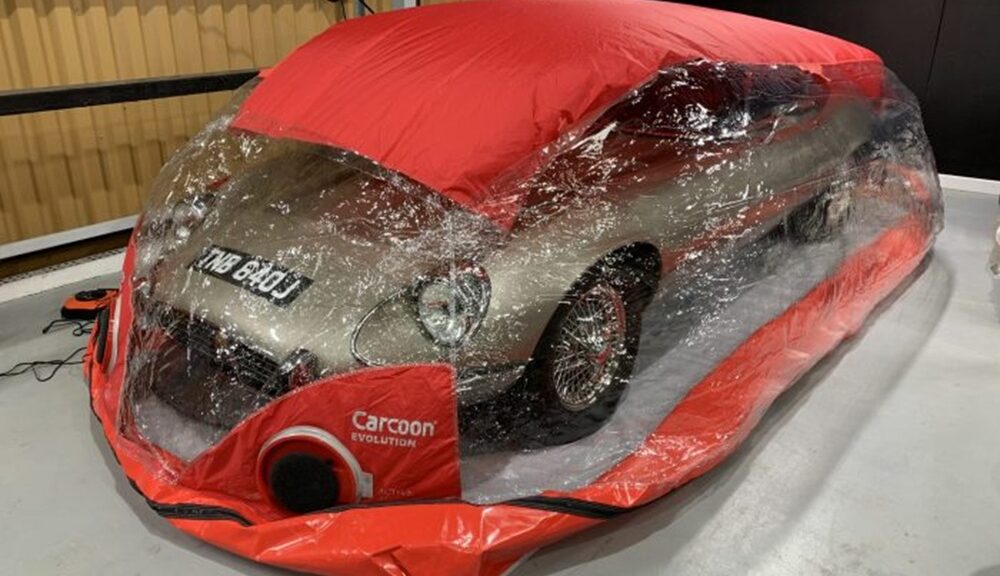
Car cover

Viper car cover
Don Rutt

Even if your classic is stored in a garage in semi-stable temperatures and protected from the elements, a car cover will keep any spills or dust off of the paint. It can also protect from scratches while moving objects around the parked car.

Oil change

Checking oil 1960 plymouth fury
Sabrina Hyde

If you will be storing the vehicle for longer than 30 days, consider getting the oil changed. Used engine oil has contaminants that could damage the engine or lead to sludge buildup. (And if your transmission fluid is due for a change, do it now too. When spring rolls around, you’ll be happy you did.)

Fuel tank

camaro red fill up gas
Sabrina Hyde

Before any extended storage period, remember to fill the gas tank to prevent moisture from accumulating inside the fuel tank and to keep the seals from drying out. You should also pour in fuel stabilizer to prevent buildup and protect the engine from gum, varnish, and rust. This is especially critical in modern gasoline blended with ethanol, which gums up more easily. The fuel stabilizer will prevent the gas from deteriorating for up to 12 months.

Radiator

This is another area where fresh fluids will help prevent contaminants from slowly wearing down engine parts. If it’s time to flush the radiator fluid, doing it before winter storage is a good idea. Whether or not you put in new antifreeze, check your freezing point with a hydrometer or test strips to make sure you’re good for the lowest of winter temperatures.

Battery

car battery
Optima

An unattended battery will slowly lose its charge and eventually go bad, resulting in having to purchase a new battery in the spring. The easiest, low-tech solution is to disconnect the battery cables—the negative (ground) first, then the positive. You’ll likely lose any stereo presets, time, and other settings. If you want to keep those settings and ensure that your battery starts the moment you return, purchase a trickle charger. This device hooks up to your car battery on one end, then plugs into a wall outlet on the other and delivers just enough electrical power to keep the battery topped up. Warning: Do not use a trickle charger if you’re storing your car off property. In rare cases they’ve been known to spark a fire.

Parking brake

For general driving use it is a good idea to use the parking brake, but don’t do it when you leave a car in storage long term; if the brake pads make contact with the rotors for an extended period of time, they could fuse together. Instead of risking your emergency brake, purchase a tire chock or two to prevent the car from moving.

Tire care

Ferrari tire care
Sabrina Hyde

If a vehicle is left stationary for too long, the tires could develop flat spots from the weight of the vehicle pressing down on the tires’ treads. This occurs at a faster rate in colder temperatures, especially with high-performance or low-profile tires, and in severe cases a flat spot becomes a permanent part of the tire, causing a need for replacement. If your car will be in storage for more than 30 days, consider taking off the wheels and placing the car on jack stands at all four corners. With that said, some argue that this procedure isn’t good for the suspension, and there’s always this consideration: If there’s a fire, you have no way to save your car.

If you don’t want to go through the hassle of jack stands, overinflate your tires slightly (2–5 pounds) to account for any air loss while it hibernates, and make sure the tires are on plywood, not in direct contact with the floor.

Repel rodents

buick in the barn
Gabe Augustine

A solid garage will keep your car dry and relatively warm, conditions that can also attract unwanted rodents during the cold winter months. There are plenty of places in your car for critters to hide and even more things for them to destroy. Prevent them from entering your car by covering any gaps where a mouse could enter, such as the exhaust pipe or an air intake; steel wool works well for this. Next, spread scented dryer sheets or Irish Spring soap shavings inside the car and moth balls around the perimeter of the vehicle. For a more proactive approach and if you’re the killing type, you can also lay down a few mouse traps (although you’ll need to check them regularly for casualties).

Maintain insurance

In order to save money, you might be tempted to cancel your auto insurance when your vehicle is in storage. Bad idea. If you remove coverage completely, you’ll be on your own if there’s a fire, the weight of snow collapses the roof, or your car is stolen. If you have classic car insurance, the policy covers a full year and takes winter storage into account in your annual premium.

  • “An ex-Ferrari race mechanic (Le Mans three times) recommends adding half a cup of automatic transmission fluid to the fuel tank before topping up, and then running the engine for 10 minutes. This applies ONLY to carburetor cars. The oil coats the fuel tank, lines and carb bowls and helps avoid corrosion. It will easily burn off when you restart the car.”
  • A warning regarding car covers: “The only time I covered was years ago when stored in the shop side of my machine shed. No heat that year and the condensation from the concrete caused rust on my bumpers where the cover was tight. The next year I had it in the dirt floor shed and the mice used the cover ties as rope ladders to get in.”
  • “I use the right amount of Camguard in the oil to protect the engine from rust. It’s good stuff.”
  • Your car’s biggest villain is rust, that’s why I clean the car inside and out, and wax it prior to putting it in storage. For extra protection, I generously wax the bumpers and other chrome surfaces, but I do not buff out the wax. Mildew can form on the interior; to prevent this I treat the vinyl, plastic, and rubber surfaces with a product such as Armor All.
  • “Ideally, your car should be stored in a clean, dry garage. I prepare the floor of the storage area by laying down a layer of plastic drop cloth, followed by cardboard. The plastic drop cloth and cardboard act as a barrier to keep the moisture that is in the ground from seeping through the cement floor and attacking the underside of my car.”
  • “Fog out the engine. I do this once the car is parked where it is to be stored for the winter, and while it is still warm from its trip. Remove the air cleaner and spray engine fogging oil into the carburetor with the engine running at a high idle. Once I see smoke coming out of the exhaust, I shut off the engine and replace the air cleaner. Fogging out the engine coats many of the internal engine surfaces, as well as the inside of the exhaust with a coating of oil designed to prevent rust formation.”

Relax, rest, and be patient

Ford Model a roadster in garage
Gabe Augustine

For those of us who live in cold weather provinces or states, there’s actually a great sense of relief when you finally complete your winter prep and all of your summer toys are safely put to bed before the snow flies. Relax; you’ve properly protected your classic. It won’t be long before the snow is waist-high and you’re longing for summer—and that long wait may be the most difficult part of the entire storage process. Practice patience and find something auto-related to capture your attention and bide your time. You’ll be cruising again before you know it. (Keep telling yourself that, anyway.) For the Silo, Rob Siegel/Hagerty.

These Fun, Affordable 21st-Century Cars Aren’t Classics…Yet


Every so often, I engage in a particularly futile and depressing ritual—I shop for cars that I’ve foolishly let go. They’re cars that could have been feasible 10 years ago, but not today. I’ve been priced out of the market for virtually all of them. And while the market might be settling down at the moment, there are few signs of an out-and-out retreat to pre-pandemic pricing. Among cars from the 1970s through the early 1990s, there are precious few bargains. But go a little bit newer, where there’s even some depreciation yet to be done, and the picture gets more enticing. I’m talking cars from the 2000s to 2010s that are getting older, but still aren’t considered any kind of “classic” or “collectible” yet. Here are some highlights.

Fiat 500 Abarth

Fiat

The 500 Abarth is the closest thing to a real hot hatch that Fiat has ever offered in the U.S., a market that is sadly short on real hot hatches. There were more interesting varieties of the Punto and Ritmo, but those were Euro-only cars that frankly weren’t very good compared to competition from Renault, Peugeot, VW, and Ford. As for the 500 Abarth, although it first arrived here in the early 2010s, the 160-hp pocket rocket feels more like a 1990s hot hatch. It’s crude, the ride is choppy, and a 10 year-old Fiat probably wears more like a 20 year-old VW. But it’s loud, analog-feeling, and fun. Most importantly, it’s cheap. Around $8000usd to $10,000usd/ $11,000cad to $13,700cad buys one with under 50,000 miles/ 80,467kms. That’s tons of fun per us or canadian dollar in a package that offers an old school driving experience in something that’s new enough to have most contemporary features and conveniences.

MazdaSpeed3

2010 mazdaspeed3
Mazda/Guy Spangenberg

Back in the days of the Zoom Zoom tagline, Mazda fielded the incredibly entertaining MazdaSpeed3. Offered from 2007-13, it’s a four-door hatch with 263 hp and 280 lb. ft. of torque. It’s exactly the kind of car enthusiasts and auto journalists beg manufacturers for, but rarely head to a dealership and actually buy.  Everyone who tested a Speed3 back in the day found the car fun, especially those of us who were entertained by the torque-steer. Car and Driver wasn’t, comparing driving the car to a game of tug-of-war. But, affordability and perfection don’t often go hand-in-hand, so for $10,000usd to $12,000usd/ $13,700cad tp $16,400cad at current prices you could do far worse than the powerful and practical Speed3.

C5 Corvette

C5 Corvette Front Country Road Action
Josh Sweeney

If hot hatches aren’t your jam, there’s always the bargain Corvette of the moment, the 1997-2004 C5. While some variants, most notably the Z06, sailed beyond true affordability in the last several years, a base manual C5 with somewhere between 75,000 and 100,000 miles/ 120,000km and 160,934km can still be had in the $13,000usd to $15,000usd range/ $17,760cad – $20,490cad. That’s a huge bargain for what was an utterly clean sheet design, one of the few in Corvette history, and more performance than almost anything in this price point. Interiors are standard 2000s GM, but livable. And the styling, over a quarter-century after it was introduced, is aging quite nicely.

2003-08 BMW Z4

2006 bmw z4 roadster front
BMW

The 2003-08 Z4 is a bit like the C5 Corvette in that it wasn’t universally loved when new, but is aging well. Available in 2.5- and 3.0-liter six-cylinder forms, the Z4 was larger and more practical than its predecessor, the Z3. Its odd surface detailing and Kamm-tail also look better now than they did 20 years ago. The Z4’s list of maladies is well-known at this point—the VANOS variable valve-timing system can give trouble (it’s often the solenoids), as can the cooling system. These are pricy repairs, but with nice cars available in the $9000usd to $12,000usd/ $12,300cad to $16,400cad range, if you budget $2000usd-$3000usd/ $2,730cad-$4,100cad to sort things out, these can still be a compelling deal in semi-modern convertible German sports car.

2012 Mercedes-Benz SLS AMG CoupePalm Coast, Florida

2005-2014 Ford Mustang

2005 mustang convertible skyline beach
Ford Motor Company

You could argue that the 2005 Mustang was the first one to really look like a Mustang since maybe 1973. The brilliant Sid Ramnarace-designed S197 Mustang managed to look the part without being foolishly retro, a hard balance to achieve. Special editions, and certainly the Shelby versions of the S197 are not cheap, but a lightly optioned V-8 coupe or convertible is still one of the best cheap V-8 pony cars out there. Being a Mustang, there are always plenty on the market to choose from at any given time, and a decent manual transmission car can be had in the $12,000usd to $14,000usd/ $16,300cad to $19,130cad range.  For the Silo, Rob Sass/Hagerty.

Featured image: Mazda/Guy Spangenberg