Black Friday and Cyber Monday are a cultural phenom. One that American and (in the past few years) hard-boiled Canadian consumers look forward to each year. We brave the crowds, set out a savings mission plan and shop like a thrifty gladiator entering the battle arena of value.
WHEN IT COMES TO BLACK FRIDAY/CYBER MONDAY…
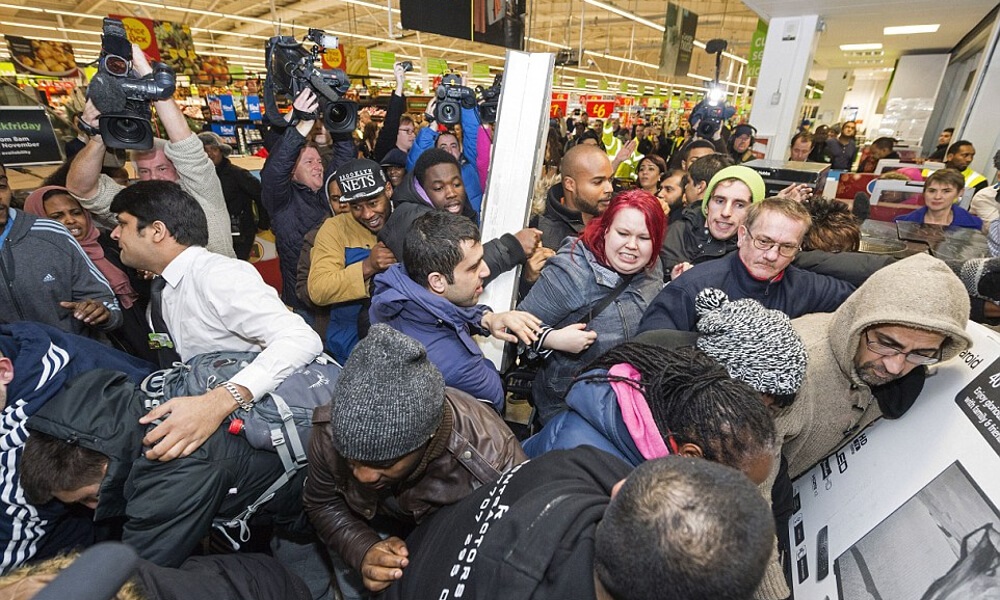
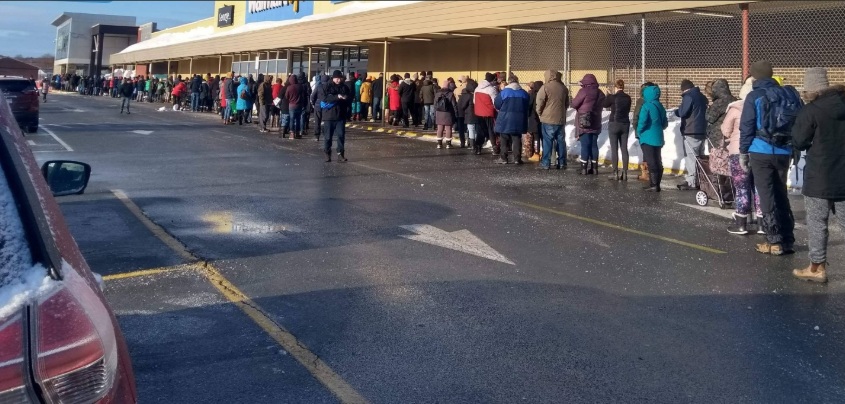
While images of people camped out in Walmart parking lots regularly dominates the Black Friday news cycle (as well as trampling and fights), we wanted to find out how people really intend to spend these consumer holidays-and more importantly, how much they intend to spend. We also looked at Holiday Gift searches from the last few years on our sister site-interestingly, there’s apparently a big market for discontinued perfumes.
SOME INTERESTING FACTS FROM THE STUDY
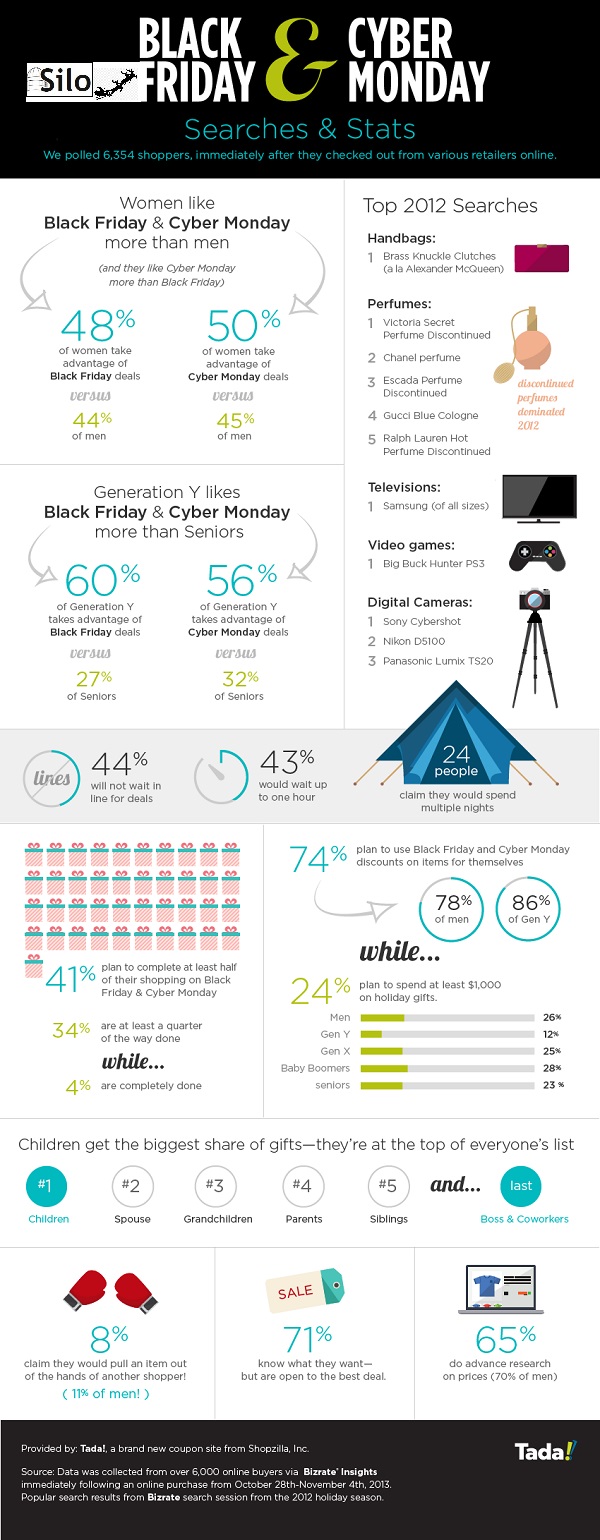
* Men are much more open to violence on Black Friday/ Cyber Monday: One out of 10 guys (11%) would pull something out of the hands of another shopper.
* 86% of Generation Y intends to use Black Friday and Cyber Monday discounts on items for themselves.
* Men are the most generous: 26% of guys plan to spend at least $1,000 usd/ $1,410 cad (exchange at time of article) on holiday gifts.
* Very few people are procrastinating: While 4% claim they’re already finished with their holiday shopping, 41% intends to complete it on Black Friday/Cyber Monday.
* 43% will wait up to an hour on Black Friday; 24 people said they’d willingly camp out for MULTIPLE NIGHTS.
* Bosses and co-workers are at the bottom of everyone’s shopping list: Children, understandably rule (followed by spouses/significant others).
The following info-graphic is based on responses from 6,354 online shoppers who were surveyed last year immediately after checking out. Odds are things haven’t changed much this year. Here’s more from our friends at Tada (or Pollpay depending on your region), they are awesomely obsessed with reporting on all the things that online shoppers value. For the Silo, shopzilla.com/Jarrod Barker.
Supplemental-
What were shoppers interested in 13 years ago? Take a look at this data chart from 2012.
Is it time for an open talk with your parents? Read on…..
Most of us have a specific preference when it comes to sexual arousal and being turned on. As long as it’s safe, sane, and consensual, hey… you do you! But, as we become more open about sexuality and the diverse ways people experience pleasure, it’s natural to start wondering if your preferences and sexual needs are something that is passed down like fear, eye colour or hair type. You might not want to hear it, but your parents are responsible for the way you see and have sex. Well, at least partly. And it seems like there is so much more that comes into play than the dreaded sex talk we all had at one point or another.
There is science behind it, and our friends at LELO are here to explain it.
Turn-ons, kinks, and fetishes – what’s the difference? Before diving into the possibly interesting family discussion, let’s quickly get our definitions straight: ● A turn-on is something that excites you sexually. It could be anything from a cologne scent to a dirty text. ● A kink is a non-conventional sexual interest, like bondage or role play. ● A fetish, however, is typically a more intense and specific need. Often, it’s a need for an object, body part (like feet), or material (like latex), without which arousal is difficult or even impossible.
In short, all fetishes are kinks, but not all kinks are fetishes.
How do fetishes develop over time? You may wonder where fetishes actually come from. A study published in the Journal of Personality highlights that personality traits, like openness to experience, neuroticism, and extraversion, are partially heritable. Since personality plays a huge role in how we approach sex, it’s not a stretch to imagine that certain people might be more genetically inclined to develop unconventional sexual interests. But here’s the kicker: fetishes are rarely the product of one factor. They’re more like a mix of factors, like:
● Biology: Brain chemistry, hormone sensitivity, and neural wiring contribute. ● Psychology: Your experiences and formative moments matter. ● Environment: What you’re exposed to, media, culture, and family attitudes, can all influence sexual development. For example, researcher Samuel Hughes at the University of California identified five stages of fetish development, from childhood exposure to community belonging and sexual practice: ● Childhood: This is when a kink or fetish has been encountered before the age of 10, very often before the concept of a kink or fetish has been realised and before said kink or fetish causes sexual arousal. ● Self-exploration: Between the ages of five and 14, one might seek out certain kinds of erotica whilst learning about their bodies and what they like. ● Introspection: Between the ages of 11 and 14, one realises that they have particular interests and can evaluate how they impact their lives, positively or negatively. ● Community: This phase is about realising that others share the same kinks and fetishes as you, and it happens after age 11. This community is often discovered via the Internet and at events, groups, or conferences after the age of 18. This sense of community usually gives the person a feeling of belonging and allows them to see their kink or fetish in a positive light. ● Outside exploration: This is when a person actively participates and engages in their kink or fetish. This is often being with another person and practicing their preferences.
Are fetishes hereditary? Here’s where things get interesting. Science hasn’t landed on a definitive “yes” or “no” when it comes to whether fetishes are hereditary. At least, not yet. But there are clues suggesting that at least some aspects of our sexual preferences might have biological roots. If you were raised in an environment where certain materials or aesthetics were normalized or eroticized, either openly or subtly, your brain might wire arousal around them. Even pre-conscious experiences can shape sexual arousal pathways. This helps explain why someone might associate arousal with very specific, seemingly random things, like rubber gloves or the sound of heels on tile.
The psychological terrain you grow up in and your unique biology can set the stage. If your parents are open-minded and you’re genuinely curious about family sexual history for the sake of understanding yourself better, having an honest, light-hearted conversation could be enlightening (and oddly bonding).
Asking questions like “Do you think our family tends to be more sexually open?” or “Have you noticed any patterns around desire or relationships in our family?” can be a healthy start. So, the conclusion is no, fetishes aren’t directly passed down like grandma’s porcelain collection. The way we feel about sex is not written in our DNA. What you like in the bedroom and what things about other people turn you on are not ingrained in your brain, nor do they come from your astrology chart.
All those things are learned the same way you learned to speak and walk. We don’t have proof that fetishes are inherited in the way eye colour is, but traits that influence fetishes (like personality and openness) may be. And since sexual preferences are shaped by a mix of biology, experience, and culture, they might feel hereditary even if they aren’t technically passed through genes. At the end of the day, you are unique, just as your kinks and fetishes, so enjoy and celebrate them. The possibilities are endless.
LELO is not just a sex toy brand; it’s a self-care movement aimed at those who know that satisfaction transcends gender, sexual orientation, race, and age. We’re offering the experience of ecstasy without shame, the pleasure of discovering all the wonders of one’s body, thus facilitating our customers with confidence, that leads to a fulfilled intimate life. LELOi AB is the Swedish company behind LELO, where offices extend from Stockholm to San Jose, from Sydney to Shanghai.
Porsche is well known for a love of details and colours. And if the normal option list just isn’t enough, the experts from Porsche Exclusive Manufaktur, Porsche Classic and our Sonderwunsch programme are happy to help.
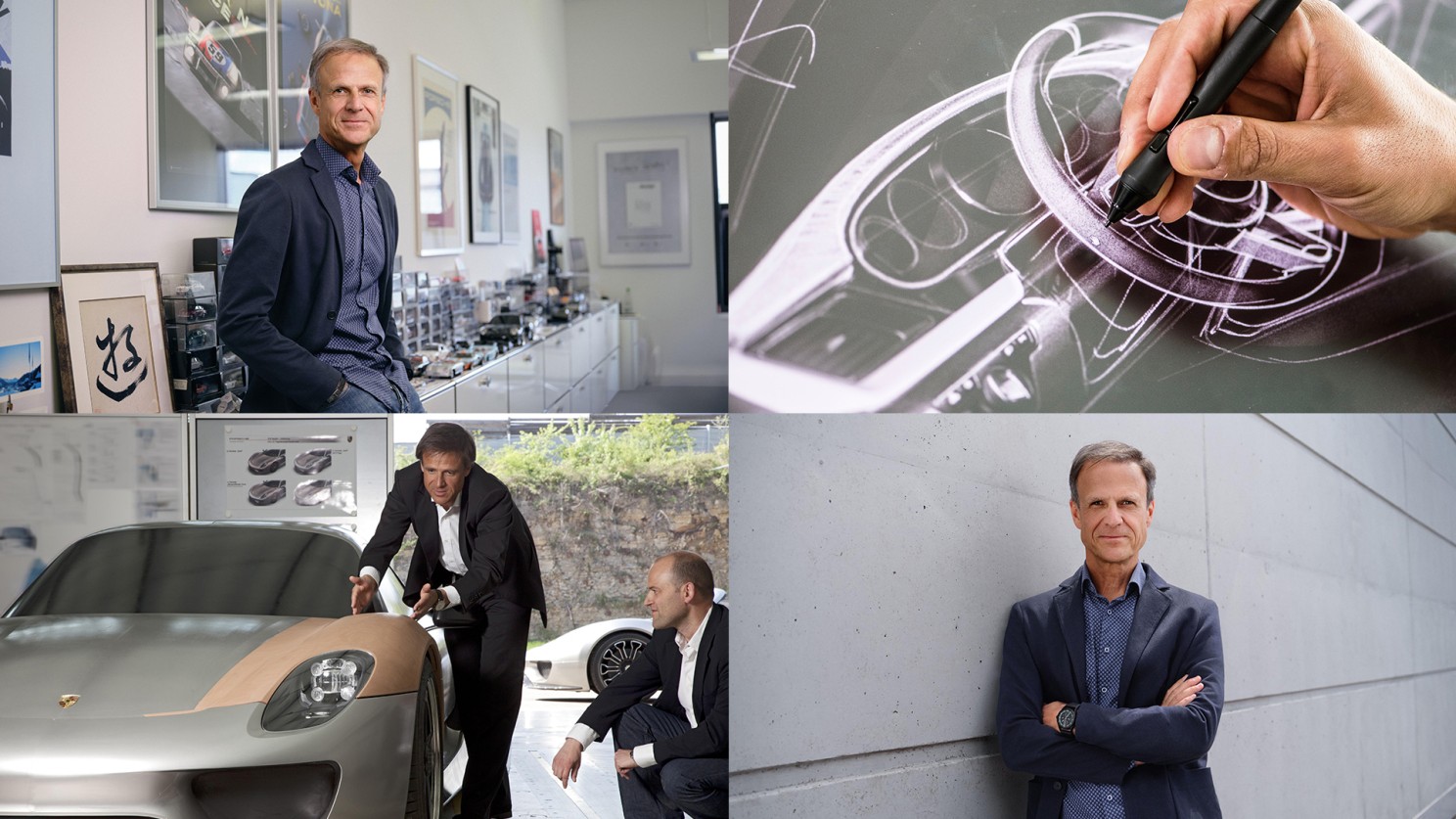
In this article we will cast the light on some of the recent special editions and look at the illustrious career of Michael Mauer, Vice President Style Porsche, who celebrated his 20th anniversary with the brand.
As if that wasn’t enough, two extraordinary events took place recently.
While the Formula Student Germany brought together top students and motorsport enthusiasts, Porsche once again attended the Gamescom in Cologne, the world’s biggest trade fair for computer games.
Something extraordinary does not just happen somehow, somewhere. It happens at a very particular place. Hand-crafted. With experience. With passion. And through the inspiration of customers. Experts in their profession pass on these ideas and the personality of the buyers to the vehicle – and thus make a Porsche your Porsche.
What starts with special paint colours and a stylish leather interior can be topped with one-off cars from the Sonderwunsch department. Here, the highest level of customisation has been offered for more than 70 years. There are technically no boundaries other than the specific budget and the existing rules and regulations to get road approval for the vehicle in the country of the respective buyer.
The Porsche Exclusive Manufaktur is also responsible for special edition models that are either offered worldwide like the new 911 Turbo 50 Years** or only for a specific market like the Taycan Turbo K-Edition***.
Let’s have a look at some of the recent special editions.
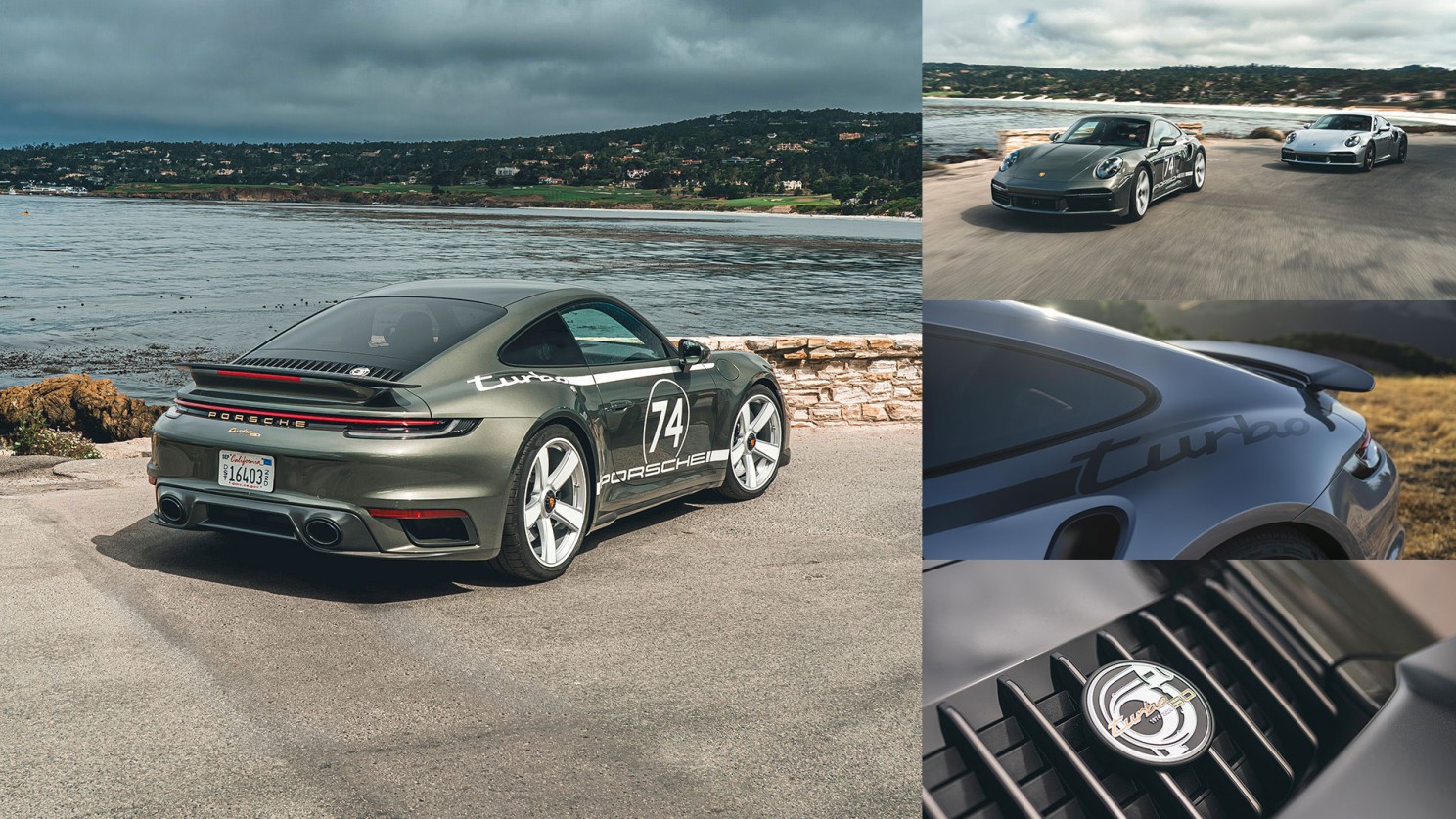
During the recent Monterey Car Week in California, Porsche celebrated the debut of the new 911 Turbo 50 Years** edition to mark the 50th anniversary of our top-of-the-line sports car.
Paying tribute and reinterpreting the Turbo heritage
The 911 Turbo 50 Years** anniversary model is based on the 911 Turbo S**** introduced in 2019. It pays a special tribute to and reinterprets this heritage:
Limited 911 Turbo 50 Years** edition to just 1,974 units worldwide in honour of the year in which the first 911 Turbo made its debut.
When it was introduced in 1974, the Type 930 Porsche 911 Turbo shifted the boundaries of what was possible. It brought the benchmark turbo technology from the 917/10 and 917/30 racing cars into a production sports car with superior performance and combined it with a unique design and unprecedented day-to-day usability.
Combining outstanding performance and the finest materials with exclusive design elements, the 911 Turbo 50 Years edition is available with an optional Heritage Design package. Those who prefer a minimalistic look can dispense with some or all of the graphic elements on the outside.
The standard side vinyl graphics are a nod to the historic livery of the Porsche 911 RSR Turbo presented at the Frankfurt Motor Show in 1973, itself a forerunner of the 911 Turbo*****.
It features the current Porsche Turbo-exclusive colour Turbonite, which makes its first appearance on a 911. Turbonite is also used on inlays in the rear engine cover, the fuel tank cap and in the Porsche crest. It is also being used as a contrasting colour in the Turbo 50 model logo.
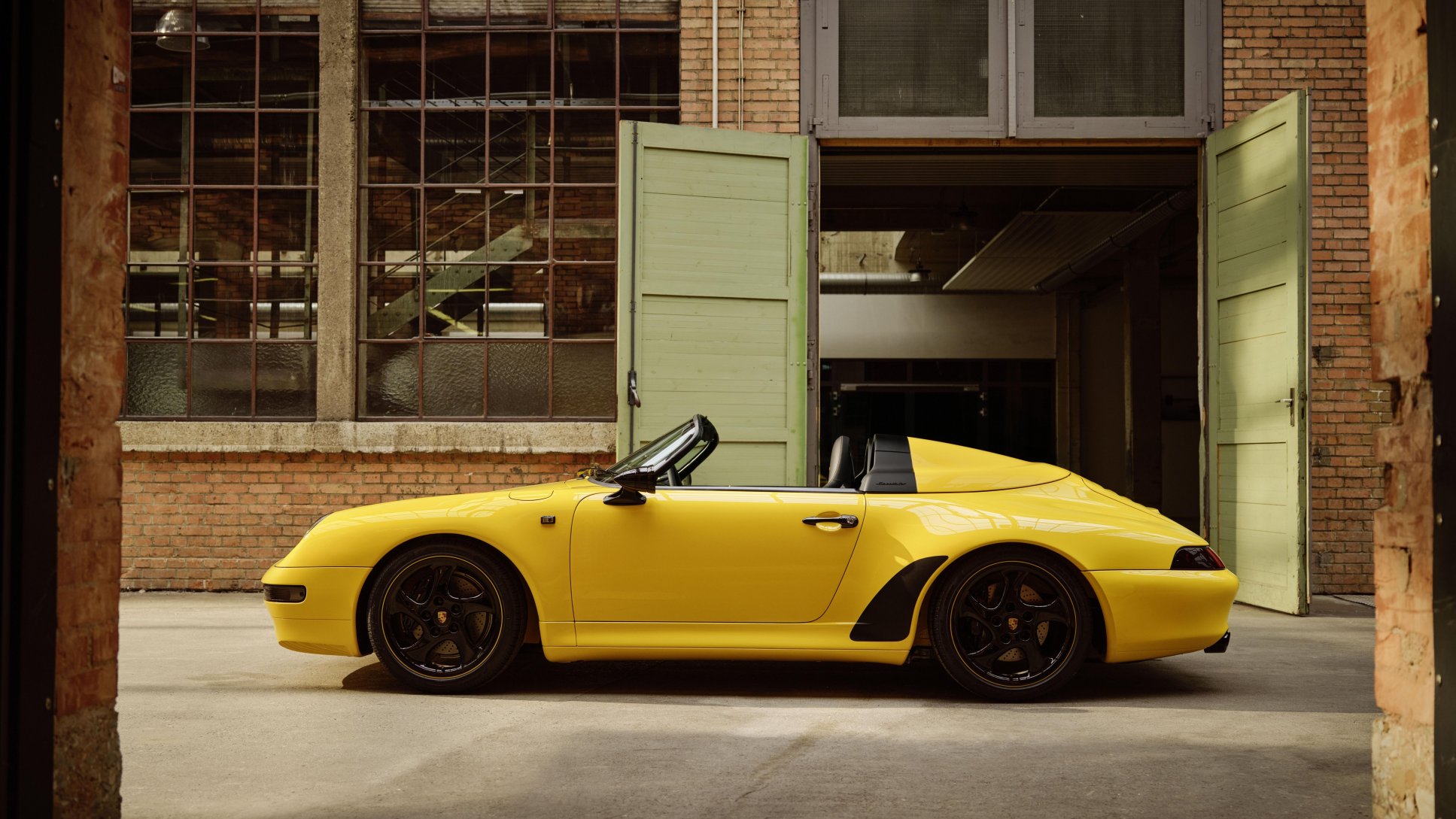
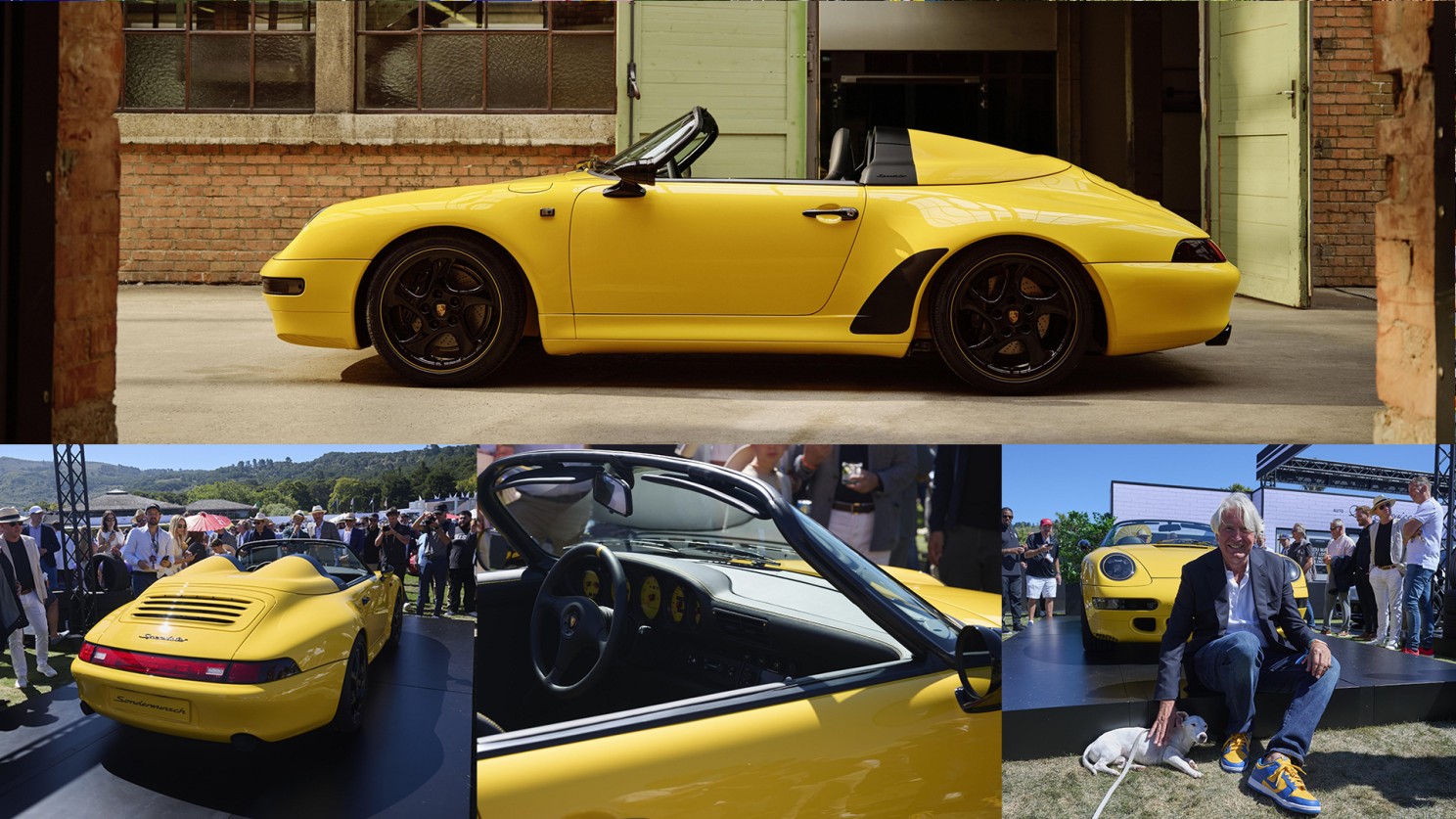
One of the further highlights of this year’s Monterey Car Week was the premiere of a one-off car based entirely on the personal vision of designer and Speedster collector Luca Trazzi.
He made his dream of a 911 Speedster come true via the Sonderwunsch programme.
“In this form, and with this vast range of modifications, the 911 Speedster is our first Factory One-Off for an end customer. This one-off car shows what’s possible with our Sonderwunsch programme – based on a classic Porsche 911 from 1994.” Alexander Fabig, Vice President Individualisation & Classic at Porsche
It took more than three years to create this one-off car based on a 911 Carrera Cabriolet (Type 993) from 1994.
The two-seater with the characteristic rear lid underwent comprehensive technical modifications.
Out of passion, Trazzi designed what this model might look like. He wanted the project to unify the stylistic elements of all previous Speedster models.
Taycan Turbo K-Edition***
Next to special editions, the Sonderwunsch department and Porsche Exclusive are also working together with teams of specific Porsche markets to create unique editions only offered to customers there.
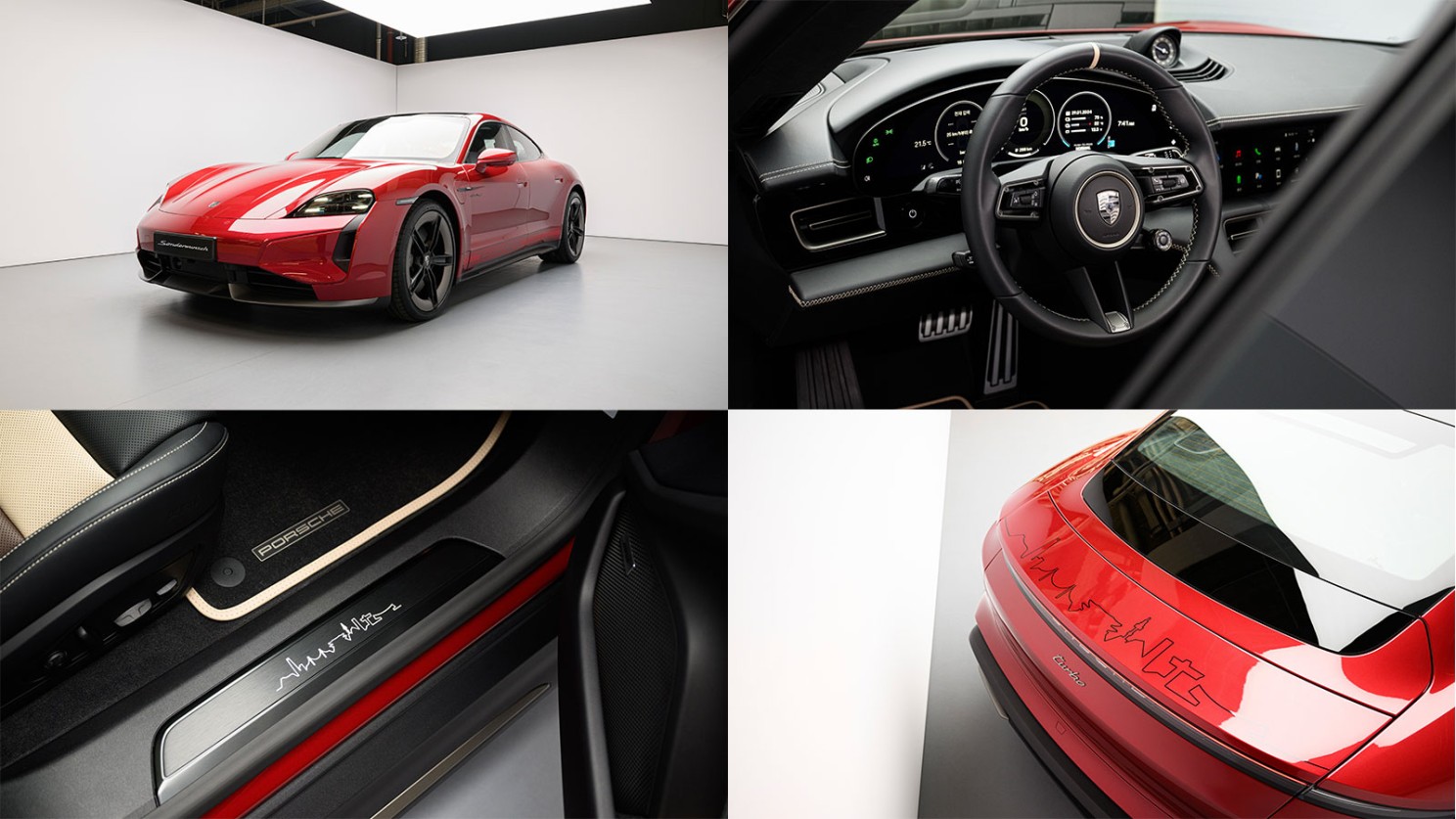
One example is the new Taycan Turbo K-Edition***, which is heavily inspired by Korean culture. It marks the 10th anniversary of 포르쉐코리아 / Porsche Korea and is available in five different exterior paints from the ‘Paint to Sample’ programme.
Designed exclusively for the K-Edition, a unique logo is based on the shape of a historical royal stamp. Within this symbol, the name ‘Taycan’ is written in traditional Korean characters.
The Style Porsche designers have also integrated a racetrack into the abstract representation of the logo and the specialists in the Sonderwunsch team hand-paint this logo in a high-gloss black onto the charging port door on the driver’s side.
Another unique selling point of the K-Edition is a special skyline graphic, created in close collaboration with Porsche Korea. The silhouette combines the characteristics of Korean cities, buildings and landscapes. It is also hand-painted in high-gloss black on the rear spoiler and the key housing.
Elsewhere on the car, the graphic is also milled into the front door entry guards (which are made of brushed black aluminium) and is revealed when the door sills are illuminated.
Inside, the skyline logo is embossed in the lower part of the leather dashboard on the passenger side.
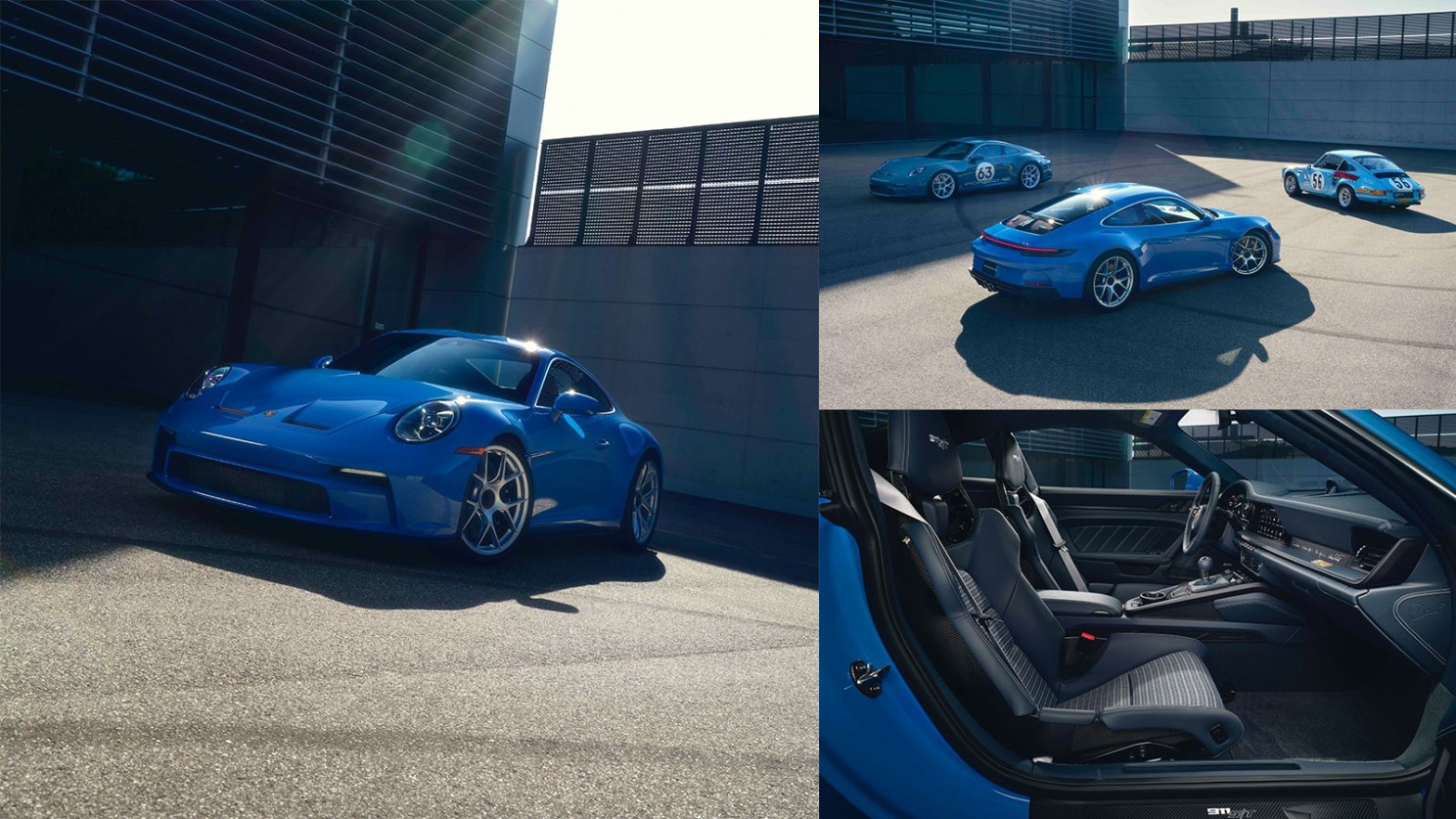
Taycan Turbo K-Edition***911 S/T****** in Dani Blue
Some customers contact their Porsche dealers with special requests. Often, they would like to order a new car in a colour not offered in the current sample. If it is a paint from an earlier Porsche model, many of those can be found via the ‘Paint to Sample’ programme.
But sometimes an owner would like to have his or her personal colour of choice – maybe inspired from jewelry, a model car or just from imagination. This is where the Sonderwunsch team comes in with its ‘Paint to Sample Plus’ programme, as in the case of Porsche enthusiast Jorge Carnicero
As part of the Porsche Sonderwunsch programme, a comprehensively customised 911 S/T in Dani Blue****** has been created.
During the configuration of his 911 S/T, Carnicero asked the colour experts at Porsche to create a special blue that would suit the sporty, puristic character of the limited anniversary model.
The colour concept of the exterior is carried on in the interior, where it strikes a balance between the sporty, puristic S/T look and high-quality individualisation. The most striking feature is the tricoloured pepita pattern on the seat centres.
The sports car collector from the US state of Kentucky named the colour exclusively developed for him after Colour & Trim designer Daniela Milošević.
“Giving the paint my nickname is an overwhelming sign of gratitude for me and my work,” Daniela Milošević, Colour & Trim designer
911 S/T****** in Dani Blue
The hybrid design process at Porsche
With all these special models, did you ever wonder how the vision of a new Porsche actually becomes reality?
Innovative software – from the gaming sector, for instance – supports Style Porsche during the design process. But even in the age of digitalisation, our design department still values the design quality of classic sketches and labour-intensive clay models very highly. Along the path from vision to reality, the designers combine the best of both worlds.
Figure of the month:
20 years: That’s how long Michael Mauer has shaped our design as Vice President Style Porsche.
Continuity is an important aspect of the company philosophy at Porsche. As a luxury brand, Porsche is not about constantly inventing new things, but rather continuously refining things that are already good.
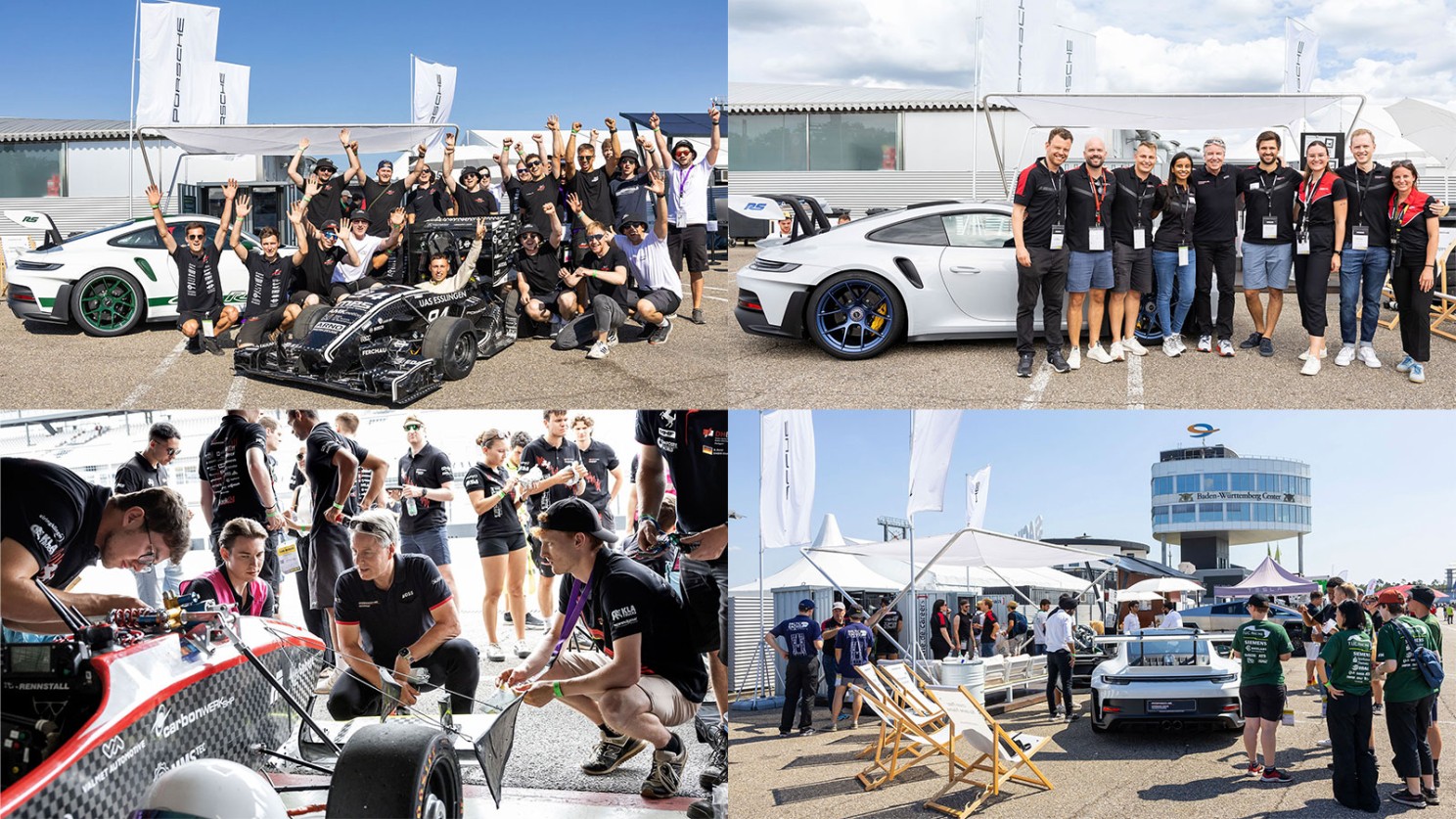
Last month, from 12 to 18 August, the international construction and design competition Formula Student Germany (FSG) took place at the Hockenheimring.
Racing teams from 20 different nations competed against each other. After intense months of preparation, the teams competed in the electric vehicle (EV) class and the so-called Driverless Cup (DC). The best overall package of design and performance as well as financial and sales planning is what counts.
911 GT3 RS*******
Porsche was also on site this year to exchange ideas with the young talents. Employees from some of our specialist departments and recruiting not only cheered on the students, but also advised them on career opportunities at the Porsche Careers stand.
“As Porsche, we have been involved in Formula Student for many years and have access to many talented engineers of tomorrow. The students put a lot of heart and soul into preparing for this competition. We experience an impressive team spirit.” Lena Siegle, Employer Branding
As a special highlight of the cooperation, Porsche invited its sponsored racing teams to the Porsche Experience Centre (PEC) at the Hockenheimring during the competition. A barbecue in a relaxed atmosphere provided the opportunity to talk to the experts from our departments and our recruiters.
“The dialogue with the students was extremely valuable for us. Getting to know their wishes and needs and meeting them at eye level at such events is essential for our work.” Sandra Knittel, Recruiting Young Talents
JOIN THE PORSCHE FAMILY: Interested in joining Porsche for an internship, thesis or dual studies? Find all our current vacancies here: https://porsche.click/NLStudents
Macan Turbo Electric********
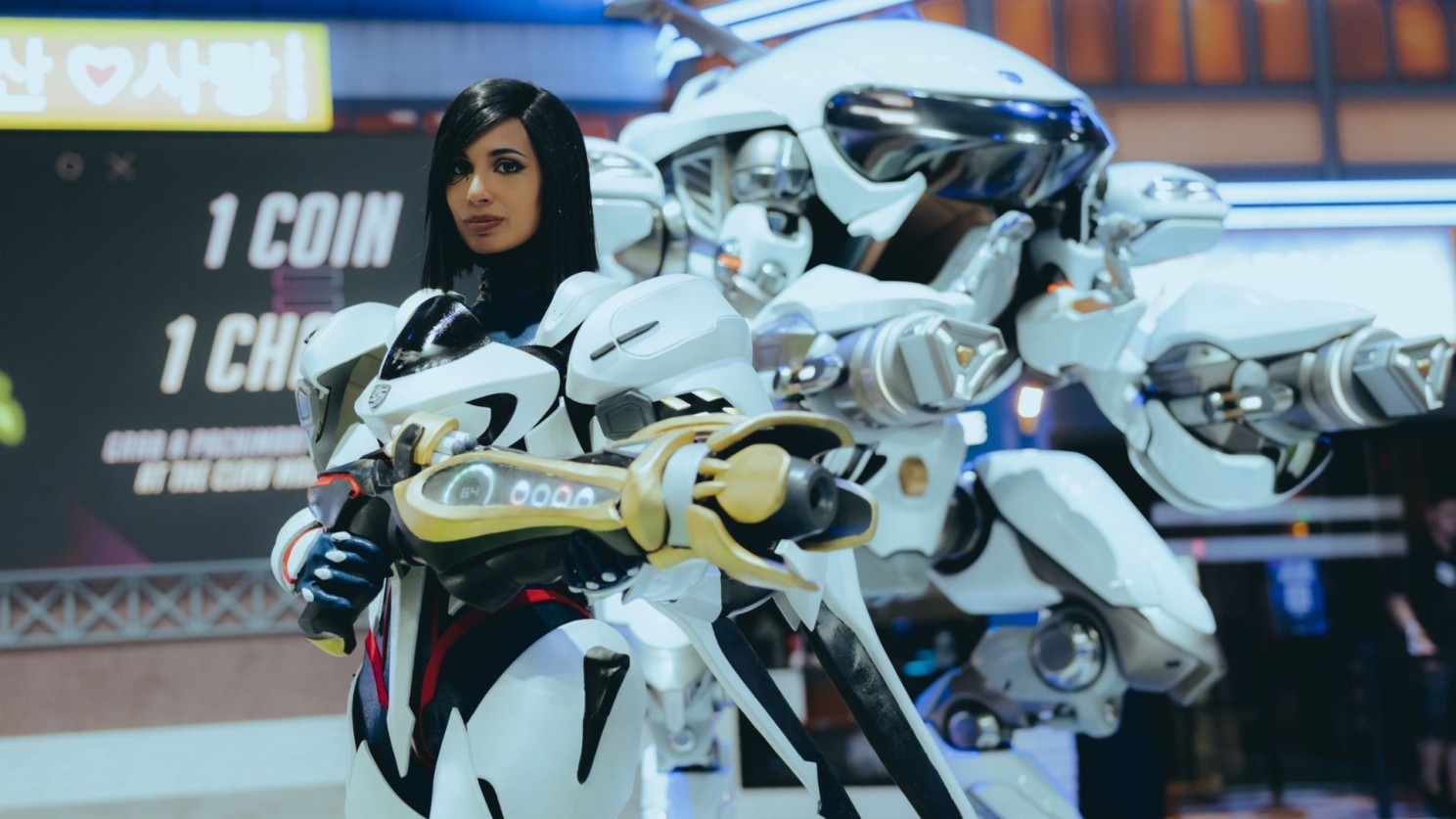
With more than 300,000 visitors, Gamescom once again was the biggest get-together for the worldwide gaming community. For the second time, we were present at the trade fair with our own stand. At our exhibition space in Hall 9.1, visitors could dive into the world of the popular game Overwatch 2®.
“At Gamescom, we have created a special multi-sensory experience of the game with a special Porsche touch for the community to enjoy.” Deniz Keskin, Head of Brand Management & Partnerships
In the spring of 2024, we cooperated with game developer Blizzard Entertainment® for the first time on the successful Overwatch 2®. For the duration of Gamescom, the digital Porsche package was once again available in the game, with players being able to use it to equip the characters D.Va and Pharah with skins inspired by Porsche.
Further, our recruiting colleagues were also present with an additional careers stand on site to advise you about our dual study program, our apprenticeships, as well as other career opportunities.