We’ve passed the mid-way point in the year, and driving season is in full swing. In the classic car market, the first half has been a roller coaster with an optimistic start in January, then a steady softening as we made it through spring. Moving into the second half of the year, and with this week’s newest release of the Hagerty Price Guide, it seems that trend is primed to continue.
That’s not the case with everything, though.
Our friends at Hagerty did watch some vehicles buck the trend and post some meaningful gains in value. Here are just a few of the more newsworthy winners this past quarter (measured by average value increase across all four condition ratings).
Got questions about how they arrived at these changes? You can read more about the methodology behind the Hagerty Price Guide here.
1970-76 Plymouth Duster
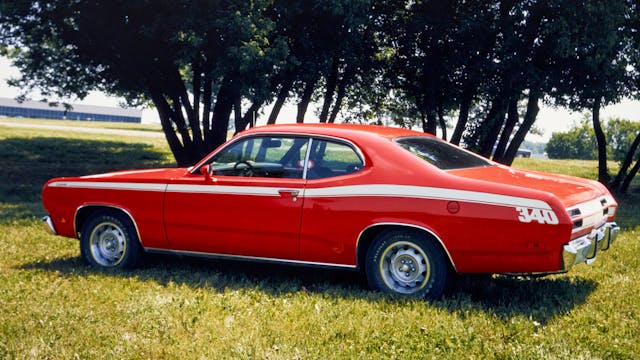
Average increase: +32%
Based on the A-Body along with the Valiant and Dodge Dart, Plymouth’s Duster offered the Mopar faithful a sporty, compact car on a budget. Much like its market competitors (Chevy Nova, Ford Maverick, AMC Hornet), Dusters could be had with everything from a fuel-sipping six-cylinders to fire-breathing V-8s, along with some truly outrageous graphics packages. A Duster 340 making 275hp was king of the hill for this series, eventually being replaced by a more moderately rated Duster 360, choked down by smog regulations and lower compression. Like the Mopars of today, a dizzying number of different packages were available, from the Gold Duster and Space Duster to the efficiency-minded Feather Duster.
This spring, Dusters performed exceptionally well, racking up big gains in public sales, listings and insurance quotes. Standard 318-powered cars can still be had cheaply, and $18,000-$20,000 usd / $24,640 cad- $27,380 cad (via exchange rate at time of posting) will land you a good (#3) condition car. The spicier 340-powered cars will reach into the $30,000 usd- $41,060 cad range, which is still a lot of muscle for the money, but an average increase of 32% is shocking for a 50-plus-year-old car from a brand that’s been dead for nearly 25.
So, what gives? Why the sudden jump?
Well, for one, cheaper cars are still performing well, and even though the majority of muscle cars are softening in value, they’re still inexpensive fun. Our theory, though, is pop culture. Around the time Duster prices started climbing, a new crime series debuted on Max. The name of the show, funny enough, is Duster, and it prominently features a Duster 340. Coincidence? Perhaps, but we’ve seen this phenomenon before. As an honorable mention, the sibling Dodge Dart also experienced a bump, but at a more modest 17% average gain. You can bet that Dusters will be a car to watch for a while, strong sales usually bring more and more quality examples to market, offering further insights into this unexpected jump.
2024 Porsche 911 S/T
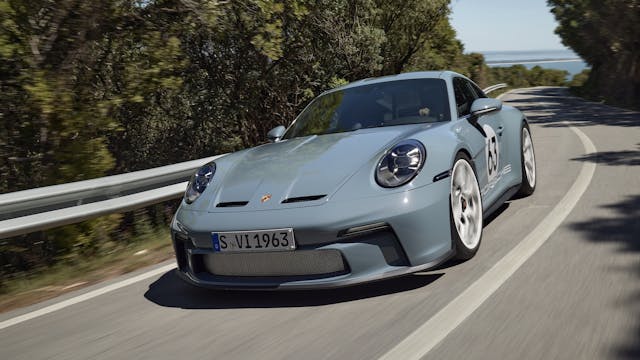
Average increase: +25%
Yes it’s exclusive and yes it’s expensive, so it’s probably easy to tune out and move on, but hear me out. The S/T is not just some badge-engineered 911 that Porsche overcharged for. It’s an obsessively lightened 911 with the high-revving engine out of the GT3, and it’s actually both quicker and lighter than a GT3. It’s more exclusive as well, with just 1960 cars produced worldwide. Not necessarily rare, but you’re gonna have to work to stumble across one. Ultimately, if you’re a Porsche fan with the money, this is a car to have.
Just as impressive as the raw performance is the market performance. The standard MSRP last year was $292,000 usd – $399,689 cad without optional extras, and that’s if you could manage to secure an allocation from your local dealer. The market for these cars is simple supply and demand. Porsche made them just scarce enough that buyers are willing to shell out major money. Public transactions have shown that buyers are willing to pay $700,000 usd- $958,160 cad or more to get their hands on one. The case of the 911 S/T also shows the world that there is still an appetite for cars geared towards hyper-enthusiasts; they want performance-focused cars, and they want them with a manual transmission. More companies should get the hint. While most of us will never afford something like a 911 S/T, or perhaps wouldn’t care to own one if we could, the insane enthusiast response to it may be the wake up call to all manufacturers to start making cars we actually want.
1979-94 Saab 900
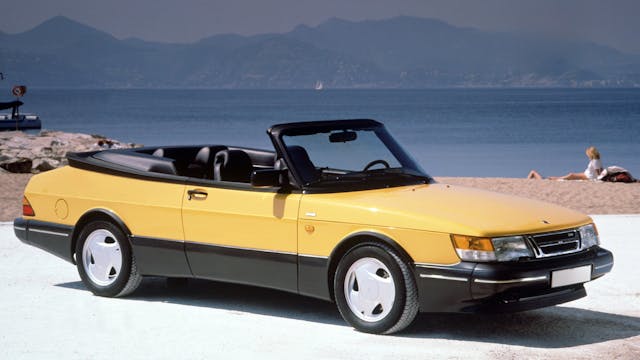
Average increase: +20%
This sweet Swede is one rad ride. I know because I have owned and enjoyed three Saab 900 cars over the years including a beauty 5 speed with moonroof which I regret selling to this day. If Saab does anything well, it’s coming up with something truly unique. This company, which is also well-known for its aeronautical division, does an exceptional job of combining practicality and safety along with a dash of the sportiness of a Saab 37 Viggen fighter jet. This mid-size automobile came in standard commuter trim, but a warmed-over Turbo and SPG version could be had to satiate the hot hatch enthusiasts.
The Saab might be a bit of an oddity or a cult vehicle here in the states, but it does carry strong enthusiast interest. It is really everything that embodies the coolness and nostalgia of the 1980s and 1990s, and they’re generally affordable. Even with the strong percentage increase, a base 900 can be scored for under $10,000 usd- $13,690 cad in good condition, while a Turbo can be picked up in the mid-teens. If you’re after the more taut and sporty SPG, be prepared to shell out around $26,000 usd- $35,590 cad for a decent one. If you’re after a fun and funky car from the ’80s, the 900 is worth a look, and with market activity picking up, more may be coming out of the woodwork. Fortunately they remain relatively affordable, just not as dirt cheap as they used to be.
1978-87 Subaru Brat
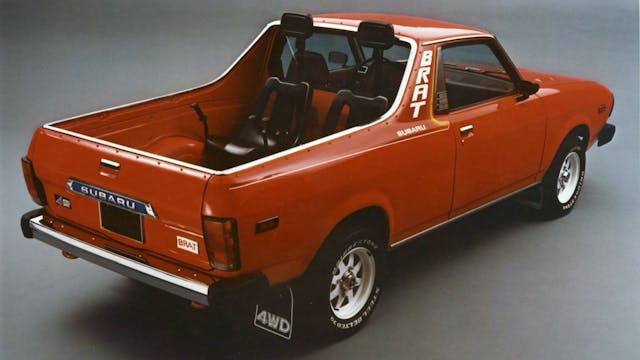
Average increase: +18%
Subaru’s Bi-drive Recreational All-terrain Transporter, or Brat, was one of many small Japanese trucks coming into the US in the 70s and 80s. Except it wasn’t a truck, technically, but we’ll cover that in a minute. Based on a car chassis, much like the Ranchero or El Camino, it was small yet capable, featuring a single-range four-wheel drive system, not far removed from the all-wheel drive setup for which Subaru is so well regarded today. Where things go off the rails a bit is when you look in the truck bed. Like I said, it’s a truck, but not technically. In the back, there is a pair of jump seats affixed to the back, which in the legal sense made the Brat a car. This was a workaround from the U.S. tariff scheme, which taxed imported cars at a rate of 2.5% instead of the 25% for trucks.
These are funky vehicles that could only have existed in the 1980s, when Japanese manufacturers were trying everything. They’re incredibly well loved around the world and are seeing an uptick in popularity here in the U.S. They’re still moderately affordable; a good example will fetch nearly $20,000 usd- $27,380 cad these days, but due to recent transactions, that’s up noticeably from the recent past. While not as commonly seen as other Japanese trucks of the era, these things are cool as hell and certainly a conversation starter, so we expect interest will stay strong.
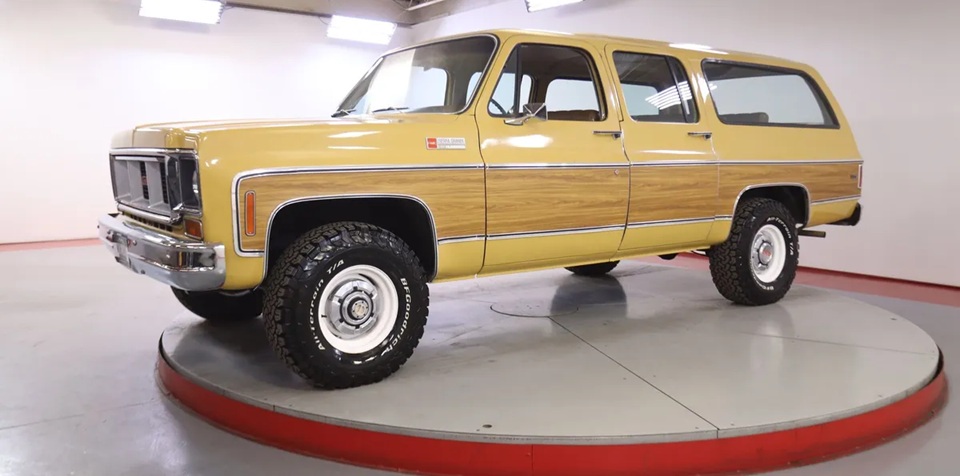
1973-91 Chevrolet/GMC Suburban
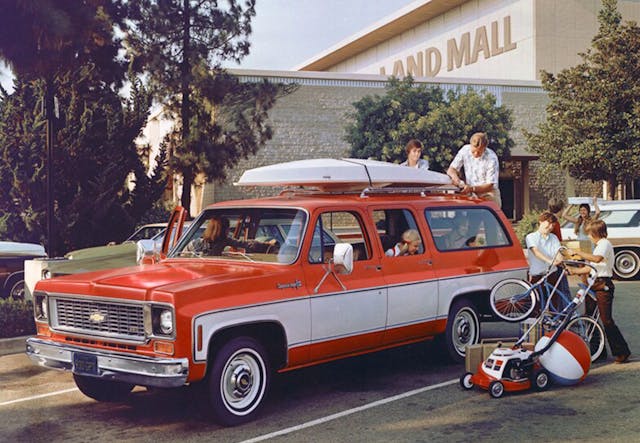
Average increase: +12%
North America’s longest serving nameplate is still the mighty Suburban, lasting an astonishing 90-years, and counting.
It began as a truck-based station wagon in the 1930s, but the Suburban we know and love today saw its roots planted in 1973. The update to GM’s truck line, known by enthusiasts today as the “square body” saw the Suburban go from a three-door to four-door for better passenger accessibility, and it dripped in creature comforts missing from previous models. Better sound deadening, cushy seats and multiple trim levels evolved the Suburban from a utilitarian people hauler to more of a luxury truck. This design stuck around until 1991, when GM added the Suburban and Blazer to the GMT400 line. The rest, as they say, is history. Suburbans would become more and more cushy (and expensive), making them somewhat of a discreet status symbol today.
The 1973-91 Suburban is a sweet spot for enthusiasts; they’re plentiful compared to earlier series, parts are easy to come by, and they are extremely usable. They’re also still pretty affordable compared to the pickups and Blazers from the same era. A good condition Suburban can be scored for under $20,000 usd-$27,380 cad , even for the 4×4 versions. We’ve observed an uptick in sales and market activity with these trucks, and combined with our quote data suggesting that Suburban owners are averaging on the younger side, this could be a strong indicator that this bump in value will stick or even grow over time.
For the Silo, Jarrod Barker courtesy of friends at Hagerty Insurance.