Tag Archives: Vince Clarke

A Synth Holy Grail- Oberheim FVS-1

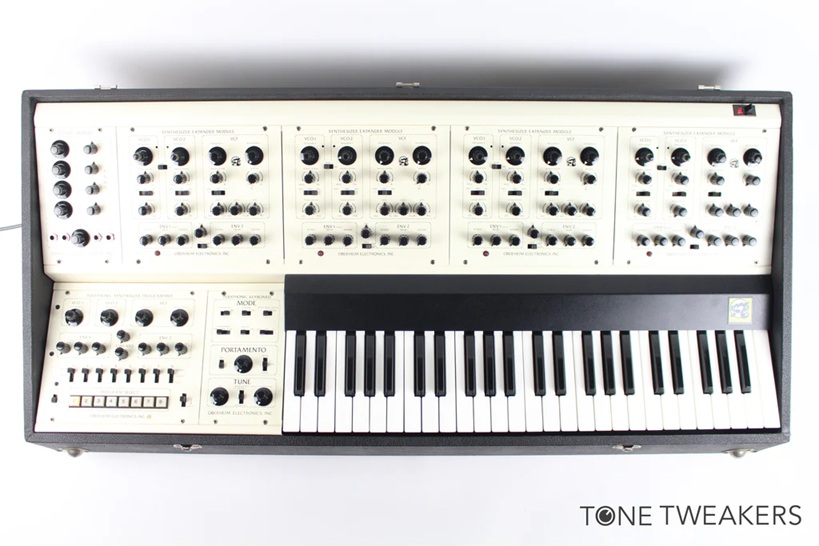
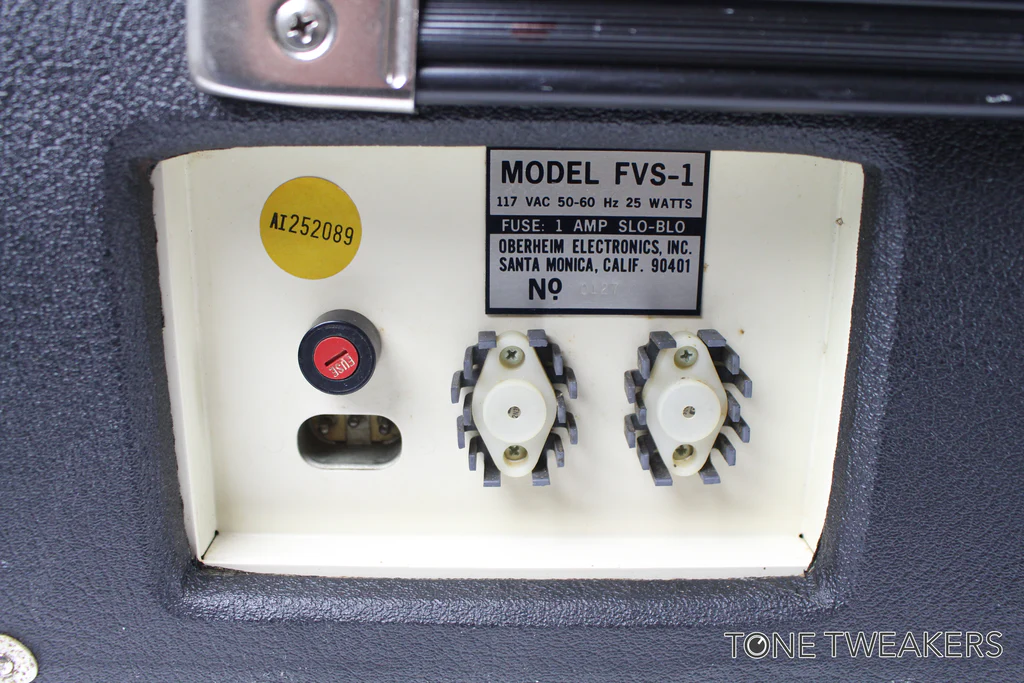
Considered by many to be The Holy Grail of Polyphonic Synthesis, this meticulously refurbished Oberheim FVS-1 took 88 hours of skilled vintage synth tech time via our friends at tonetweakers to perfect. The FVS-1 contains 4 classic Oberheim SEM modules, each providing a single dual oscillator voice. Sounds are dialed in manually on each module, with global control over the most tweaked parameters via the programmer module, where patches are also saved and recalled. Since each SEM is manually adjusted, it’s hard to get them sounding exactly the same. The result is a much more organic, slightly detuned, richer, truly magical sound than you’d get out of most other poly synths.

Famous users include Lyle Mays, 808 State, Depeche Mode, Styx, Pink Floyd, The Shamen, Gary Wright, Joe Zawinul and John Carpenter (yep the film director of The Thing, Big Trouble in Little China, Starman, Escape From New York and other classics often composed and recorded music for his movies). You won’t find a better example of this beautiful classic synthesizer, so if you’re looking for an exceptional 4 voice, now’s the time. Visit our friends at tonetweakers.com to learn more.

The OB Four Voice contains 4 SEMs and a mixer module. This beautiful instrument can play up to 8 oscillators at once, for insanely humongous sounds. 
One of the first

The 4 voice was one of the first polyphonic synths. Each of the four Synthesizer Expander Modules ( SEM ) can be assigned to a different note. Splitting voices between modules is also possible, as is a monophonic unison mode. A single voice is surprisingly powerful, offering 2 oscillators, 2 envelopes (1 for filter, 1 for volume), an LFO, pulse width modulation and a real sweet multimode filter with sweep-able mode (which few synths offered). The programmer module allows fast saving and recall of programmed sounds. With a combined 8 oscillators, these sound unbelievably fat. Even a single SEM sounds great. In unison mode, play all VCOs on one key for one of the most powerful vintage synth sounds ever. Nothing sounds like it to us and we’ve played everything. This is a personal favorite. This FVS-1 has the standard configuration of modules: 4 x Synthesizer Expander Module ( SEM ) Keyboard Output module Polyphonic Keyboard module Programmer module.

No clangs or zaps


If you are an analog synth head who makes musical sounds, you need one of these. To avoid disappointment though, we would recommend anyone looking for a dedicated sound effects machine to go for something else. This 4 voice is fabulous at musical tones and can make some interesting sound effects but there are better choices for clangs, zaps, explosions and similar atonal timbres. 

Other famous users include: Joe Zawinul, Chick Corea, Larry Fast (Synergy), Jan Hammer, Herbie Hancock, Human League, Michael McDonald / Doobie Brothers, Patrick Moraz, Steve Porcaro, The Shamen, Tim Simenon, Depeche Mode, Vince Clarke / Erasure, Tangerine Dream, Stevie Wonder and many other influential musicians who could afford one – this was a very expensive instrument when it came out! 
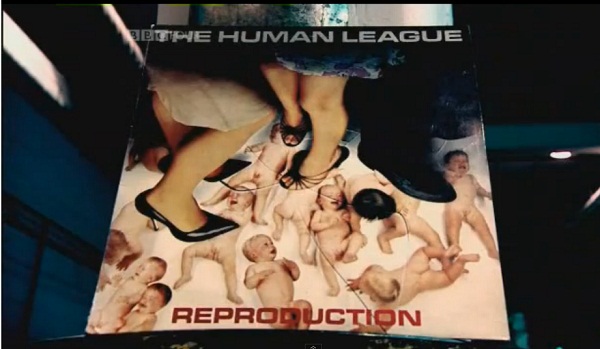
Synth Britannia Shows The Future Was In Fact Delivered

Come on, you have to admit. It’s a lot of fun to stumble around YouTube with that old pre-internet habit of television channel surfing surprising you with random discoveries.

When I do, I particularly enjoy reading comments left by others who have somehow found their way to whatever it is I happen to be watching. This comforts me because I know that this method of purposeful and accidental consumption of media is not exclusive to me [many comments start with: “Not sure how I ended up at this video but….” or ” __________led me here.”]  but perhaps I’m alone in the belief that spontaneous discoveries help connect me better to the production. I think what I’m talking about is called “verisimilitude” and no doubt as I type this out there’s someone trying to figure out how they’ve discovered the same excellent BBC synth documentary that I discovered by chance: Synth Britannia.

Donna Summer's synth programmer in 1977 brought the sounds of the future to disco with I Feel Love
Donna Summer’s synth programmer in 1977 brought the sounds of the future to disco with I Feel Love

A few years ago, I was enjoying reading a guest editorial in Wired by comedy bull Will Ferrell. )

Not one to beat around the bush, Will wanted to know what had happened to the future?  Specifically the future suggested if not promised in comic book ads to the then pre-adolescent Will Ferrell. He asked, where were the Jet packs, autopilot-flying cars and robot butlers? It occurred to me that if Will was an electronic musician he would have come to the same conclusion that the producers of Synth Britannia did while they drew up the plans to make their excellent documentary: The future did come, it just wasn’t so literal.

1970's Northern Britain looking like a scene from Blade Runner, one of the birthplaces of future synth music.
1970’s Northern Britain looking like a scene from Blade Runner, one of the birthplaces of future synth music.

To compound matters this future somehow passed by all of us, unless perhaps you were a student of history or an existentialistic, free-radical electronic acolyte or computer programmer back in the golden age of dystopia vision. I call this era the ‘other’ 1970’s.
I have added the qualifier: ‘other’ 1970’s, because today’s media mistakenly focuses on reinforcing the bell-bottom, disco driven qualities of the 1970’s but there was a much more robust, artistic movement running against the grain in the same way that meaningful art has always done. This movement bridged fashion, art, cinema, sound design and of course music and if you want to learn more while being thoroughly engaged, then spend some time paying attention while you watch Synth Britannia.

You might even find yourself considering an impulse purchase of a mini Korg 700S. I know I did.

Supplemental- While I polished this article, one thing became apparent. New music or to be specific, those new artists that are being profiled on national television as new music agents are all lacking the one thing that characterizes the heroes of this column. Simply put, today’s music heroes are not a unity of ideas and expression. They are not bands. They are performers representing wish fulfillment with no sense of genuine attitude or social commentary and perhaps even worse, no sense of daring inventiveness. So far, most (but not all-there are exceptions) of today’s star performers are ‘safe’, predictable and lacking in terms of communicating their alienation. They have become game show contestants. This is because media business (in other words the television networks) has formulated and created what is palatable to an audience. The home video game market further suggests and reinforces created fantasies with interactive games that essentially boil down to a form of karaoke or twister. Simply put, new consumer habits are being engineered and I’m sure they always will be.

So, as listeners, is it fair to say that we no longer think for ourselves and we no longer question what is ‘good’ or ‘impactful’? With today’s de rigueur promise of dream and wish fulfillment (in terms of television shows that empower an audience with voting privileges to create the next pop star) that most crucial artistic ingredient: “individualized commentary” has been eradicated. Even more alarming is that consumers’ freedom of choice is being challenged.

That’s likely because the major media corporations feel wholly threatened by what the internet promises: a vast sea of content that is discoverable and searchable by desire or by chance.

Vince Clarke- Depeche Mode's keyboard player and future visionary.
Vince Clarke- Depeche Mode’s keyboard player and future visionary.

So-is it fair to say that we have become woefully inadequate in identity and informed choice? If there is art, angst and message, where can we find it? Try channel surfing around YouTube and follow what catches your interest.  For the Silo, Jarrod Barker.