November, 2025 – The federal Canadian government is expected to unveil proposed changes to its electric vehicle sales mandate this winter. The upcoming announcement comes as Canada’s 2026 Zero Emissions Vehicle (ZEV) mandate – requiring 20 percent of new light-vehicle sales to be electric – faces mounting evidence it was unlikely ever to be met, according to a new report by the C.D. Howe Institute.
In “Mandating the Impossible? Assessing Canada’s Electric Vehicle Mandate for 2026 and Beyond,” Brian Livingston, at the C.D. Howe Institute, finds that the policy’s trajectory remains unrealistic beyond 2026. “Even if incentives return, the targets far exceed what consumers are willing or able to buy,” says Livingston. “Mandates alone won’t generate the demand or the vehicles needed to meet these goals.”
The analysis shows that under the 2026 requirement, automakers collectively would have had to spend hundreds of millions of dollars to comply. Companies falling short of their targets could face over $200 million in penalties to generate “Charging Fund Credits,” along with unknown additional costs to purchase “Excess Credits” from firms such as Tesla and Hyundai. To meet compliance thresholds, manufacturers might have been forced to restrict non-ZEV sales, reducing total vehicle supply by more than 400,000 units – leaving significant consumer demand unmet.
Meanwhile, companies exceeding the 20 percent target – primarily foreign-based automakers – would benefit from windfall revenues by selling excess credits. Canadian-based producers such as GM, Ford, Toyota, Stellantis, and Honda, which manufacture domestically, would bear higher costs and face reduced competitiveness.
Federal officials recently noted that the government’s highly anticipated review of the ZEV mandate – launched after Prime Minister Mark Carney paused the 2026 target in September – will report back this winter and unveil proposed changes to targets and credit rules.
Livingston recommends that Ottawa either abandon or substantially revise the ZEV mandate. Options include revising percentage targets to align with market realities, counting increasingly popular hybrid vehicles toward compliance, redirecting credit proceeds to the federal government, or suspending the mandate until trade negotiations with the United States and China clarify the future of Canada’s auto sector.
“The waiver of the 2026 target is only a first step,” Livingston cautions. “Unless the policy is recalibrated to reflect consumer demand and production capacity, Canada’s ZEV mandate risks driving up costs, shrinking supply, and undermining competitiveness – without delivering meaningful emissions reductions.”
You know the look: A long, low-slung sedan finished in shiny black paint with equally bright chrome rolls through town. Beige, burgundy, and blue cars move out of the way, magnetically repelled by the menacing four-door.
This threatening style has been idolized by Hollywood since the 1960s, perhaps most famously in the unfortunately short-lived ABC television program The Green Hornet, in which actor Van Williams drove a Chrysler Imperial modified by Dean Jeffries. It was painted black, of course, and the chrome slats that ran horizontally across its huge grille clearly meant business—even on the 19-inch TV screens that took up considerable living room real estate in a 1960s home.
Black paint, while popular today, was a daring, high-style choice in the 1960s that was not-so-subtly influenced by the largely chauffeur-driven cars that carried around heads of state and other major politicians. For instance, the Soviet Union’s KGB notoriously drove around in black-painted GAZ Chaika sedans that had a distinctly Detroit-inspired appearance. (The irony of which seems to have been lost.)
An outsider might not expect Japan, where the pavement has been specifically engineered to be quiet, to have a small but mighty homegrown industry producing the world’s most ominous cars.
Nissan
The Japanese Royal Family Needed a Ride of Their Own
Dating back more than 1400 years, Japan’s Imperial Household Agency does just what its name suggests: it manages the royal family’s affairs. This is no easy task for a country so steeped in tradition. In fact, the Imperial Household Agency has more than 1000 civil servants, which stands in marked contrast to the self-funded, non-governmental managers of, say, the British and Swedish royal families.
The Imperial Household Agency’s wide-ranging list of tasks includes everything from ensuring that the Emperor’s family is comfortable and healthy to organizing and overseeing ceremonies. In the early 1960s, the Imperial Household Agency called automakers together and told them to submit designs for an official state vehicle. The car needed to have four doors, be reasonably spacious, and have a prestigious but not overly ostentatious appearance.
Nissan
Prior to World War II, the Emperor’s vehicle fleet consisted of large, imported cars from brands like Rolls-Royce and Daimler. The company’s nascent automotive industry focused on small, mostly work-oriented vehicles. By the early 1960s, Japan’s recovery from the war’s devastating effects was well underway, fueled heavily by Western investment. While Japan didn’t give up on its traditions, the bright lights of Tokyo had a strong American influence. So too did the country’s cars, like the Toyota Crown that looked like last season’s Chevy. So when the Imperial Household Agency came calling, it should come as no surprise that the results looked rather Detroit-ish.
The winner was a brand you might not have heard of: Prince Motor Company. Founded in 1947, Prince was Japan’s short-lived flagship automaker in the early 1960s, though it was in the midst of being folded into Nissan.
The Prince Royal that got the royal nod, so to speak, was based on the Prince Gloria, a vehicle already used by the Japanese government in an official capacity. The Prince Royal was extended to provide those in back with stretch-out legroom, and the rear doors were modified to open coach-style for easier and more elegant access. While not a particularly showy car, the Prince Royal has an understated elegance. Its stacked headlights recall the Ford Galaxie and the big W108-generation Mercedes-Benz models. The tall greenhouse, on the other hand, is a nod to practicality rather than style. Inside, in the Japanese luxury tradition, the wool seats make nary a peep as passengers slide across. Leather would be rather squeakier.
The Prince Royal gained the Imperial Household Agency’s nod as transport for the Emperor of Japan. These cars served until 2006, when they were replaced by a special version of the Toyota Century.Nissan
Underhood, the Prince Royal utilized a 6.4-liter V-8—not Japan’s first, but only a couple of years after the so-called “Toyota Hemi.” An eight-cylinder design was, admittedly, an odd choice; while inherently fairly smooth, the engine was undoubtedly a costly thing to develop. Fewer than 10 were ever built, one of which lives at the unusual and yet highly appealing Nissan Engine Museum and Guest Hall next to the company’s powertrain factory in Yokohama, Japan.
Just five Prince Royals were built, and they stayed in service for a staggering 40 years, when they were replaced by a limousine version of the Toyota Century. But the Century doesn’t really owe its status to the Prince Royal. It should thank the Nissan President, a model that was developed back when Nissan and Prince were quasi-competitors.
Into the 1980s, the Nissan President retained a classic, but hardly ostentatious, look as seen on this 1982 President Type-CNissan
The President, as its name suggests, was intended from the start as a government vehicle. Unlike Toyota’s Crown, the first Japanese car to use a V-8, the President was developed in direct response to the Imperial Household Agency’s request. At nearly 200 inches long, the President was a very large sedan by Japanese standards. Its styling is contemporary if a bit bland, even in comparison to the Prince Royal. Horizontal headlights embedded in a broad, generic grille give way to fenders that had an almost Ford Falcon modesty to them. There’s a bit more drama at the rear with big NISSAN badging. Copious chrome lines the rocker panels.
While the Prince Royal ended up being chosen to transport the Emperor, Nissan’s President didn’t go home empty-handed. Instead, it was used by the country’s Prime Minister. Government versions were only minimally modified compared to the President models sold through Nissan’s dealership network in Japan, though official-use models were invariably painted black. Those available to consumers came in a slightly wider range of colors. The President was a sign that its owner—and, most likely, the person riding in the back—had arrived. It was the Lincoln Continental of its era. Today, when government spending is closely watched by a hawkish public, there is no U.S.-market comparison.
In Japan, fabric upholstery like the wool seen in the 1973 Nissan President remains an indicator of a high-end vehicle because it makes no sound as a human slides across it.Nissan
Nissan didn’t dominate government contracts, but it was a commanding presence into the late 1980s. Then, almost inexplicably, the brand gave up. Its chrome-laden second-generation President, which was based on an early 1970s design, was replaced with a comparatively plebian design that would be sold in the U.S. as the Infiniti Q45. That’s not to say that the Q45 was a dud, but its big plastic bumpers and, in Japanese-market spec, Jaguar-ish grille were not in keeping with tradition. The Imperial Household Agency famously rejected a stretched version of the 1990 President in favor of the Toyota Century.
Toyota’s Century Begins
The original Toyota Century was overshadowed, at least to a degree, by the Nissan President that beat it to the market in Japan and initially secured more government contracts.Toyota
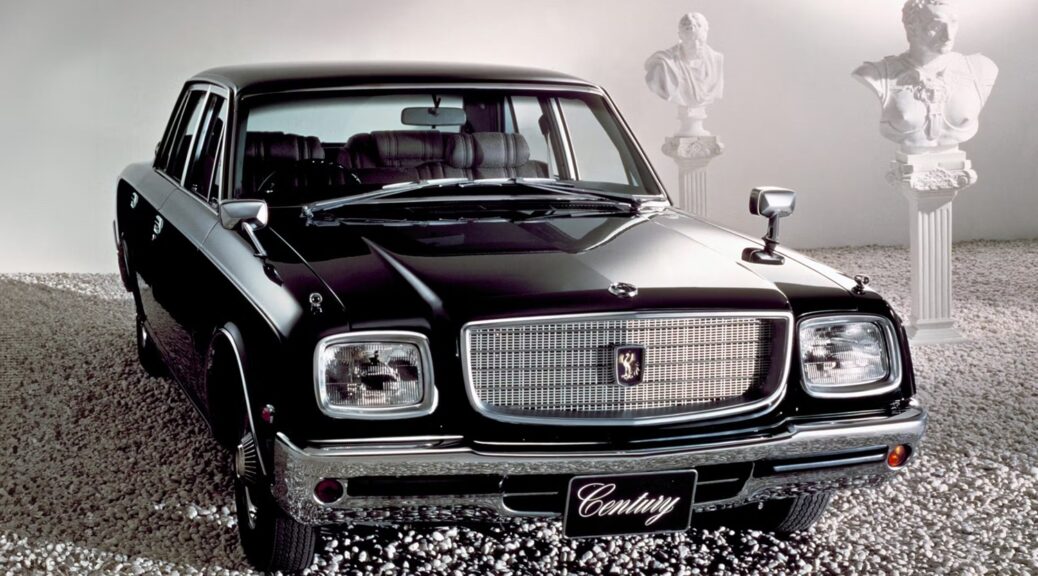
Thanks in part to the floodgates of 25-year-old vehicles from Japan, the Toyota Century has something of a cult status among enthusiasts in the U.S. today. It was not always this way; while the Century was undoubtedly a high-tech vehicle at its 1967 debut, the Imperial Household Agency initially passed it up in favor of the Nissan President. However, the Century’s rise coincided with Toyota’s phenomenal growth in the 1970s and 1980s, when it began to overtake Nissan as the premier Japanese automaker.
The original Century ran for three decades, always with V-8 power. Despite the fact that its specs and power could have appealed to buyers in Europe and, especially, the U.S., it was rarely sold in left-hand-drive markets. (Toyota flirted with the idea in the early 2000s before concluding that the conservative Century would be no match for the comparatively flamboyant Mercedes-Benz S-Class.)
Toyota
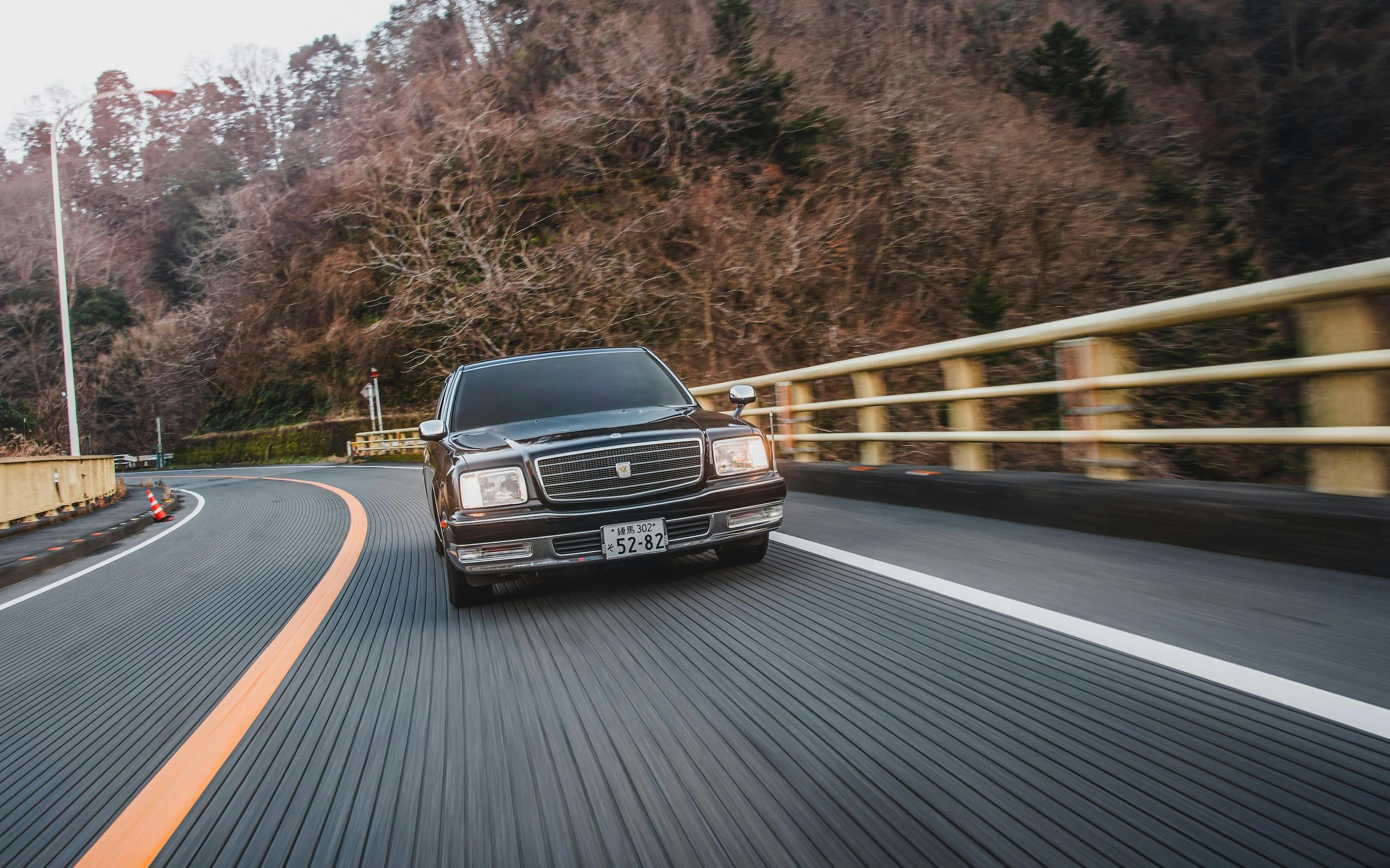
Yet it’s the Century that endures in Japan, an icon in its own time. The Emperor of Japan rides around in a stretched one, approved by the Imperial Household Agency, of course. The redesigned model that arrived in 2018 carries on the 1960s original style in marked contrast to the edgy, modern look found in any Toyota or Lexus model. There’s even an SUV version now, though its front-wheel-drive architecture and hybrid V-6 powertrain mean it’s more like a snazzy Toyota Highlander than a bespoke Emperor-hauler.
Toyota
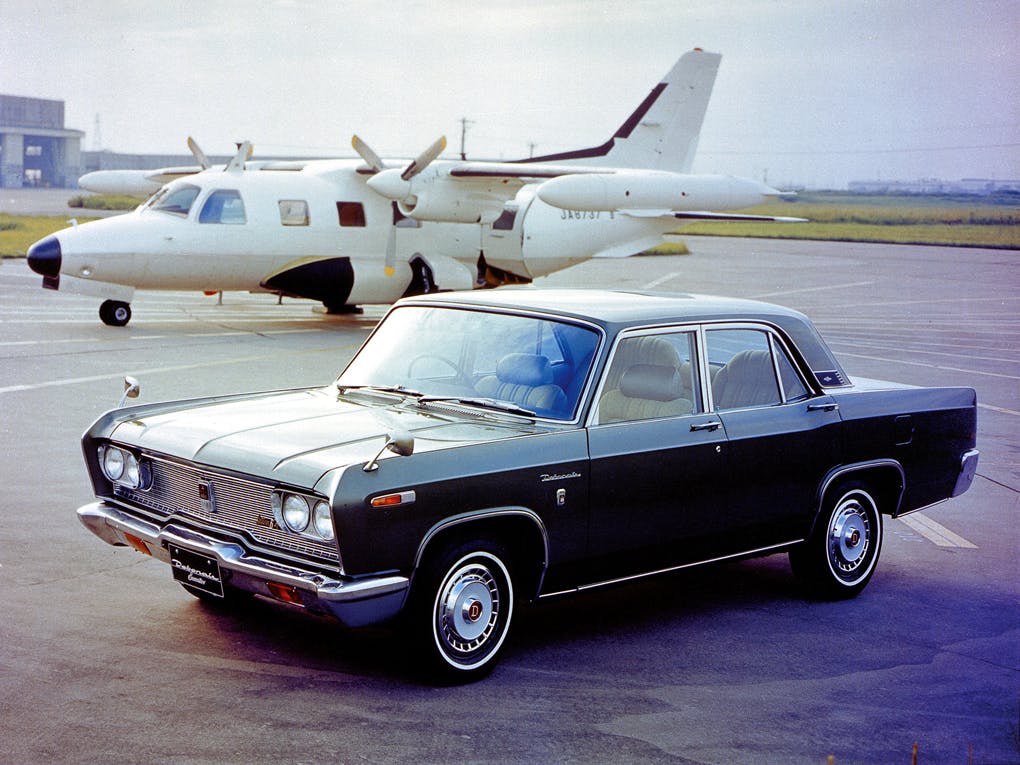
Clearly, the Century has won out, so much so that Toyota recently announced it will position the Century as its own brand as a more conservative sibling to Lexus. It did face some limited competition from Mitsubishi with its mid-1960s Debonair. While the Mitsubishi, with its slab sides and fenders that leap forward past its grille, is basically a rolling villain, the four- or six-cylinder sedan lacked the interior volume and the power to compete with the Century or the President. Its angular 1986 replacement, which looked sort of like a K-Car with fender mirrors, was anything but debonair.
Though its effort was comparatively short-lived, the Mitsubishi Debonair boasted a fantastic name and slab-sided Lincoln Continental-inspired looks, if not Conti-style proportions.Mitsubishi
The Yakuza Turns State Cars Into Mafia Cars
Nobody does organized crime like the Japanese—and that is not meant as a compliment. The Yakuza, as the Japanese crime syndicates are broadly known, hit its peak right around the time when the decidedly more upstanding Imperial Household Agency was asking automakers to design a state vehicle.
Those vehicles were soon appropriated by the Yakuza. In retrospect, they have a sinister, angry look. If the bad guy in a period flick drives a car in Tokyo, it’ll be a President, a Century, or perhaps an early Debonair. Set in 1999, HBO’s Tokyo Vice puts the Q45-adjacent Nissan President front and center. While it may not have been the vehicle of choice for the Emperor, that era’s President was the car to have for the heads of organized crime. Perhaps that’s why Nissan steered away from tradition with its final redesign, a swoopy model unsuccessfully sold here as the Infiniti Q70.
The 1990 Nissan President abandoned the 1960s-style chrome bumpers of its predecessors.Nissan
These big, black sedans have an authoritarian presence. Their drivers may think they have impunity. Not only are their cars imposing, but they look official—even if those inside are doing anything but official business. Yakuza members often mounted curtains inside their Presidents and Centurys, a style known as VIP that persists today—albeit in a much broader and harder-to-define look.
We have no direct equivalent in Canada or the US., at least in terms of how the criminal underground appropriated cars meant for high-ranking government officials. The Crown Victorias once favored by Canadian and American cops lack the luxury and exclusivity of a Century or President. A Chevy Tahoe can’t be all that menacing if you can find dozens of them in the carpool line at your local elementary school. And while our head of state has long had a highly modified Cadillac-ish limousine, which has been described as a tank with a limousine body, it lacks a showroom counterpart. That said, the crested wreath brand made a strong appearance in the late-1990s/early-2000s setting of HBO’s The Sopranos.
It’s a different story in Japan, though. There, a government official arrives in black-and-chrome style—as dictated, if indirectly—by the edicts set forth by the Imperial Household Agency. The automotive equivalent of a tuxedo is, after all, always in style. For the Silo, Andrew Ganz/Hagerty.
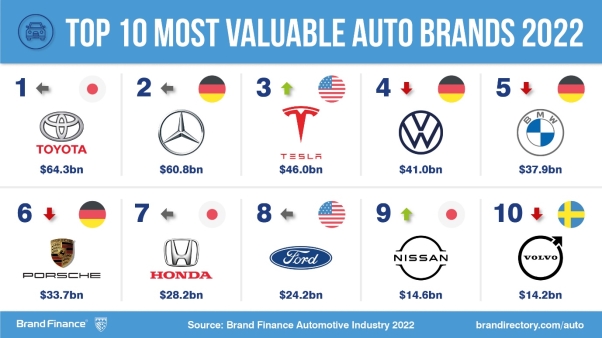
Tesla has been the fastest growing automobile brand over the course of the pandemic with astounding brand value growth of 271% in the last two years, according to the latest report by leading brand valuation consultancy Brand Finance. Tesla’s impressive growth continued this year with its brand value up by 44% to US$46.0 billion ( CAD$58.55 billion) which saw it move from 6th to 3rd in the Brand Finance Automobile 100 2022 ranking.
Tesla was the only brand in the Top 10 of the ranking to see significant growth this year.
Every year, Brand Finance puts 5,000 of the biggest brands to the test, and publishes nearly 100 reports, ranking brands across all sectors and countries. The report ranks the world’s top 100 most valuable and strongest automobile brands, the top 20 auto component brands, the top 15 tire brands and the top 10 car rental service brands.
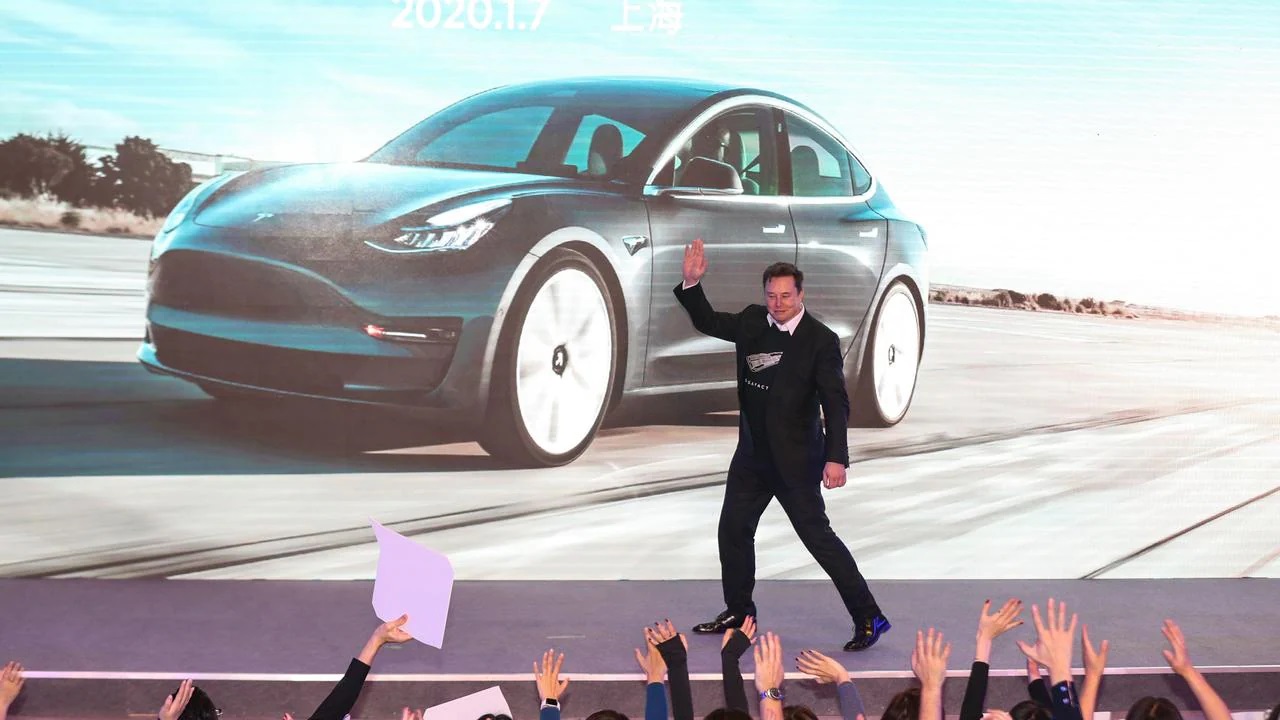
Musk at Tesla event in China.
Tesla’s CEO, Elon Musk, has played a huge part in the growth of the brand with his charismatic, and at times controversial, behaviour keeping it firmly in the limelight. Tesla’s transformation into a household name has seen other brands try to connect themselves to the brand to benefit from the Tesla effect.
2021 saw Tesla increase its footprint in China, to ensure it continues to compete in the booming Chinese market.
It opened a new research and development centre, its first outside of America, in addition to a data centre at its Gigafactory in Shanghai. The brand also built a second delivery centre in the city, which incorporates sales, test driving and delivery of Tesla vehicles. Looking to this year 2022, Tesla announced it would launch no new models this year due to the global chip shortage, as doing so would reduce its overall output. Instead, the brand will focus on its full self-driving software as well as scaling up its production capabilities.
Electric revolution sees Chinese brands surge
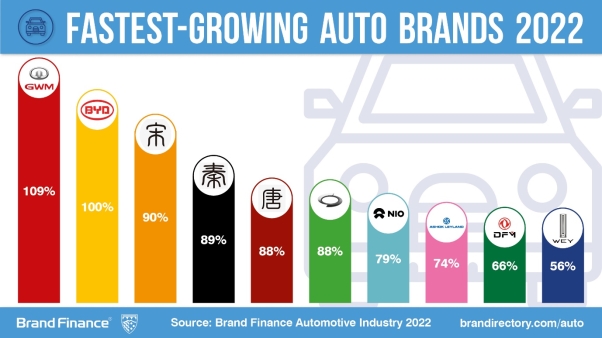
Chinese brands account for eight of the top 10 fastest-growing brands in the ranking . The increasing popularity and adoption of electric vehicles in China has been a key driver behind the impressive growth for these brands, with China accounting for most electric vehicles sold globally. Several Chinese brands are looking to capitalise on the momentum by expanding their global footprints, with several of these brands launching in Europe in 2021.
While Tesla has seen the fastest growth over the past two years of the COVID-19 pandemic, Great Wall is the fastest-growing brand in the ranking this year, with its brand value increasing by an impressive 109% to US$2.6 billion (CAD$3.3 billion). As well as launching in Europe last year, Great Wall announced it will be launching nine electric vehicle models in Thailand over the next three years, where demand is expected to grow considerably. Great Wall plans to use Thailand as a base to launch its expansion into the ASEAN region. The auto marque’s CEO, Jianjun Wei, was also the top ranked automobile CEO in the Brand index, which ranks the world’s top 250 Chief Executives according to how well they manage and grow their company’s brand, and placed 3rd overall across all industries.
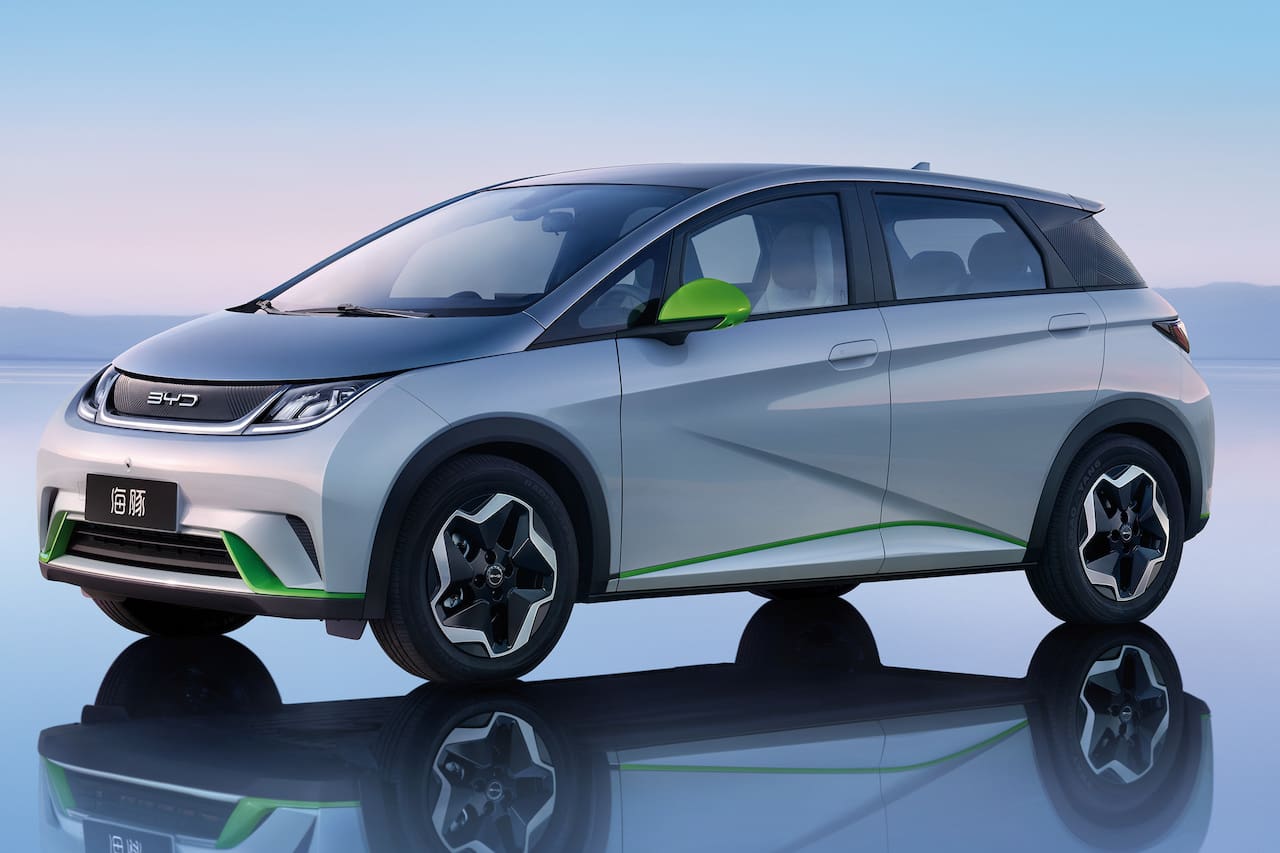
The BYD EA1 Dolphin.
BYD was the second fastest-growing brand in the automotive ranking with its brand value doubling to US$6.4 billion (CAD$8.15 billion), an increase which saw it overtake Haval (brand value up 55% to US$6.1 billion or CAD$7.76 billion) to become China’s most valuable car brand. BYD, which specialises in electric vehicles, saw sales accelerating 232% in 2021 with 603,783 models sold – making it the best-selling new energy vehicle manufacturer in China for the ninth year.
Joining Great Wall and BYD in the Top 10 fastest-growing brands is Song (brand value up 90% to US$1.7 billion or CAD$2.16 billion), Qin (up 89% to US$475 million or CAD$604 million), Tang (up 88% to US$630 million or CAD$802 million), NIO (up 79% to US$2.6 billion or CAD$3.3 billion), Dongfeng (up 67% to US$1.4 billion or CAN$1.78 billion), and WEY (up 56% to US$613 million or CAN$780 million).
Toyota holds on to pole position as most valuable automobile brand
Although Chinese auto brands have seen impressive growth, Japan’s Toyota has held on to the top spot in the Brand ranking with a brand value of US$64.3 billion (CAN$81.9 billion).
Whilst the Japanese brand wasn’t immune to the global chip shortage that ravaged the industry, Toyota was better placed than most to weather the storm thanks to its contingency stockpiling.
The foresight allowed the brand to keep production levels high when others faltered and resulted in Toyota outselling General Motors in North America in Q1 2021 – the first time any brand has outsold General Motors in the region since 1998. Toyota remains the world’s top-selling automaker, the only manufacturer selling over 10 million vehicles globally.
Toyota was one of the early adopters of hybrid technology, with its Prius model dominating the hybrid segment for years, but it has fallen behind in the increasingly competitive electric vehicle arena in recent years. To regain ground, last year it announced it would be investing US$35 billion (CAD$44.6 billion) in electric vehicles, focusing on both battery technology and car development. The investment forms part of Toyota’s ambition to sell 3.5 million electric vehicles a year by 2030.
Fellow Japanese brands Honda (brand value US$28.2 billion or CAD$35.9 billion)and Nissan (US$14.6 billion or CAD$18.6 billion) join Toyota in the Top 10 of the ranking, though both brands saw a 10% decrease in brand value this year. Honda held onto its position in 7th, and despite the loss in brand value Nissan actually climbed two spots from 11th to 9th, as it fared better than Sweden’s Volvo (down 20% to US$14.2 billion or CAD$18 billion) and Germany’s Audi (down 20% to US$13.8 billion or CAD$17.6 billion).
Mercedes-Benz remains most valuable European brand
Sitting behind Toyota, Mercedes-Benz remains the second most valuable brand in the ranking, and the most valuable European brand, with a 4% increase in brand value year-on-year to US$60.7 billion (CAD$77.3 billion). Amid challenging market conditions due to the pandemic and an industrywide semiconductor shortage, the brand prioritized electromobility and has seen great results from it. The German automobile giant confirmed that their electric vehicles sales saw a 90% increase this year.
In 2021, Mercedes-Benz launched the sixth generation of the C-class series with a new interior design and is planning to implement autonomous driving features. At the same time, an industry-wide trend to make a transition to electric vehicles and a sustainable approach to production and distribution is on the rise.
2022 Mercedes C class.
A key development to strengthen the Mercedes-Benz brand is the rebrand of Daimler AG to Mercedes-Benz Group AG. The focus of the rebrand is to enhance passenger cars and vans in the luxury segment. The strategic move to rebrand was to fulfil the brand’s objective to focus on financial and mobility services by offering insurance and rental subscriptions and digital fleet management systems.
Other German brands did not fare so well in the ranking this year, with Volkswagen (brand value down 13% to US$41.0 billion or CAD$52 billion), BMW (brand value down 6% to US$37.9 billion or CAD$48.2 billion), and Audi (brand value down 20% to US$13.8 billion or CAD$17.6 billion) all seeing losses in brand value. With lockdowns, network contractions in production and the ongoing semiconductor shortage, the industry has been faced with many challenges. Apart from sector wide disruptions, the German automakers who were reliant on diesel-powered vehicles have had to deal with regulatory challenges and the transition to electric mobility and electric production methods, resulting in rolling back on production to meet industry trends.
Porsche most valuable among luxury and premium, but Ferrari strongest across the whole table
Porsche is the most valuable luxury and premium automobile brand in the world with a brand value of US$33.7 billion (CAD$42.9 billion). The automobile giant celebrated the 50th anniversary of the iconic Porsche Design with a limited-edition sale of 750 cars to pay tribute to the iconic design by Ferdinand Alexander Porsche.
The brand’s aim to transform into an agile company has led to leveraging digital transformation by enhancing online sales. To adapt to new formats of sale in the automobile sector, Porsche has invested in e-commerce for 100 markets globally to adopt an omnichannel strategy to connect digital services and retail sales.
While Porsche is the most valuable brand in the luxury and premium segment, Ferrari was named the strongest automobile brand in the world with a Brand Strength Index (BSI) score of 90.9 out of 100 and a corresponding AAA+ rating. Apart from calculating brand value, Brand Finance also determines the relative strength of brands through a balanced scorecard of metrics evaluating marketing investment, stakeholder equity, and business performance. Certified by ISO 20671, Brand Finance’s assessment of stakeholder equity incorporates original market research data from over 100,000 respondents in more than 35 countries and across nearly 30 sectors.
2021 was Ferrari’s best-ever year in terms of sales, with the company paying bonuses to all employees as a result, and the projected growth for 2022 remains high. The automotive brand’s historic pursuit of controlled growth has helped to preserve its exclusivity within its sector, however, last year Ferrari expanded its target market to a younger demographic by launching a new high-end fashion line. The aim of creating a brand that can cater to Italian luxury lifestyle in the high-end category will help expand and strengthen its brand portfolio into new avenues, whilst enhancing brand awareness amongst the younger generation.
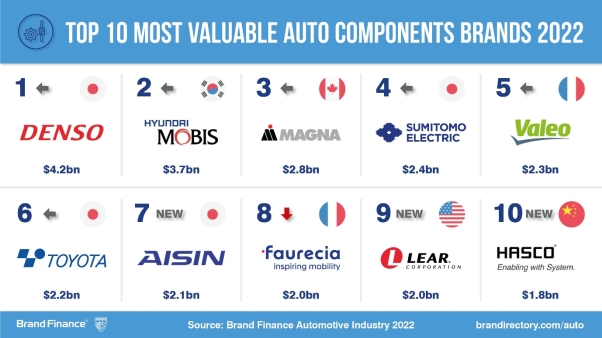
Denso most valuable auto components brand
Car sales picked up following the loosening of lockdown restrictions, and auto component brands saw demand rise in turn. It has been far from clear sailing for the industry with the global chip shortage disrupting production, but the overall outlook is positive, evidenced by the vast majority of brands seeing good growth.
Denso has retained the title of most valuable auto components brand in the world for the 5th consecutive year, with brand value up 12% to US$4.2 billion (CAD$5.4 billion). The brand continued to play its part in combatting the COVID-19 pandemic, creating respirator components in collaboration with Ford, as well as hosting over 50 vaccination clinics for employees across North America. Looking forward, the ever-increasing adoption of hybrid and electric vehicles is good news for Denso, which has over two decades worth of experience in the manufacturing of hybrid car parts.
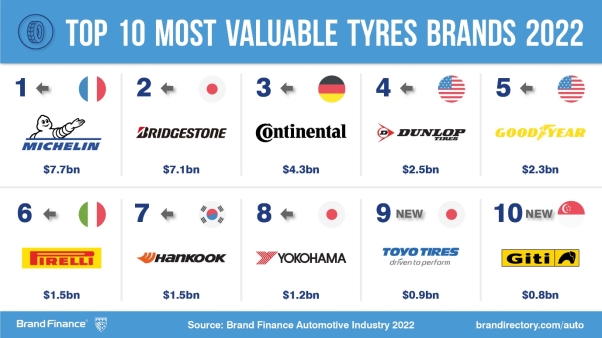
Michelin most valuable and strongest tyres brand
As the world opened back up and travel increased throughout 2021 the tyre sector regained traction, with almost every brand in the ranking now more valuable than they were pre-pandemic.
Michelin has retained the title of the world’s most valuable and strongest tires brand, with a brand value of US$7.7 billion (CAD$9.8 billion) and a brand strength index score of 85.8 out of 100.
Despite continued disruption within the industry, Michelin saw a 15.6% year-on-year increase in consolidated sales in the first nine months of 2021 and exceeded expectations in the third quarter of the year thanks to a rebound in demand for tires for agricultural machinery. The brand also announced an extension of its partnership with the MotoGP World Championship, remaining the exclusive tire supplier for the competition until 2026.
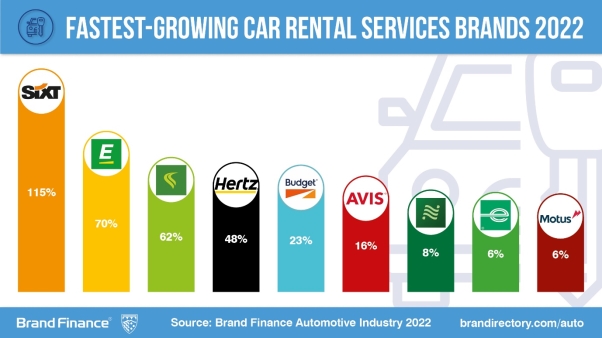
SIXT is fastest-growing car rental services brand
The car rental brands have gained momentum in 2021 after a steep decline in brand value at the start of the pandemic. As the demand for vehicle hires increases, brands in this industry are presented with the opportunity to innovate and capture a high market share.
SIXT is the world’s fastest-growing car rental brand of 2022 with a 115% increase in brand value over the year to US$1.3 billion (CAN$1.7 billion), according to the Brand Finance ranking. This year’s increase is the continuation of an impressive growth trend for SIXT, which has seen its brand value increase 265% over the past five years. The brand has built a strong international growth strategy, expanding rapidly in the United States and entering new markets, such as Australia.
Enterprise has retained the position of the world’s most valuable car rental brand with a brand value of US$7.1 billion (CAN$9 billion) with a 6% increase in brand value over the year. Despite COVID-induced travel restrictions, the brand has performed well by launching new mobility hubs and undertaking fleet electrification, but it remains below its pre-pandemic brand value of US$7.4 billion (CAD$9.4 billion). For the Silo, James Haggis.
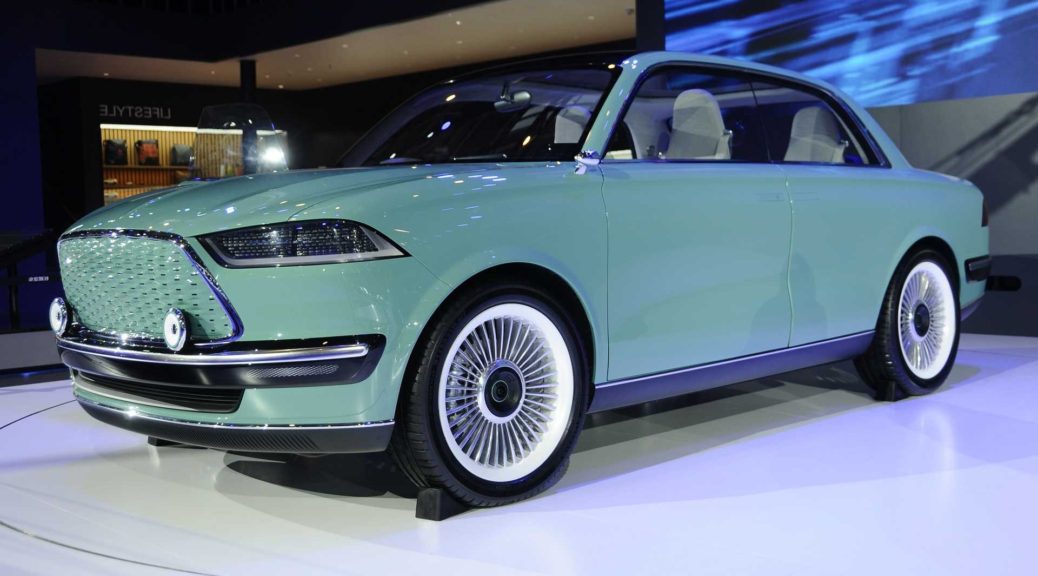
Featured image: Great Wall Ora Concept Electric Car Made In China