Tag Archives: synth

Lit Up Like A Christmas Tree- 1969 Moog Synth For Christmas?

This rare and refurbished 1969 Vintage Moog Model IIIP Modular Synthesizer System lights up like a Christmas Tree and Is Now For Sale. 


This unit has been disassembled, cleaned inside and out, fully refurbished by vintage synth specialists with decades of experience (our friends at tonetweakers.com), systematically tested by perfectionists over a long period and working like new again after 56 years! Few sellers invest the time, love and money tonetweakers do in the preparation of gear, and this is justifiably reflected in their prices.  

The Moog modular was one of the first commercially available synthesizers.

Sold in different configurations, the IIIP consisted of 3 portable cabinets of modules. Containing ten (!) 901 series oscillators, the best lowpass and highpass filters in the biz, and a magical spring reverb that makes things sound more organic, I can’t think of any other synth that matches the warmth and fatness of this genuine 1969 vintage Moog modular. Wendy Carlos’s classic album Switched on Bach and I Feel Love by Donna Summer were recorded on similar Moog modular systems.

Tonetweakers just finished refurbishing this gorgeous example (assuming they don’t find any problems as they continue to test every single part of it). Restoration was done in stages and took many months to complete. Total tech time spent was around 85 hours. They hit a snag when some parts ordered turned out to be fakes – a sadly common occurrence these days – but they eventually managed to track down some legit replacements.

They also have a smaller (single cabinet) real vintage Moog Model 15 that’s ready for sale. (Search their website for Moog Model 15).

The first photo and video of this unit in their studio shows 2 switch modules in the right most cabinet which were removed from this system since it does not belong with it. They were replaced with a blank .com metal panel. All other pics here show the .com panel in place.

This system came to tonetweakers without a keyboard. A Kenton Pro-2000 MIDI to CV converter and a MIDI keyboard is a much better option than the original Moog keyboard anyway as it offers so much more control. One of the cases does not have a front cover, which means less closet space wasted once you set it up in your studio.

Tonetweakers are all about negotiation and only ask that interested parties make a serious offer.

Trades of similar vintage modulars considered (ARP 2500, Roland System-700, Buchla Electric Music Box, EMS Synthi 100, Buchla 200/300, Polyfusion, Emu modular, etc). If we don’t get any offers we like, this classic instrument will likely end up in a vintage synth studio museum we may eventually open up here in New York City. Please message us if you’d like to be involved, if and when that happens. For the Silo, Jarrod Barker.

Here are a couple videos of this incredibly tight Moog IIIP in action:
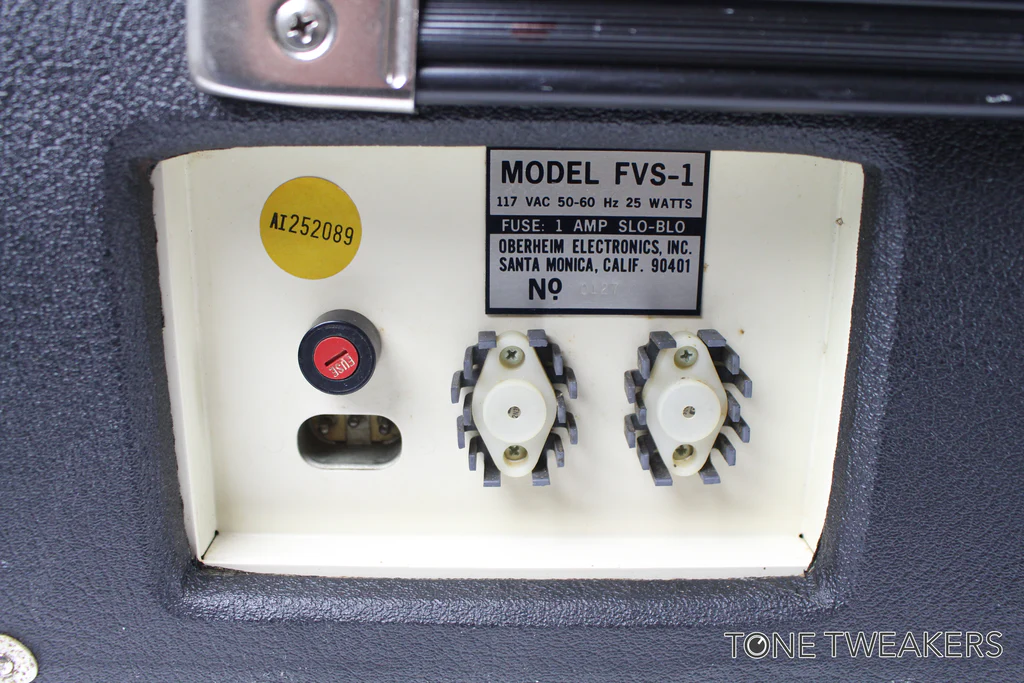
A Synth Holy Grail- Oberheim FVS-1

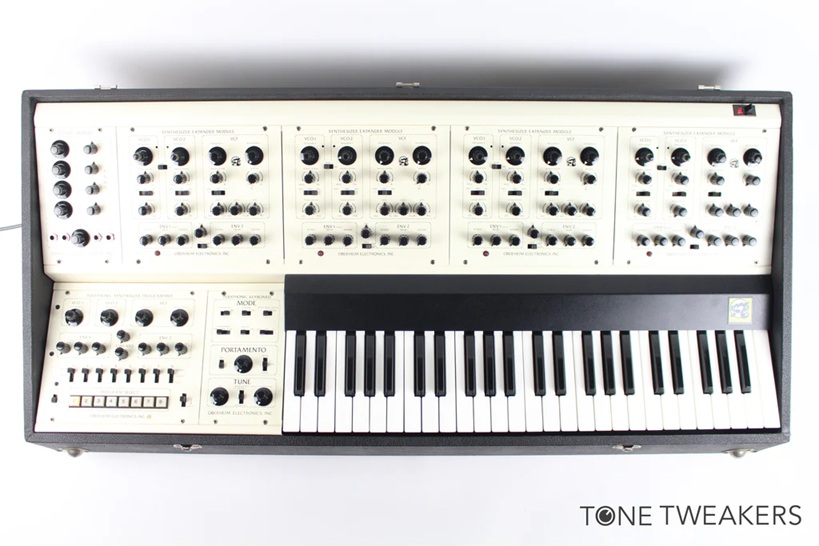
Considered by many to be The Holy Grail of Polyphonic Synthesis, this meticulously refurbished Oberheim FVS-1 took 88 hours of skilled vintage synth tech time via our friends at tonetweakers to perfect. The FVS-1 contains 4 classic Oberheim SEM modules, each providing a single dual oscillator voice. Sounds are dialed in manually on each module, with global control over the most tweaked parameters via the programmer module, where patches are also saved and recalled. Since each SEM is manually adjusted, it’s hard to get them sounding exactly the same. The result is a much more organic, slightly detuned, richer, truly magical sound than you’d get out of most other poly synths.

Famous users include Lyle Mays, 808 State, Depeche Mode, Styx, Pink Floyd, The Shamen, Gary Wright, Joe Zawinul and John Carpenter (yep the film director of The Thing, Big Trouble in Little China, Starman, Escape From New York and other classics often composed and recorded music for his movies). You won’t find a better example of this beautiful classic synthesizer, so if you’re looking for an exceptional 4 voice, now’s the time. Visit our friends at tonetweakers.com to learn more.

The OB Four Voice contains 4 SEMs and a mixer module. This beautiful instrument can play up to 8 oscillators at once, for insanely humongous sounds. 

One of the first

The 4 voice was one of the first polyphonic synths. Each of the four Synthesizer Expander Modules ( SEM ) can be assigned to a different note. Splitting voices between modules is also possible, as is a monophonic unison mode. A single voice is surprisingly powerful, offering 2 oscillators, 2 envelopes (1 for filter, 1 for volume), an LFO, pulse width modulation and a real sweet multimode filter with sweep-able mode (which few synths offered). The programmer module allows fast saving and recall of programmed sounds. With a combined 8 oscillators, these sound unbelievably fat. Even a single SEM sounds great. In unison mode, play all VCOs on one key for one of the most powerful vintage synth sounds ever. Nothing sounds like it to us and we’ve played everything. This is a personal favorite. This FVS-1 has the standard configuration of modules: 4 x Synthesizer Expander Module ( SEM ) Keyboard Output module Polyphonic Keyboard module Programmer module.

No clangs or zaps


If you are an analog synth head who makes musical sounds, you need one of these. To avoid disappointment though, we would recommend anyone looking for a dedicated sound effects machine to go for something else. This 4 voice is fabulous at musical tones and can make some interesting sound effects but there are better choices for clangs, zaps, explosions and similar atonal timbres. 

Other famous users include: Joe Zawinul, Chick Corea, Larry Fast (Synergy), Jan Hammer, Herbie Hancock, Human League, Michael McDonald / Doobie Brothers, Patrick Moraz, Steve Porcaro, The Shamen, Tim Simenon, Depeche Mode, Vince Clarke / Erasure, Tangerine Dream, Stevie Wonder and many other influential musicians who could afford one – this was a very expensive instrument when it came out! 

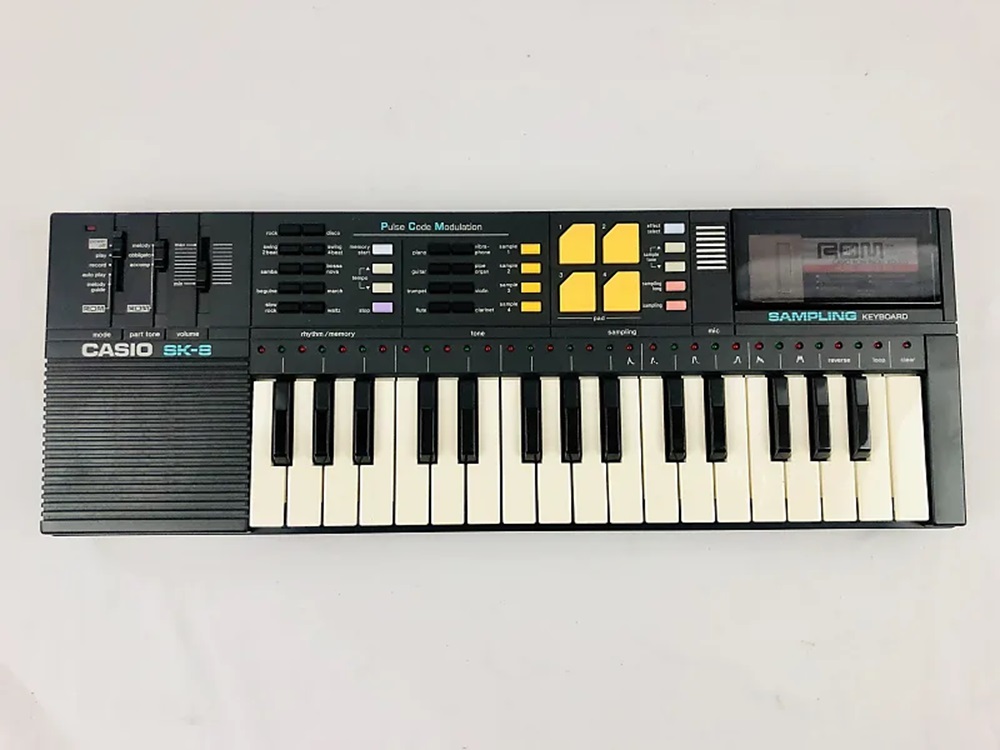
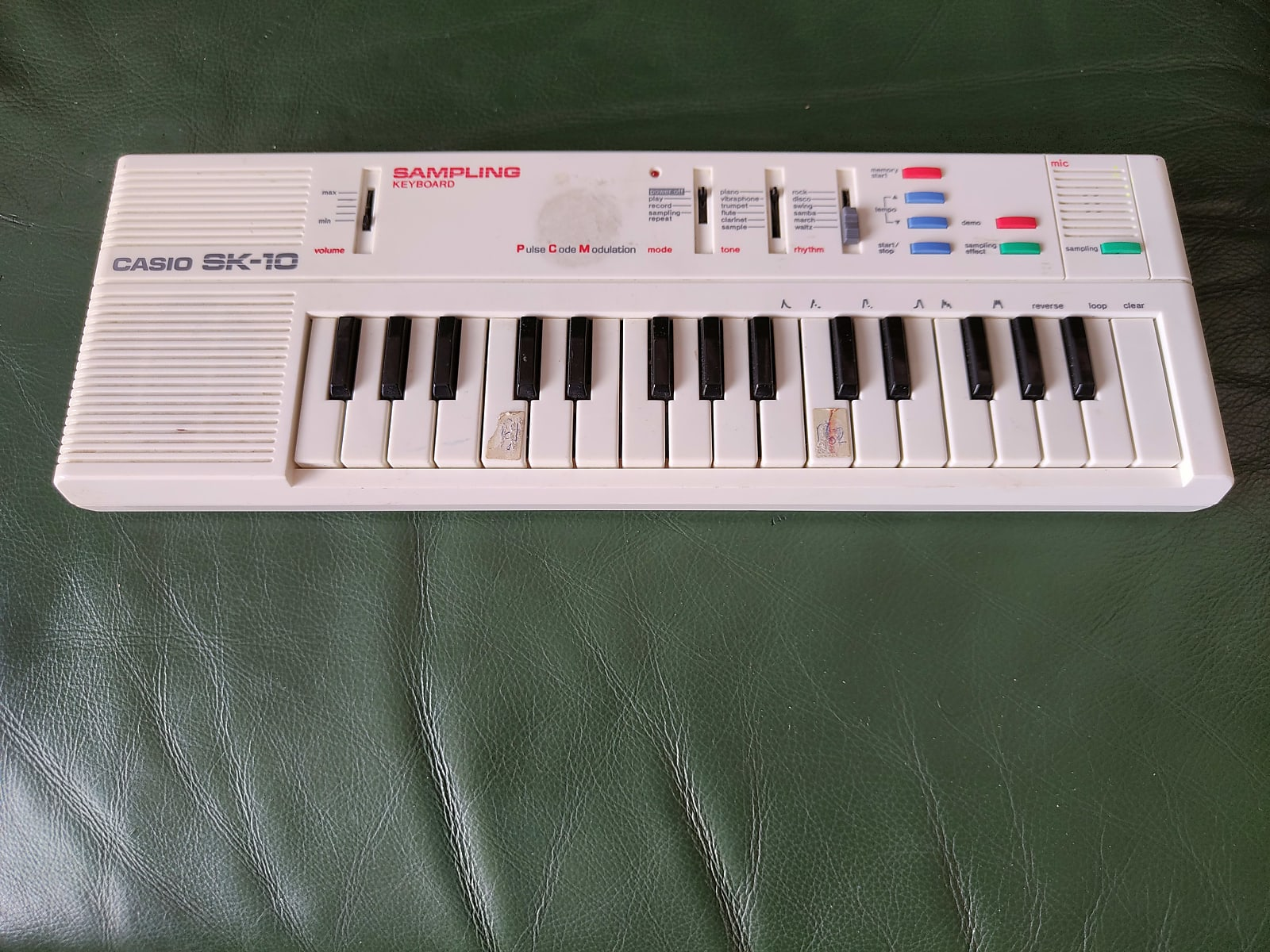
The Crappy But Amazing Toy Sampling Keyboard That Influenced Legions

SPOTLIGHT: The Casio SK series keyboards, carries great nostalgia for many of us who grew up in the 80s and 90s.

My friend got one for his birthday, and after spending an entire day at his place sampling burps, coughs and farts, I knew I was destined to become an electronic musician. If this is your story too- let us know below in the comments section.

The SK line’s distinctive design and sound evoke memories of early bedroom-made electronic music and hip-hop production, making it a sought-after collector’s item. The SK sound quality is characterized by its lo-fi charm. Everything sampled into it sounds like crap, but in a good way!

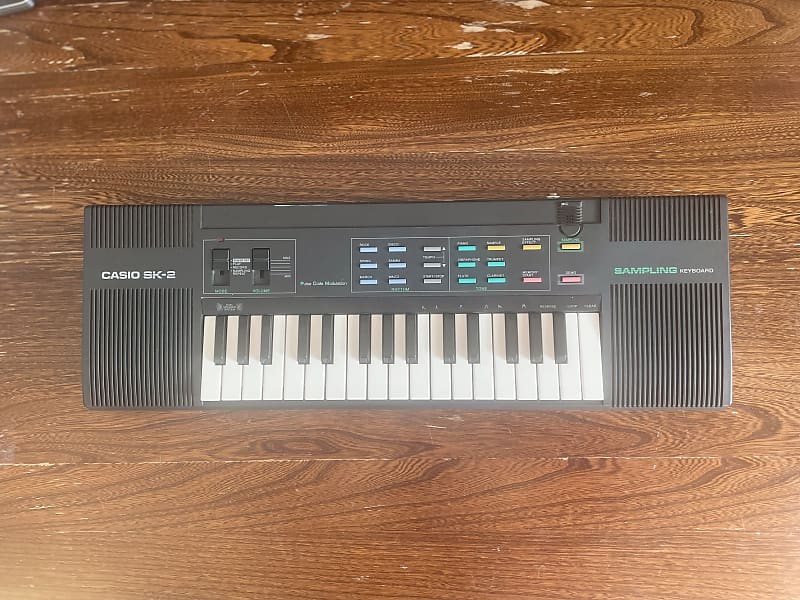
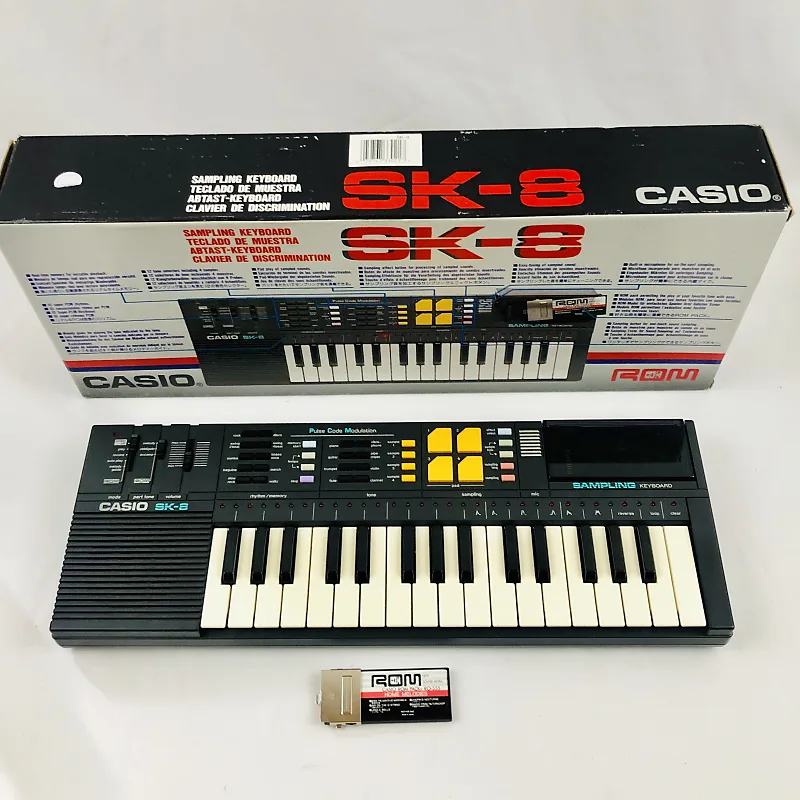
There’s a thriving community of musicians and collectors who appreciate the SK-2 , SK-5, SK-8 et al for their historical significance and cultural impact.

Used prominently on my 2008 release of AUDIOCOSM by Jarrod Barker, the SK-8 was used as a sampling beat box and also one or two of its famous presets were used in a loop to create swirling matrices of sound on a number of tracks. I found this keyboard in a thrift store in 2007 buried in the children’s electronic toys. It was $2.99 CAD and even had the battery cover. This fortuitous discovery was the spark that led to the writing and recording (on a boat no less!) of AUDIOCOSM.

The rare white version of the SK-10.

At their absolute basic, the SK line are fun keyboards and a great introduction tool to lo-fi sampling. But there is much more.

After recording a short audio sample (recorded either via the built in monophonic microphone or by plugging in an audio source using the 1/8″ female jack) you can choose from various envelopes (settings that affect how the sound starts, how long it sounds and how it ends) and also select whether to reverse or loop samples. These toy synthesizers are a treat when connected via guitar effects pedals. A good outboard effect can transform these keyboards into something much more powerful and believable. If that isn’t enough you can explore the factory preset sounds some of which sound more realistic than others but all have usefulness in the correct setting.

Most SK’s have a decent enough piano, vibraphone, flute, trumpet and clarinet sounds. There are also built-in speakers that are loud enough for mobile use such as camping or beach hang outs and of course the SK’s run on batteries. They also have line out feature which bypasses the onboard speakers allowing you to record them into your favorite DAW or standalone recording machine….an analog 4 track is a great bedfellow.

The Mod community and the SK (circuit bending)

Due to it’s relative affordability (used prices have continued to rise in the past 10 years) the SK series of keyboards have been embraced by electronic musician modifiers. Their basic construction and ease of internal access makes modifying them a lot of fun. The creativity of modders seems to be endless- everything from MIDI control to individual audio outputs to real time control of sound chips using dip switches or rotary controls.

Join that thriving community by buying this one from our friend at Tone Tweakers today! For the Silo, Jarrod Barker.