Tag Archives: substack

How Rules Of USA Flag Influenced New Series Of Soft Sculptures

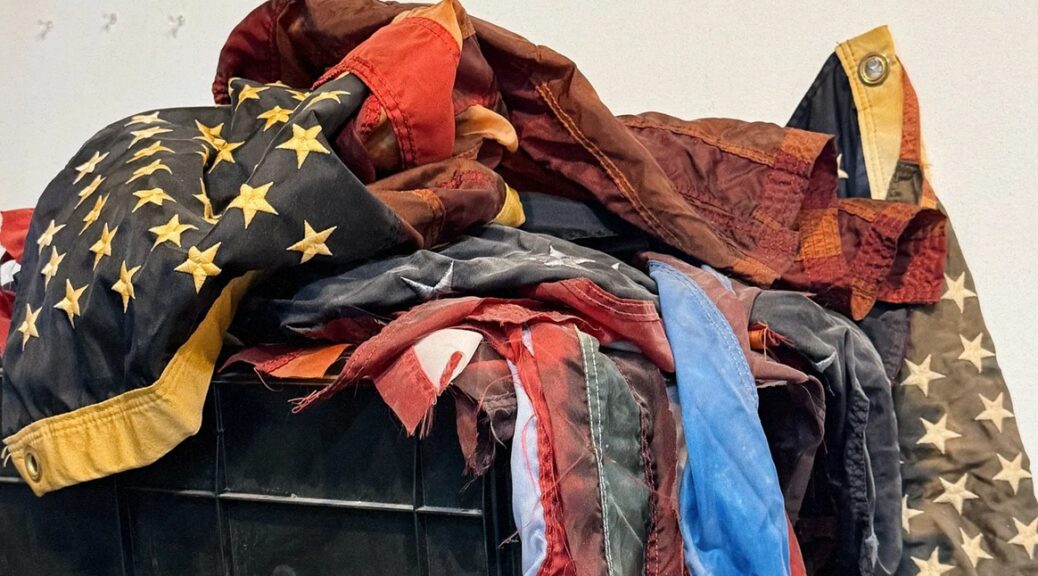
A few years ago, Keiran and I were visiting antique stores in Connecticut when we came across an American flag that had fallen from its flagpole and was lying on the steps to a manor house, which doubled as an antique store.

We looked at each other in horror. This was one of those All-American towns where flags flew proudly and the anthem played on the radio. The store owner probably played quarterback in high school. What would his reaction be to learn his flag had been desecrated?

Flags aren’t such a big thing in Canada, so I’m not entirely sure of the rules.
But I’m fascinated by the strict set of protocols for displaying and respecting flags, an inanimate object. Can you wear them? What happens if you accidentally fly one upside down? How do you store one? What spell do you have to cast if it accidentally falls on the ground? And most pressing: why?

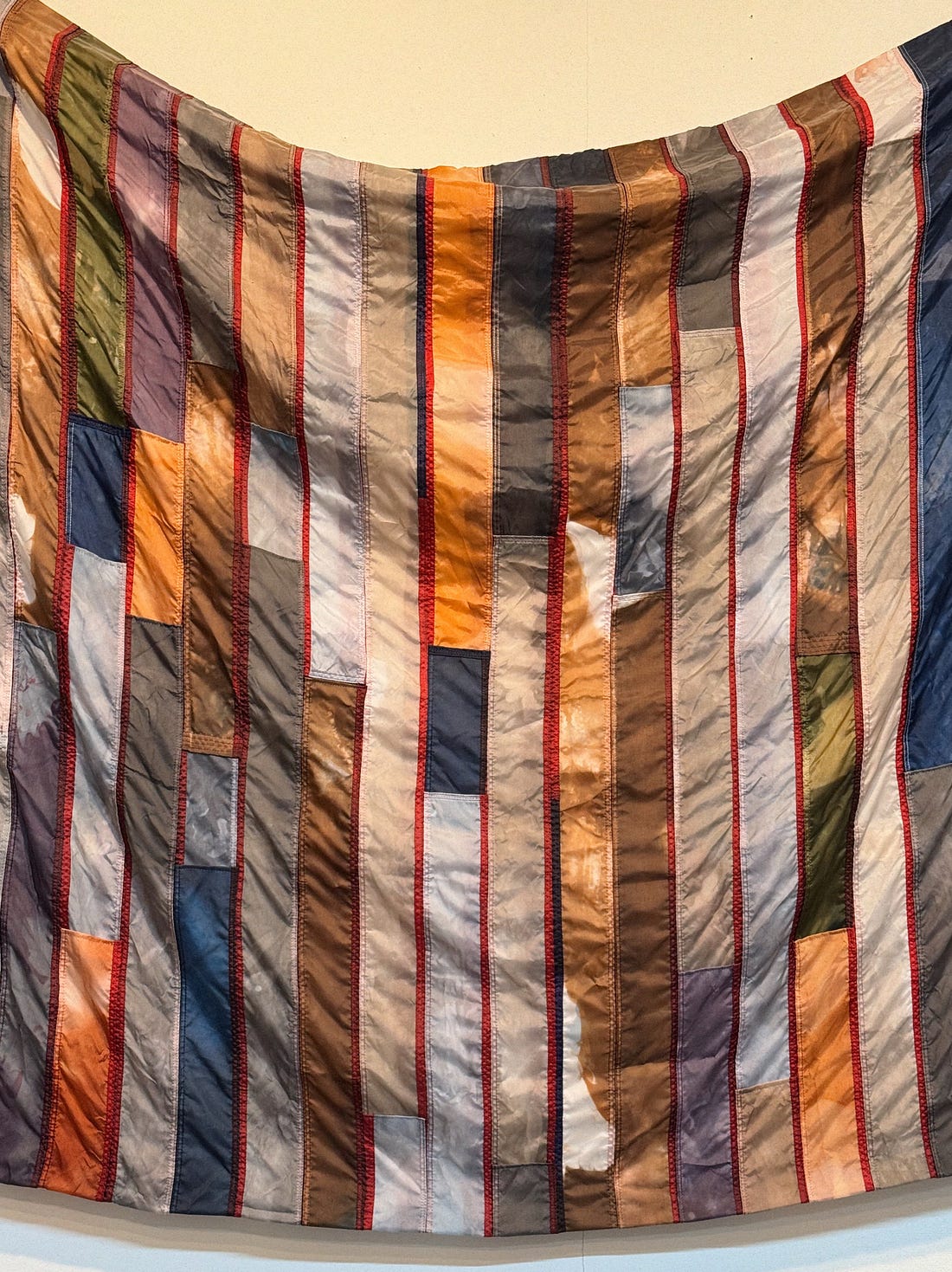
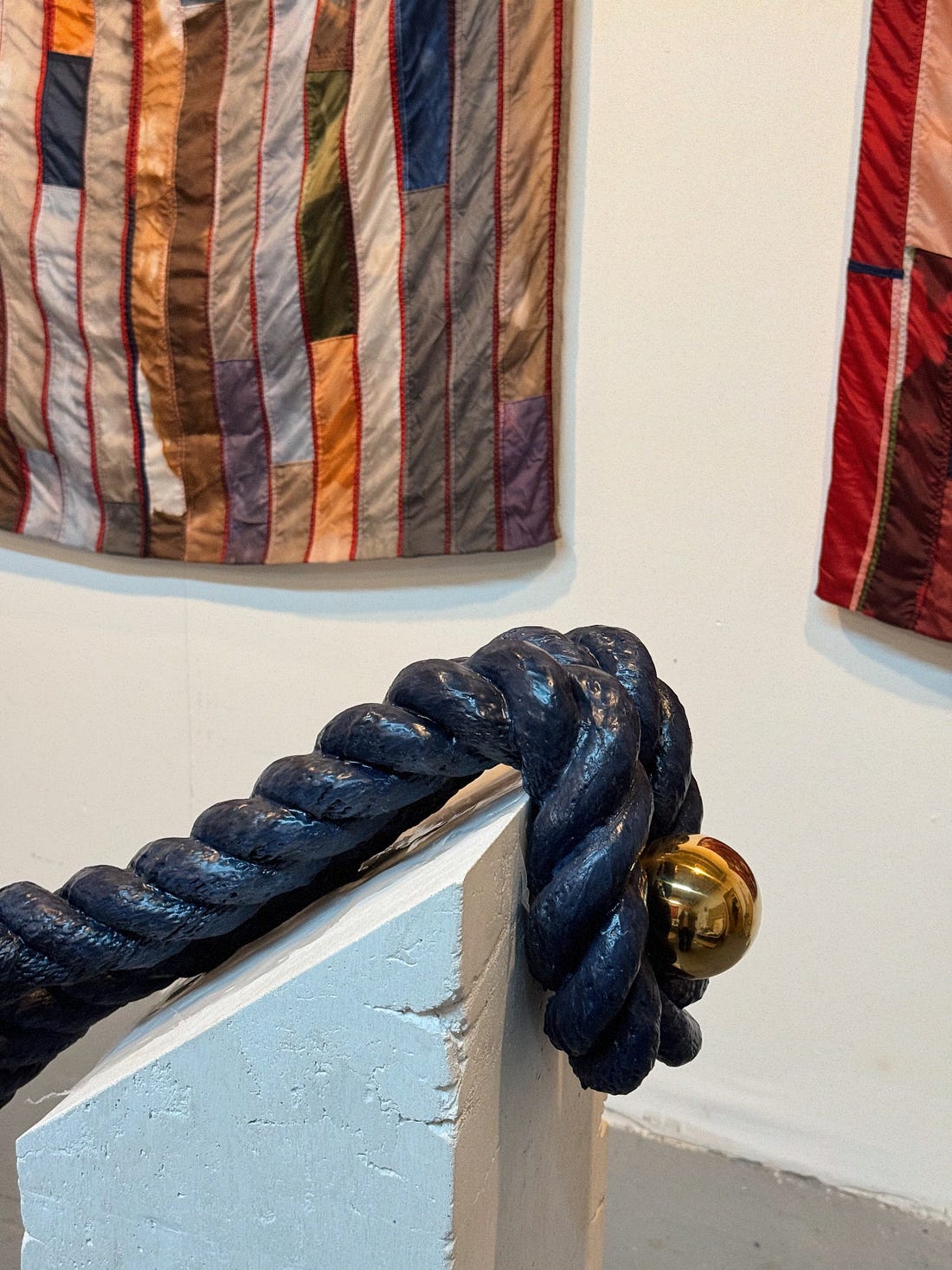
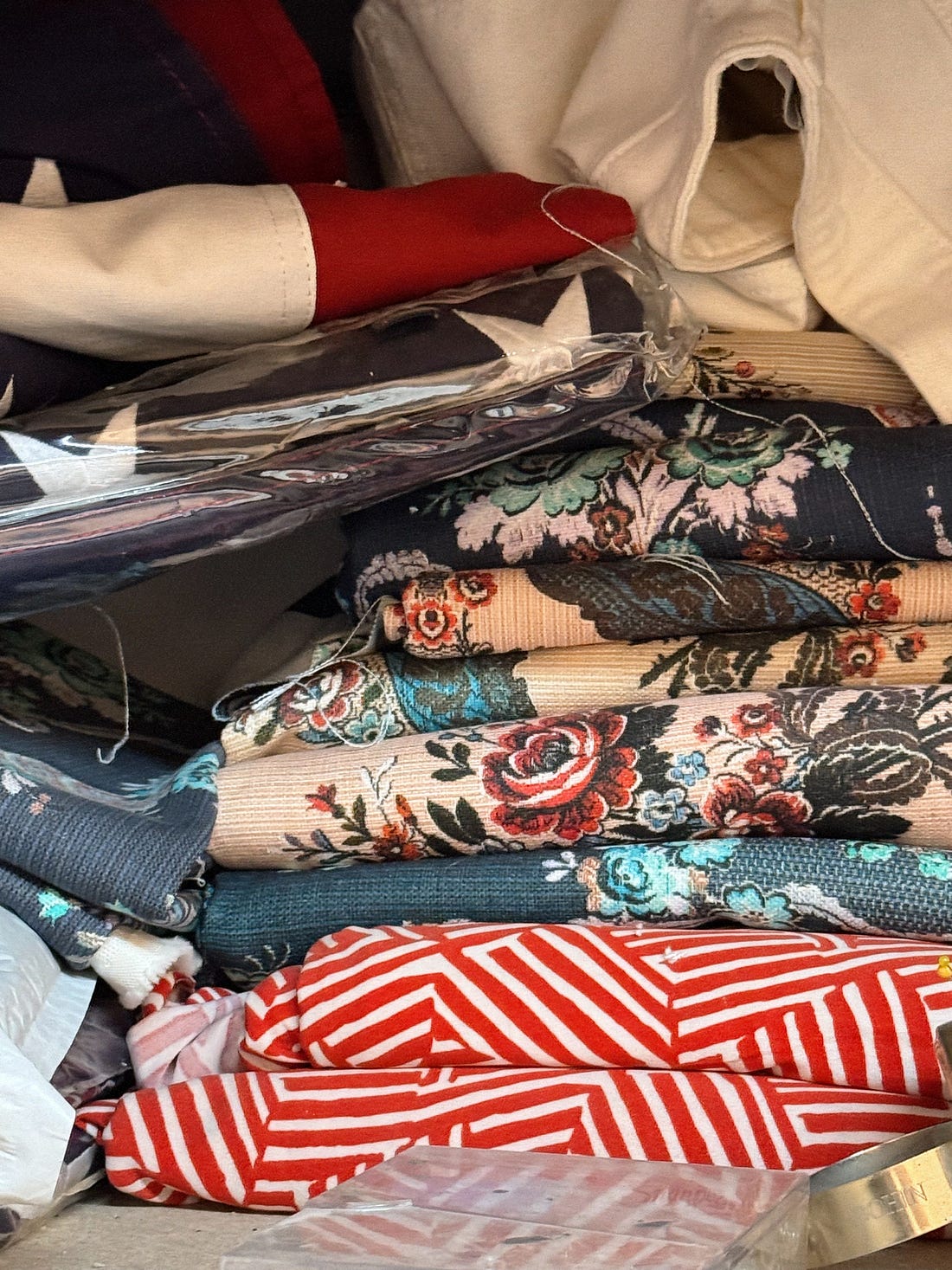
The artist Carla Edwards is also interested in the state-issued protocols for handling the American flag, and sets out to upend said formal rules by dismantling, dyeing, and reconfiguring standard-issue American flags in her Flag Series. The work becomes unrecognizable from its origin, transformed into patterned tapestries with abstractions that harken to the domestic activity of quilting.
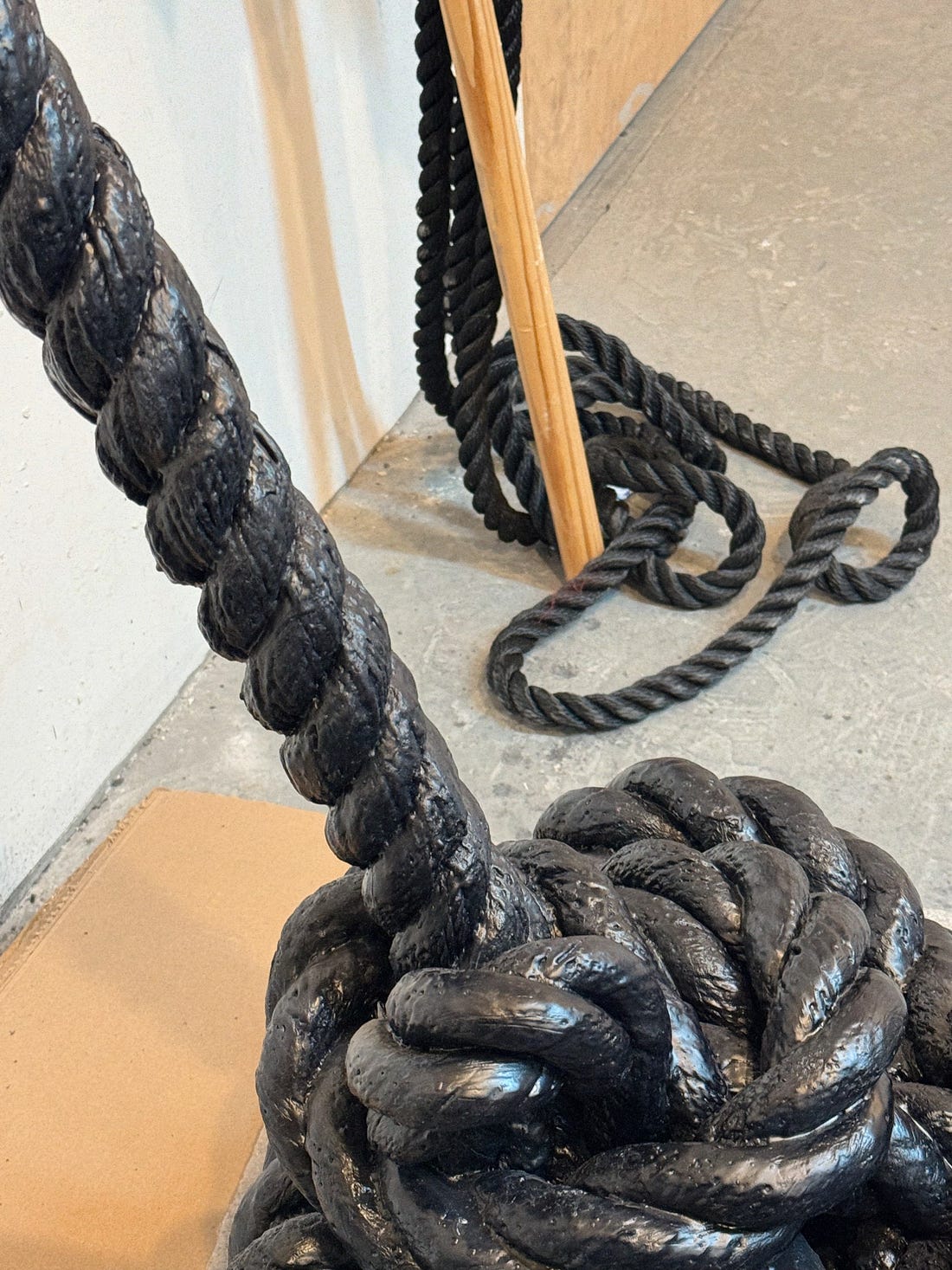
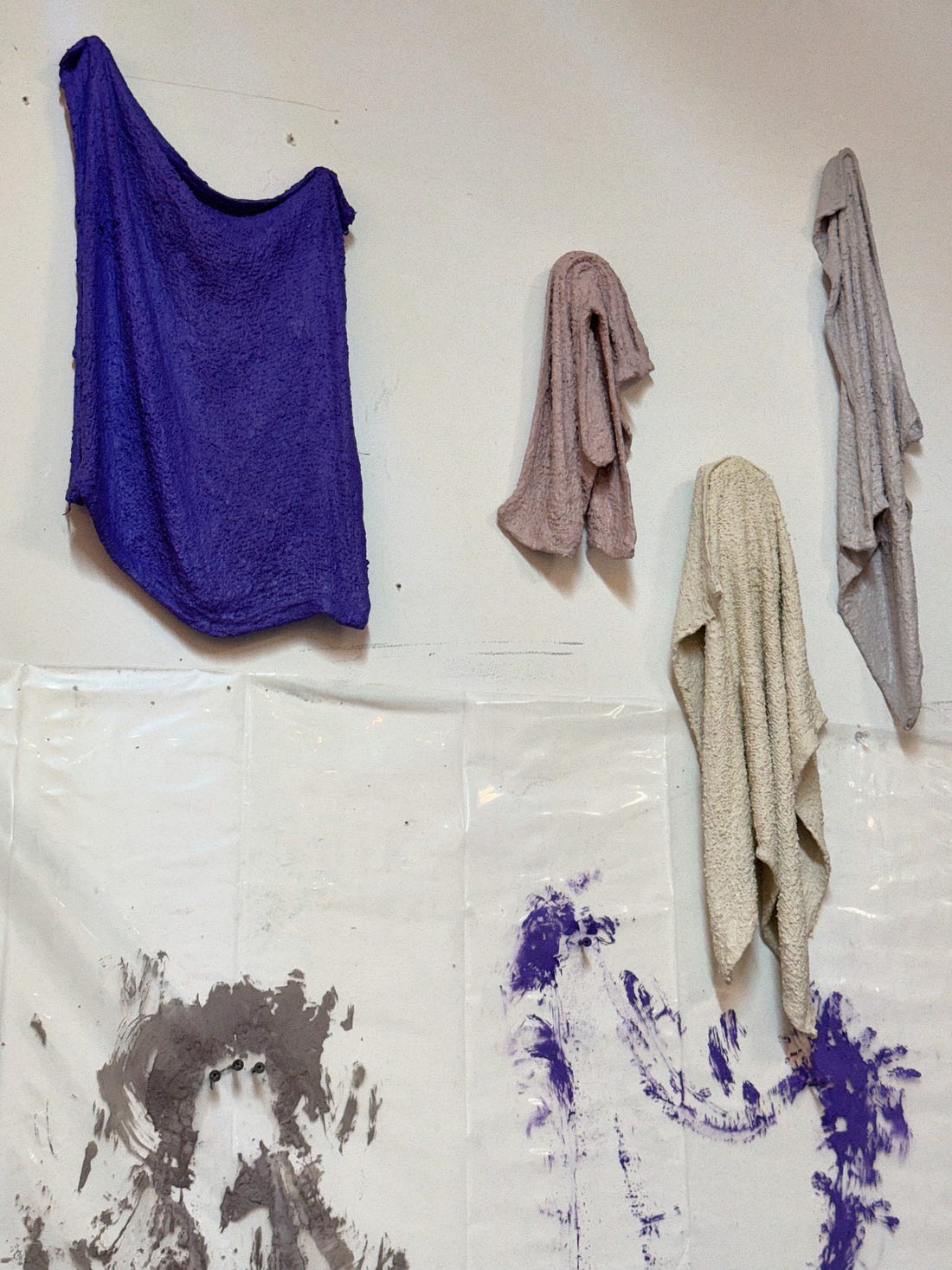
Edwards’s sculptural work, made from rope configured in gravity-dying shapes that come to take on human-like qualities, continues her pursuit of shifting materials through rigorous process. Just like a flag, it seems like ropes and knots come with their own set of rules: how to tie them properly, and the practical roles they play.

I think about all the metaphors we have for ropes and knots: walking a tightrope, enough rope to hang oneself, tied up in knots, tying the knot.

Another inanimate object takes on outsized proportions.

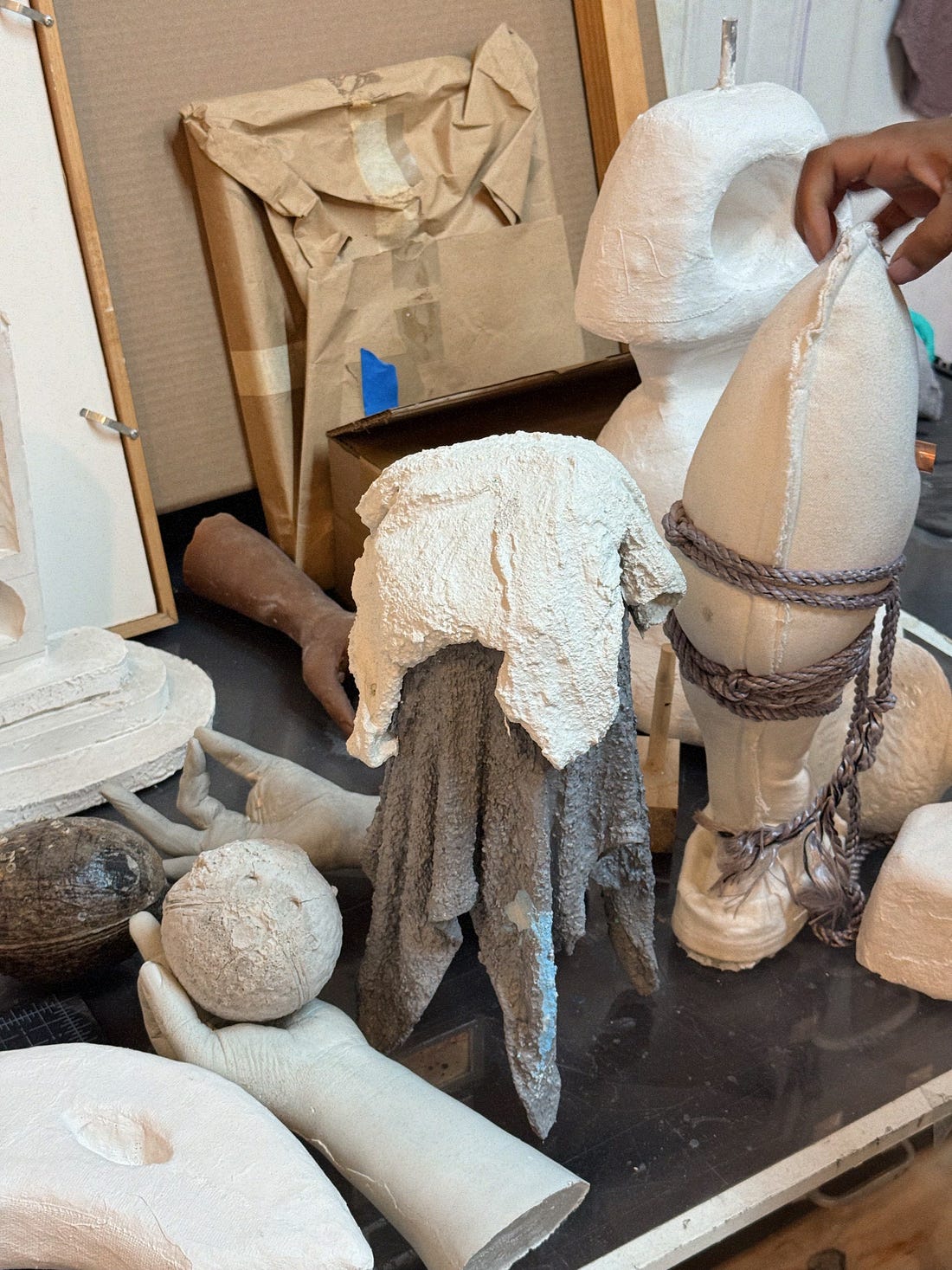
Edwards takes it even further, imbuing pieces with energy and anthropomorphic qualities that make the viewer think for a beat longer about what these objects mean—and, most importantly, why.

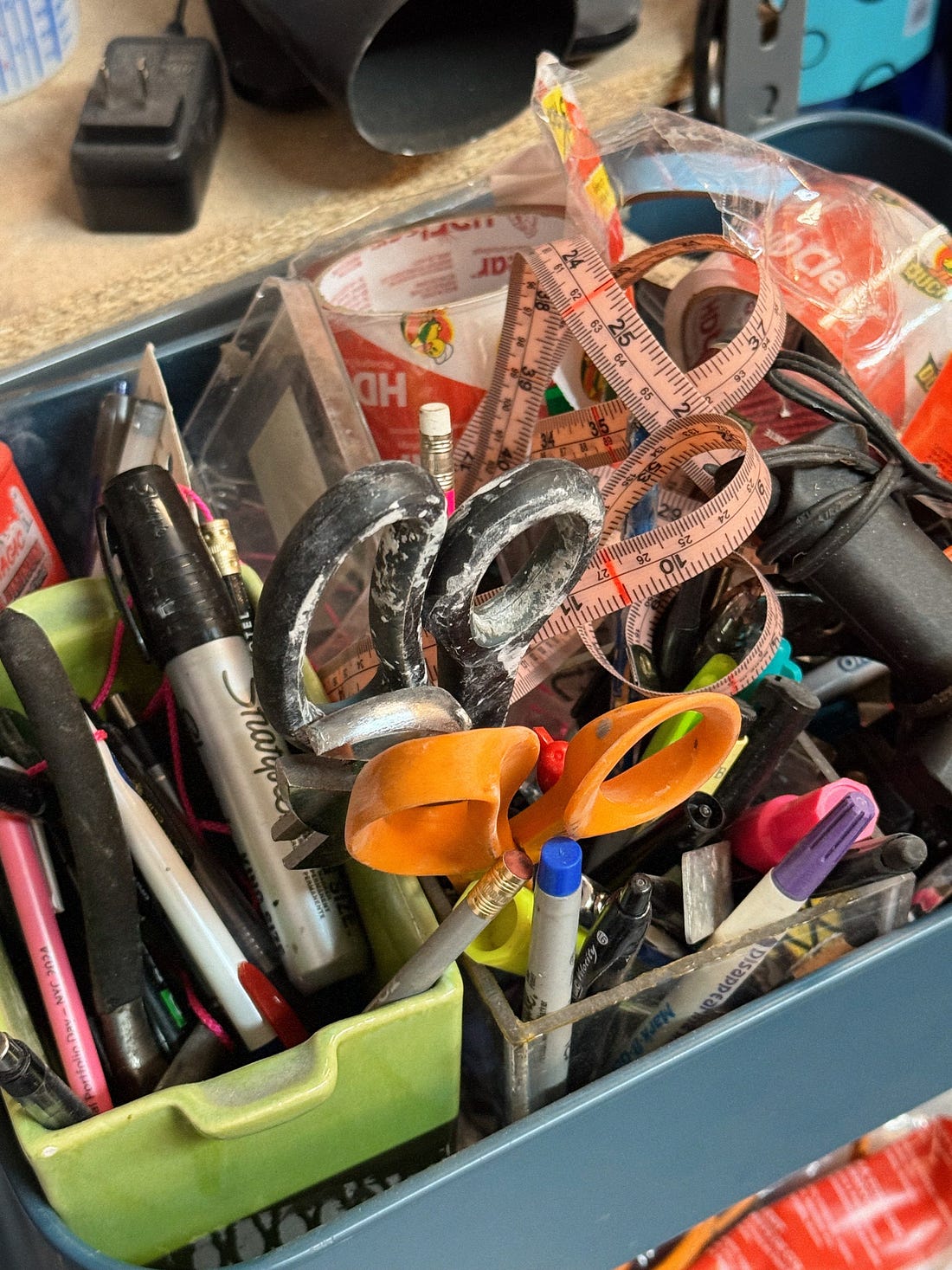
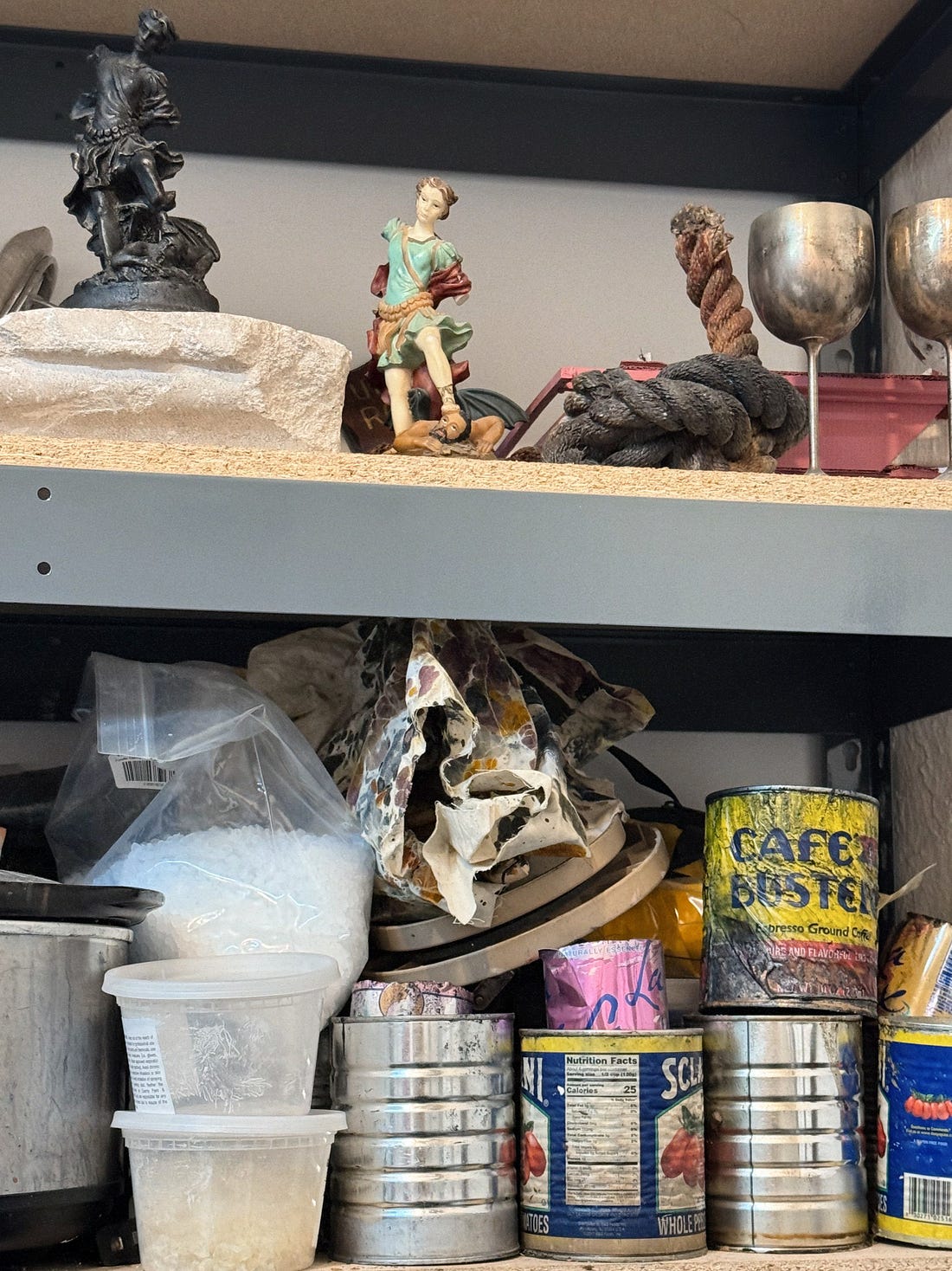
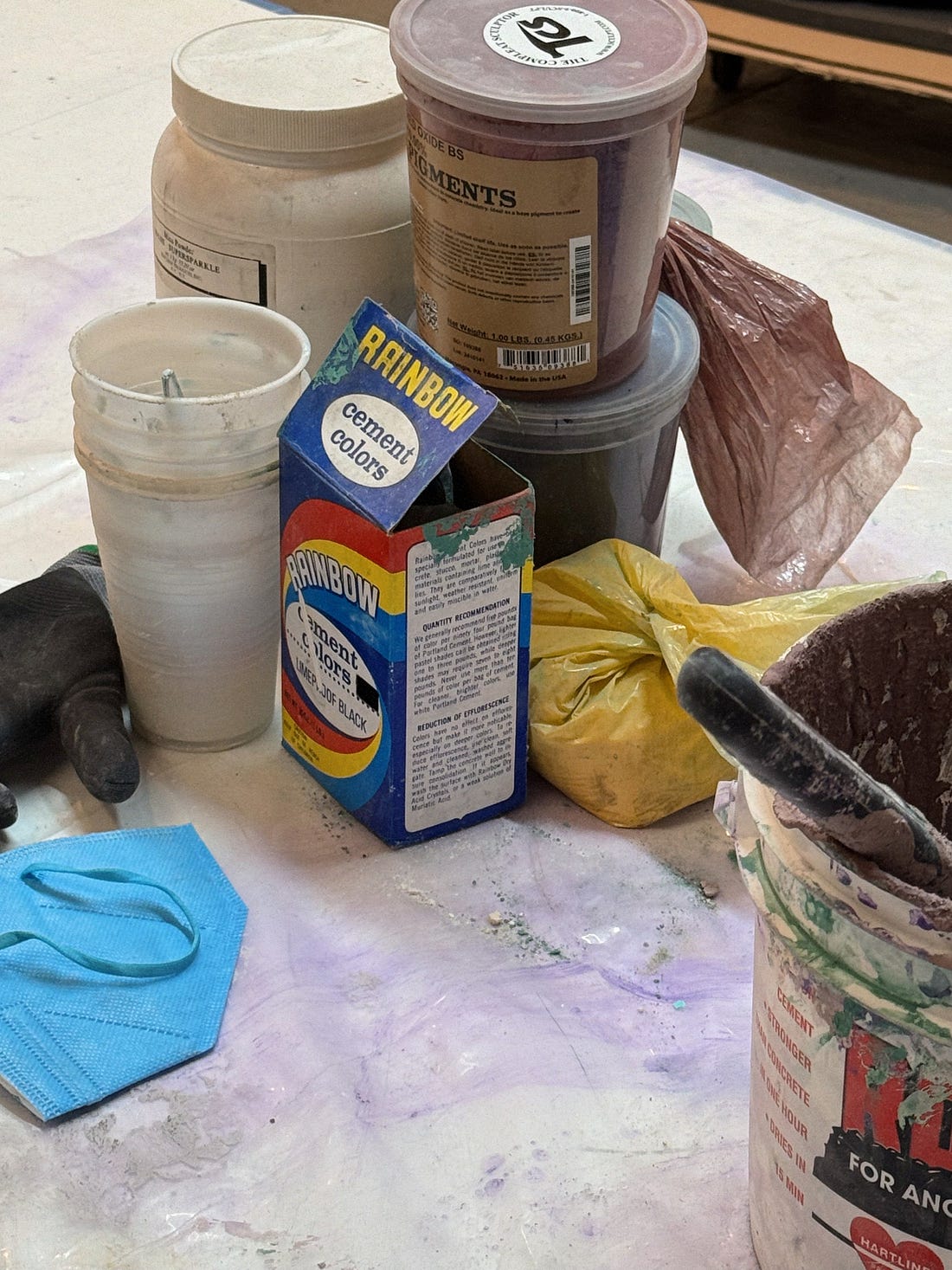
Below is a look inside Carla Edwards’s studio in Brooklyn, NY. The artist will have work at Art Basel Miami with Night Gallery.
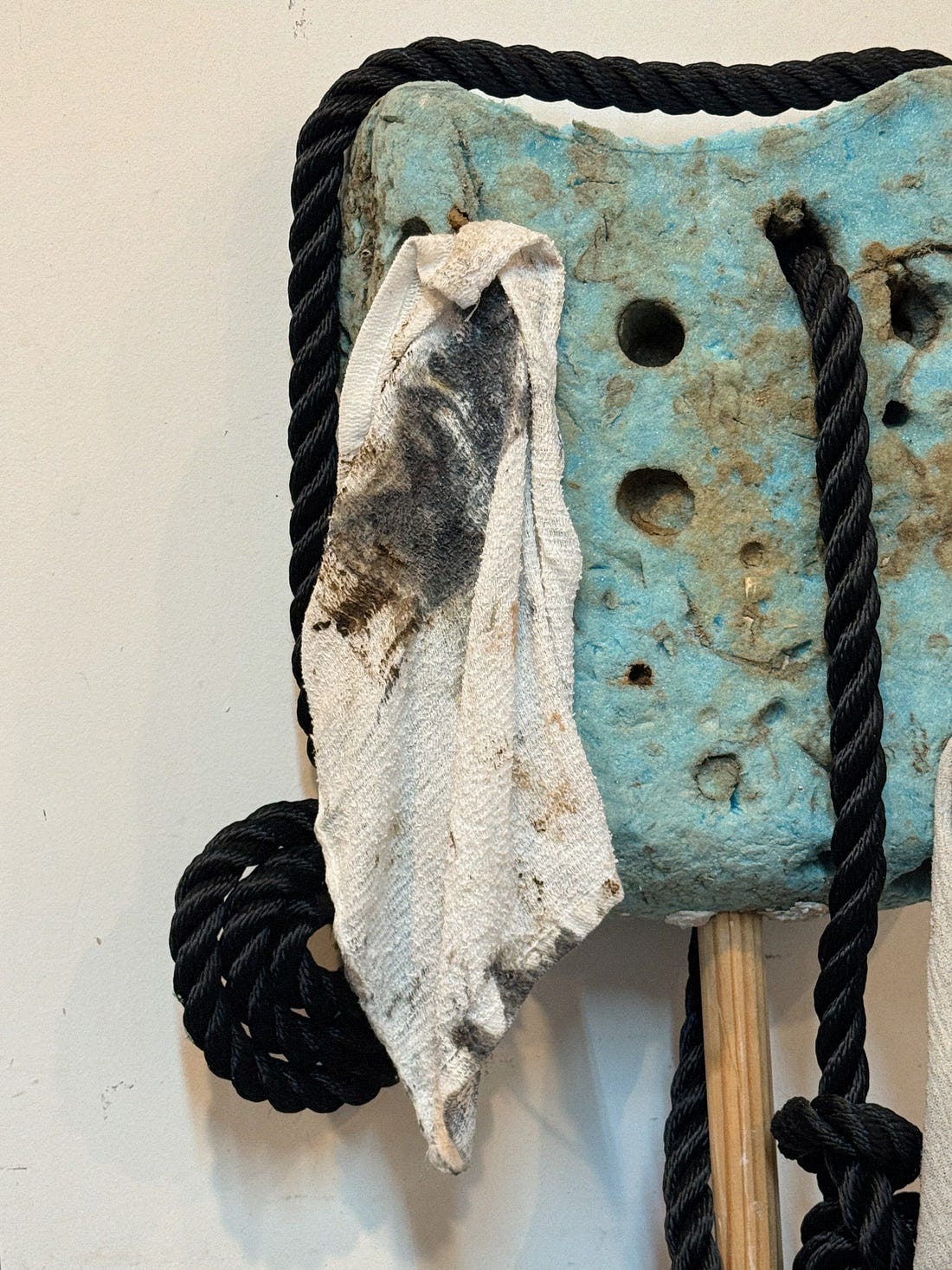
Carla Edwards (b. Illinois) received her MFA in Sculpture from the Rhode Island School of Design, Providence, RI. She has exhibited her work nationally and internationally, including at the Studio Museum in Harlem, New York, NY; Louisiana State University Museum of Art, Baton Rouge, LA; Crystal Bridges Museum of American Art, Bentonville, AR; Paula Cooper, New York, NY; Nuit Blanche Toronto, Canada; Volta5, Basel, Switzerland; Night Gallery, Los Angeles, CA; and Lyles & King, New York, NY, among other venues. She has exhibited public sculpture at the Socrates Sculpture Park in Queens, NY and at Lighthouse Works, NY. The artist is an alumna of Skowhegan School of Painting and Sculpture and was a studio fellow in the Whitney Independent Study Program. Her works are included in numerous private collections and the public collections of Crystal Bridges Museum, Bentonville, AR; Institute of Contemporary Art, Miami, FL; Vera Institute of Justice, Brooklyn, NY; and JP Morgan Chase. She lives and works in Brooklyn, NY.
For the Silo, Tatum Dooley.

The Biggest Art Collecting Mistake I Made

Before I started collecting art, I dipped my toe in the water by buying prints and art posters (the latter still has a soft spot in my heart). One thing that often gets overlooked when collecting works on paper in the pursuit of affordable art is just how expensive framing is. Now, when given a choice between a painting on canvas or paper, I’ll sometimes choose the former to avoid the cost of framing.

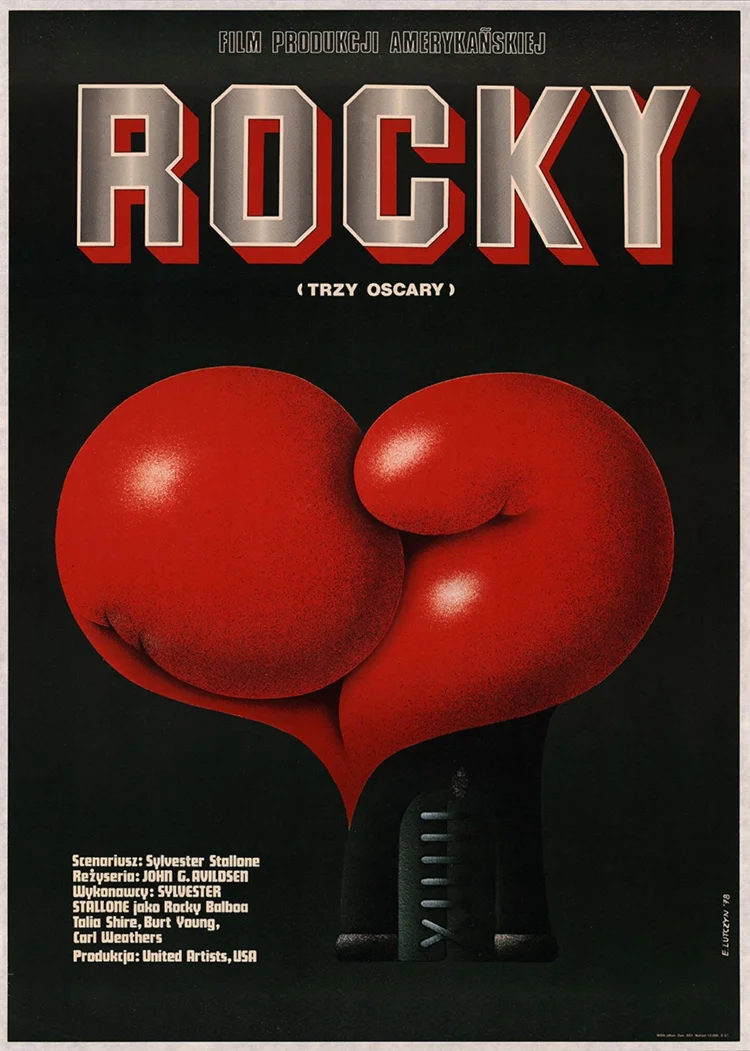
Polish Rocky Poster

Polish Back to the Future poster.

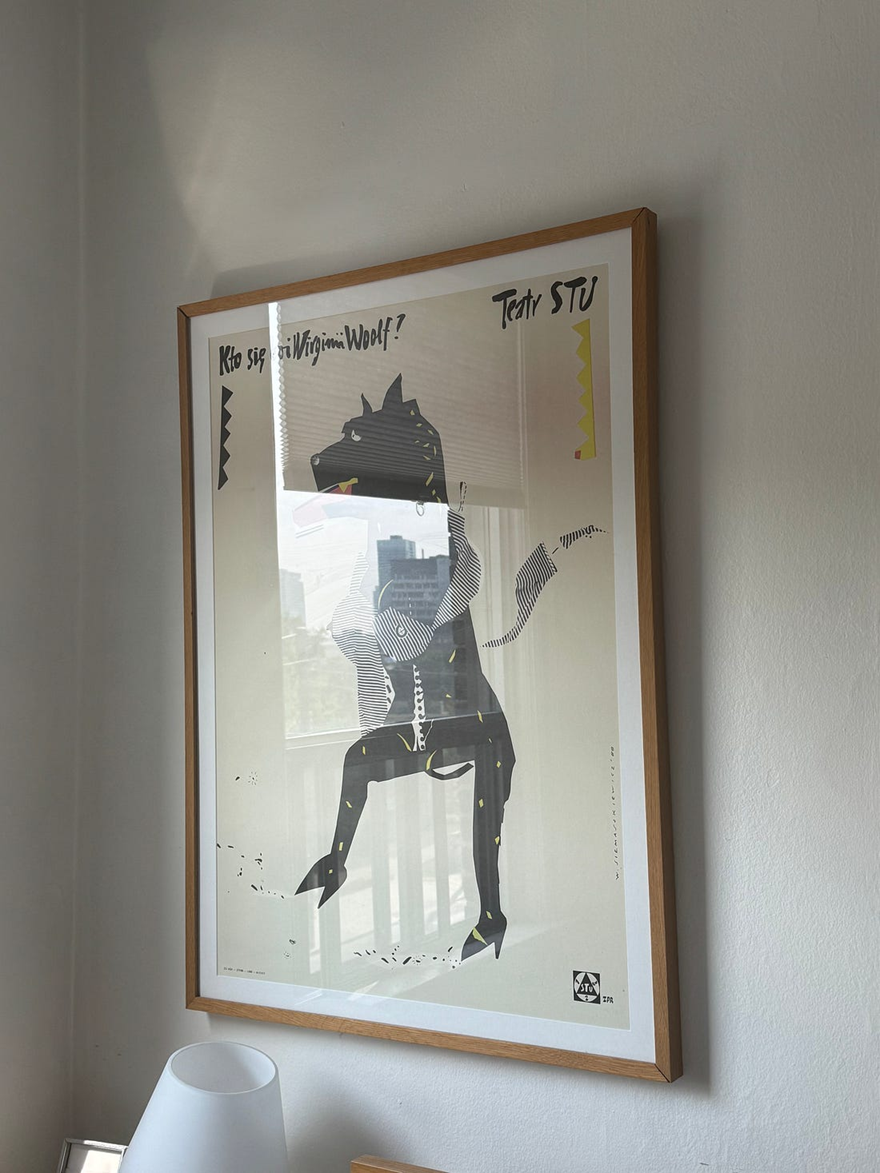
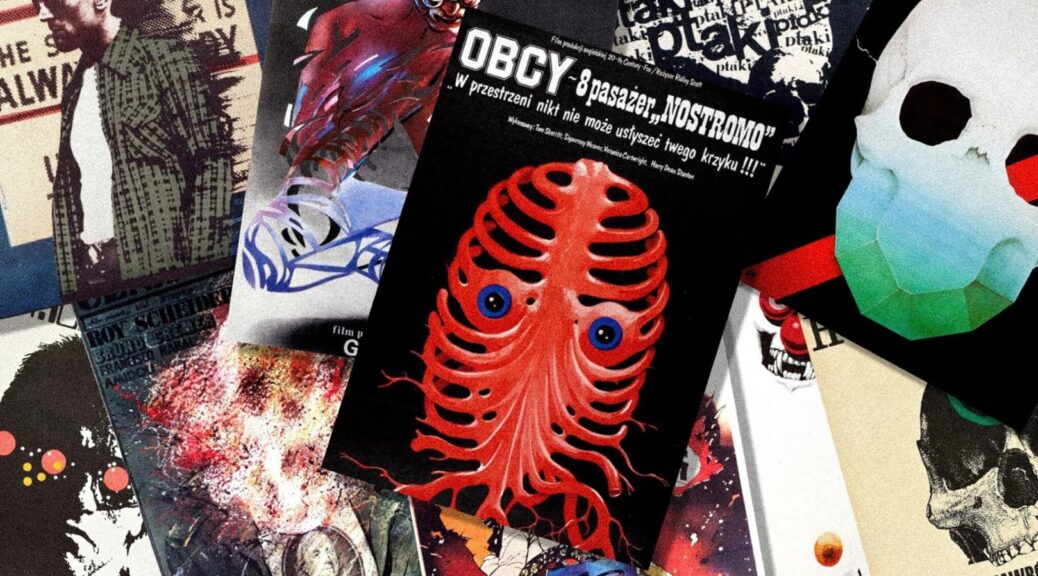
Years and years ago, on a trip to Cincinnati for the FotoFocus Biennial, I picked up this Polish theatre poster for a production of Who Killed Virginia Woolf. I love the history of Polish film posters, which have a distinct style that circumvented strict rules of the Stalinist regime around art making (you can read more about the history of that here). I love the weirdness and darkness of the posters, and with this particular poster, I love(d) the deeply pigmented pink.

Now I present my biggest art mistake:

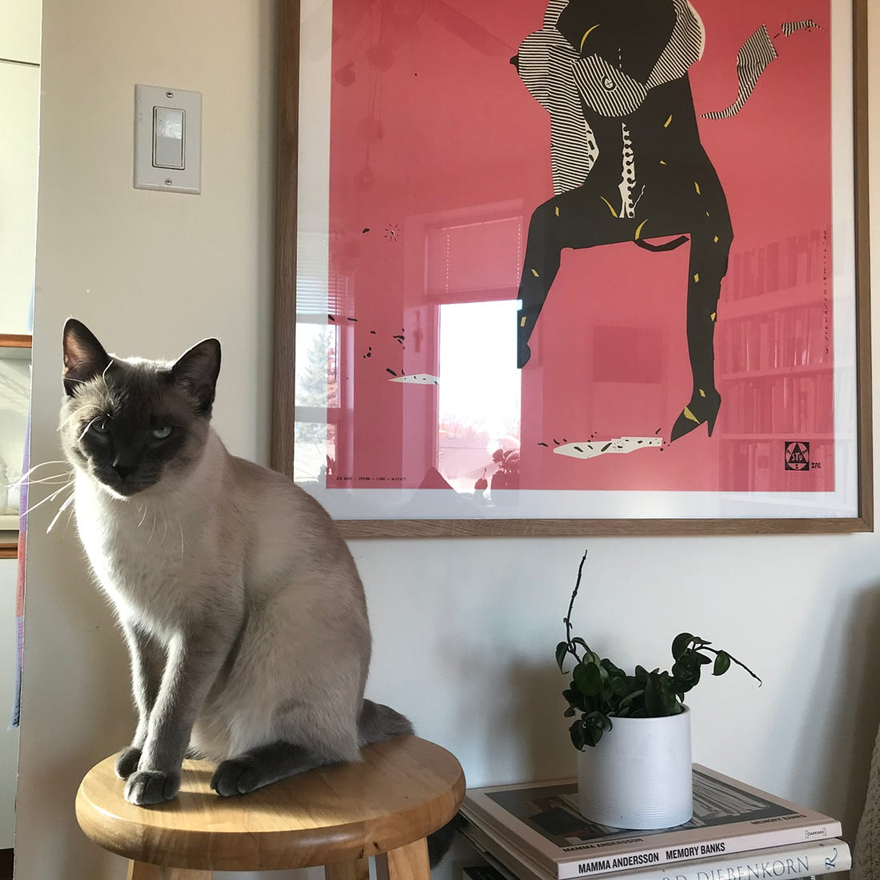
The poster four years ago:

Hi, Raffi

And the poster now:

I’m sure being directly beside a window doesn’t help matters

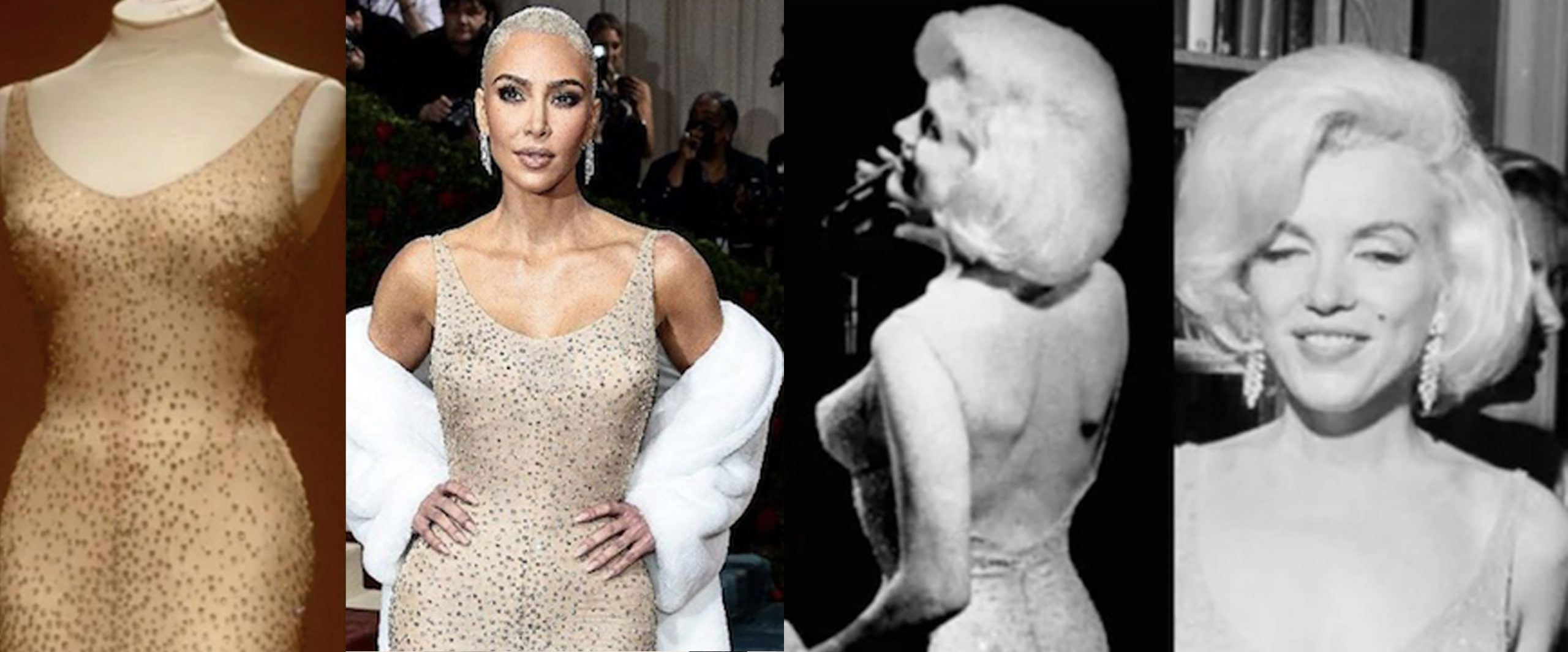
All the pink pigment is gone. Remember when Kim Kardashian wore Marilyn Monroe’s dress to the Met Gala and everyone was furious that she ruined something archival? That’s basically how I feel.

Lesson Learned: Go for the more expensive glass or acrylic option!

I emailed Mitch Robertson at Superframe, a top-of-the-line frame shop in Toronto, to ask about how I could have prevented this. His first response was to express disbelief: Were they really the same poster? Yes, unfortunately, it is.

He followed up with an in-depth breakdown of why the glass, specifically the UV protection, is important to consider when framing:

For art or anything that is light sensitive, the type of glass or acrylic used is one of the most important decisions in framing. The sun and any source of UV light can bleach or shift the colours in a print or photograph in particular and warm colours like red are the most susceptible.

To prevent this, clients should choose a glass or acrylic with a high UV filter. Standard glass and acrylic typically block around 50% of UV light. Conservation options block 99% of UV light but look much like regular glass. Finally, low reflection glass and acrylics offer a much better viewing experience and offer 92 to 99% UV protection.

There is a price difference between the three levels so deciding which option is right for you can depend on budget as well as the location the art will hang as well as how vulnerable the art is to UV light. A reputable framer should have a range of options available and can explain the pros and cons for each.

While the glazing is a very important part of the decision for protecting your new art, other factors such as how the art is hinged and the quality of matboard and backing will also affect the art over time and can lead to discoloration if the materials and hinging methods are not to museum standards.

Mitch’s response demonstrated something I came to learn the hard way: it’s not the time to cut costs when choosing the type of UV glass. A sidenote is I’ve also had polaroids fade after framing in store-bought frames, so if there are family photos that are important, the same lesson applies.

I then started thinking about a conversation I had in 2021 with Monique Palma Whittaker, an art conservator who works between Toronto and Italy. We discussed the importance of collectors being stewards of artworks, propelling them into the future for the next generation. This conversation has always stuck with me because it answers a question I think about often: What is the purpose of art collecting? The answer might be as simple as taking care of art for our lifetime, so that it can exist into the future. It’s a question of maintaining history!

When collecting, it’s not just about the cost of the artwork, but the cost to properly take care of it for its lifespan. If that price is too high, whether it be framing or a properly temperature-controlled room, then it’s better to collect something you can holistically afford to take care of. For the Silo, Tatum Dooley.