Tag Archives: restoration

Hallmark Of All Porsche Sportscars For Sale

  • Extensive restoration within the last decade
  • Restored in its originally delivered livery of Speedster White over Red leatherette
  • Considerable history dating back to the late-1970s, documenting long-term preservation into the late 2010s
  • Original U.S.-specification 1600 Speedster delivered to Hoffman Motors
  • Fitted with a period-correct 1956 1,600-cc engine with twin Solex carburetors paired with its numbers-matching transmission
  • Furnished with a copy of its factory Kardex warranty card, Porsche CoA, owner’s manual, and toolkit

Chassis No. 82181

Engine No. 63249
Transmission No. 8775

USD 485,000$/ CAD 678,130$ (exchange rate at time of posting)

Dispatched to Hoffman Motors in New York City in the spring of 1956, this 1956 Porsche 356 A 1600 Speedster was among those U.S.-market examples delivered via the legendary American-market distributor and tastemaker. It left the factory wearing Weiss (White) paint over Red leatherette, the same striking livery it wears today. Additional options noted on the Kardex include a speedometer in miles and sealed beam headlights.

The earliest history of the car dates to the late 1970s when it was sold via Weldon Scrogham’s G&W Motorwerkes to R.A. Hendricks of Waynesboro, Virginia. Service invoices show that by at least 1983 the car was in the hands of long-term owner Carter Elliott based in nearby Charlottesville. Elliott would take fastidious care of the car while under his ownership, a span that would last over three decades.

Invoices on file reveal more

Invoices remain on file showing parts purchases and work completed by the best suppliers throughout the 1980s and 1990s, including Stoddard, Performance Products, and H.G. Bieker. In 2018 the story of Speedster chassis number 82181 simultaneously began anew and circled back to familiar hands when noted 356 Porsche expert and restorer Cole Scrogham (son of Weldon) was tasked with a thorough refresh. Directed by its then-owner to keep as much of the original car intact as possible, Scrogham is said to have been able to retain the majority of its original, Reutter-built sheet metal with an eye on preservation while the car was refinished to “show quality” in its original shade of Speedster White.

A period-correct 1,600-cc flat-four (serial number 63249) from a 1956 356 A powers the wheels through its numbers-matching transmission. In the nicely detailed engine compartment, you’ll find proper FRAM and Bosch decals, correct finishes and components, as well as a pair of Solex carburetors topped by silver Knecht air cleaners.

Today, this Speedster appears just as Max Hoffman and the Porsche factory intended: in elegant White over Red, with such details as accessory chrome guards protecting the sealed-beam headlights, period-style Michelin XZX 165 tires, and gold-tone badging serving as clear indicators as the quality of its restoration. A matching red vinyl boot (trunk) covers the occasional soft top when it’s folded. Inside, the red vinyl bucket seats made famous by the Speedster wear contrasting ivory edge piping. A correct ivory two-spoke steering wheel with a horn ring frames a body color dashboard covered with a red upholstered top. VDO instruments feature with correct green lettering — including a miles-per-hour speedometer, as specified in the original Kardex. In a smart nod to modernity, the car is equipped with a pair of vintage style lap belts. Otherwise, Speedster chassis number 82181 presents very much as it did when delivered new in 1956 — down to its exquisite color selection.

In addition to extensive documentation dating back more than four decades, this iconic 356 A Speedster is furnished with a toolkit, a spiral-bound driver’s manual, a Porsche Certificate of Authenticity, a copy of its Kardex warranty card, and side curtains with their protective case.

For the Silo, Alexander Weaver/ Hagerty.
How Do You Make Expanding Foam At Home?

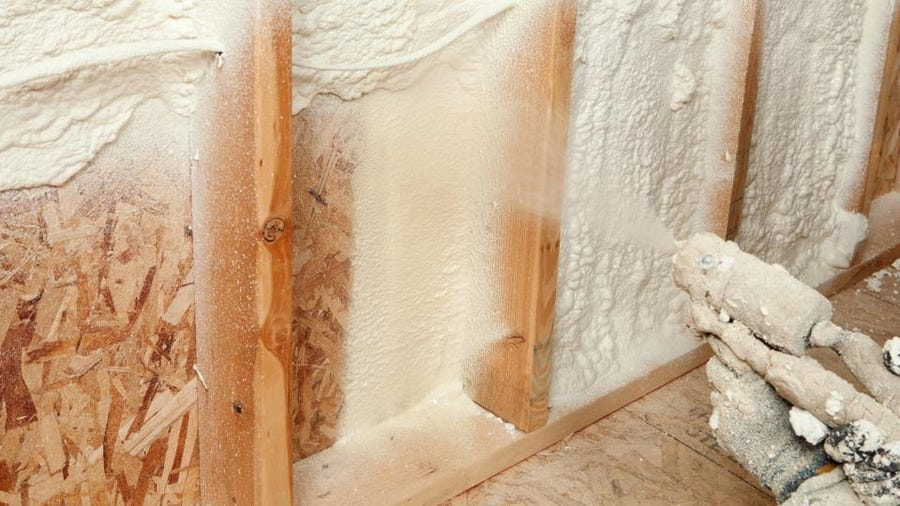
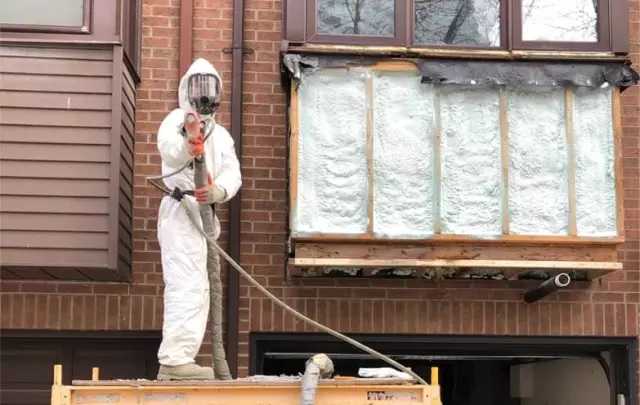
Expanding foam is a versatile material that is commonly used in construction, DIY projects, and home repairs. It is a polymer foam that expands upon application and hardens to fill gaps, cracks, and voids. Expanding foam is useful for insulating walls, sealing leaks, and stabilizing structures. While it is readily available for purchase at hardware stores and home improvement centers, it is also possible to make expanding foam at home. Visit here to learn more.

Making expanding foam at home is a cost-effective alternative to purchasing premade foam. It also allows you to customize the foam to your specific needs and preferences. In this guide, we will walk you through the steps of making expanding foam at home.

Step 1: Gather materials

To make expanding foam at home, you will need the following materials:

  1. A mixing container
  2. A stirring stick
  3. Polyurethane resin
  4. Isocyanate
  5. A catalyst
  6. A foaming agent

Step 2: Measure out the ingredients

The ratio of ingredients needed to make expanding foam varies depending on the desired consistency and expansion rate. A common ratio is 2 parts polyurethane resin to 1 part isocyanate and a small amount of catalyst and foaming agent.

Measure out the ingredients using a mixing container or a measuring cup. It is important to be precise with the measurements to ensure that the foam expands and hardens properly.

Step 3: Mix the ingredients

Pour the polyurethane resin and isocyanate into the mixing container. Use the stirring stick to mix the ingredients together until they are fully combined.

Step 4: Add the catalyst and foaming agent

Once the polyurethane resin and isocyanate are fully combined, add a small amount of catalyst and foaming agent. The exact amount of catalyst and foaming agent needed will depend on the size of the batch and the desired expansion rate.

Step 5: Stir the mixture

Stir the mixture until the catalyst and foaming agent are fully incorporated. It is important to stir the mixture thoroughly to ensure that the foam expands and hardens properly.

Step 6: Pour the foam into the desired area

Pour the foam into the area where it is needed. The foam will begin to expand as soon as it comes into contact with the air. Use a tool, such as a spatula or putty knife, to shape the foam as desired.

Step 7: Allow the foam to harden

Allow the foam to harden completely before handling or using it. The drying time will depend on the size of the batch and the desired expansion rate.

Benefits Of Expanding Foam

Expanding foam is a versatile and widely used material in construction, DIY projects, and home repairs. It is a polymer foam that expands upon application and hardens to fill gaps, cracks, and voids. Expanding foam is useful for a variety of purposes, including insulation, sealing leaks, and stabilizing structures. In this article, we will explore the many benefits of expanding foam and how it can be used in a variety of applications.

  • Insulation: One of the primary benefits of expanding foam is its ability to insulate a space. When applied to walls, attics, or crawl spaces, expanding foam can help to keep a building or home warm in the winter and cool in the summer. This can save energy and reduce heating and cooling costs. Expanding foam is also effective at blocking drafts, which can further improve energy efficiency.
  • Sealing leaks: Expanding foam can be used to seal leaks around windows, doors, pipes, and other openings. It is an effective way to prevent water damage and improve the overall energy efficiency of a building or home.
  • Stabilizing structures: Expanding foam can be used to stabilize structures, such as foundations, roofs, and walls. It is often used in situations where traditional methods of repair are not feasible, such as when access to the damaged area is limited.
  • Filling gaps and cracks: Expanding foam is an excellent material for filling gaps and cracks in walls, floors, and other surfaces. It can be used to fill small gaps and cracks as well as larger voids.
  • Durability: Expanding foam is a durable material that can withstand a range of temperatures and weather conditions. It is resistant to water, moisture, and rot, making it an ideal choice for use in damp or humid environments.
  • Easy to use: Expanding foam is easy to apply and does not require any special tools or equipment. It can be applied using a simple nozzle or applicator and hardens quickly, making it convenient to use.
  • Customizable: Expanding foam can be customized to suit specific needs and preferences. The expansion rate and consistency of the foam can be adjusted by adjusting the ratio of ingredients used to make it. This allows for a wide range of applications and allows the foam to be tailored to specific requirements.
  • Versatility: Expanding foam can be used in a wide range of applications, including construction, home repairs, and DIY projects. It is an effective material for filling gaps and cracks, sealing leaks, insulating spaces, and stabilizing structures.

Conclusion:

Making expanding foam at home is a cost-effective and customizable alternative to purchasing premade foam. With the right materials and a little bit of elbow grease, you can easily make expanding foam at home. Just follow the steps outlined in this guide and you’ll be on your way to using your very own homemade expanding foam in no time.