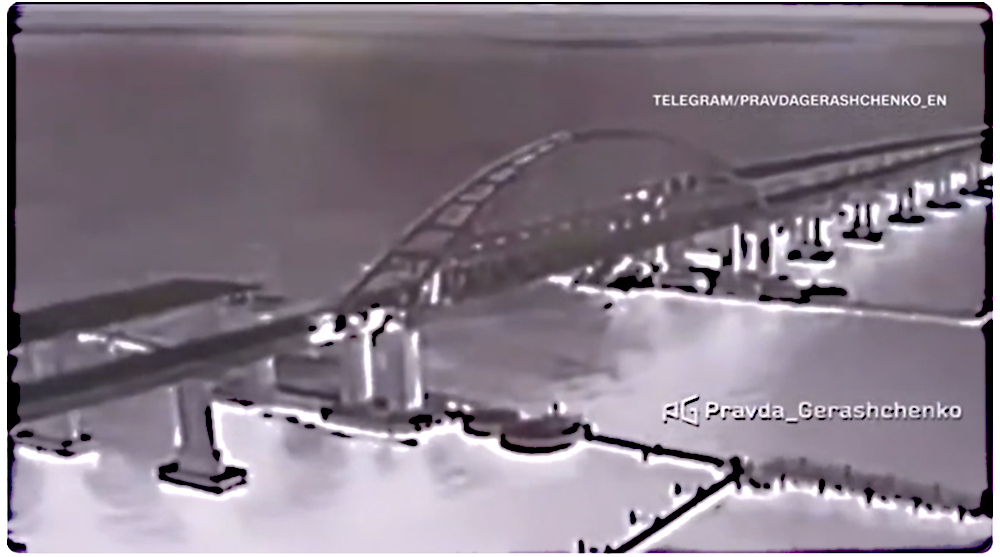
Dear Readers, our friends at Vertical 52 have brought us a new Story From Space with an analysis of Ukraine’s blow to Russian infrastructure on Crimea.
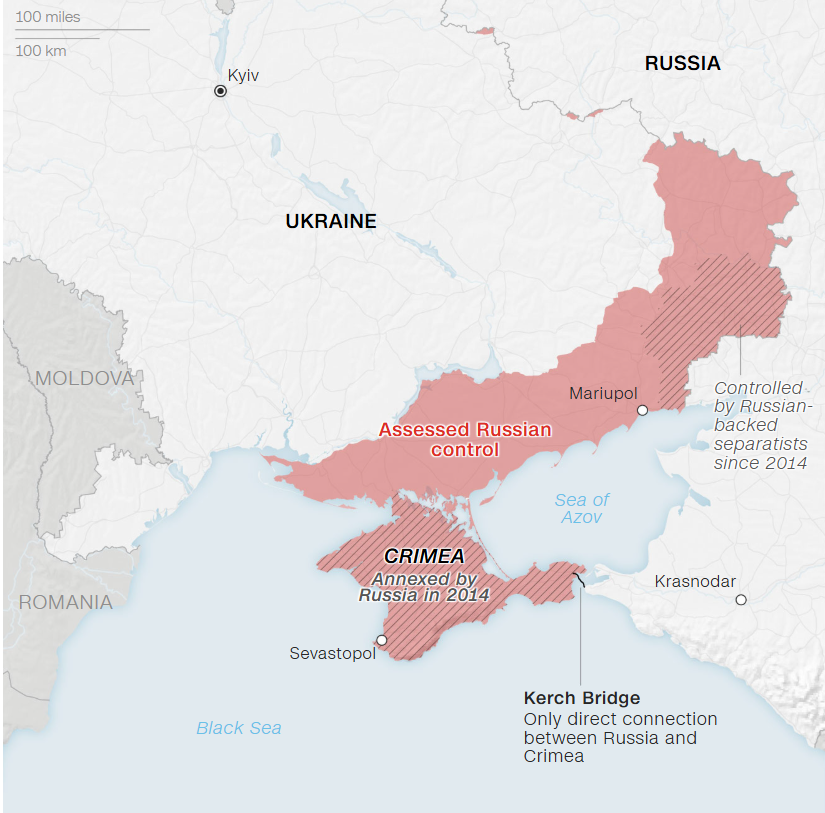
Notes : Control data as of Nov. 15, 2026. “Assessed Russian control” means the Institute for the Study of War has received reliable and independently verifiable information to demonstrate Russian control in those areas. Source: The Institute for the Study of War with AEI’s Critical Threats Project Graphic: Becky Pinnington, CNN
Ukrainian drone and missile strikes have destroyed parts of the Kerch Bridge that connects Russia with occupied Crimea. High-resolution images show initial damage to the $3.7 billion usd Black Sea crossing. High-resolution satellite image showing multiple burn scars after the first wave of Ukrainian drone strikes targeting Kerch Bridge on November 16. Source: Airbus Pléiades Neo 30cm, 16 November 2026. On the night of November 17, Ukrainian drone and missile strikes destroyed the road and arch of the Kerch Bridge. Both parts broke into the Kerch Strait. Russia built the 19-kilometre crossing to occupied Crimea after it invaded the peninsula in 2014 to secure consistent access to the region. The wreckage now blocks the only sea access between the Black Sea and the Sea of Azov, stopping vital shipments by Russia. The rail crossing next to Kerch Bridge still stands, though Ukraine’s General Staff states its arch is damaged too. In an X post on Monday, Ukraine’s president Volodymyr Zelensky stated that Ukraine’s Forces “gradually destroyed air defense systems, radars, electronic warfare equipment, and other designated targets on the way to the final objective.”  Kerch Bridge shown on 3m resolution satellite imagery just hours before the first attacks on the 16th of November. Source: Planet Labs The crossing has long been a target for the Ukrainian forces. It is symbolic of Russia’s invasion of Ukraine, and also holds strategic power. After the start of the occupation of Crimea in 2014, Kerch Bridge was built for 3.7 billion USD. Citing Russian state media CNN reports that it was constructed to transport up to 40,000 cars a day, about 14 million passengers, and 13 million tonnes of cargo a year. For the Russian army, it is a main supply line for fuel, ammunition and troops in Crimea and southern Ukraine. Since Ukraine destroyed the Chonhar and Henichesk bridges in the north, Russia depends even more on Kerch and on the land corridor through occupied southern Ukraine, Reuters reports. On the morning of November 16, the Russian-installed head of Crim ea Sergei Aksyonov, posted on his Telegram channel that Kerch Bridge was attacked and traffic stopped. The Russian outlet Mash reported that up to 2,000 cars were stuck on both sides of the Bridge – a number we were not yet able to verify through satellite imagery. Drones hit the arch on the Crimean side and pushed it about 15 degrees out of line. Satellite images from Exilenova+ – a pro-Ukrainian war monitor and news channel, showed the deck damaged in at least two, potentially three, places. High-resolution images from Airbus show burn marks on the same parts of the road – though they appear slightly larger. The Airbus image shows small strike impacts but not yet the full-scale destruction seen after the missile strikes. By midday, cars crossed again in alternating single lanes, and trains kept running. The next night, heavy missiles followed.  High-resolution satellite image showing burn scars after the first wave of Ukrainian drone strikes targetting Kerch Bridge on November 16. Source: Airbus Pléiades Neo 30cm, 16 November 2026.  Satellite image and damage analysis posted by war monitoring channel “absolutely_reliable”, verified by Vertical52. The image shows the strike impact: a slight tilt of the bridge’s metal arch. Drone attacks on the sea walls set up along the bridge to protect it are visible to the right and left. Source: Telegram “absolutely_reliable”, 16 November 2026.  Close-up of the burn scars after the first wave of Ukrainian drone strikes targeting Kerch Bridge on November 16. Source: Airbus Pléiades Neo 30cm, 16 November 2026. The following night on November 17, the Ukrainian Forces conducted further strikes — this time with heavier explosives than the night before. Footage posted by Volodymyr Zelenskyy shows one of them, an FP-5 “Flamingo” cruise missile, just before impact. Der Spiegel reports that the slow and usually easy-to-defend-against missile can carry up to one ton of explosives. By morning, photos showed the road span in the water and only the rail arch still standing.  The vessel-tracking service MarineTraffic shows multiple tug vessels gathering very close to the destroyed bridge, possibly doing smaller cleanups. Source: MarineTraffic, 18 November 2026. The Ukrainian missile strikes followed a wave of Russian attacks on bridges across Ukraine. The Russian military heavily targeted and damaged civil infrastructure, including many bridges, in the weeks before Kerch Bridge was destroyed. Breaking down the Kerch crossing, blocking the only sea access between Black Sea and the Sea of Azov, and cutting a vital road to occupied Crimea is a symbolic blow to Putin’s war in Ukraine. |
For the Silo, Luis Beyerbach.