Tag Archives: kommandostore.com

Art Of Camouflage- Rhodesian Brushstroke

There are an insane variety of camouflage patterns. From subtle and understated but effective (solid polar white for snowy battlefields) to ostentatious and loud but surprisingly battle proven (the Belgian jigsaw pattern anyone?).
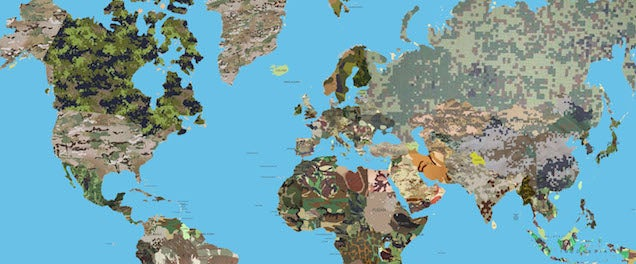
Main camo patterns of the world.

A Few Interesting Examples. Be Sure To Click On The B/W Images To View In Color.

You get the idea. But what is the best camouflage pattern?

That is an objective question and no doubt everyone has a personal favorite. Our friends at the kommandostore.com make a pretty solid case for the Rhodesian brushstroke pattern. Let’s take a closer look at the history of the Rhodesian Army and the buildup towards the Bush War where said pattern was dutifully employed.

Rhodesia Leading Up To The Bush War: An Overview

What we now know as Zimbabwe was Southern Rhodesia was one of three states merged in 1953 to form the British-administered Federation of Rhodesia and Nyasaland (also known as the Central African Federation). This union was largely a marriage of convenience, as the British protectorates of Northern Rhodesia and Nyasaland were significantly less developed than self-governing Southern Rhodesia.

However, the Federation balkanized and dissolved in 1963 amid ethnic tensions, political instability, and deep cultural divides. Simultaneously, changing political winds in London favored a policy of rapid decolonization and majority rule. The collapse of the Central African Federation was viewed as proof positive that failing to quickly implement majority rule would result in the collapse of European-lead African governments.
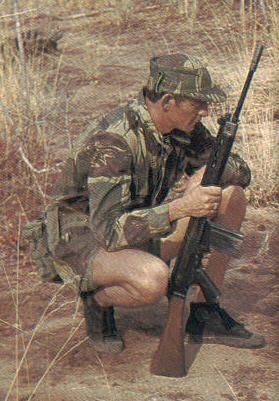
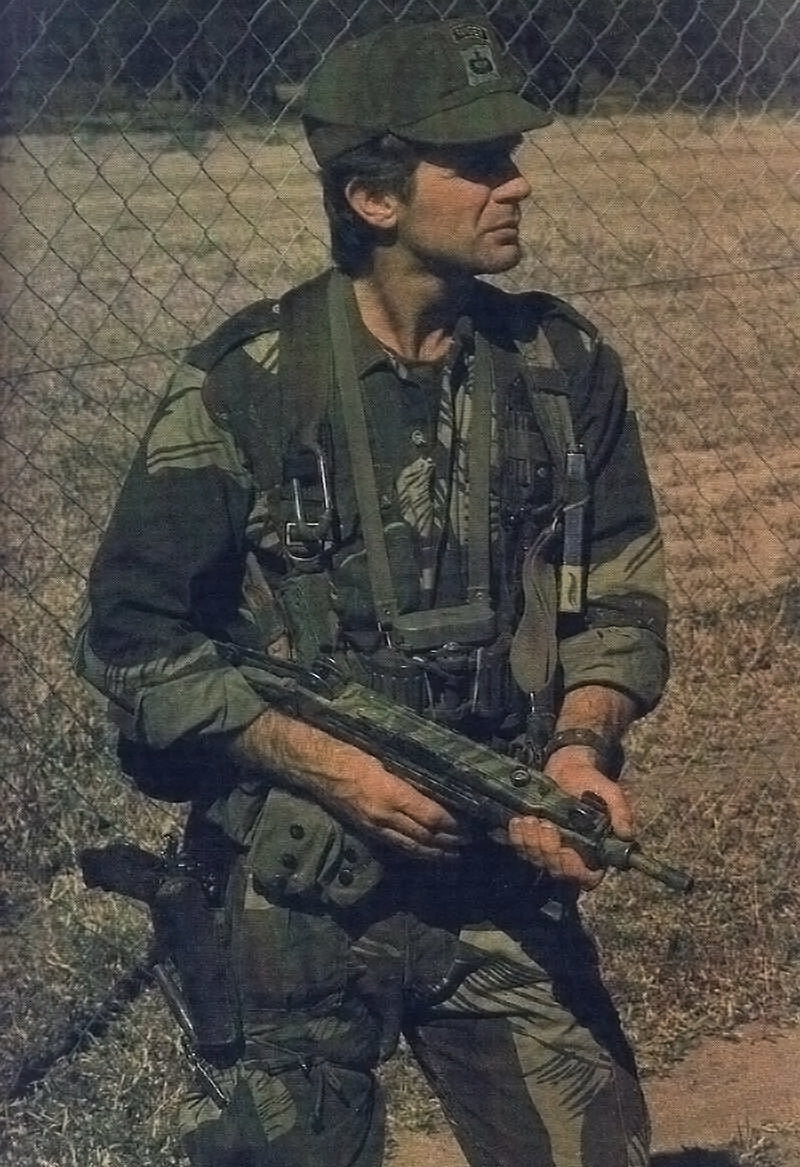
An early type brushstroke pattern.

The reality was more complex.

Western-style democratic republics require a certain level of social infrastructure in order to function as intended. While the white population of the Central African Federation carried western traditions with them from Europe, the myriads of African ethnic groups had long traditions of tribal organization along ethnic lines, with their own rivalries and blood feuds.

To address this, Southern Rhodesia had created the best educational system in Africa, spending enormous sums on literacy programs, primary and secondary schools, vocational education, technical colleges, and universities. On a GDP adjusted basis, Southern Rhodesia’s expenditures on education were not just the best in Africa, they were world leading. By 1959 this approach yielded incredible results with roughly 85% native children enrolled in school, a trend that would only accelerate through the 60s. Similar initiatives had developed road and rail networks, the best healthcare system in Africa, modern water purification, and cheap, plentiful electricity.

The British governed protectorates of Northern Rhodesia and Nyasaland enjoyed little of this economic or social development. In these areas western ideas held no hope for the future and only served to destabilize traditional power structures. These communities, dominated by subsistence farming and rural poverty, contrasted sharply with the economic miracle happening just across the border.

Fresh from the bloody partition of India, English politicians failed to appreciate the likelihood of a similarly violent outcome in the push for immediate majority rule in their African colonies.

Amid intense pressure to solve Britain’s problems at home, the UK’s rush to divest its colonies created a power vacuum that China and the USSR were more than happy to exploit by funding, training, and arming the Marxist-nationalist ZANU and ZAPU groups in Northern Rhodesia and Nyasaland.

Southern Rhodesia unilaterally declared independence (known as “UDI”), from Britain, forming the state of Rhodesia in 1965. And almost in unison, the Bush War began.

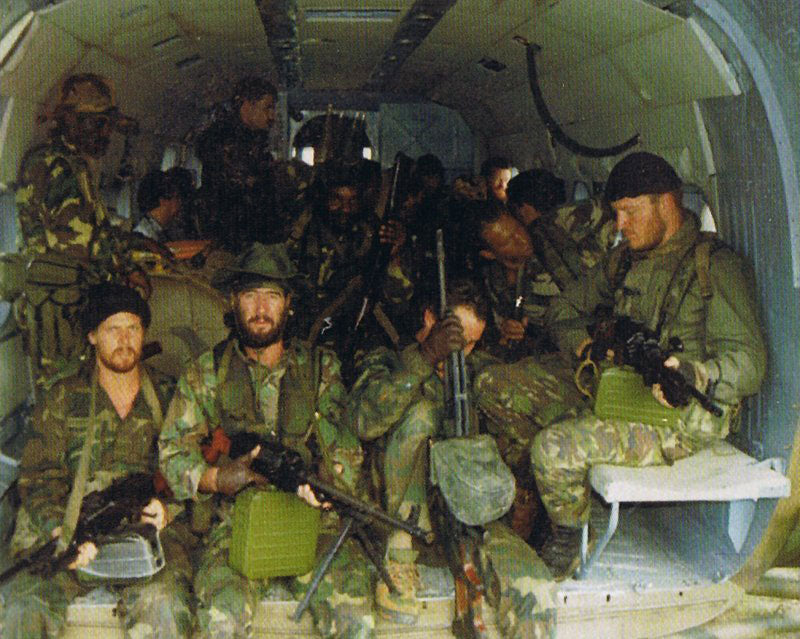
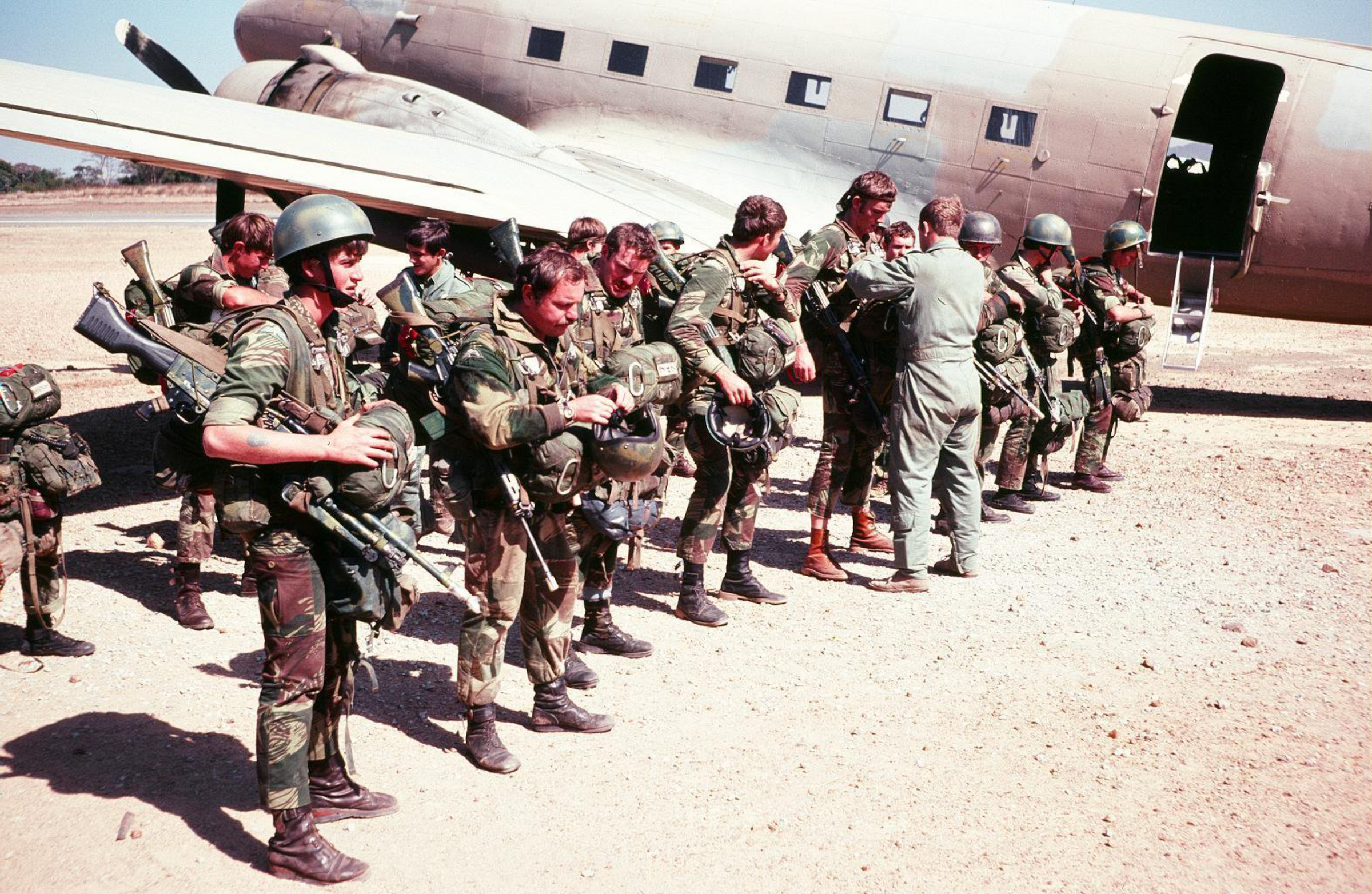
Formed around a small cadre of 10,000 highly experienced WWII combat soldiers and airmen, the Rhodesian military benefited from extensive counter-insurgency experience serving alongside British forces in the Malayan Emergency of the 1950s. Due to the stability, security, and prosperity in Rhodesia, the military had no problem recruiting a racially-integrated and majority native fighting force. The 60s and 70s would also see an influx of adventure seeking British and American expats, including many Vietnam veterans…

Cool Camouflage. Where Can I Get Some?

I thought you’d never ask. Made in South Africa, this legendary camo has been brought back to life by kommandostore and it is epic.

A Blank Canvas

Rhodesian camouflage, often referred to as “Rhodesian Brushstroke” or simply “Rhodie camo” is a distinct and highly effective pattern created during the height of the Cold War. Its development was driven by the unique circumstances of the Rhodesian Bush War (1964-1979), a conflict characterized by high tempo counterinsurgency operations and great power proxy warfare.

Prior to the widespread adoption of Rhodesian Brushstroke, the Rhodesian military primarily used camouflage patterns from allied British and Belgian forces. Specifically, the British WWII Denison, Belgian Moon and Ball, and Belgian Brushstroke patterns. Looking at these camouflages it’s easy to see how they influenced the development of Rhodesia’s indigenous camouflage.
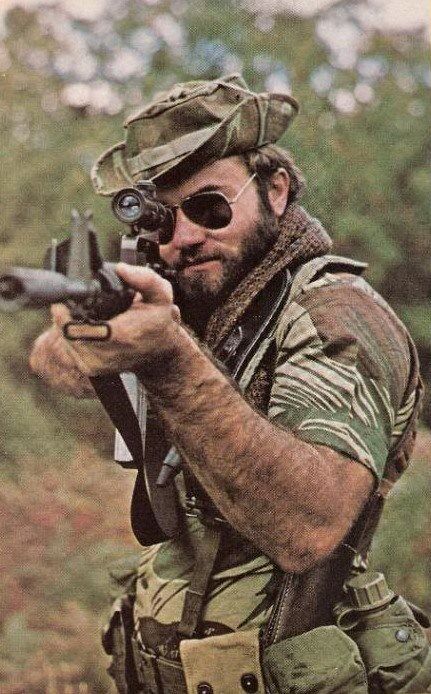
Cut Off

Sanctions after ‘UDI’ aimed to isolate Rhodesia economically and politically, but paradoxically spurred swift industrial and economic development in Rhodesia, including production lines for vital military equipment. Without these sanctions, Rhodesian manufacturer David Whitehead Textiles Ltd, would not have been contracted to develop and manufacture a uniform for the nascent Rhodesian military.
2nd Time’s the Charm

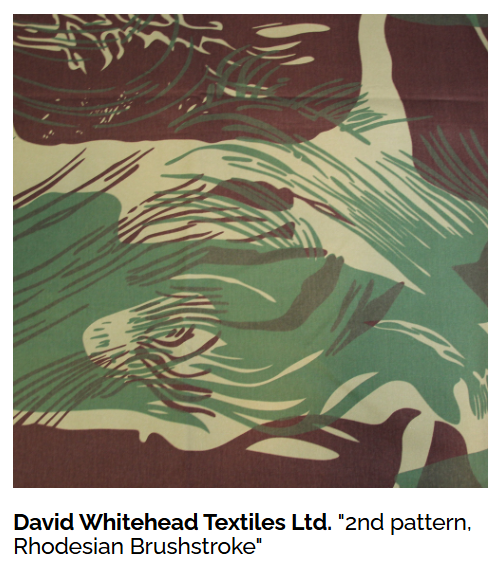
The print itself was Designed by Dianana ‘Di’ Cameron, an young print designer at David Whitehead in Salisbury. Di hand painted different patterns and presented her canvases directly to senior military officials. This rapid iteration allowed Rhodesian camo to be put into production quickly, and changes continued to be made over several years.

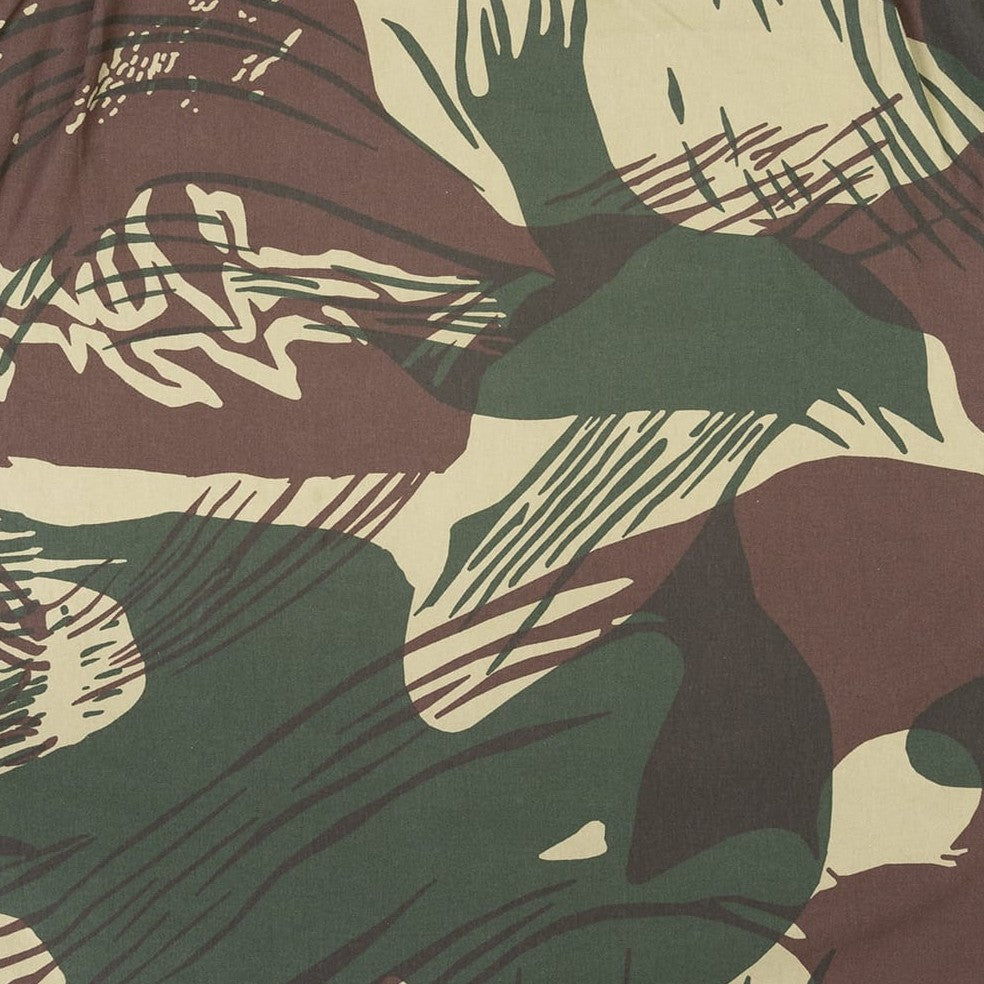
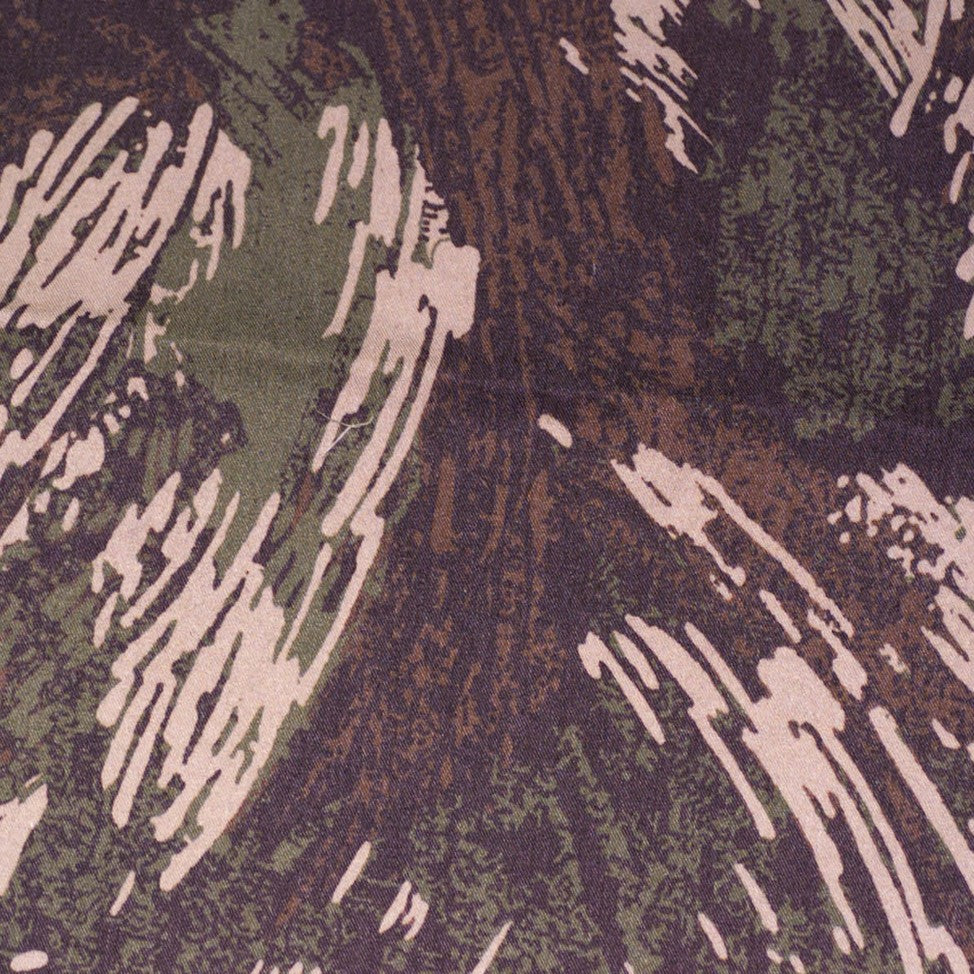
Di’s ultimate ‘2nd pattern’ design was distinctly organic, with large, high-contrast of light and dark. Together these elements create a layered three-dimensional effect which was more effective than previous British and Belgian designs. Sadly, Di passed away in South Africa due to a stroke around 1995.

Pictured: Our remix of 2nd pattern brushstroke with a few minor differences.
Design Details
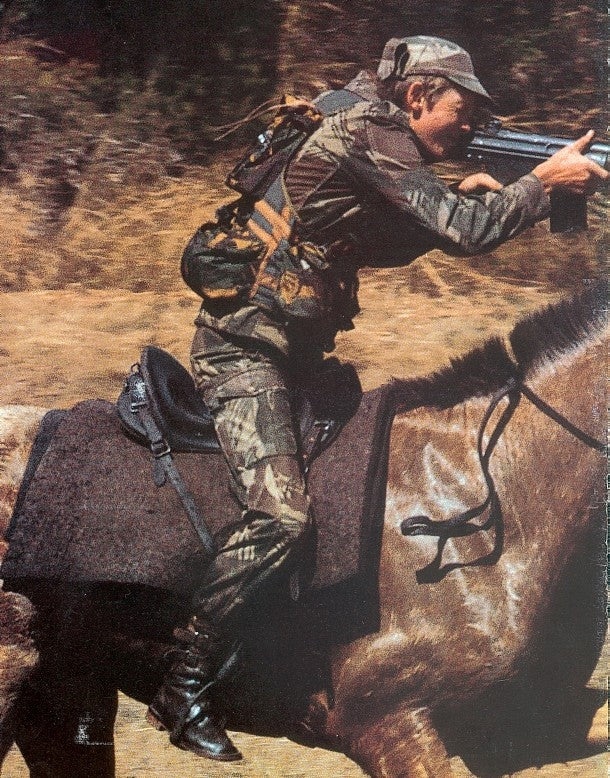
The fabric used in original Rhodesian uniforms was a 100% cotton twill available in two weights: a heavy denim-like fabric for use in hats, smocks, and some pants, and a lighter twill for shirts, trousers, shorts, and the like.

Throughout the Bush war, a half dozen local producers manufactured ‘official’ uniforms in these two David Whitehead fabrics. However, due to the ad-hoc nature of military procurement in Rhodesia, a handful of smaller companies and cottage producers also made their own copies and derivatives in various forms. The quality of these original uniforms varied widely; for example, early ‘1st pattern’ Rhodesian camo was infamous for totally washing out in the sun, and throughout the war fabric quality varied significantly.
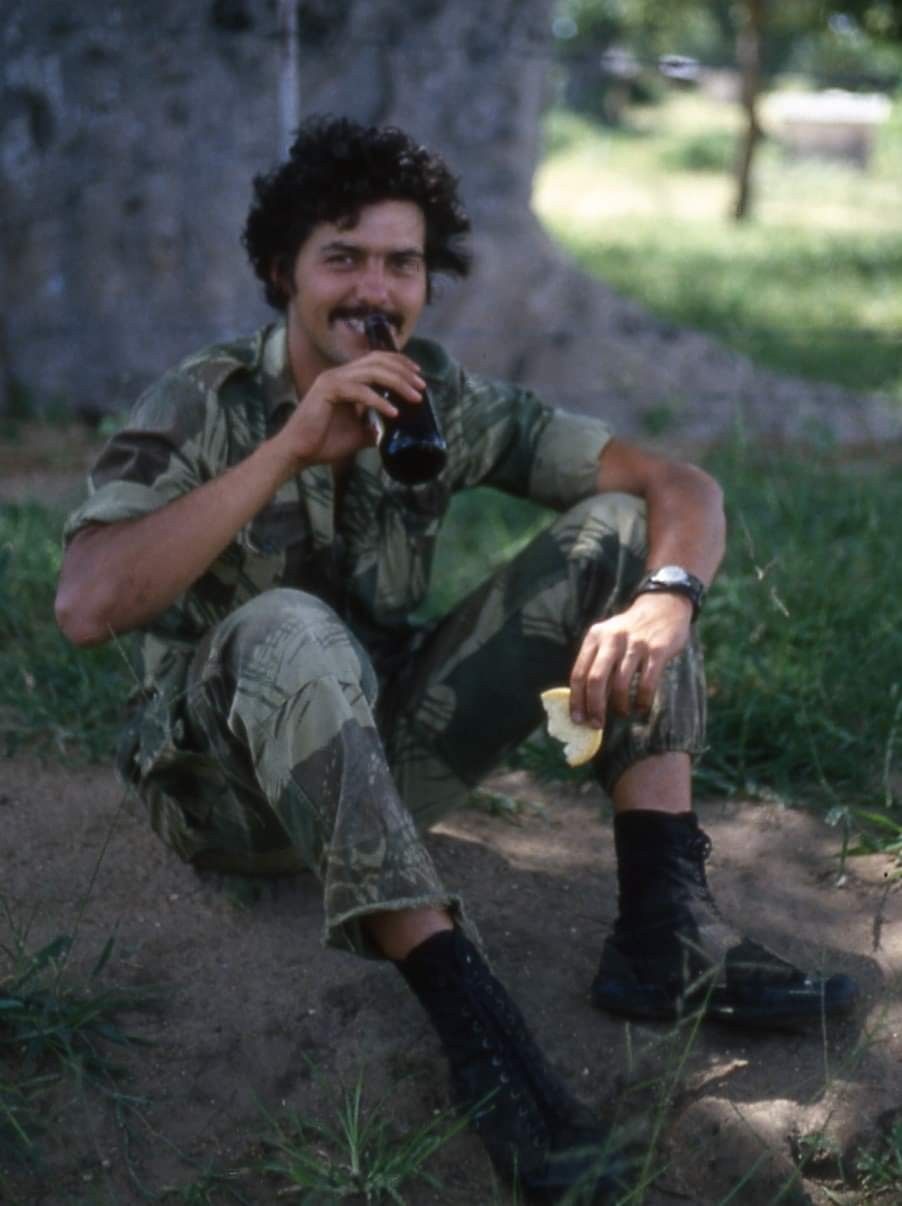
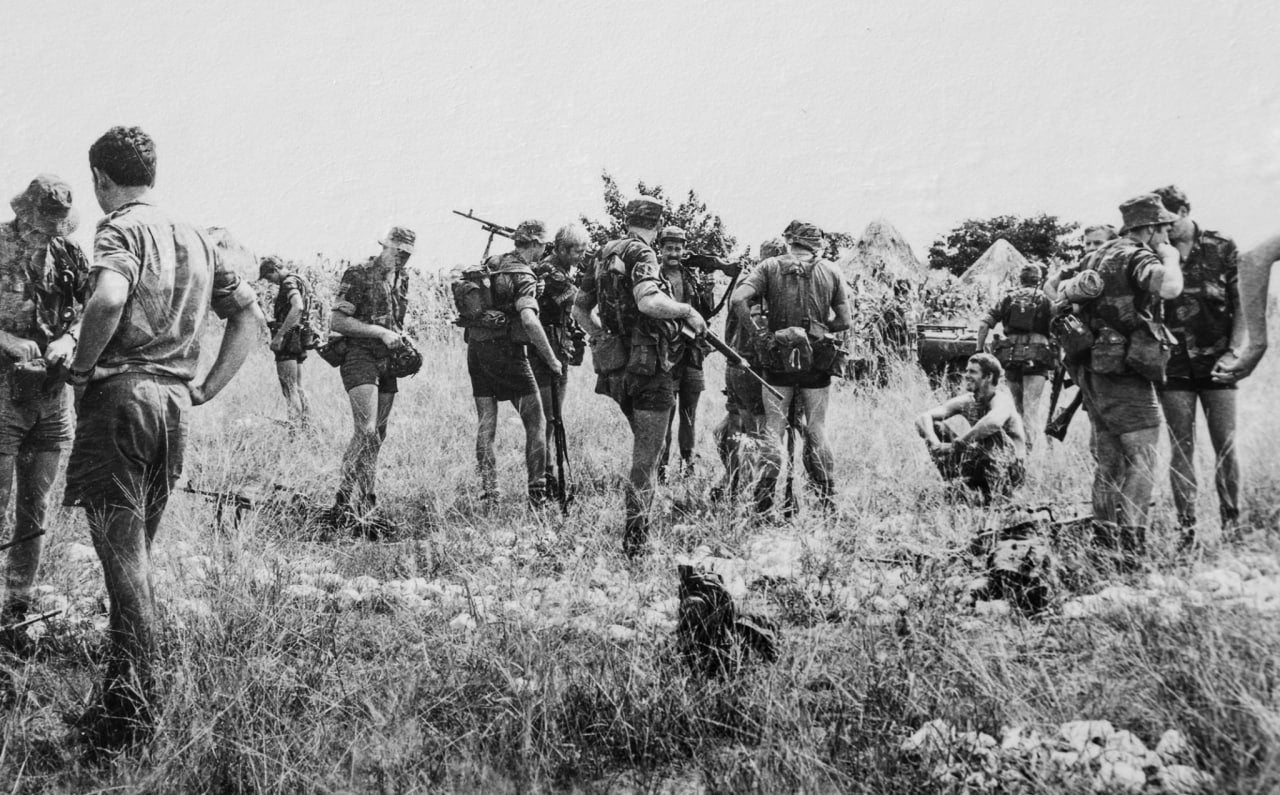
Rhodesian uniforms were constructed in a variety of styles with different finishing, and trims. However most garments shared the same generous cut which prioritized range of motion, user comfort, and airflow in the hot African climate. Although some ‘arid’ versions of the Rhodesian uniforms were prototyped and trialed, the vast majority of Rhodesian forces simply used fresh uniforms with vibrant colors in the rainy season, and switched to their ‘salty’ sun-faded uniforms during the dry season.
A Stroke Of Genius?

Over the course of the Bush war, Rhodesian Security Forces became known for their military prowess. So much so that their distinctive camouflage acquired a certain prestige in Southern Africa. This association was so strong that the pattern was retained by Robert Mugabe after his successful conquest of the country. While attempts to field other camouflages were made, a variant of Rhodesian Brushstroke remains the current standard uniform to this day, presumably to lend credibility to the Zimbabwe Defense Forces.

Outside of Rhodesia, elite South African units adopted the print for clandestine cross border raids during Border War years. Due to its popularity, commercial manufacture of the print continued in South Africa after the fall of Rhodesia.

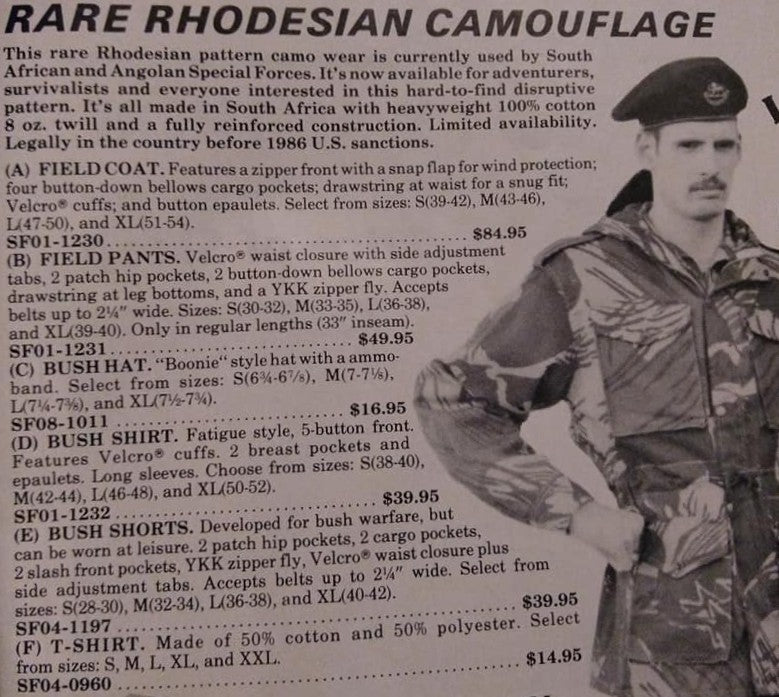
Among the most famous post-war manufacturers was Adder (aka. Adro), a company founded by Johan Niemoller in 1981 after he finished service as a SADF Recce. Known for his legendary contributions to innovative SADF webbing systems, Niemoller became an established military outfitter in the 1980s, supplying both the SADF and ‘other interested parties’ like Executive Outcomes. Niemoller’s businesses also enjoyed substantial commercial sales, with Adder Brushstroke appearing in stores and on the pages of Soldier of Fortune in the late 80s and early 90s.
All-Over-The-Globe

Outside of Africa, Rhodesian Brushstroke also made a notable appearance in the year 2000 during the USMC camouflage trials (which would culminate in the development of the MARPAT family of patterns.) Brushstroke was deemed one of the world’s most effective patterns and was evaluated alongside CADPAT and a modified US Tiger Stripe print.

In the US, Brushstroke can also be credited with inspiring the ‘All-Over Brush’ pattern featured in the US Army’s universal camouflage trials which took place between 2002 and 2004.
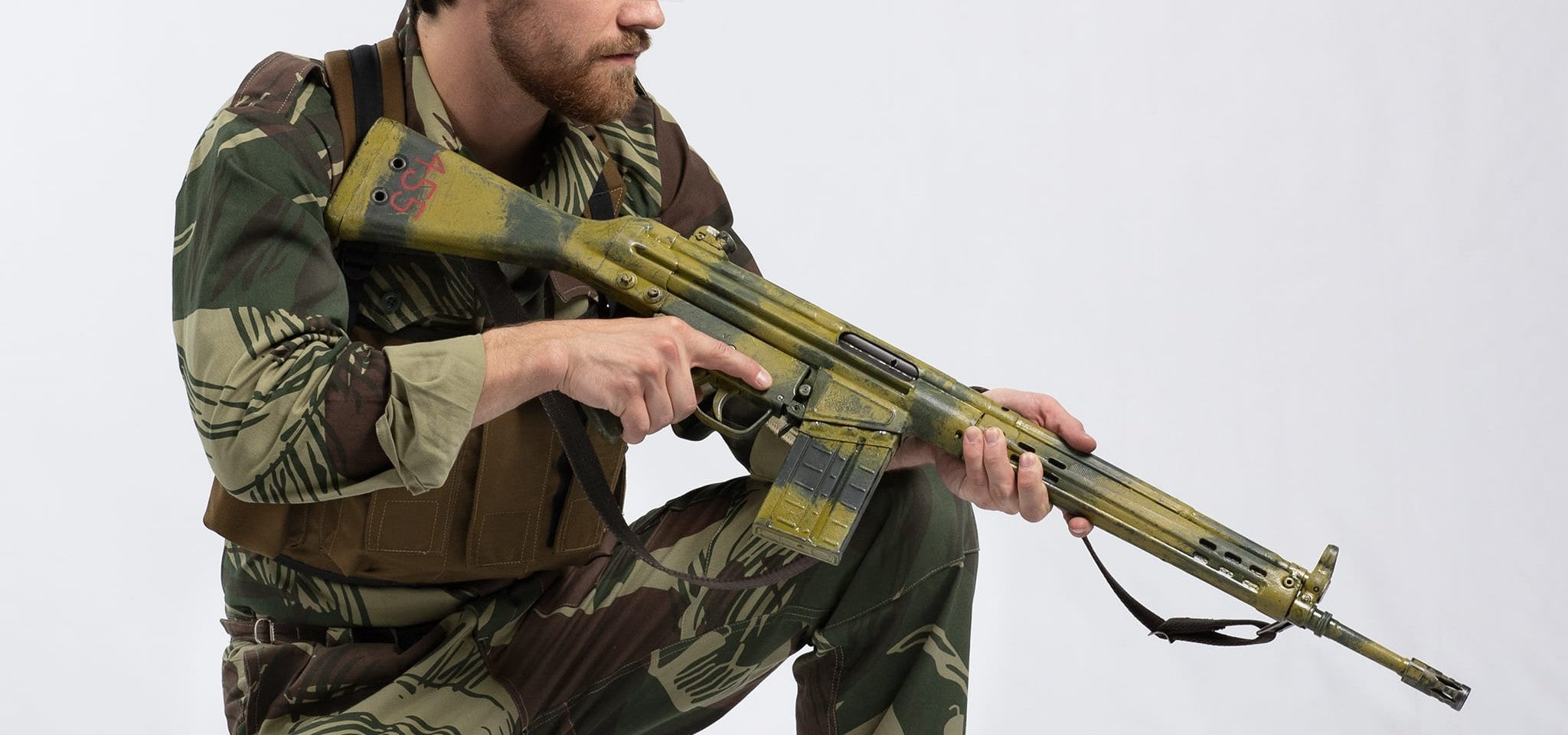
North Equipment

The dawn of the ANC government in 1994 shuttered most of South Africa’s defense industrial base, including Niemoller’s textile businesses. At this time all of Niemoller’s manufacturing equipment was moved to his property for storage.

Years later Niemoller’s neighbor, a former SADF Parabat with a keen interest in sewing, approached him with a proposal to restart textile manufacturing work in South Africa for the commercial and private security industry. In short order, all of Niemoller’s equipment was moved just across the road.
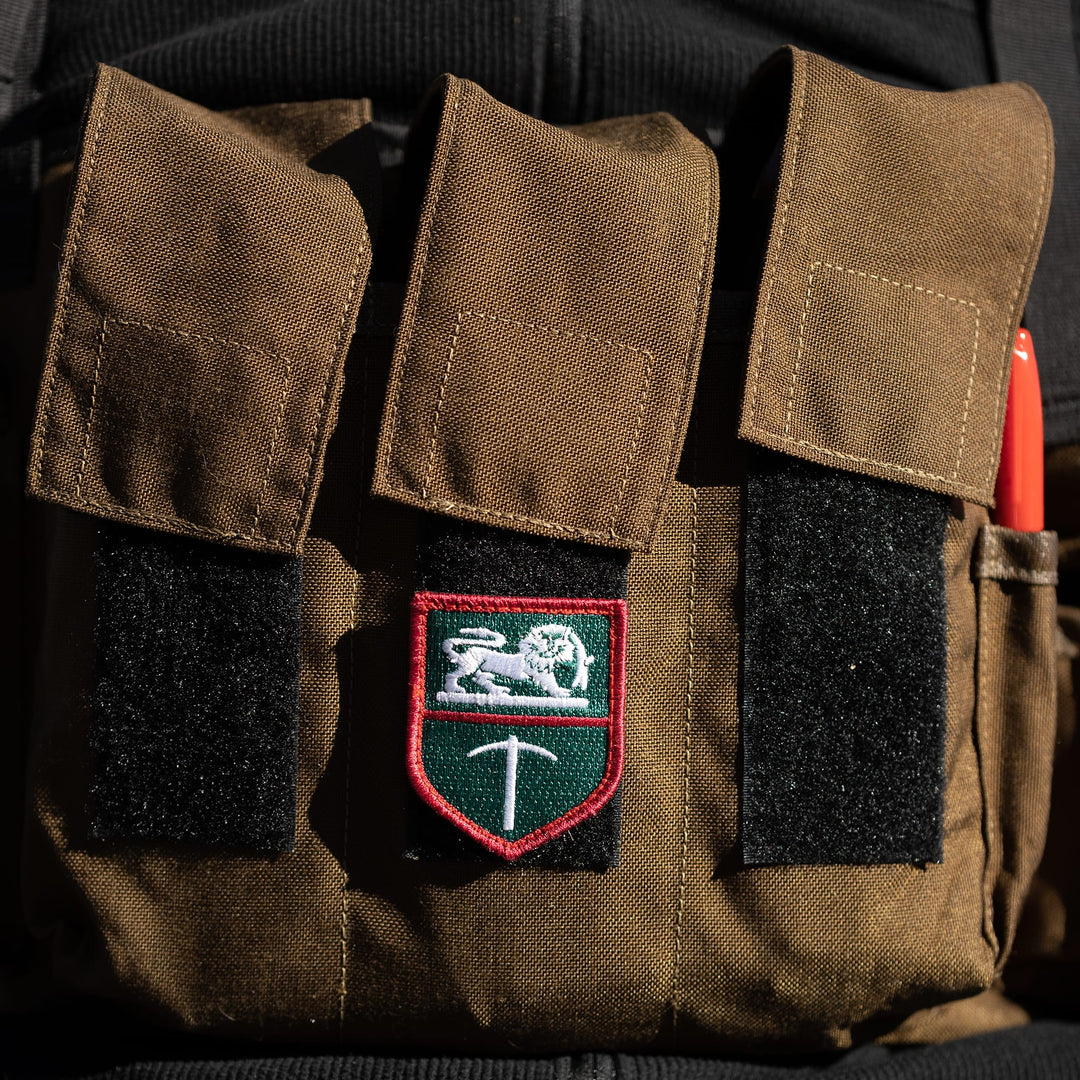
Our History With Brushstroke

‘Brushstroke’ camo has been in high demand with survivalists, outdoorsmen, and even militaries worldwide since it’s inception — we even had some of our own made in the early days of our business.

Nowadays, an average Google search brings up a minefield of low-quality, Chinese, drop-shipped casualwear — a minefield for anyone who hasn’t properly done their homework.

On the contrast, we can appreciate the passion that goes into actual high-quality reproduction equipment on the market, but it’s certainly scarce.

Our main aim was to do something a little different than everyone else. When it was finally our turn to try our hand at making ‘Brushstroke’, we wanted to make it in Africa, just like it was in its heyday.

Giving It Our Best Shot.

With the aid of local contacts in South Africa, we stumbled across this local business in 2021 while sourcing manufacturers for South African webbing and clothing.

It would take several years, but this working relationship would eventually evolve into the North Equipment brand and our exclusive, locally made 2nd-pattern-inspired Rhodesian Brushstroke using much of the same equipment and staff used by Adder in the 1980s.

Order Your Brushstroke Camo Here.

Three and Half Decades Ago The Nighthawk Stealth Fighter Was Revealed

35 years ago, a mysterious and strikingly beautiful aircraft touched down on a dusty airfield in the Nevada desert. Can you imagine what kind of advanced aircrafts are being developed now?


The F-117 Nighthawk


Since its public reveal decades ago (consider that development started in the 1970’s on this amazing machine), the Nighthawk served with quiet distinction through the latter half of the Cold War, the first Gulf War, a kerfuffle in Yugoslavia (bet you don’t remember that one) , and the invasion of Iraq in 2003.
Despite and official ‘retirement’ in 2008, the F-117 still gets spotted in the skies over Nevada where it is rumored to serve as an ‘aggressor aircraft’, helping to train pilots.


What’s the F-117 about?


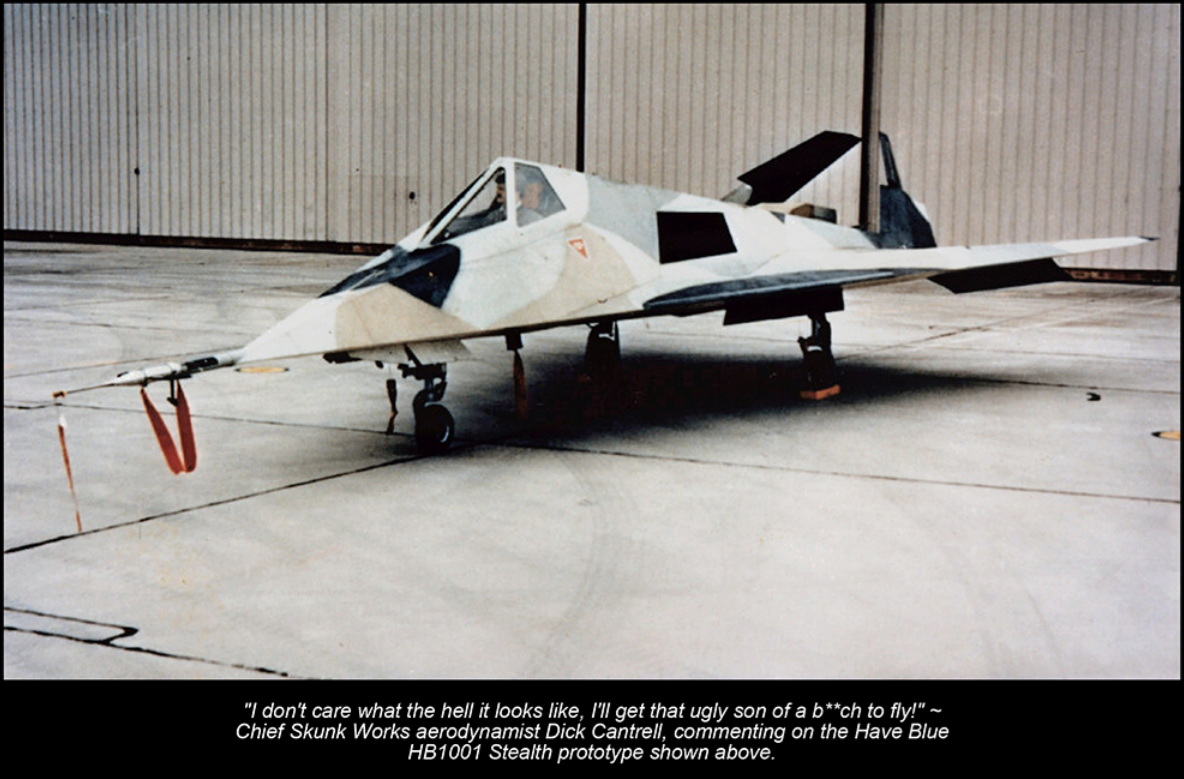
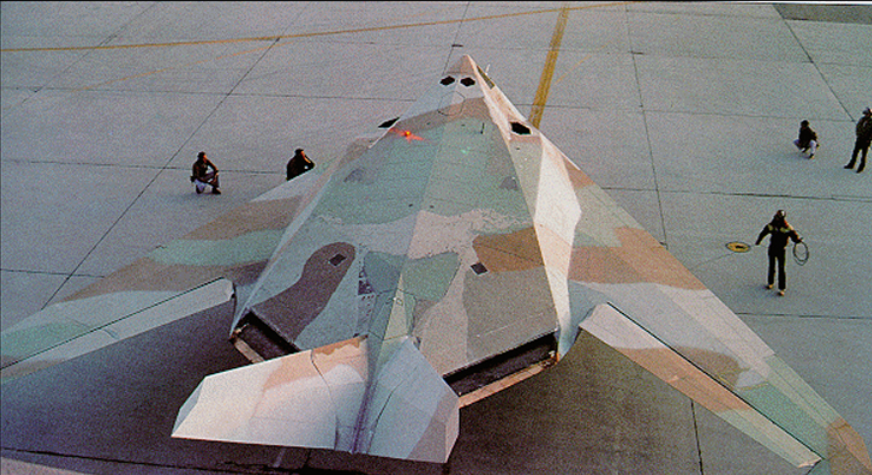
With it’s cyberpunk like profile and stunning angles, the F-117 Nighthawk instantly captured the public’s imagination and birthed a lot of UFO /UAP stories, especially in the late 1980’s and early 1990’s when it’s unusual shape confused expectations of what an aircraft could and should look like.
A radical departure from the retro-aerodynamic curves of traditional aircraft design, the F-117’s odd shape serves a singular purpose.


Stealth.


The Nighthawk was conceived by Lockheed’s Skunk Works, a secretive development team responsible for some of the most capable aircraft of the 20th century.
Designed to slip through deep Soviet territory, the Nighthawk incorporated radical new technology to achieve an incredibly small radar and thermal signature. Hard edges, radar-absorbing coatings, a unique twin-tail, and special endinge cowlings reduced the aircraft to the size of a sparrow on Soviet radar.
The Nighthawk was deemed fully operational in the early 1980’s and nearly a decade her pilots and crew flight night sorties in complete secrecy.
Seven years later, the USAF and the Department of Defense decided the Nighthawk would work better as a deterrent if the world knew about it and it’s capabilities.


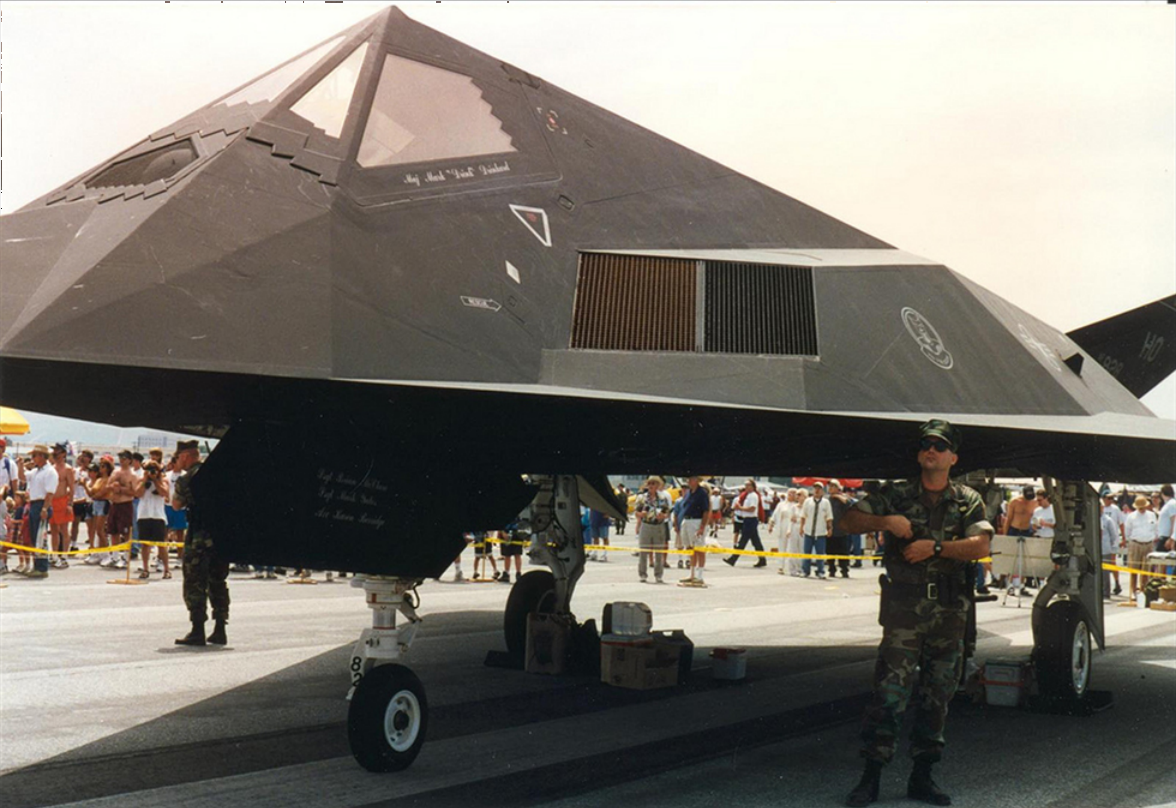
Plans were made to reveal the aircraft to the world at Nellis AFB on April 21, 1990. Those of us who saw this event live on television will always remember the shock and awe inspiring gasp it created- nothing like it had ever been seen before and it surely looked like something from a science fiction novel or movie.
On a hot spring day, a flight of two F-117s landed in front of thousands of cheering spectators, kicking off one of the most memorable air shows in US history. After opening the show, the F-117s sat quietly on the tarmac surrounded by an entourage of armed airmen and curious onlookers.
Although little was said about the new “stealth fighters”- blimps, fighter jets, and mock dog fights continued the day’s entertainment in style.


Even with talks of ‘spending prioritization’ and ‘doctrinal appropriateness’, the Nighthawk has endured, in it’s own special way, for nearly 40 years. Everything about the F-117 that made it great in the 1980’s still captivates us today. It’s razor-sharp edges, futuristic technology, and it’s family tree of stealthy cousins (foreign and domestic). Here is hoping many more years of this little black triangle up in the sky… via our friends at kommandostore.com

What Makes A Gas Mask A Great Gas Mask?

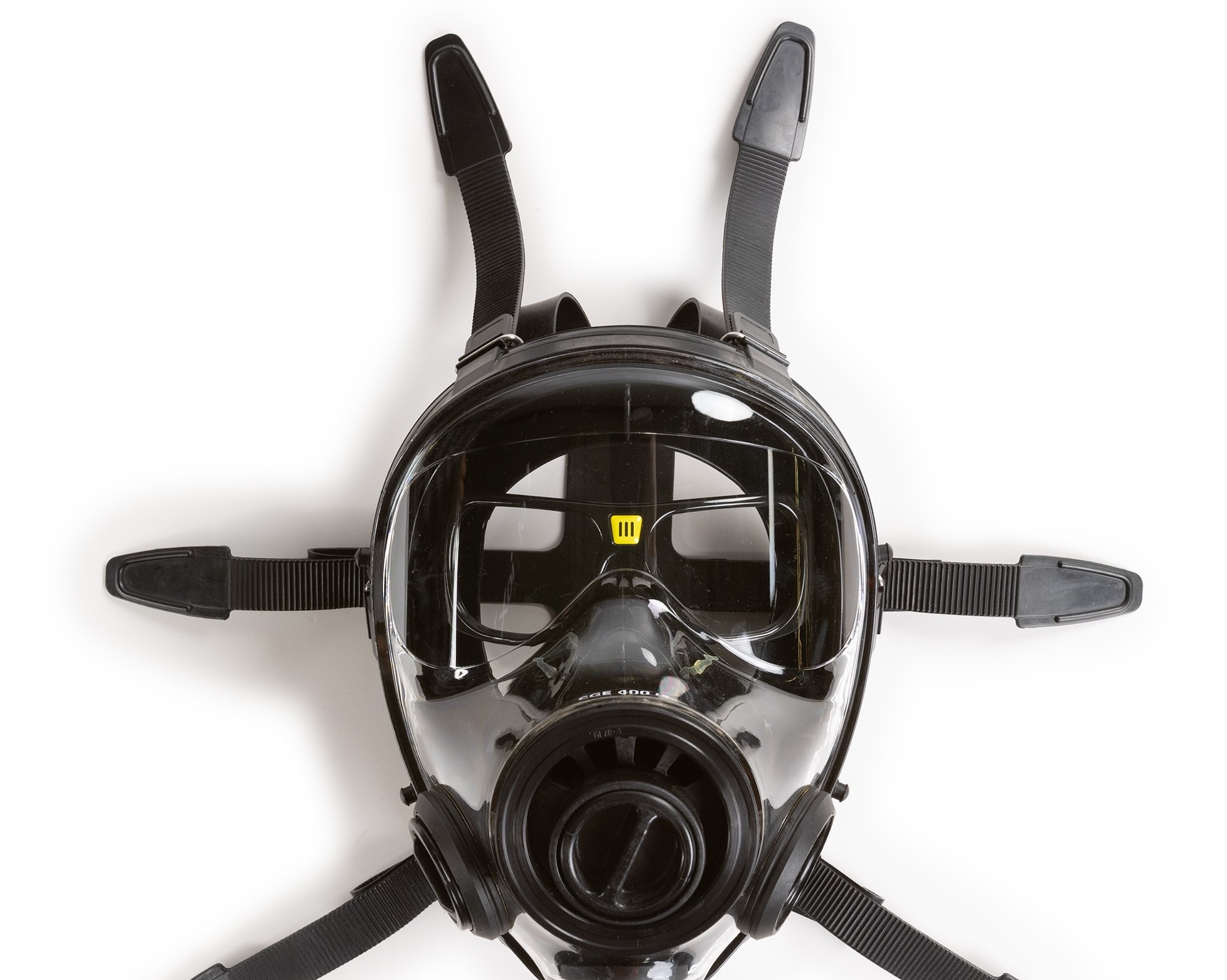
Sometimes great things can come from unexpected places. When our friends at kommandostore.com were hit up by an Italian scuba diving company for CBRN-Rated Gas Masks a few years back, they were very intrigued.
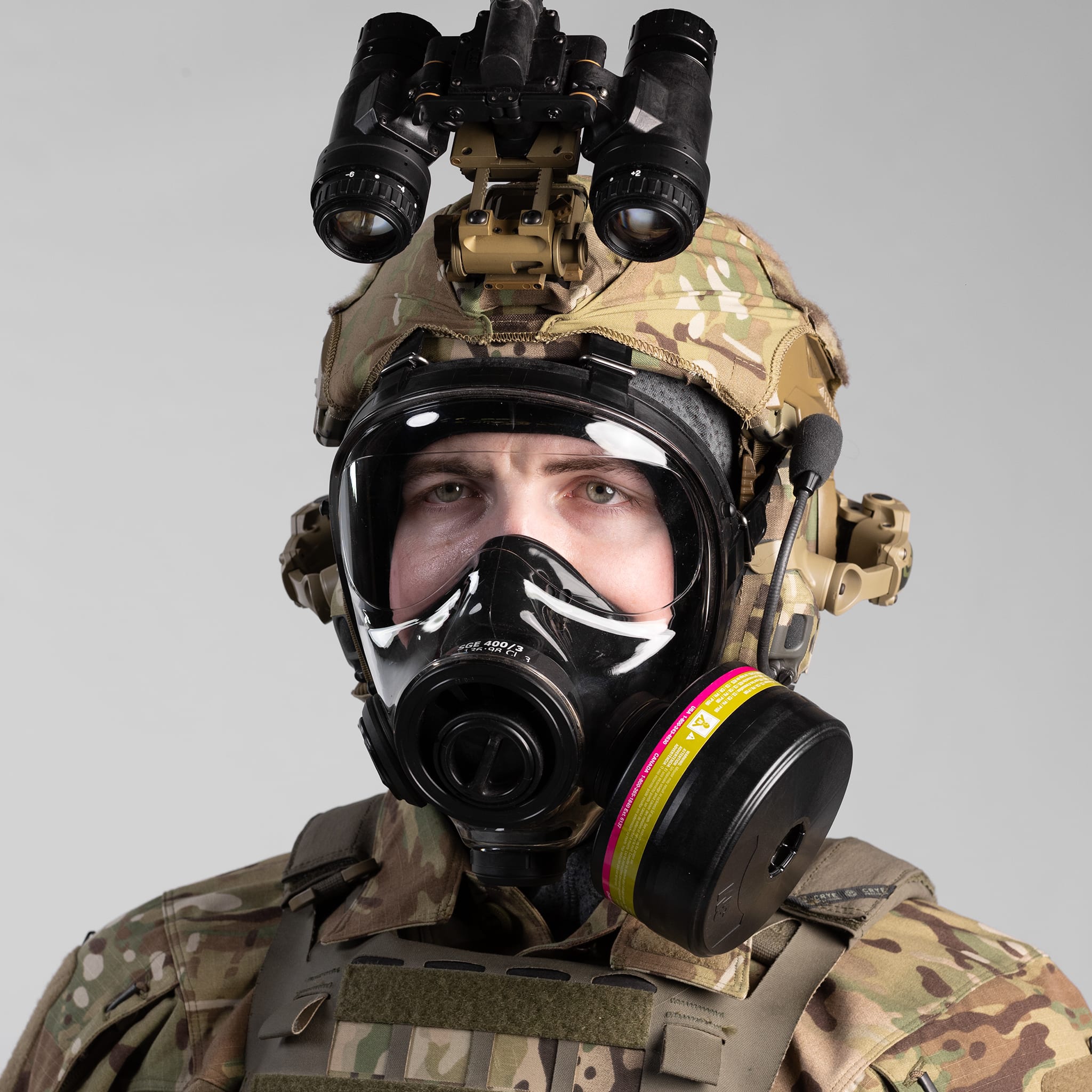
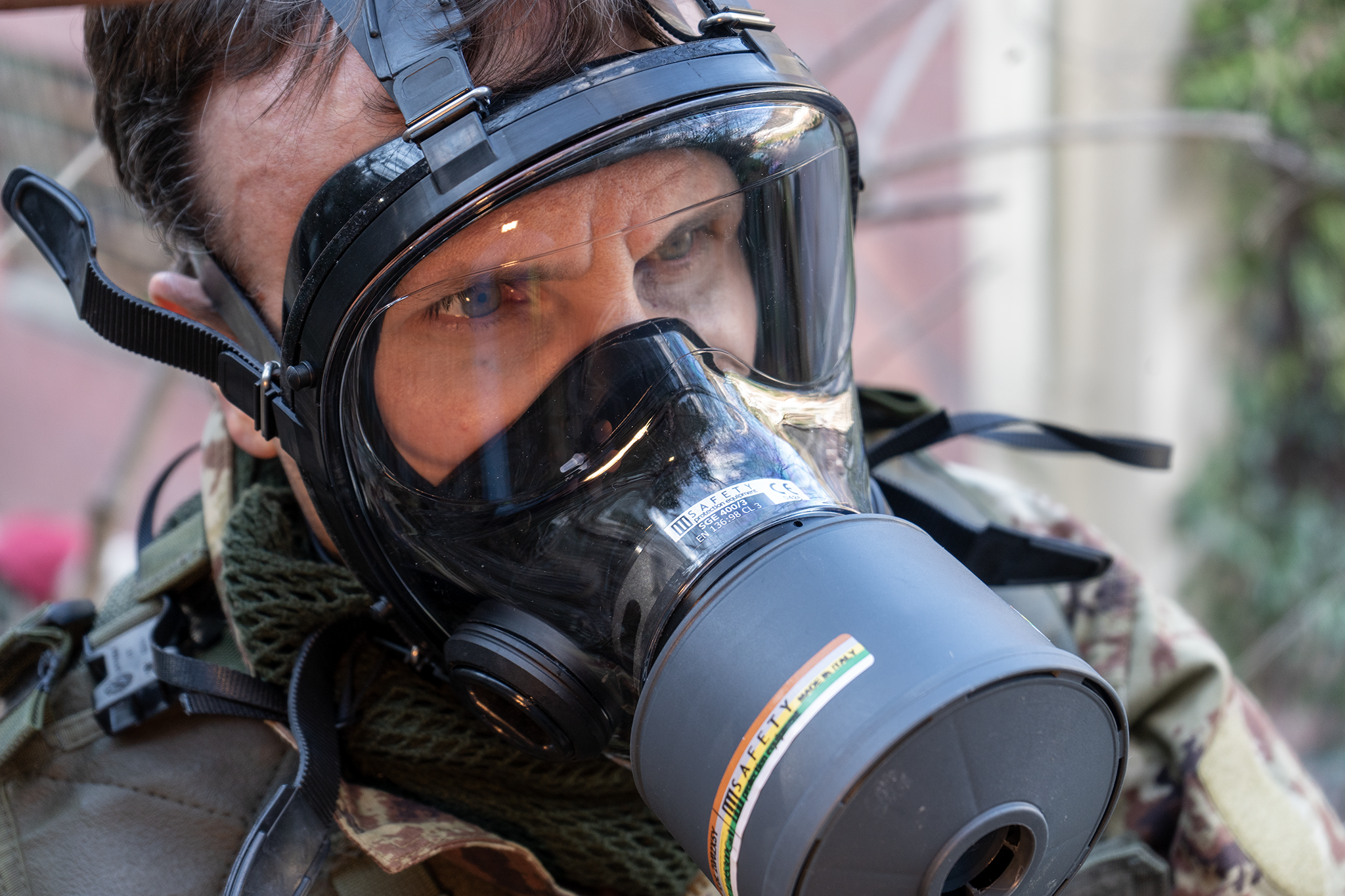
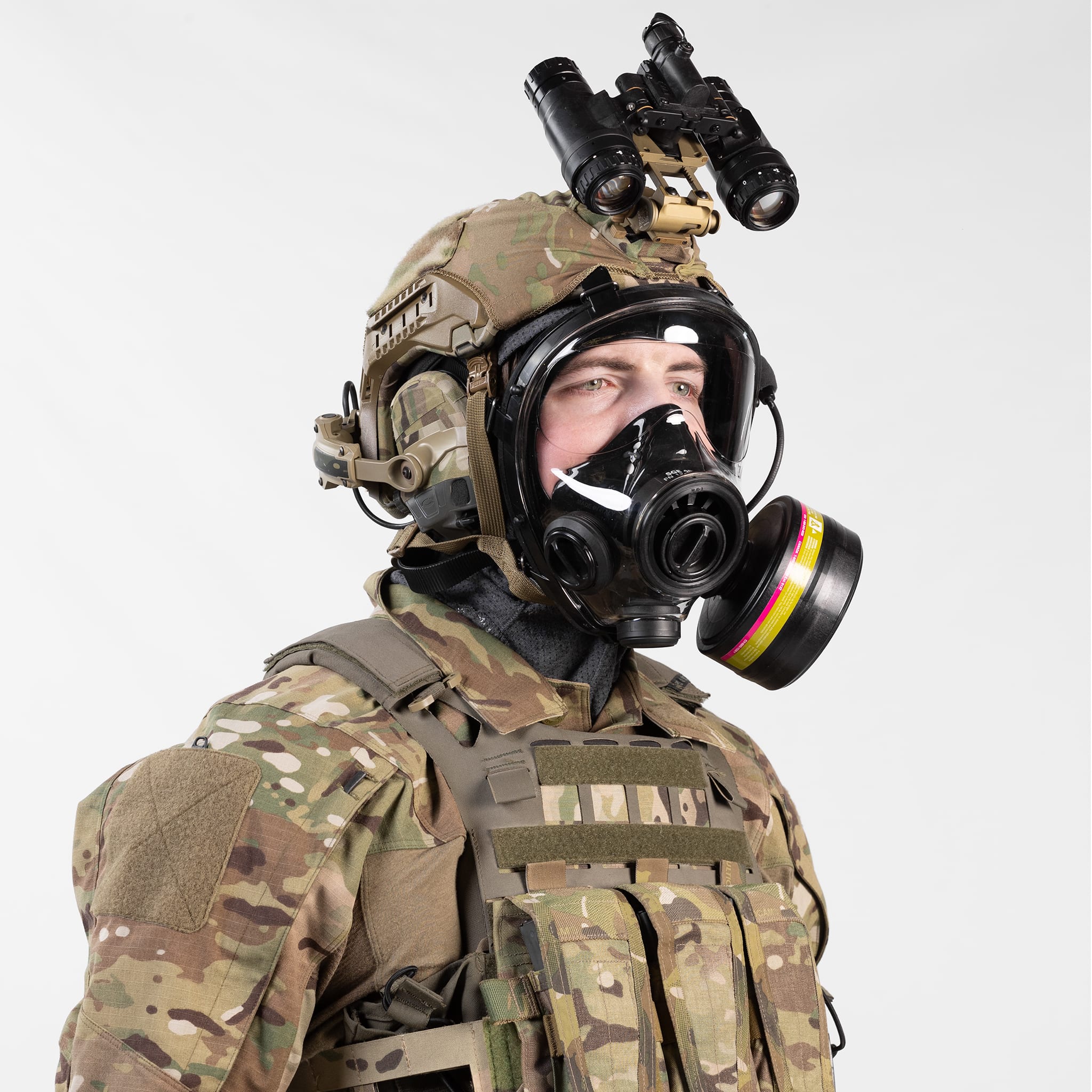
Mestel Safety, under ‘Ocean Reef Group’, makes the “SGE 400-3” — a gas mask that thinks completely outside the box — a favorite all-rounder on the gas mask market. 
SEE THINGS CLEARER.
 As usual, kommandostore will be offering the full suite of masks (a CBRN-approved and non-CBRN approved version*), filters, and eyeglass inserts.*More on that later below
A look under the sea – how military scuba diving had an important impact on the design of this unorthodox gas mask… 
UNDER-WATER ORIGINS
Ocean Reef Group, Mestel Safety’s parent company, actually specializes in all kinds of equipment for undersea exploration. AndiIt all started with rubber — Giorgio, Ruggero, and Gianni Gamberini worked at a tire repair shop in Genoa, Italy.​ During their experimentation with rubber compounds at the time, they were approached by pioneer of scuba diving and legend of the Italian Navy, Luigi Ferraro. He wanted to make rubber masks and fins for scuba diving based off his experience. From the successful designs that resulted, a sprawling Italian scuba industry was born. 

Commander Luigi Ferraro pictured in his diving gear. He was part of the “Gamma” sapper group, who performed some of the first major underwater stealth operations in WWII with the aid of very-early SCBA equipment. He would go on to sink 3 enemy ships by himself during a long sabotage operation, becoming one of the few people to have received Italy’s highest Naval honor (the Gold Medal) and live to tell the tale. The gif shows examples of some of the equipment he really used, including a damaged Panerai dive watch, and the aforementioned scuba fins. Quite the backstory.
 But like all good materials sciences, one of its breakthroughs resulted from a mistake. An “Incorrect” mix of rubber ended up also being the first buoyant rubber compound, incredibly important in the making of flippers.The Gamberini brothers would also pioneer some of the first rubber watch straps, which were a massive upgrade in comfort & security in comparison to leather straps that would degrade in the salty depths. 
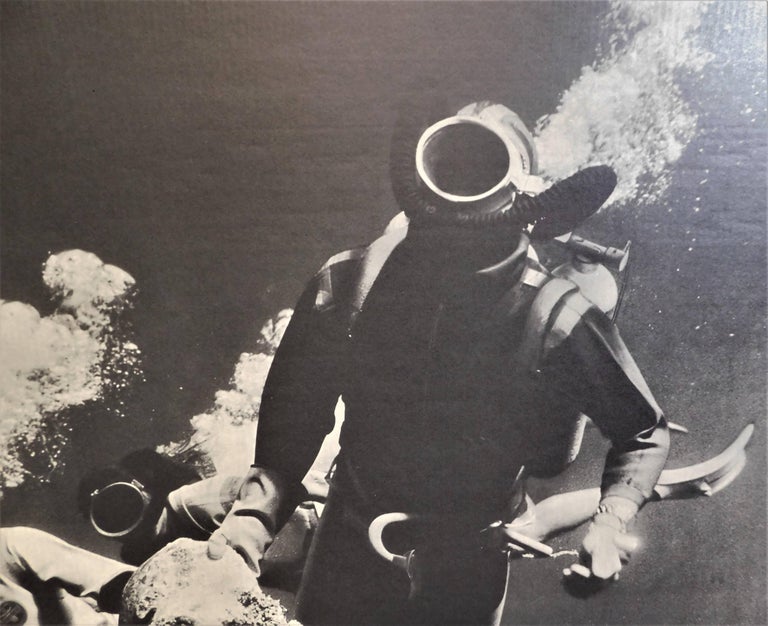
This is about as good as scuba gear got in the 50s and 60s. On this gentleman’s left hand, you can see his dive watch with a stainless steel wrist strap. While still incredibly popular today even amongst avid scuba divers, they weren’t ideal for military use due to their reflectivity.
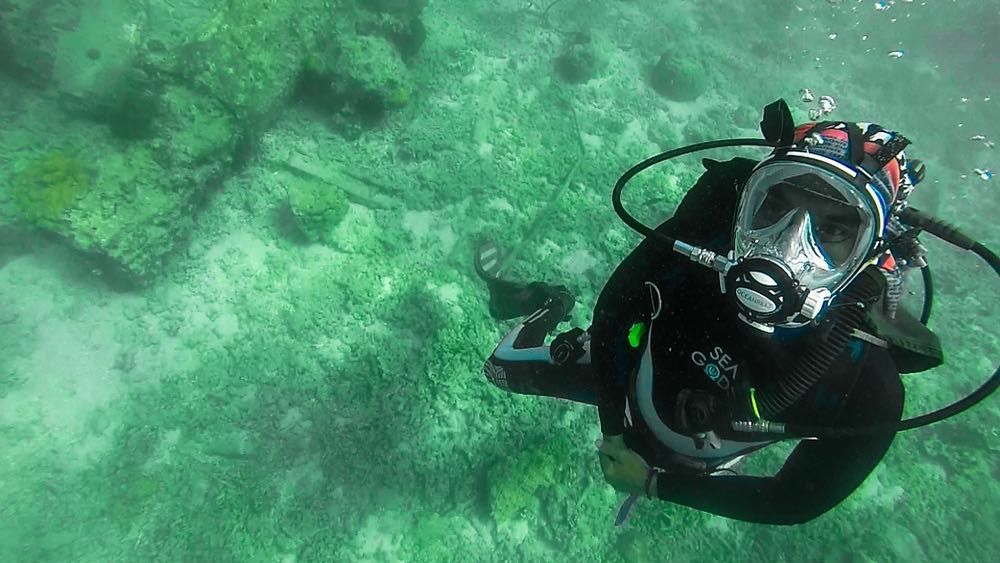
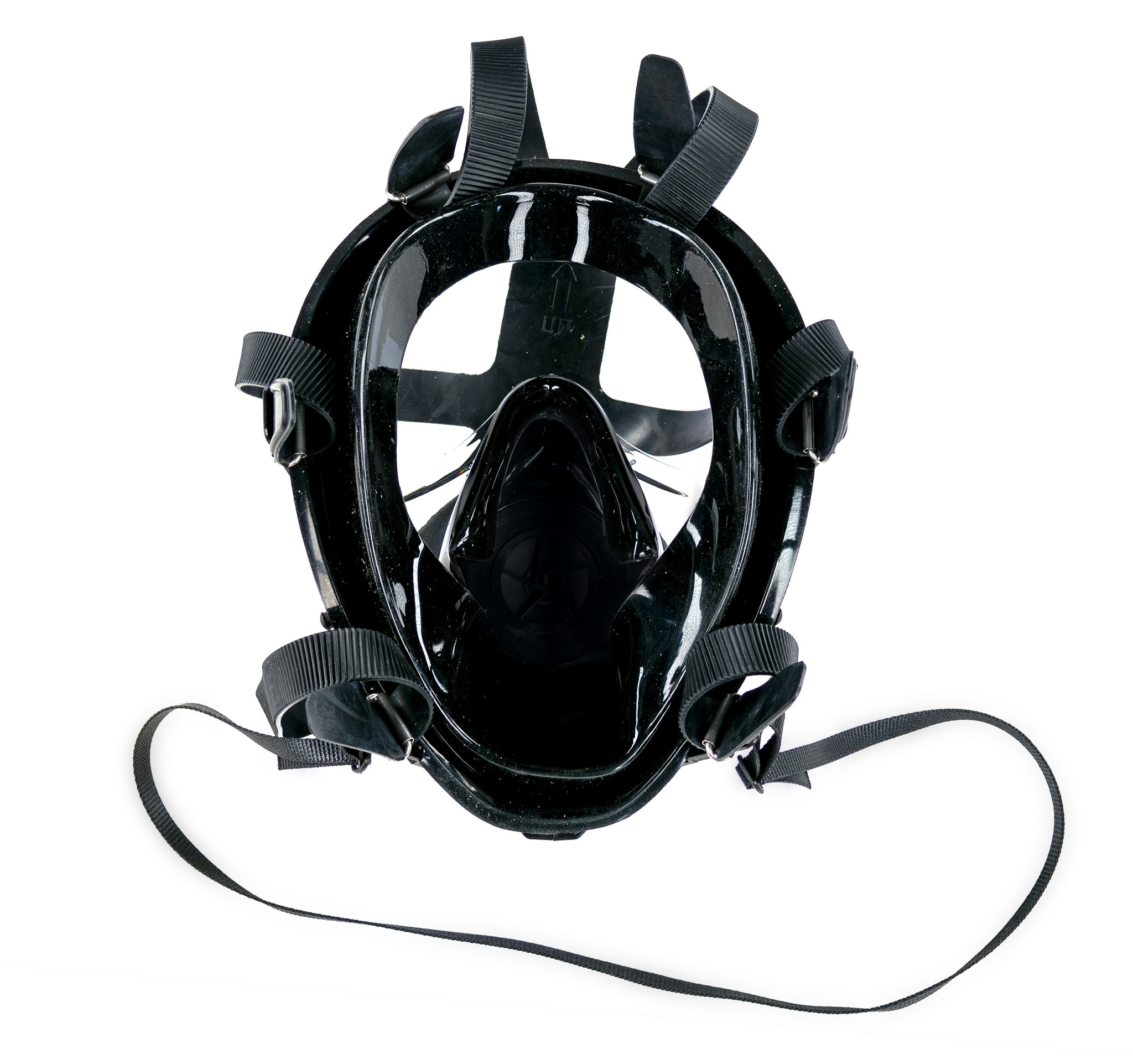
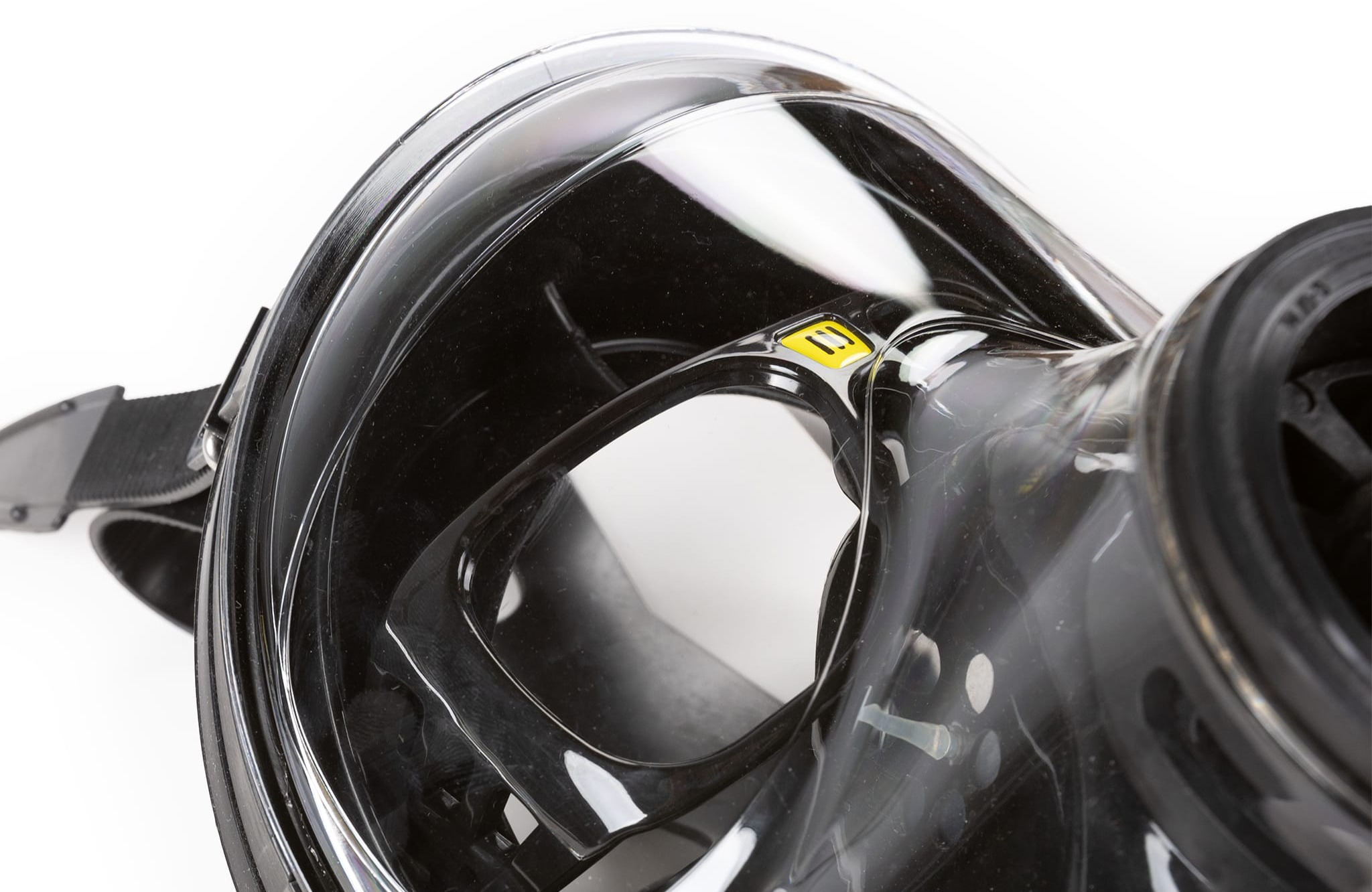
 Their company Ocean Reef would go on to pioneer the design of the first ever full-face mask for snorkeling use. It featured an almost entirely transparent facepiece with an incredible field of view, which would “float” in front of the rubber that sealed to your face, reducing felt weight.  Sounds like these would be great features on a gas mask, eh? They had the same feeling too… 
 “Mestel Safety”, their medical & safety division, would use everything they learned with their pedigree in undersea engineering, and the very gas mask we’re presenting today would be born. From the depths of the Mediterranean to a position of respect in military & civil applications, Ocean Reef has come a long way, and they definitely earned their spot amongst the best. 
COMBAT CAPABILITY
 Don’t be spooked by the unconventional design — these masks are tough as nails.Mestel safety tested their masks by barraging the facepiece with, quote, “6.35mm steel spheres going over 300 mph”. For some reason the specificity makes it sound hilarious, but that’s practically like being shot directly in the face with a BB gun over and over and shrugging it off – not bad one bit. So, rest assured, this thing can probably handle some projectiles from common workshop incidents and Airsoft matches. 
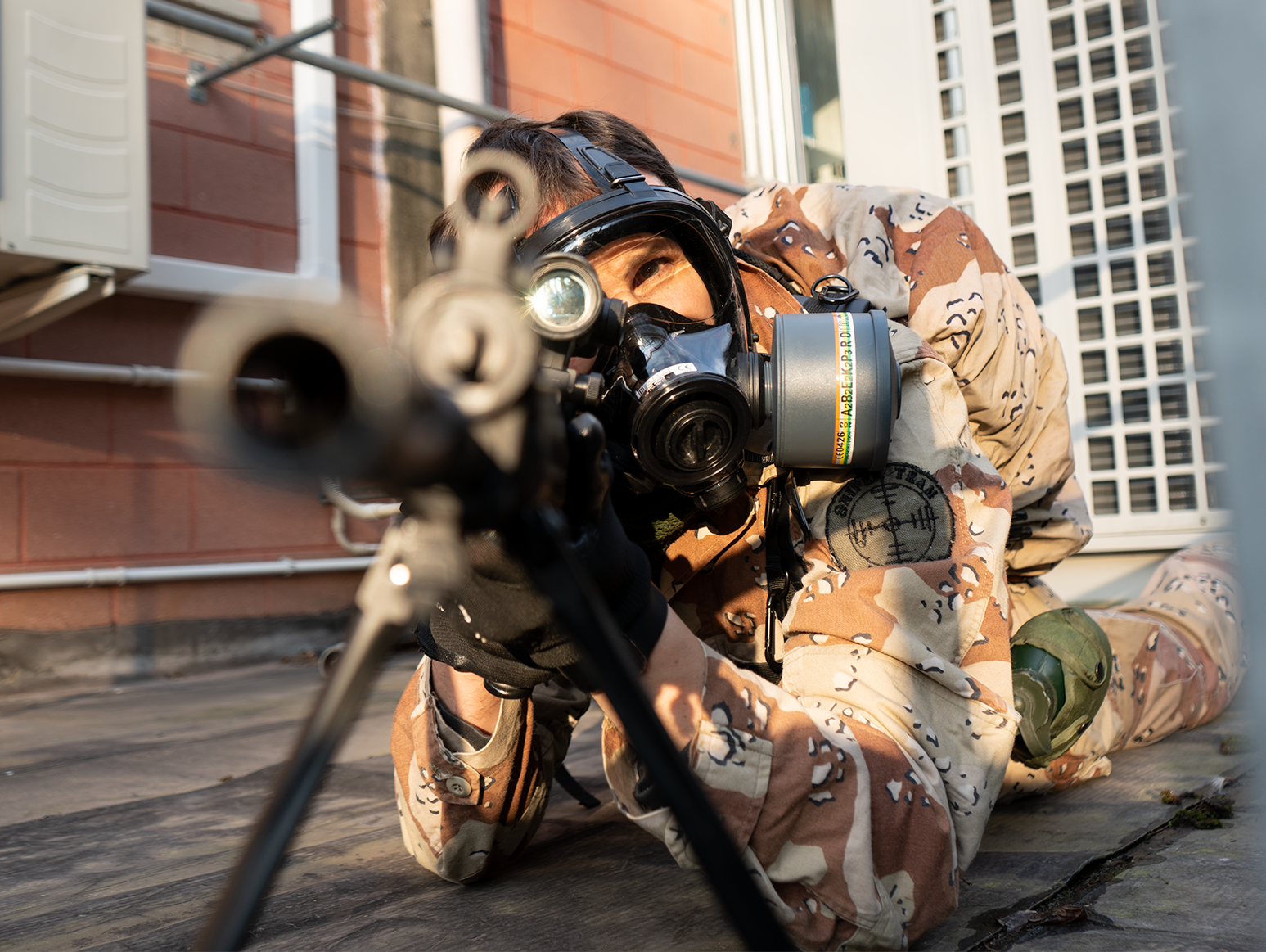
 Probably its most visually obvious feature is, once again, the insane Field of View. It preserves nearly 90% of your vision without significant “warping” and makes it pretty usable with firearms like many mil-contract masks on the market. But when you put on the average military mask, you’ll be stunned at how much you can’t see in comparison. 
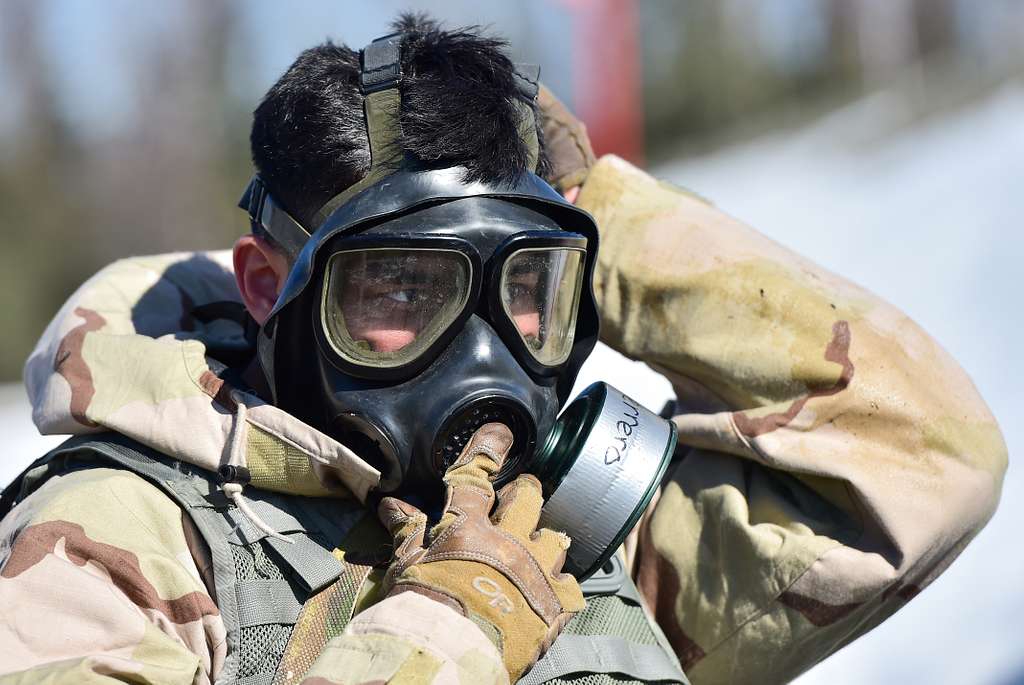
Having a massive split in the mask reduces the ocular overlap for your eyes and does, in fact, impede your vision right away. It’s why masks like the Avon M50 feature a single unified eyepiece instead of the classic two-piece styled masks of the cold war.
 Lastly, these are comfortable to wear over very long durations thanks to the “floating” facepiece design.  It allows the rubber to seal perfectly to the shape of your face, and takes the “felt weight” off of your face and onto the harness, where it should be. 
 We could go on about the cool factor of this mask for a lot longer but if you want to take a closer look at the mask you should investigate the product pages 👇 
KNOW THE DIFFERENCE!
 An important side note on “CBRN” capability: If you’re looking for the model with 90% of the capability at a reduced price, the silicone-rubber based model is what you’re going to want to pick up. So what’s that other 10%? We’ll keep it simple: the butylated rubber, or just “butyl rubber” adds the ‘R’ and ‘N’ protections to CBRN, (Chemical, Biological, Radiological, Nuclear) *.  *If you’re actually planning on dealing with those extra threats or the ‘blister agents’ that can also bypass a silicone seal, you’re going to need way, way more than just the mask to protect yourself anyways. Think a full HAZMAT suit with chemical tape, gloves, booties. And that’d only be for an hour or two of exposure to some of these more deadly agents. In addition to having the right equipment, the best plan is to simply GTFO. 
 The TL;DR is that this mask will cover you (literally) in most other incidents where a civilian might want full-face protection, from civil unrest to forest-fire evacuation, and of course common household projects.It’s simple: pick up the ‘BB’ model if you are interested in having the full ‘CBRN’ capability at the cost of slightly reduced comfort.And remember: A gas mask is only as good as the filter you’re breathing through, and we have a plethora of information about the excellent filters we’re also stocking from Mestel. 
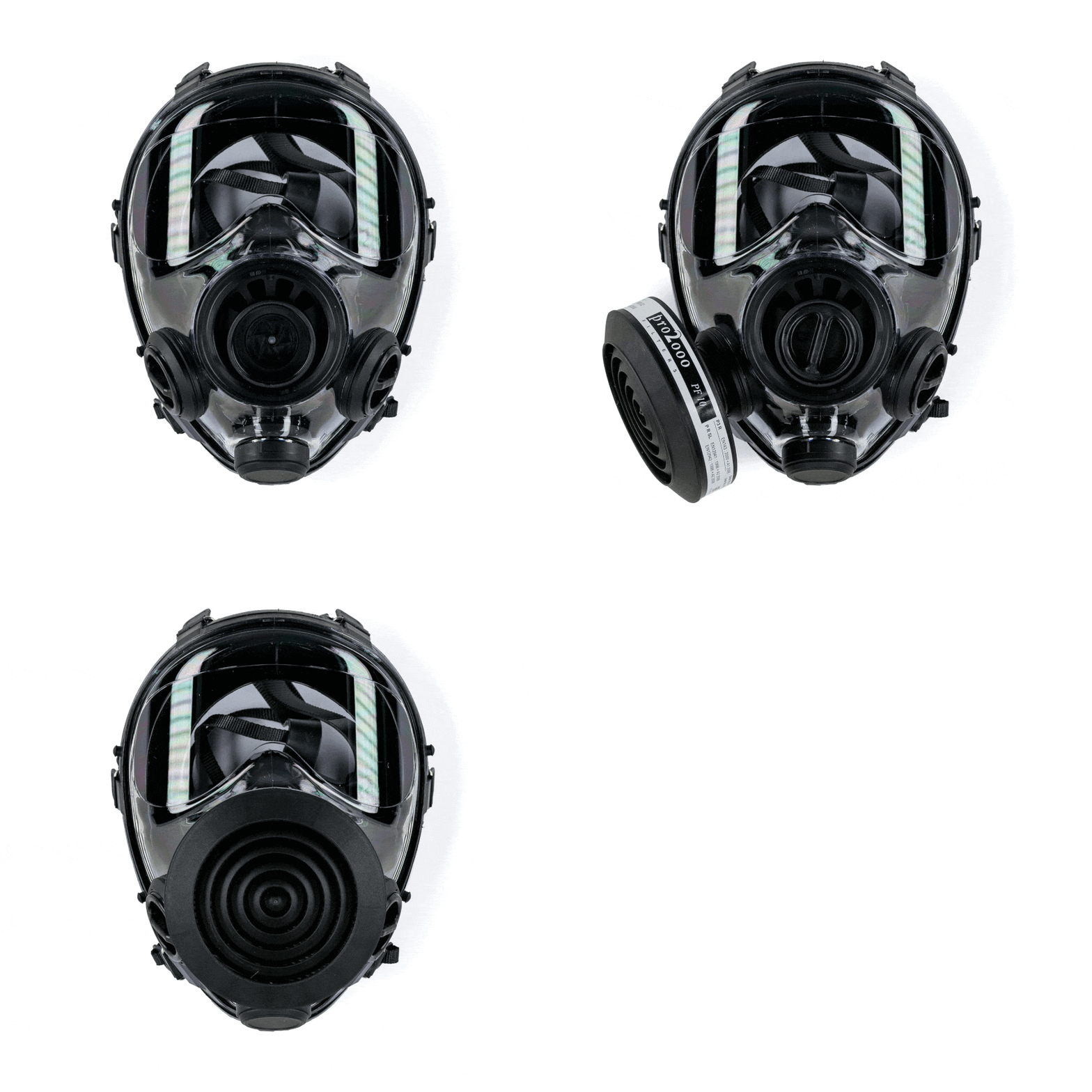
Another cool feature: there’s 3 different positions for filters to be placed to your heart’s desire.
 One other note: the lack of ‘NIOSH’ approval for these masks is a bit misleading. Since these are European-made masks, they fall under ‘CE’ standards, which work a bit differently than NIOSH approval. An explanation of these standards can be found on kommandostore’s product page. 
 Whether this is your first serious use gas mask with actual pedigree or you’re looking for an affordable alternative to the mil-contract priced (expensive) masks, we’re confident that the SGE 400/3 will be the baby bear’s porridge. Once again, take a look at the product pages — you’ll find everything from sizing info to a free copy of the user’s manual if you’d like to read up. 

For the Silo, Jarrod Barker.

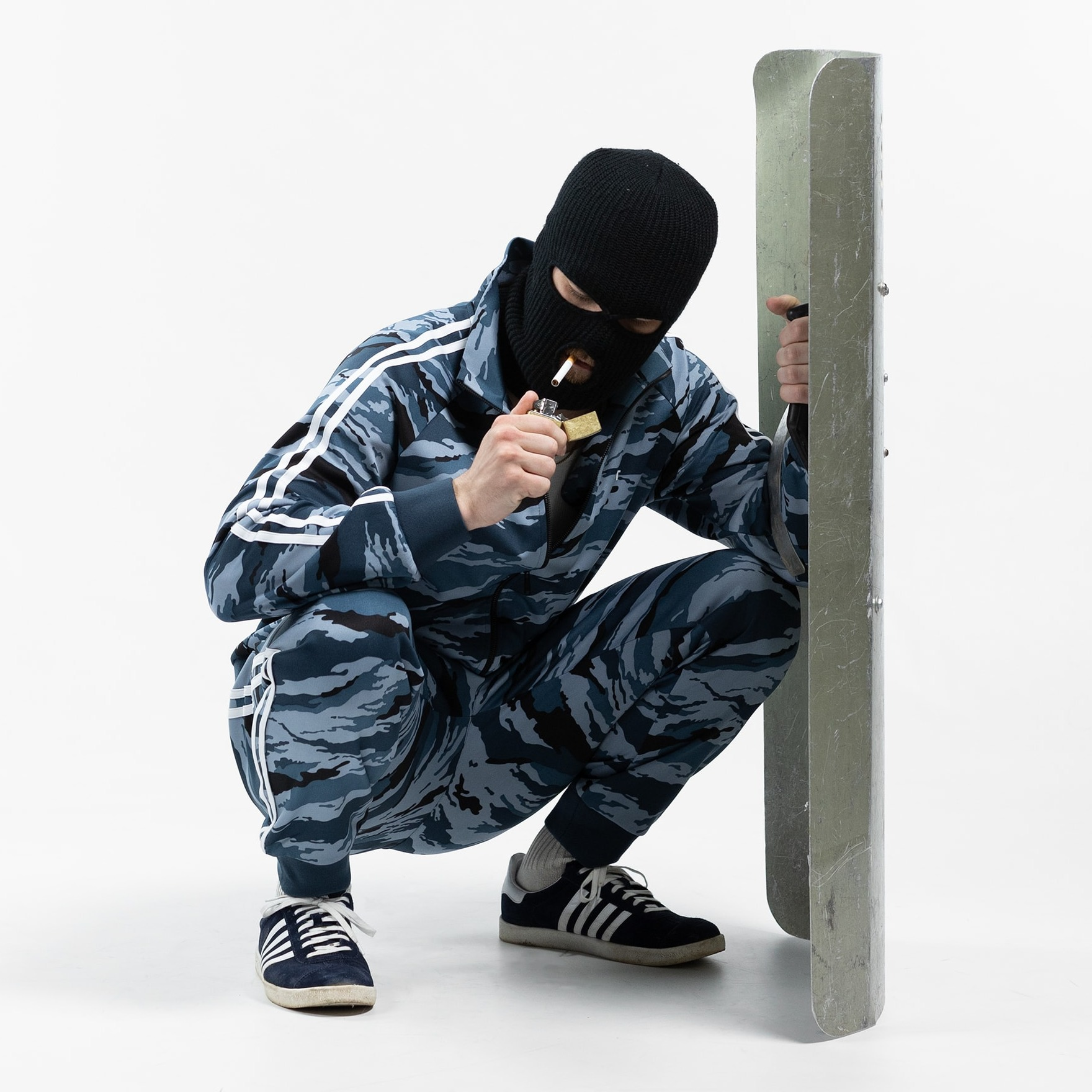
A Camouflage Tracksuit? In Blue? Why Not.

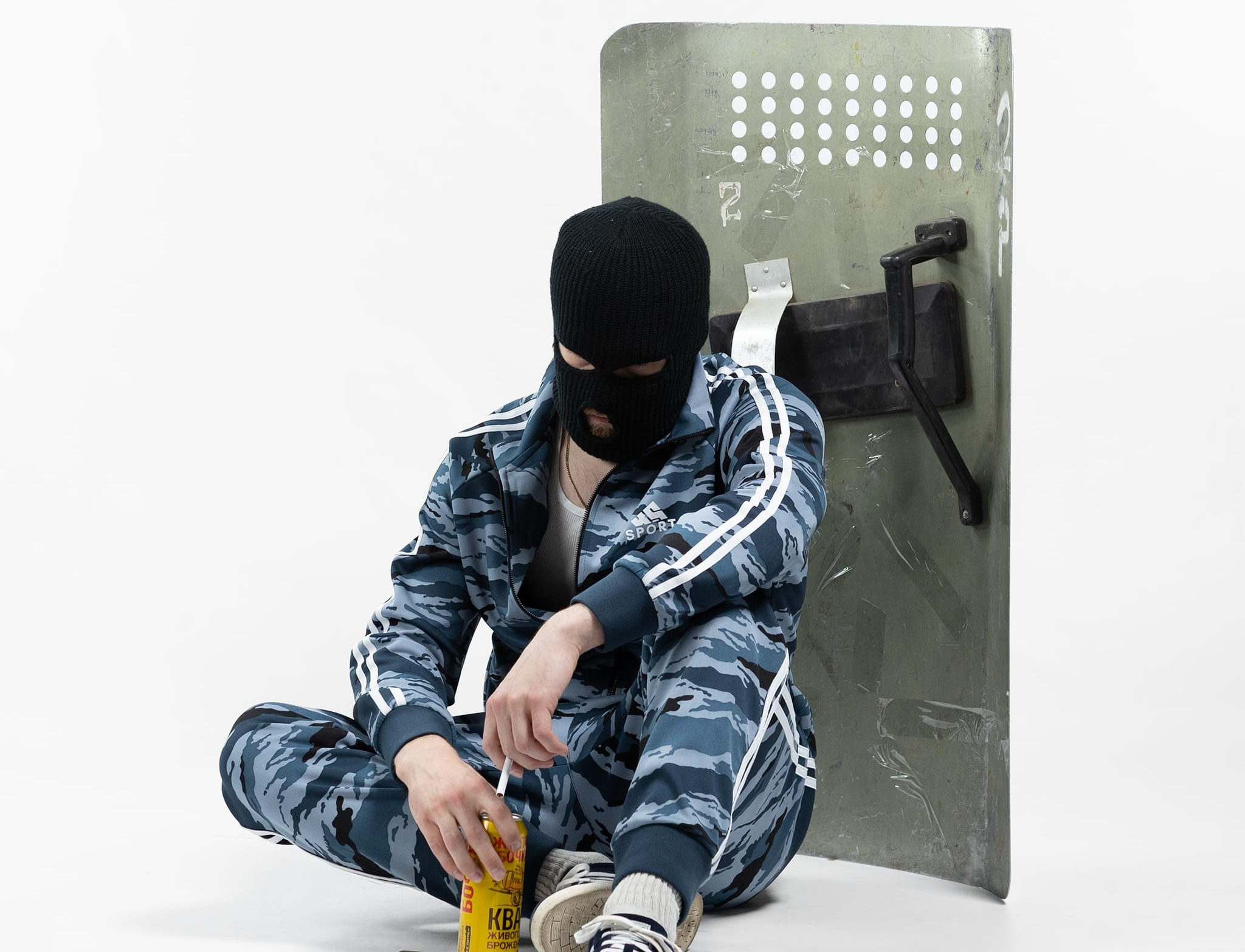
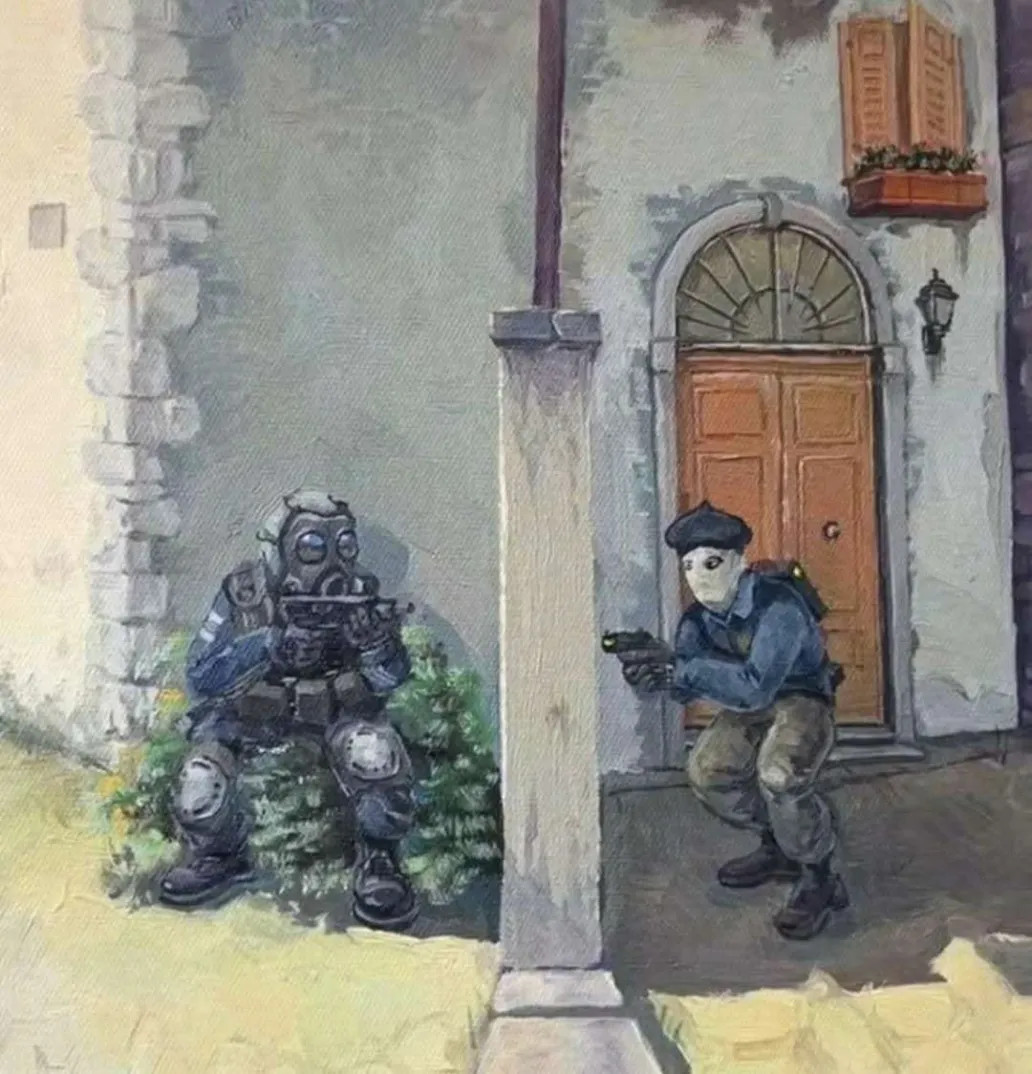
Shadow While our friends at kommadostore.com have been busy in the warehouse doing a bit of spring cleaning, how about something really special this weekend?In their back pocket, they’ve been having a chat with their Gorka-making friends in Uzbekistanand they’re once again expanding the Slav tracksuit extended cinematic universe. The camo is called “Kamysh” kamush? kamiish?, and its art. They heard that YOU LIKE STRIPES…ShadowSo they put stripes on your stripes. For the uninitiated, this tracksuit features a faithfully rendered version of a real camouflage that Russia used on a militarized police force for decades.The blue tiger striped camo “Kamysh” became as infamous as it was eye-catching, so they figured why not take this work of madness and give it the full slav tracksuit treatment?  But the tracksuit is as much of a work of art as the camo itself —It’s got all the features you’d expect in a premium pairing with sewn-on instead of printed stripes, zipped pockets, ultra-cozy fabric, and a “goldilocks” athletic fit you’ll love. As expected, the same people who made the Gorkas absolutely nailed it. Current ETA is mid-June. 
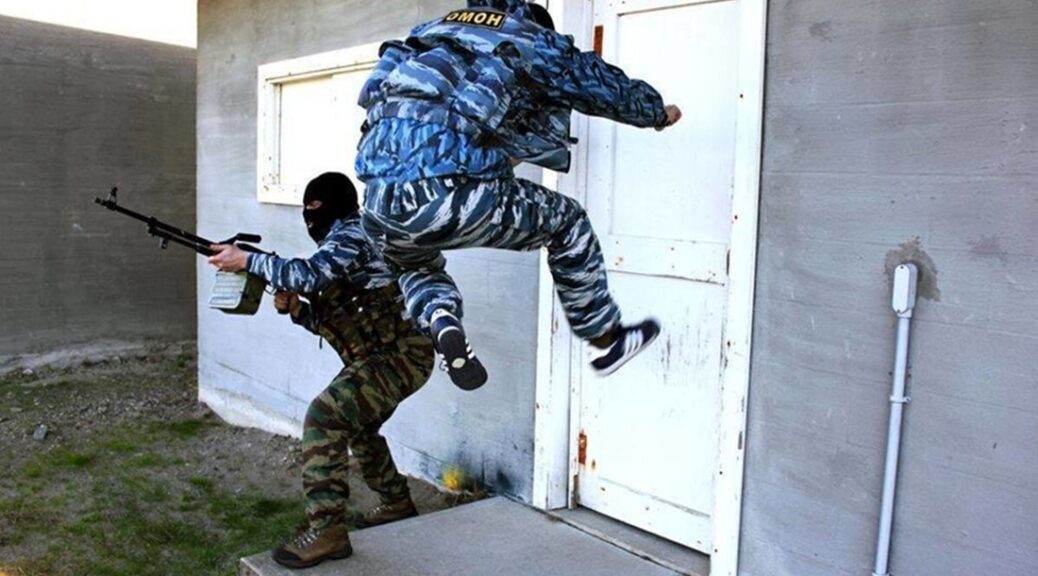
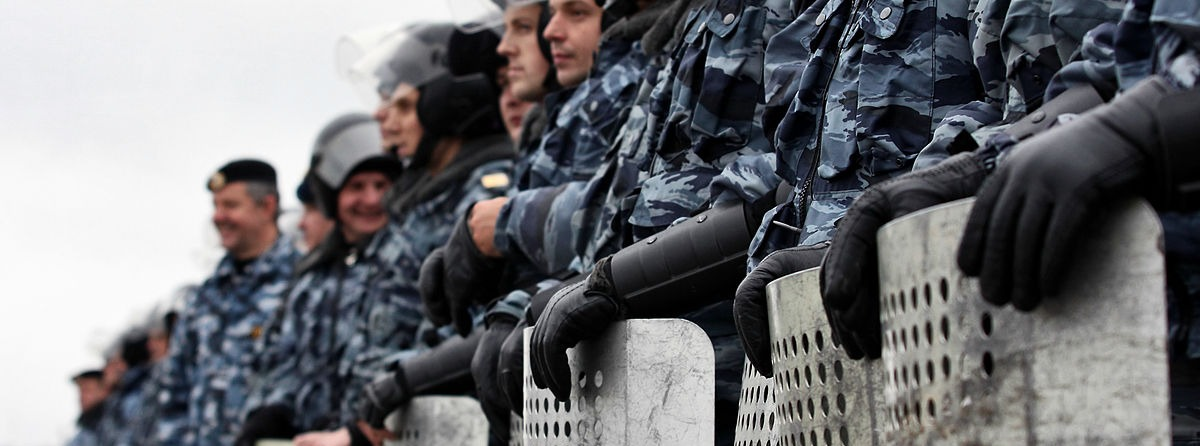
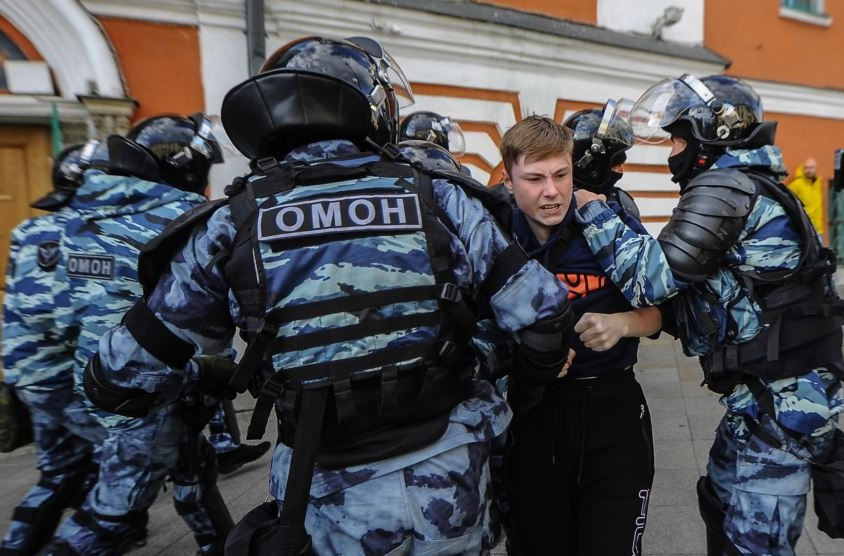
ShadowFor more about what is undoubtedly the most insane camouflage ever sold surplus or not,  keep on scrolling for the scoop… Shadow Not that long ago- It was the post-soviet-union collapse. Russia couldn’t make up their mind, so they finally lost it instead. The camo-of-the-week for Russia’s primary military force was “VSR”, a vertical-dominant pattern.  But there was a horizontal pattern that also started to see use around the same time in the mid 90s, Tiger Stripe. Shadow It’s obviously different to US tiger stripe from Vietnam but it was deployed for the same reasons. In built up tall grass, marshlands, and water-adjacent flora, it excels. But hold on, how the heck did it turn blue? Shadow It’s obviously different to US tiger stripe from Vietnam but it was deployed for the same reasons. In built up tall grass, marshlands, and water-adjacent flora, it excels.But hold on, how the heck did it turn blue? ? Kamysh is actually a bit of a blanket term for ALL tiger stripe camos from Russia, its sometimes just called “Tigr” too. Shadow With increasing police presence during former-soviet-state separatist conflicts, Russia’s ‘MVD’ came into play, but there was a problem — they didn’t want to make it look like their internal security forces were literally the military. Normal VSR was a no-go because then it’d look like Russia’s primary military. Then they had a crazy idea: Give different police/emergency response units a different shade of the camo to soothe any accusations of paramilitary activity. Shadow Blue tiger striped camo would be given to “OMON”, a top mobile police unit in the MVD. Curiously, they’d even adopt the Siberian tiger as a mascot on some of their unit patches.What exactly does OMON do? Think of them like the US’s militarized federal police forces for the FBI, DEA, Homeland Security, and everyone’s favorite, the IRS. Except Russia liked to use them outside the country quite a bit, too. They were seen in many armed conflicts. So for decades the MVD and it’s definitely-not-military units would show up to the function wearing knockoffs of DPM, M81, Flecktarn, or this crazy tiger stripe all to not raise too much suspicion that they were militarized forces of the Kremlin… Yeah… Shadow A litany of blue-ish tigerstripe-ish commercial camos would become the face of OMON for decades. Infamously, a suspiciously similar blue tiger stripe was also used by “Berkut” units during the “Revolution of Dignity” in Ukraine c.2014.  Was it a true “Urban camo”? or just an identifying mark of the unit? Does Russia know “OMON” in Cyrillic is “HOMO” backwards? It seems like it’s anyone’s best guess. Shadow And we couldn’t neglect to mention what made this camo popular to us gun-toting autists in the west. At MilSim West, an iconic photo of a man performing a flying kick into a door wearing what appears to be genuine “OMON” garb was taken.It was only in recent years that people actually figured out it wasn’t really OMON doing that, which just goes to show you how crazy that police unit is. It made that camo go “viral” amongst the surplus-sphere, and with the state of Russian unobtanium, we decided to take a new spin on it by making a brand-new garment out of a pre-existing camo. Shadow It was only fitting that kommando approached their gorka-maker to bring back this piece of Russian obscura — and they did a fantastic job to boot.. MVD! OPEN UP! 🚓
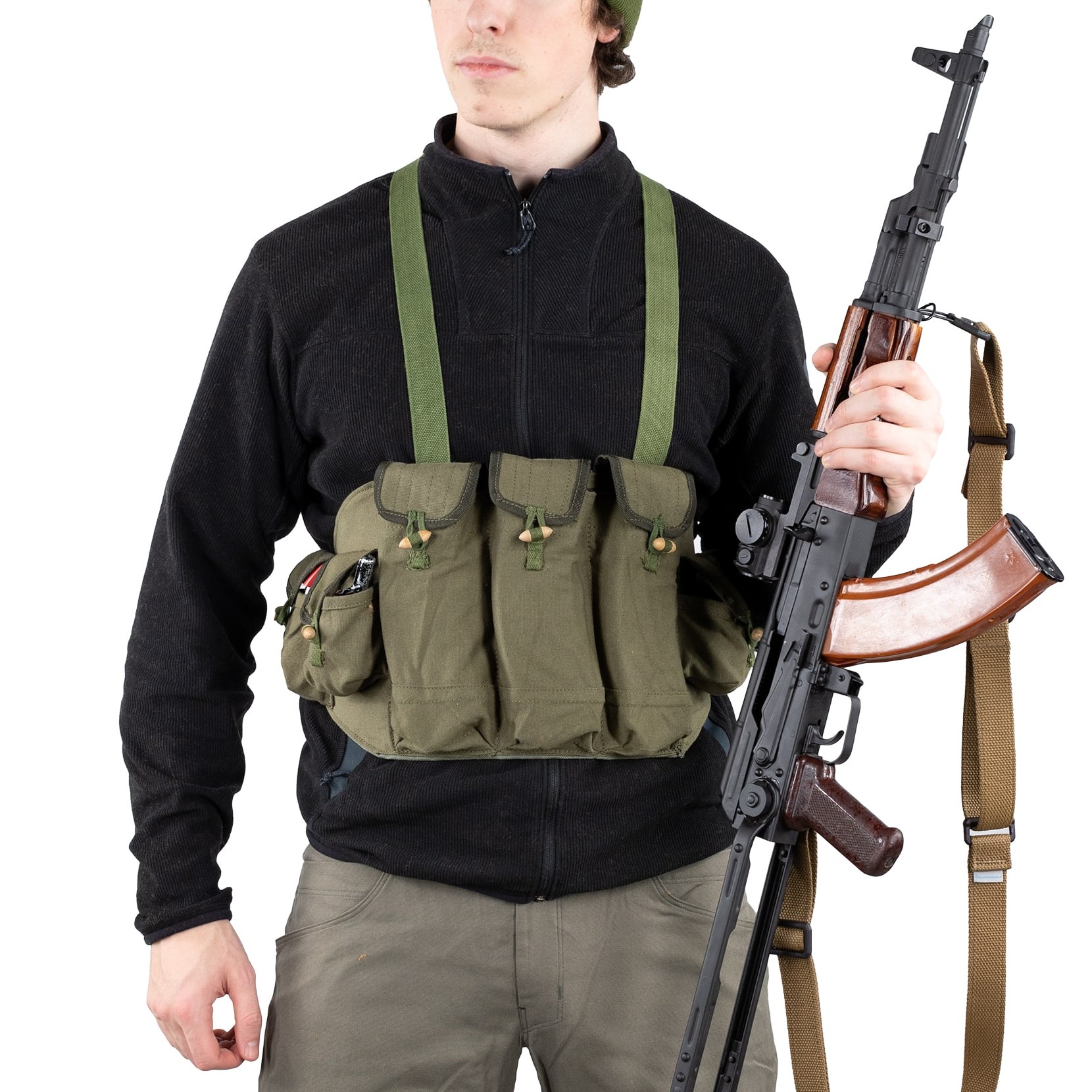
The No Quit Chicom Chest Rig

A RIG THAT’S SEEN IT ALL (And would probably rather not have)
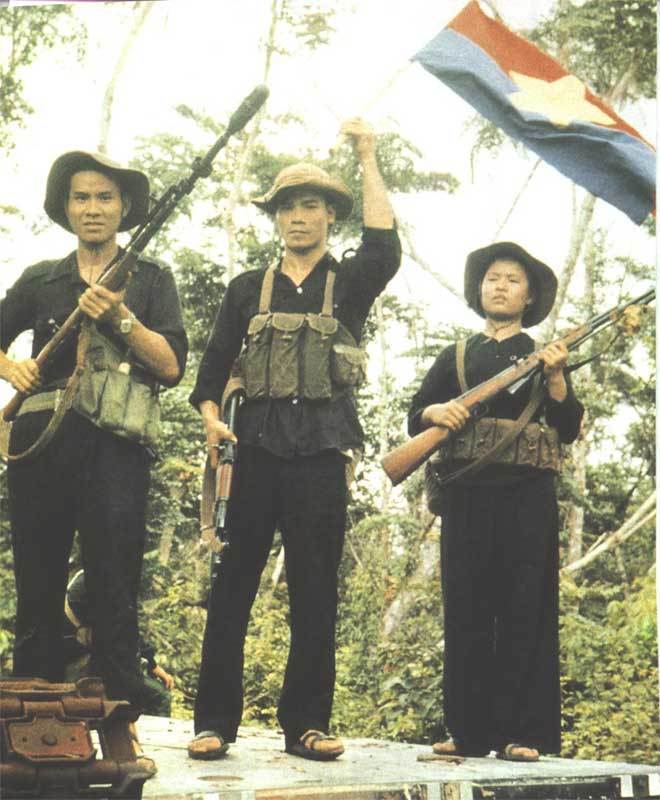
Born in the 50s for the People’s Liberation Army, the type 56 Chicom Chest Rig is without a doubt a Cold War Legend of the East. The Viet Cong rocked it in Vietnam, Soviet Spetsnaz snagged it in Afghanistan, and every commie-aligned rebel and LARP-ist from Rhodesia to the borders of South Africa copied it. 
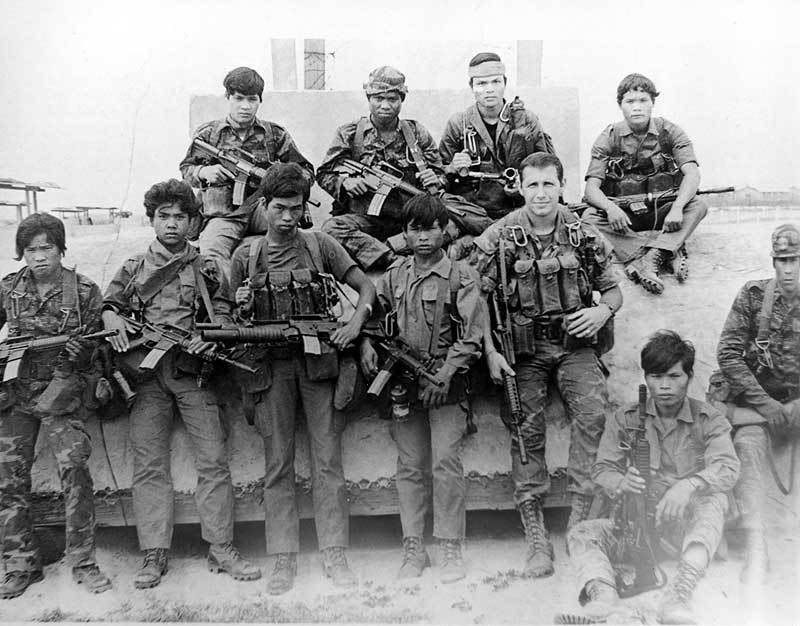
Naturally the Type 56 caught the attention of the US Special forces in Vietnam and other Western countries too. The US used the rig in conjunction with the family of AKMs borrowed from downed VCs & blend in with the enemy as much as a 6’4 Iowan MACVSOG commando could – it’s high speed and ease of use changed the western world’s opinions on belt-mounted kit as a means of combatting Insurgency.  
 A spiritual evolution to the bandoleers of old, the Type 56 would go on to inspire the Russian Lifchik, and spread the gospel of chest-stowed-ammo to the western world via Soldiers of Fortune in Rhodesia & South Africa. It still saw use deep within enemy territory in the past few decades. And of course, we could even credit the USA’s very own Pattern 84 rig to the Type 56’s legacy. 
To us Zoomers It’s been made famous again by its depictions in cyberspace and on the big screen – CoD Black Ops, Escape from Tarkov, and hit films like Apocalypse Now & Platoon all show the influence of the OD canvas OG. 
So stay loaded, unhinged and within the limits of Xi Jinping’s social credit system with the type 56.Or go hog wild and modify it. It’s only $30usd / $42.94cad from our friends at kommandostore.com and is great to get your sewing and seam ripping practice in. Just make sure the party isn’t watching, they don’t like when us filthy capitalists misuse their gear, we wouldn’t want a Cold War II: 电动布加洛. 
In case this message is seen by CCP members: Zǎo shang hǎo zhōng guó! Xiàn zài wǒ yǒu Chicom rig—wǒ hěn xǐ huān! We love TEMU, Alibaba, and Xiaohongshu!
Speaking of Canvas…

For the Silo, Ivan K.

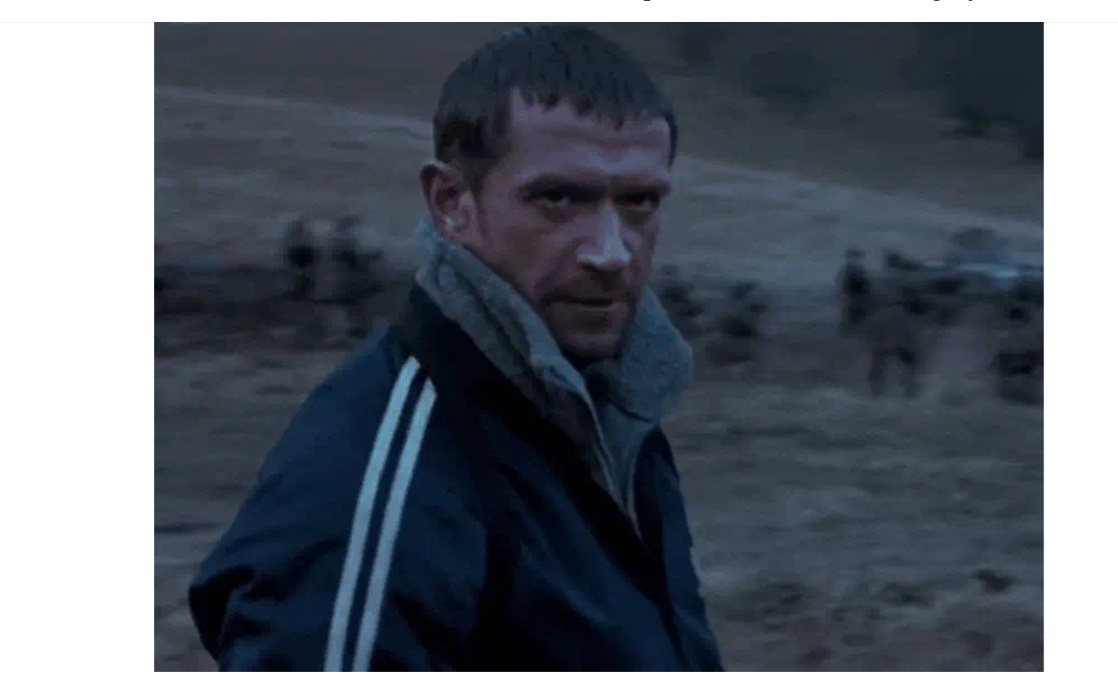
Now You Can Own A Sasha Ivanic Jacket

The origin story of the quintessential “Slav” outfit…

A True Story Goes to Hollywood

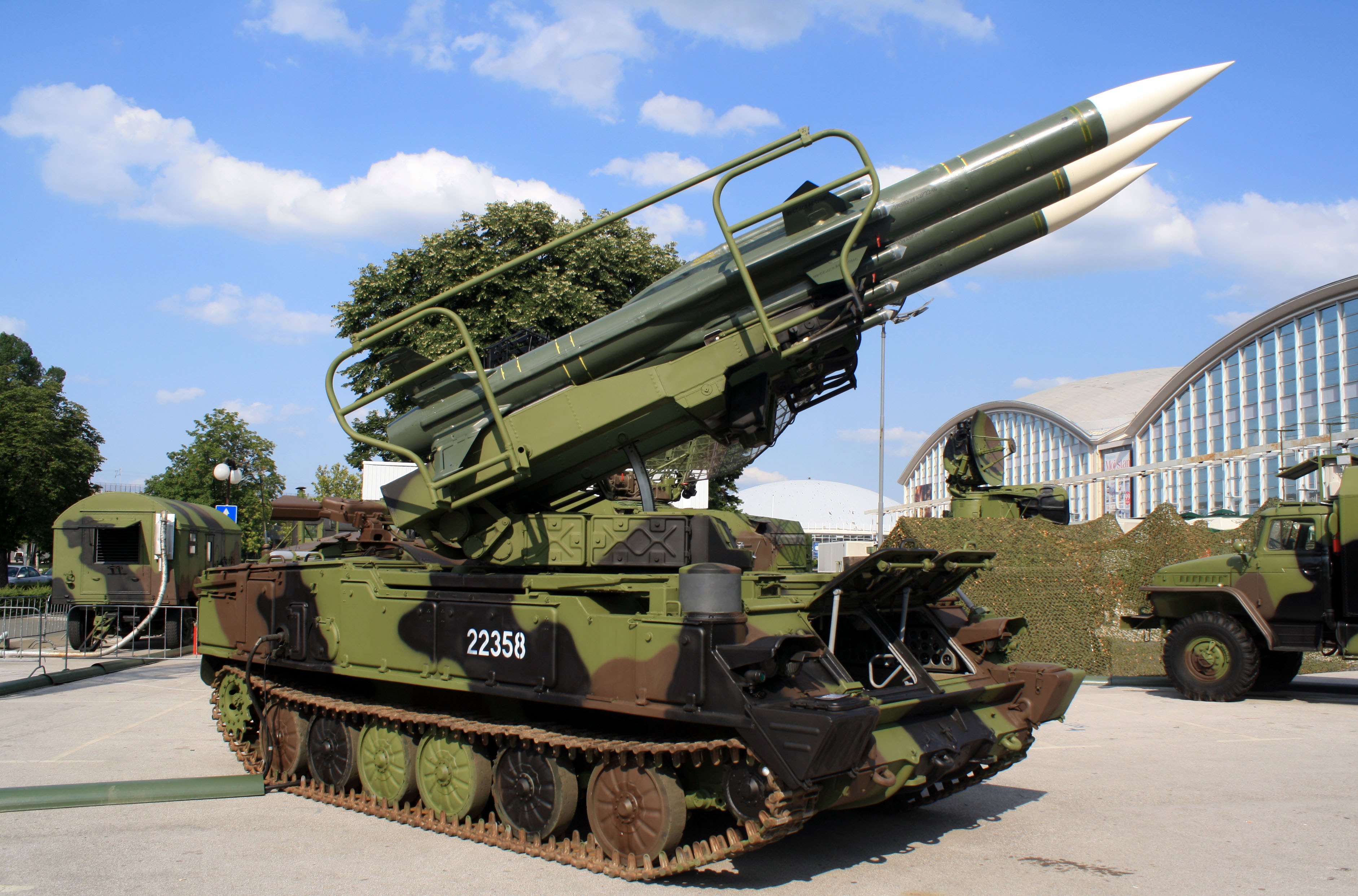
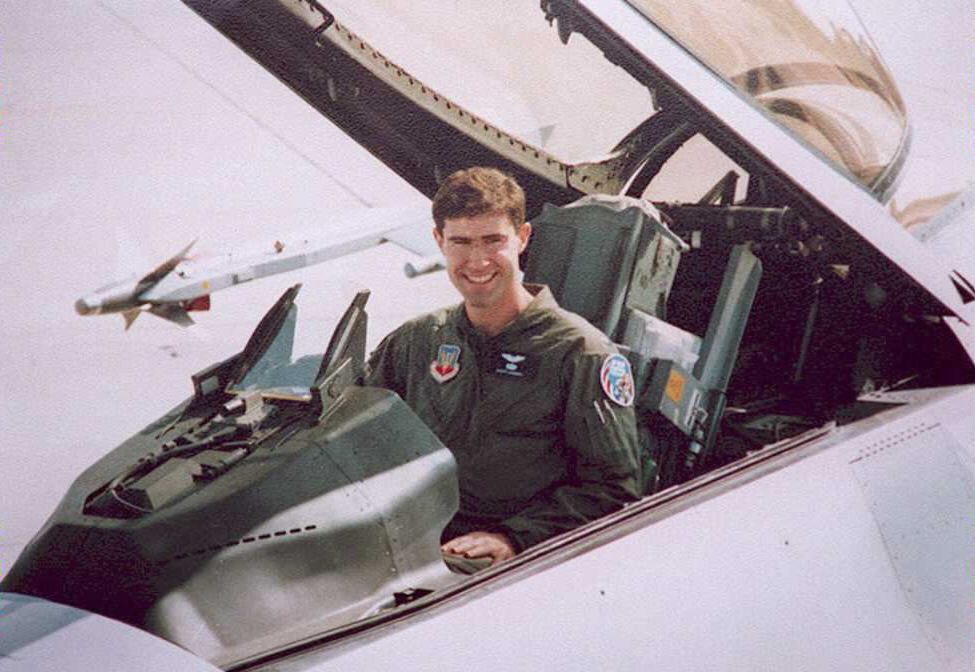
Here is another fine article via friends at kommandostore.com- you can find your size and place your order here. In 1995, pilot Scott O’Grady was flying his F-16 on a mission during the Bosnian war, when his aircraft was destroyed by an SA-6 Missile.

SA-6/ 2K12 SAM surface to air missile launcher.

He survived by successfully ejecting from the aircraft, but was forced to spend nearly a week evading local military forces before he could be rescued by US Marines.

He wasn’t approached to consult on the making of Behind Enemy Lines, nor was he paid for the rights to his story. As one could imagine, lawsuits ensued and “Behind Enemy Lines” would later be presented as the story of a different person in a very similar set of circumstances…

Behind Enemy Lines, 2001

This action flick featured Owen Wilson playing Chris Burnett, a pilot who gets shot down over Bosnia on a reconnaissance mission. He ejects, but that’s only where his problems begin.

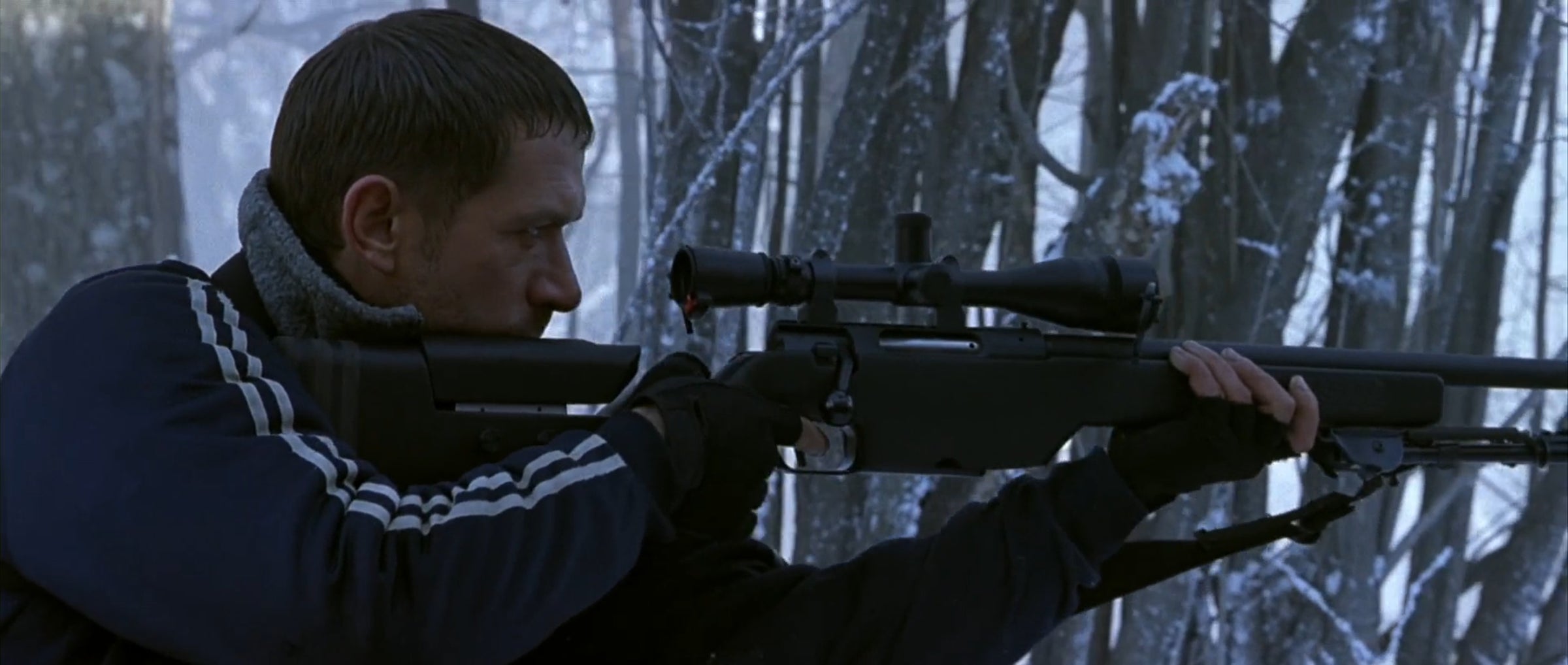
The lieutenant spends the rest of the film evading an extremely dangerous lone-wolf sharpshooter and the rest of the Bosnian-Serb military.

Almost immediately upon release, the movie was a cult-hit among firearms & military enthusiasts in the US. The main antagonist, Sasha Ivanic was in many ways the focal point of this obsession.

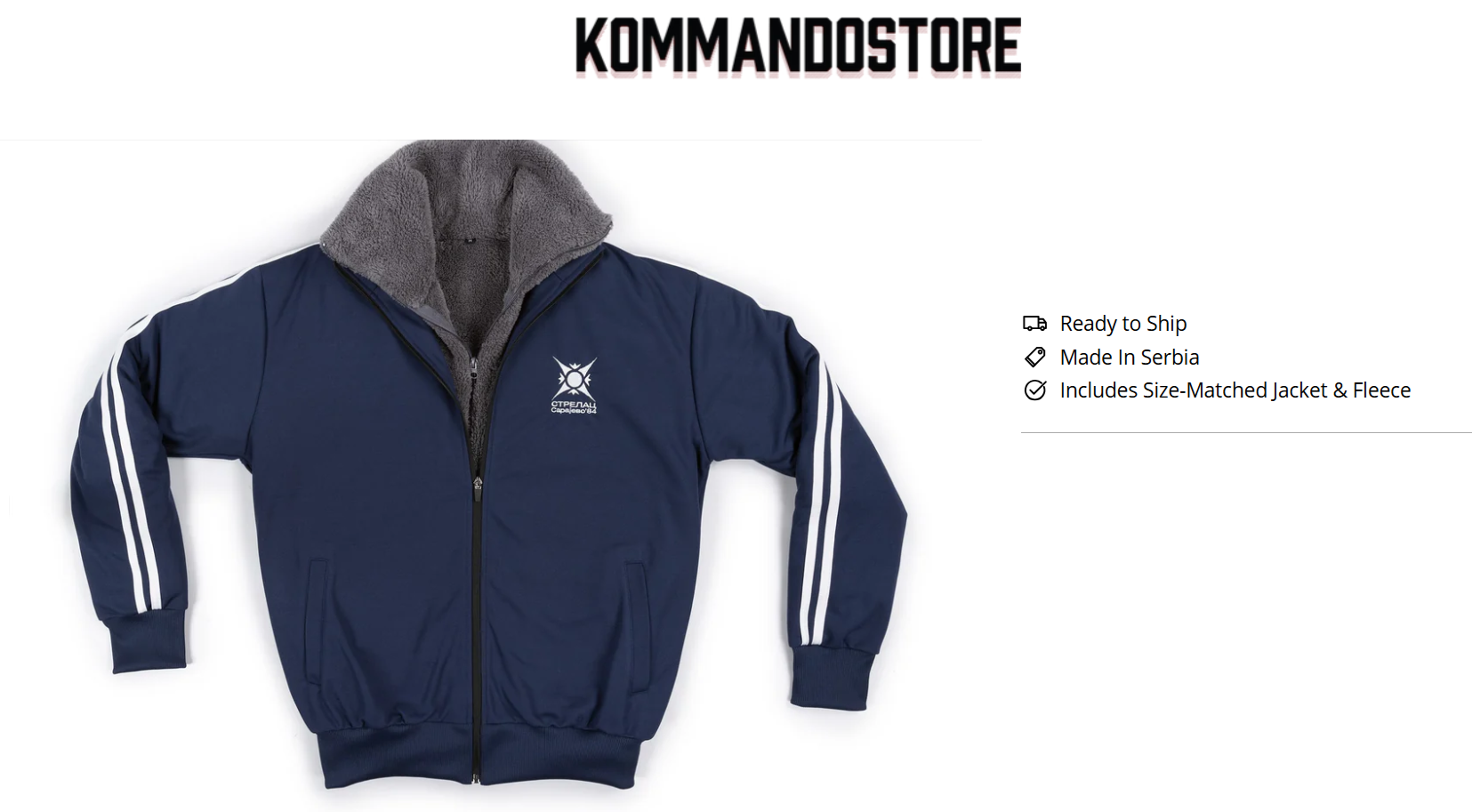
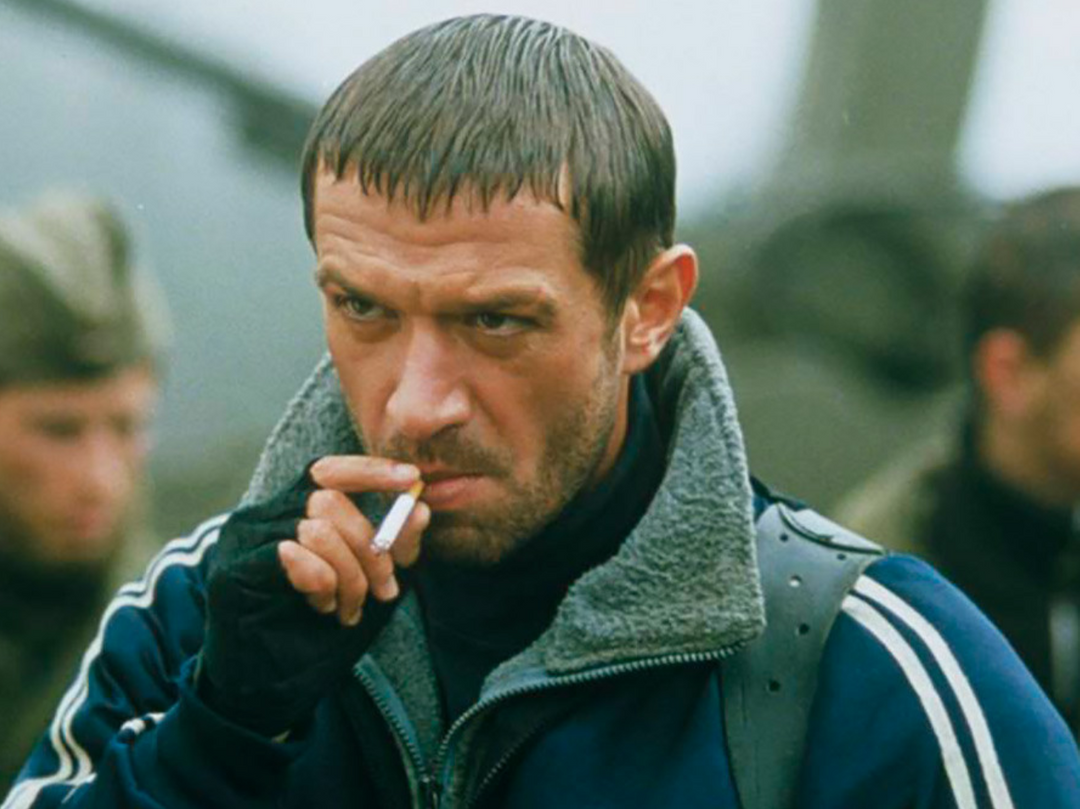
Sasha’s iconic track jacket became an “it item” among collectors, but it was nowhere to be found…

Stealing The Show

Ultimately the film’s legacy hasn’t been kind to its hero. Sasha Ivanic is such cool villain that despite having almost no lines, he completely steals the show.

Vladmir Mashkov, the actor playing Sasha, left such a lasting impression on audiences that he shaped Eastern European villains and anti-heros for years to come.

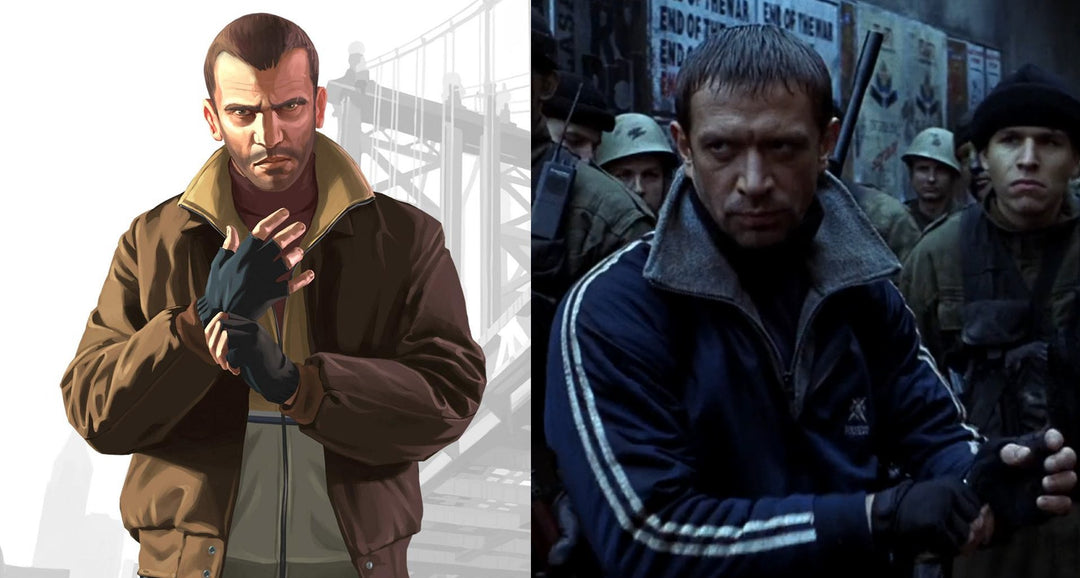
The protagonist of Grand Theft Auto IV, Niko Bellic, was based almost entirely on Sasha — Rockstar Games even intended to cast him for the role. GTA IV would go on to be one of the most celebrated video games in history, firmly cementing post-USSR “Slav” culture in the minds of millions.

Finding The Fit

Like many white whales we’ve chased, it all started with blurry photos circulating on obscure forums and social media pages. But try as we might, the search for the Sasha jacket always came up dry.

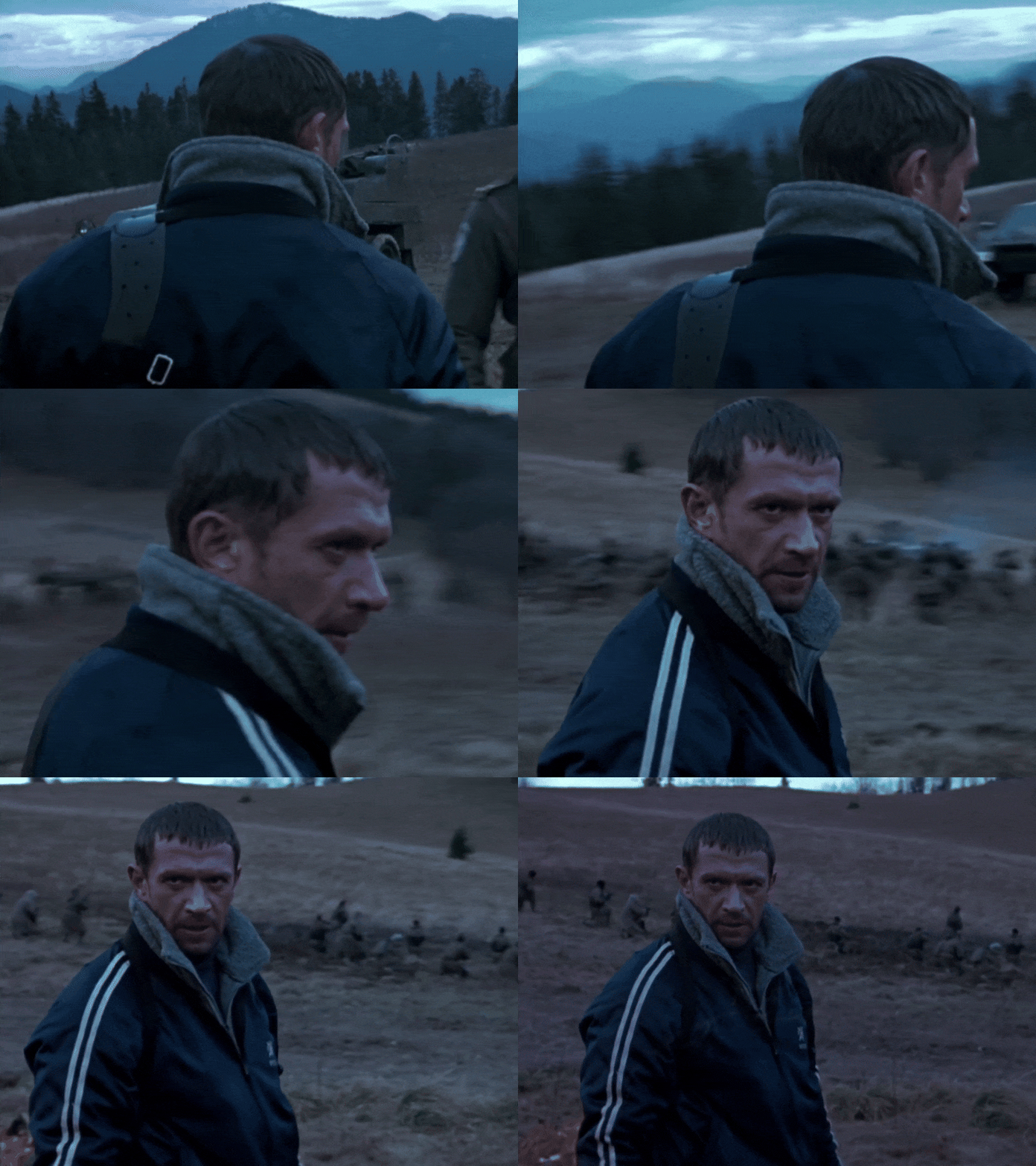
So, we rolled up our sleeves and got to work. We went frame by frame through the original movie, painstakingly made our own artwork and mockups, and designed our track jacket from the ground up.

Why Sarajevo?

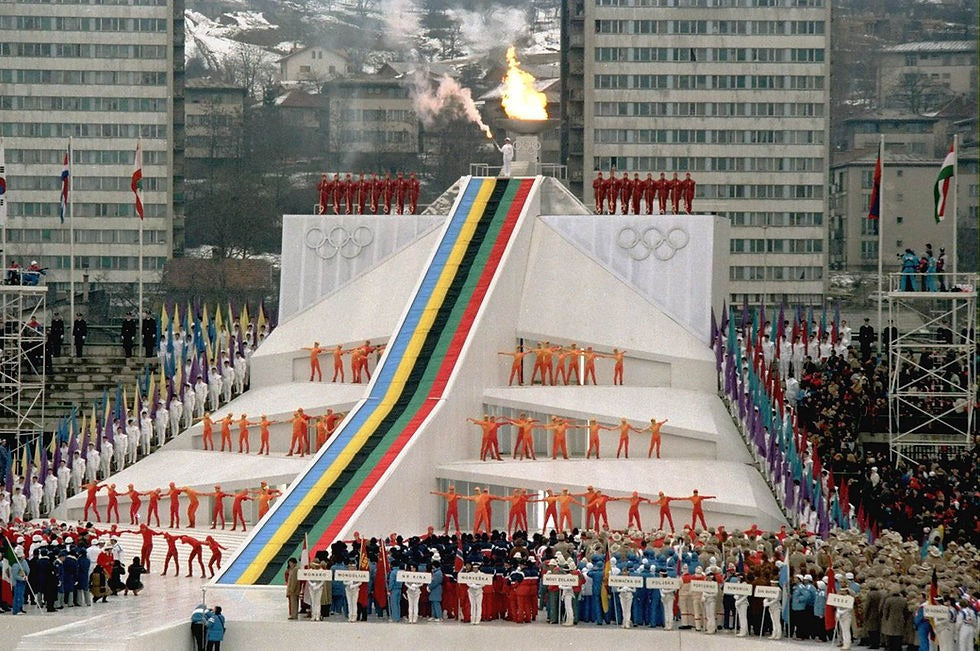
The 1984 Olympics in context

The Boycott Games

The Olympic games during the Cold War were notorious for boycotts organized by dozens of countries up through the 1980s.

Melbourne ’56, Tokyo ’64, Canada ’76, and particularly the Moscow Olympics in 1980 were all mired in international politics.

But in 1984, for the winter Olympics in Yugoslavia, there was a distinct (and welcome) lack of boycotts.

As a result the Sarajevo games had highest rate of participation of any Olympics during the Cold War. Unfortunately this moment of hope and unity was short-lived.

Civil war would divide Yugoslavia less than a decade later.

The Siege of Sarajevo

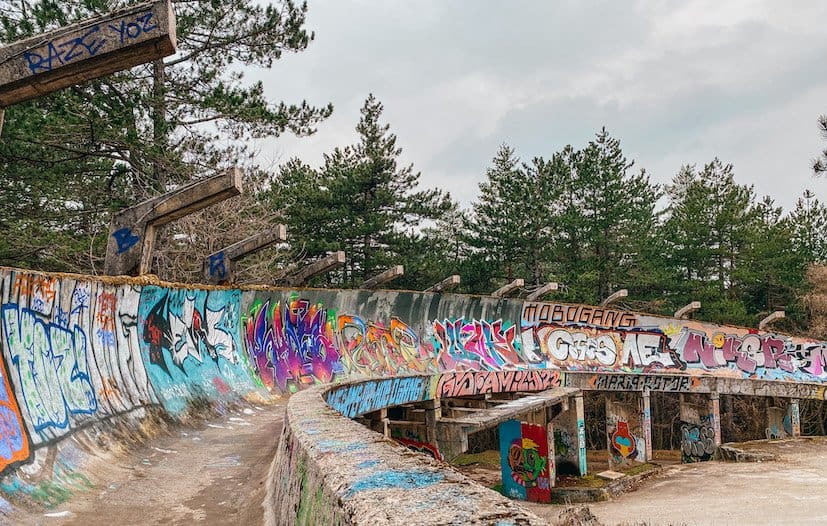
The siege of Sarajevo featured prominently in the opening chapters of the Bosnian war, and the brand-new Olympic facilities were caught in the crossfire.

As the battle intensified, Bosnian-Serbs famously dug in on the Bobsled/Luge track and used it as an artillery stronghold. To this day, you can still see firing ports drilled into the concrete.

The former olympic village was never redeveloped, and remains in ruins to this day…

…Just A Theory?

By late 2001, the Former-Soviet-Bloc countries were still in disarray, and ‘War On Terror’ was in full-swing.

In this post 9/11 world, films about the horrors of the Vietnam war, or the spy games of the Cold War just didn’t resonate. So, the way action movie antagonists were written had to evolve…

Real-world unknowns and fears drive how we write stories; whether it’s a humanitarian crisis inspiring movies about invading aliens from outer space, or zombies representing our fears around epidemics & disease.

Villains like Sasha Ivanic embodied this new era of guerilla tactics and hazy or mysterious motivations. Much like the terrorist groups feared by the public, there was no telling what they’d do next, or why.

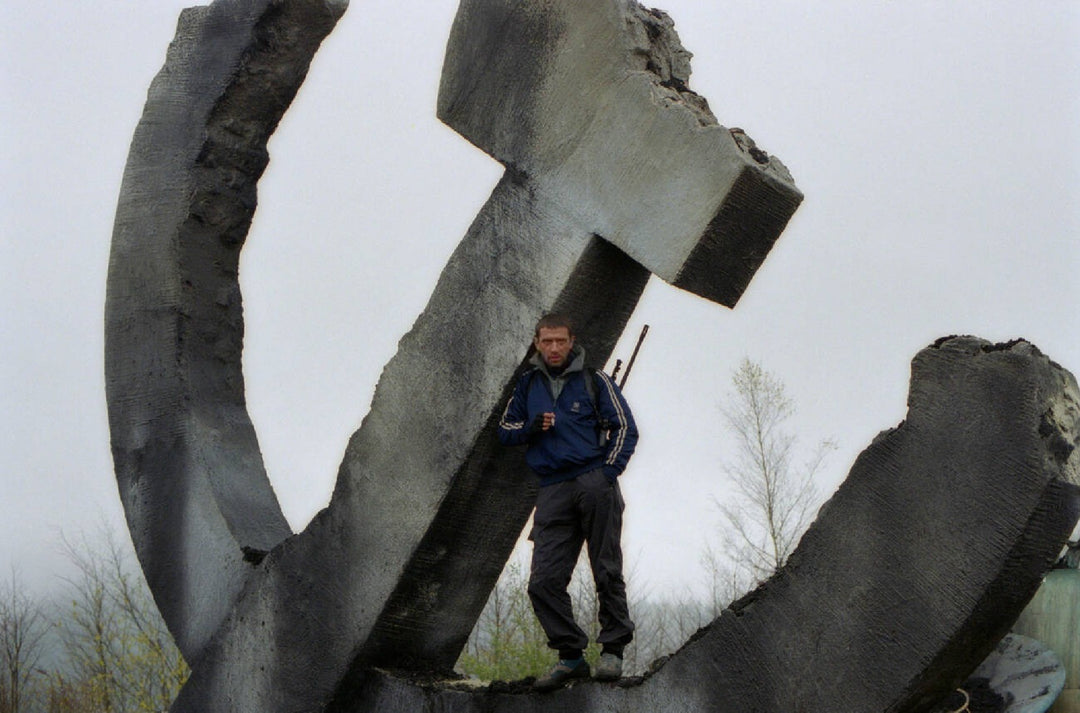
Sasha’s Jacket begged some unknowns: Could Sasha have been an Olympian at Sarajevo? What was he really fighting for, or for whom? We never found out, but it’s part of what makes him so frightening and believable.

Sasha’s Legacy

Going on to inspire Anti Heros like Nico Bellic in GTA would be one thing, but he was certainly part of a larger trend of iconic Eastern European villains.

The Ivan Dragos of cinema were slowly replaced with the Vladimir Makarovs of video games, and with the re-opening of closed wounds constantly in Eastern Europe, Sasha’s morally grey character archetype continues to have a lasting relevance.

Sure, the boys in the Adidas track jackets were always there, but it was Sasha who made it the standard issue uniform.