Tag Archives: Jackson Pollock

The Met to Present a Major Exhibition Dedicated to the Careers of Lee Krasner and Jackson Pollock

Featuring over 120 works from more than 80 U.S. and international lenders, this exhibition marks the first major New York presentation of either artist’s work in over two decades—and their first at The Met.

Exhibition Dates: October 4, 2026–January 31, 2027
Exhibition Location: The Met Fifth Avenue, Gallery 899, The Tisch Galleries


(New York, February, 2026)—Krasner and Pollock: Past Continuous at The Metropolitan Museum of Artis a major exhibition that charts the full arc of the careers of Lee Krasner (1908–1984) and Jackson Pollock (1912–1956) in parallel, examining the distinct yet connected practices of these artistic peers and life partners. On view October 4, 2026, through January 31, 2027, it marks the first major New York presentation devoted to either artist in more than 20 years, introducing their work to a new generation while reassessing their enduring impacts on modern and contemporary art.

A meeting of two great artists


Krasner and Pollock were emerging artists in New York when they met on the occasion of being included in a 1942 exhibition organized by the artist John Graham. They married in 1945 and moved to Springs, Long Island, where they remained entwined personally, artistically, and professionally until Pollock’s death in 1956. Pollock’s life’s work had secured his legacy, while the nearly three decades that Krasner survived him marked some of the most transformative years of her career. Drawing its subtitle, Past Continuous, from a 1976 painting by Krasner, the exhibition traces parallel lives and practices, first forged by lived experience and then shadowed by memory. It foregrounds the range and art historical significance of Krasner’s work while offering a sustained examination of Pollock’s rich and complex practice.
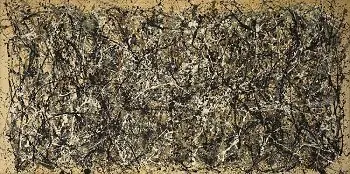
Number 31. 1950. Jackson Pollock

Outstanding philanthropy


The exhibition is made possible by Kenneth C. Griffin and Griffin Catalyst, Marina Kellen French, and the Barrie A. and Deedee Wigmore Foundation.
Additional support is provided Trevor and Alexis Traina, the Aaron I. Fleischman and Lin Lougheed Fund, The Huo Family Foundation, and Joyce Kwok.
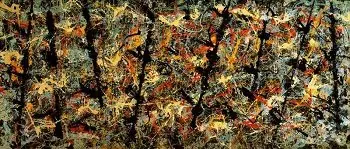
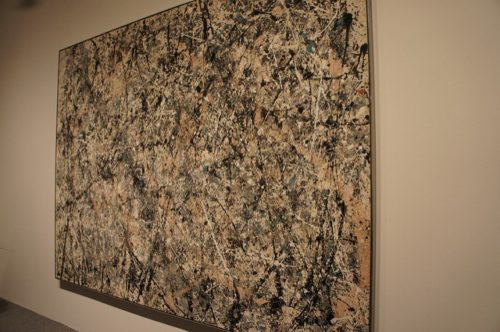
Number 11. 1952. Jackson Pollock

A novel way of reexamining modern art


“With its distinctive premise and scope, Krasner and Pollock: Past Continuous exemplifies The Met’s commitment to reexamining modern art through rigorous scholarship and fresh perspectives,” said Max Hollein, Marina Kellen French Director and Chief Executive Officer of The Metropolitan Museum of Art. “By considering each artist on their own terms while also foregrounding their consequential relationship, the exhibition situates Krasner’s and Pollock’s work within a broader cultural and artistic context—an approach central to the mission of The Met’s Department of Modern and Contemporary Art and to the vision of the forthcoming Oscar L. Tang and H.M. Agnes Hsu-Tang Wing, opening in 2030. This project affirms Krasner and Pollock not only as defining figures of their moment, but as artists whose work continues to shape and inspire future generations.”

What makes an artist revolutionary?


Krasner and Pollock: Past Continuous begins with the fundamental premise that these artists are equals, partners in life, giants in the history of art, and revolutionaries who defined what abstraction could be,” said David Breslin, Leonard A. Lauder Curator in Charge, Department of Modern and Contemporary Art, The Met. “Each found a partner who would insist on the primacy of art over life; and they both aspired to an art that was forged out of historical connections but that also promised freedom and radical possibility in a world forever changed by war. The exhibition concerns entwined lives but is also about how different artistic directions come from shared terrain.”

Krasner and Pollock: Past Continuous approaches these artists not as a single story, but as two practices unfolding in proximity over time,” said Brinda Kumar, Associate Curator, Department of Modern and Contemporary Art, The Met. “The exhibition examines how Krasner and Pollock shared a commitment to testing the possibilities of abstraction—through shifts in scale, material, and form—and how those investigations continued to evolve along distinct trajectories.”

Krasner and Pollock: Past Continuous follows each artist’s life and work.

The exhibition highlights their differences as much as their interrelation, with some galleries that place the artists together and others where they are presented independently. Krasner and Pollock were shaped by their distinct upbringings and formative trainings. Krasner adopted and negotiated the tenets of the European avant-garde, particularly Pablo Picasso, Henri Matisse, and Piet Mondrian. Her training under Hans Hofmann was key to her development. Pollock’s network of broad influences included Thomas Hart Benton and American Regionalism, Mexican mural traditions, Surrealism, and even his own family of artists.

Their early paths unfold as complementary divergences, tracing distinct strands of American modernism that would ultimately converge in the rupture known as Abstract Expressionism. For Pollock, his breakthrough was the “drip” technique, a radical mode of painting that flourished in a condensed but prolific period from 1946 to 1951. Krasner’s varied practice was typified by ceaseless explorations of abstraction, often cued by her abiding interest in the possibilities of nature and color. This manifested in bold collages, gestural canvases and vividly hued hard-edge painting. Historically, Pollock’s reputation has eclipsed Krasner’s. LIFE Magazine asked in 1949 if Pollock was “the greatest living painter in the United States.” His early death and posthumous media attention further amplified his fame and eclipsed critical appraisal of Krasner’s contributions. Today, both artists’ practices are rightly recognized as key to the innovations of art from the mid-20th century onwards. This exhibition continues and amplifies this reevaluation.

Rarely loaned works
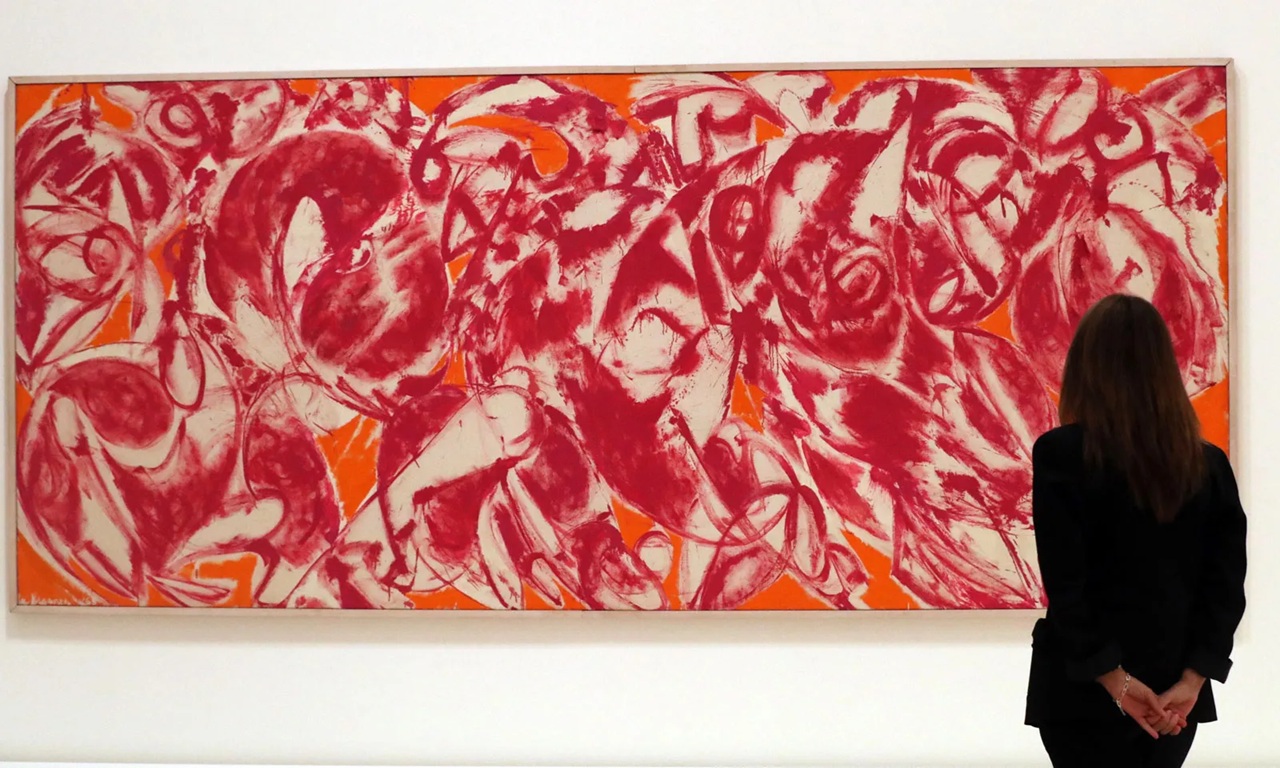
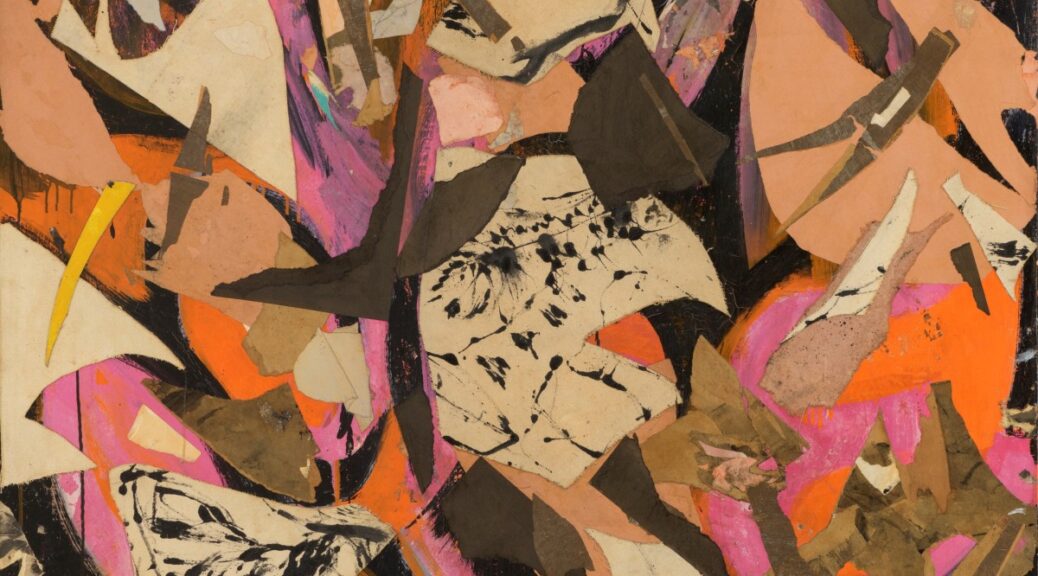
Combat. 1965. Lee Krasner


The exhibition draws on The Met collection and rarely loaned works from more than 80 U.S. and international lenders, bringing together over 120 paintings, works on paper, and ephemera to reconsider Krasner’s and Pollock’s careers—both on their own terms and in dynamic relation to each another and their shared artistic context. Major institutional lenders include Peggy Guggenheim Collection, MoMA, the Whitney Museum of American Art, Tate, National Gallery of Art, National Gallery of Victoria, Centre Pompidou, Buffalo AKG Art Museum, Dallas Museum of Art, The Art Institute of Chicago, and SFMoMA. The exhibition will also include several rarely seen works from important private collections.

Organized into 12 chapters that span each artist’s career and are punctuated by defining moments, Krasner and Pollock: Past Continuous unfolds from the 1930s through the postwar years to the end of their respective lives, moving between moments of convergence and difference. The exhibition’s design, informed in part by historic spaces and installations, enhances moments of exchange—across time and practices—while allowing for discrete encounters with works by each artist, from Krasner’s Little Images series and Pollock’s drip paintings of the late 1940s to his monumental canvases in the 1950s and Krasner’s Umber and Earth Green series. The exhibition charts ongoing dialogues—Pollock’s late return to earlier motifs in the mid-1950s and Krasner’s extended engagement through the 1960s and 1970s with artists such as Klee, Picasso, Mondrian, and Matisse. This presentation will reveal two artists in constant negotiation with each other, themselves, and the cultural, political, and aesthetic stakes of their time.

A constellation of landmark works anchor the exhibition’s exploration of both artists’ practices, including Lee Krasner’s Composition (1949), The Seasons (1957), The Eye is the First Circle (1960), and Combat (1965), along with Jackson Pollock’s Stenographic Figure (1942), Guardians of the Secret (1943), Number 1, 1950 (Lavender Mist) (1950), and The Deep (1953). Two earlier exhibitions, Krasner/Pollock: A Working Relationship (co-organized by Guild Hall and Grey Art Gallery, 1981) and Lee Krasner-Jackson Pollock: Kunstlerpaare Kunstlerfreunde (Kunstmuseum Bern, 1989–90), concentrated on the approximately 15-year overlap in the artists lives, from 1941, when they met, until Pollock’s death in 1956. Krasner and Pollock: Past Continuous is the first exhibition to consider both artists’ practices, in their full chronological sweep, together.

The Met has long been significant for both Krasner and Pollock.

Pollock first exhibited a painting at The Met in 1943 in an exhibition in support of World War II. By the end of the decade, he would be among the artists—The Irascibles—who mounted a notable critique of the Museum’s then-prevailing attitude to contemporary art. However, a short while after Pollock’s death, The Met acquired the landmark painting Autumn Rhythm (Number 30) (1950). The Met’s collection of works by Lee Krasner—from her earliest self-portraits to her late magnificent Rising Green (1972)—includes important gifts to the Museum by the artist during her lifetime. The Met was notably also the venue for Krasner’s memorial service in 1984. Krasner and Pollock: Past Continuous builds on this history, marking the Museum’s first major exhibition devoted to either artist. A focused survey, the exhibition traces the arcs of their artistic developments, offering fresh perspectives on two of the most influential figures of 20th-century art.

The exhibition also reflects The Met’s commitment to showcasing artists whose work continues to shape how art is made and understood today. Krasner’s and Pollock’s contributions to modernism and their serious engagement with the possibilities of painting continues to be significant for the work of contemporary artists. In advance of the opening of the Tang Wing for Modern and Contemporary Art, opening in 2030, Krasner and Pollock: Past Continuous models a curatorial approach that reexamines canonical narratives and connects 20th-century innovations to the concerns of today’s artists and audiences.
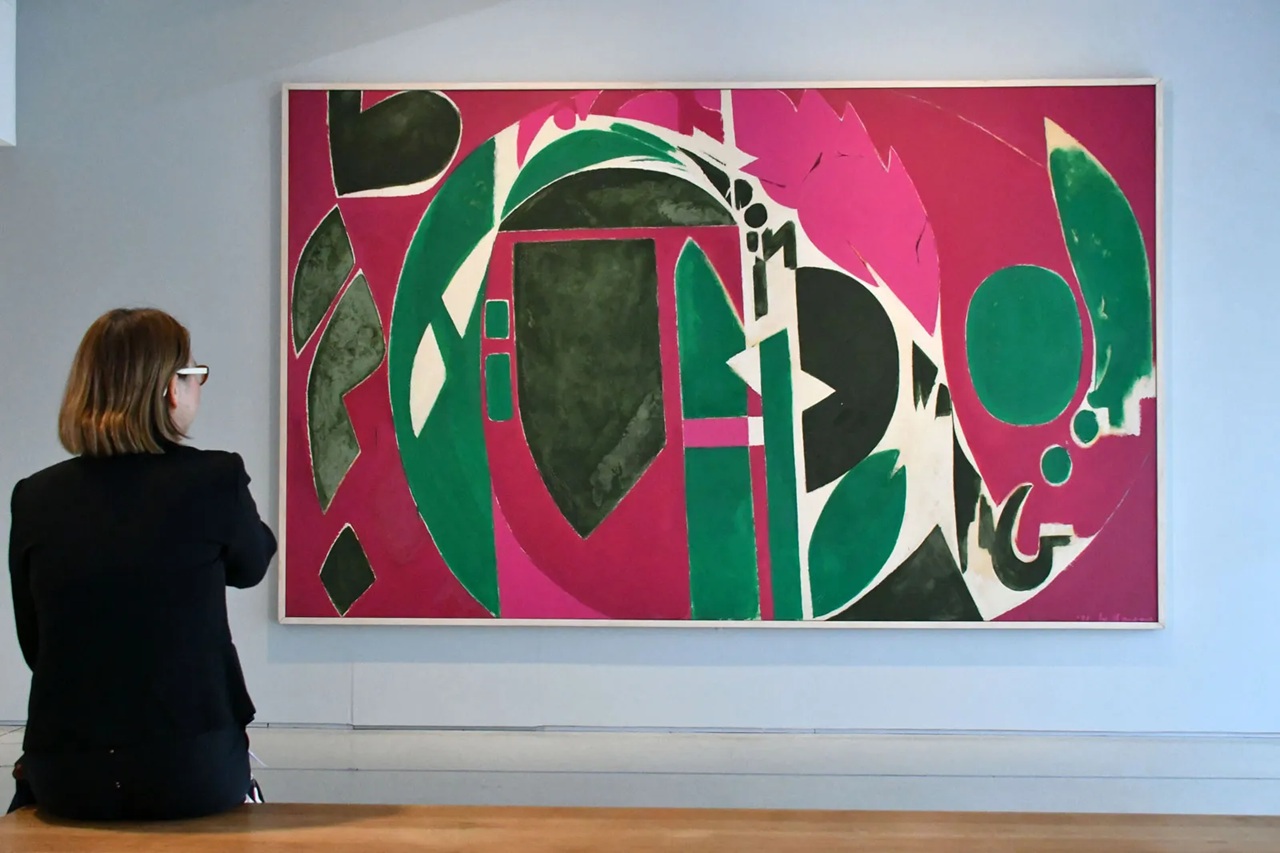
Palingenesis. 1971. Lee Krasner

Exhibition Catalogue


The exhibition’s accompanying catalogue, Krasner and Pollock: Past Continuous, expands the project’s central themes through newly commissioned texts. Featured essays by the exhibition’s curators as well as Johanna Fateman, Prudence Peiffer, and Matthew Holman consider a range of topics, including Krasner and Pollock’s intertwined creative lives as an artist couple, their strategies of abstraction in the 1950s, and the transatlantic reception of their work, while artist Amy Sillman offers a contemporary painter’s perspective on artistic breakthrough and legacy. The volume also includes an illustrated, interwoven chronology as well as reflections by leading contemporary artists, underscoring the enduring resonance of Krasner’s and Pollock’s work across generations.

The catalogue is made possible by the Pollock-Krasner Foundation.

Additional support is provided by the Aaron I. Fleischman and Lin Lougheed Fund, The Robert David Lion Gardiner Foundation, Karen and Sam Seymour, the Wyeth Foundation for American Art, Suzanne Deal Booth, and Kelly Williams and Andrew Forsyth.

For the Silo,  Julie Niemi.

Credits and Related Content
Krasner and Pollock: Past Continuous is curated by David Breslin, Leonard A. Lauder Curator in Charge, and Brinda Kumar, Associate Curator, with the assistance of CJ Salapare, Research Associate, all of the Department of Modern and Contemporary Art, The Met.

The Met will host a variety of exhibition-related programs, to be announced at a later date.

Featured Image: Lee Krasner (American, 1908–1984), Bald Eagle, 1955, Oil, paper, and canvas collage on linen, 77 × 51 1/2 in. (195.6 × 130.8 cm), ASOM Collection © 2026 Pollock-Krasner Foundation / Artists Rights Society (ARS), New York
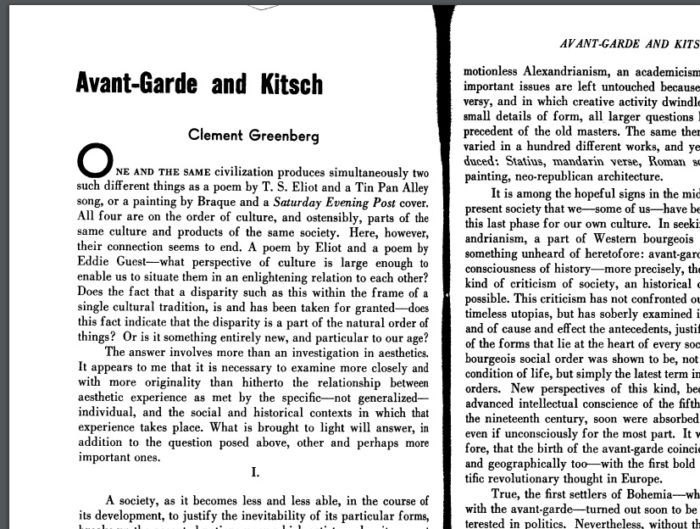
Clement Greenberg’s The Avant-garde And Kitsch

Art is, or it should be, about more than simply making marks on a surface or manipulating materials into pleasing–or indeed displeasing–shapes…. perhaps the avant-garde or kitsch. A true artist benefits immeasurably by knowing about the history that has created the universe they traverse.

Ever wonder what all that academic talk is that curators like to use so much? Do you find it pretentious or worse?

Art Theory informs in so many ways, tracing the paths that have led to a particular moment or movement. A foundational understanding of the schools of thought, the histories, the thinkers who have wrought the ground you stand on as an artist today enriches not only your own mind but your work as well.

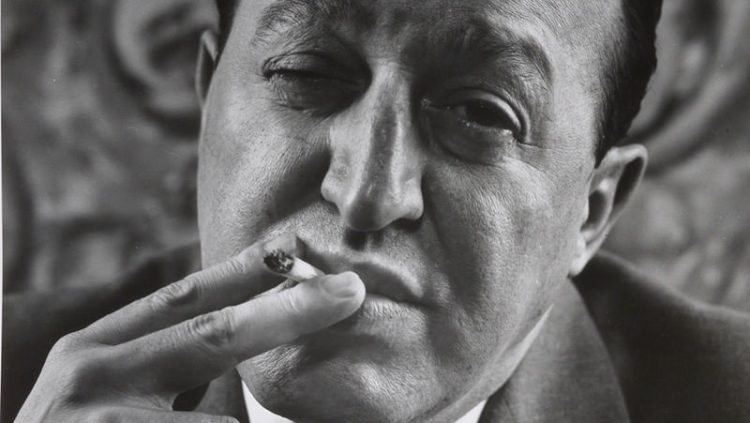
One such thinker who made a significant impact on the art world in the 1940s was Clement Greenberg. In 1939, Greenberg published one of his seminal works Avant-Garde and Kitsch. The essay not only launched Greenberg to nearly overnight notoriety, it also sparked a major development in the art world as a whole.

The essay begins with the following statement:

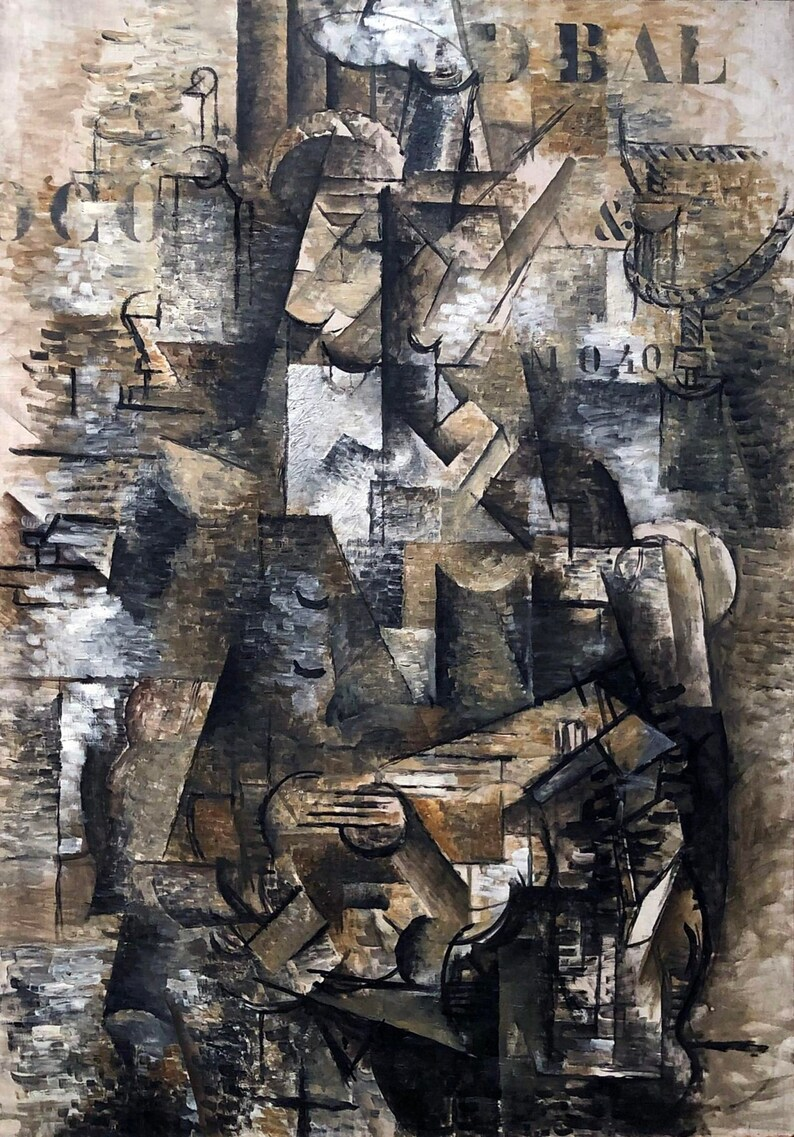
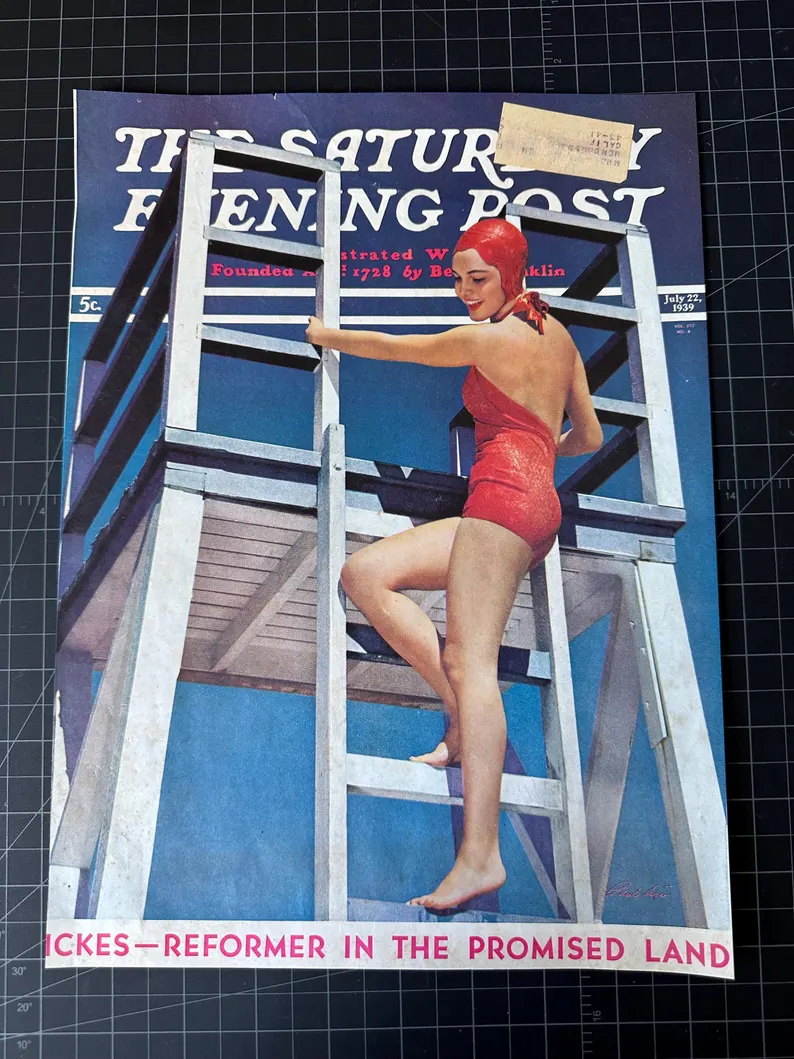
“One and the same civilization produces simultaneously two such different things as a poem by T.S. Eliot, and a Tin Pan Alley song, or a painting by Braque and a Saturday Evening Post cover. “

Click on the following scan to open the full essay in PDF form-

PDF Greenburg Essay Avante-Garde and Kitsch
Click me to read full essay.

Greenberg goes on to classify Avant-Garde as those things that are untouched by the decline of taste and meaning in a society (a poem by T.S. Eliot or a painting by Braque) while Kitsch is the title bestowed on the rest of the clutter that appeals to the masses and asks nothing in return other than their money (a Tin Pan Alley song or a Saturday Evening Post cover).

The Portuguese-Georges Braque-1911.

For Greenberg, Avant-Garde situated itself outside the influences of both capitalist and communist influences that were gradually dampening society’s ability to appreciate any depth of meaning.

Greenberg wrote several other important essays over the course of his life and career. He was a strong proponent of Modernism being the last best hope for the preservation of integrity in art. Jackson Pollock and Willem de Kooning were among those he deemed the saviors of art in their time.

Understanding who Clement Greenberg was and why his influence matters is just one piece of the complex puzzle of being a well-rounded artist. There are libraries worth of books out there that will break down every bit of art theory and history you ever need to know.

Of course, who has time to read all that? How can you know where to begin? Who and what are some of the most important influences that have shaped the art world as it stands today and how are you meant to sort them out from the crowd? For the Silo, Brainard Carey

MODERNISM ADORED: 20th Century Art A New Online Exhibition Now Open

“Art cannot be modern. Art is primordially eternal.” Egon Schiele 

New York City, New York, April 2024. Our friends at Helicline Fine Art proudly announces the opening of its new online exhibition, Modernism Adored: 20th Century Art, a celebration of the revolutionary artistic movements that defined the 20th century. The exhibition runs through June 30 and features a curated selection of paintings, drawings and sculptures from important to rediscovered artists, Modernism Adored explores essential movements that shaped the artistic landscape during the 20th century from ashcan, cubism, art deco, Vorticism, WPA, abstraction, abstract expressionism, caricature and outsider art. It brings together a diverse range of artwork that reflects the spirit of innovation and creativity that defined these pivotal periods in art history. As we are a NYC based gallery, the history of New York inspires us to include art that glorifies our great city.

“We are thrilled to present Modernism Adored: 20th Century Art. This is stuff in our hearts and we are honored to share it with collectors and curators throughout America and worldwide,” said Helicline proprietors Keith Sherman and Roy Goldberg. They continued, “This exhibition is our “eye,” it exemplifies the enduring impact of modernism in art and provides a unique opportunity to witness the evolution of artistic expression over the course of the 20th century.” 

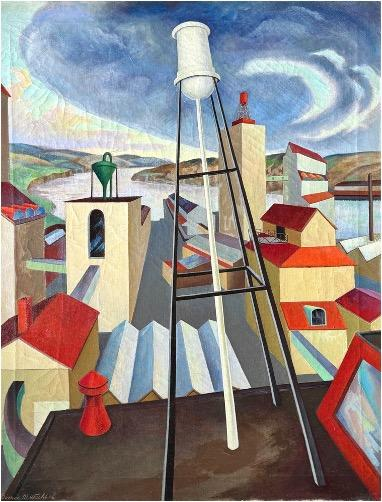
Highlights of Modernism Adored: 20th Century Art include three early Stuart Davis drawings, Vorticist linocuts by Sybil Andrews and Lill TschudiMaurice Guiraud-Riviere’s breathtaking “La Comete” silvered bronze, several works by Al Hirschfeld, abstracts by Florence Henri and O. Louis Guglielmi, a Charles Demuth drawing of bathers, an early Daniel Celentano oil, a precisionist industrial scene by Simon Wachtel, and much more. 

Artists in the exhibition include: Sybil Andrews, Maurice Becker, A. Aubrey Bodine, Jo Cain, Staats Cotsworth, Daniel Celentano, Robert Cronbach, James Daugherty, Stuart Davis, Charles Demuth, Donald Deskey, George Pearse Ennis, William Gropper, O. Louis Guglielmi, Harold Haydon, Florence Henri, Al Hirschfeld, Mervyn Jules, Max Kalish, William Kienbusch, Georgina Klitgaard, Henry Koerner, Leon Kroll, Vladimir Lebedev, Carlos Lopez, James McCracken, Alfred Mira, Irene Rice Periera, Antonio Petruccelli, Arthur Rosenman Ross, Hilla Rebay, Maurice Guiraud-Riviere, Joseph Solman, Lill Tschudi, Gerrit Van Sinclair, Samuel Wachtel, Katherine Wiggins, John Winters and Purvis Young. 
Florence Henri (1893 – 1982)Composition18 ½ x 12 ½ inchesGouache on paper Monogrammed F.H. and dated 1926 lower rightGeorge Pearse Ennis (1884 – 1936)Forging a Gun Tube #146 x 37 inches, 1918 Signed lower right
There is great debate about what modern art is.
Numerous descriptions abound. It is a series of genres from the mid-19th century to the present that challenged the Western standards of fine art and embraced new forms of expression. It is often seen as beginning with realism, which rejected the traditional subjects of art and focused on common people. 

Others say modernism was a movement in the arts in the first half of the 20th Century that rejected traditional values and techniques and emphasized the importance of individual experience. A broader perspective, which we at Helicline embrace, modernism was a break with the past and the concurrent search for new forms of expression. It is in fact, constant reinvention, and it’s significant because it fundamentally asks us to change our perspectives as time passes.  

“The strangeness will wear off and I think we will discover the deeper meaning in modern art.”  Jackson Pollock
Daniel Ralph Celantano (1902-1980)Long Beach8 x 10 inchesOil on artist boardSigned lower leftTitled in pencil, versoHarold Haydon (1909 – 1994)History of the US Postal Service21 x 25 inchesoil on canvas, c. 1938
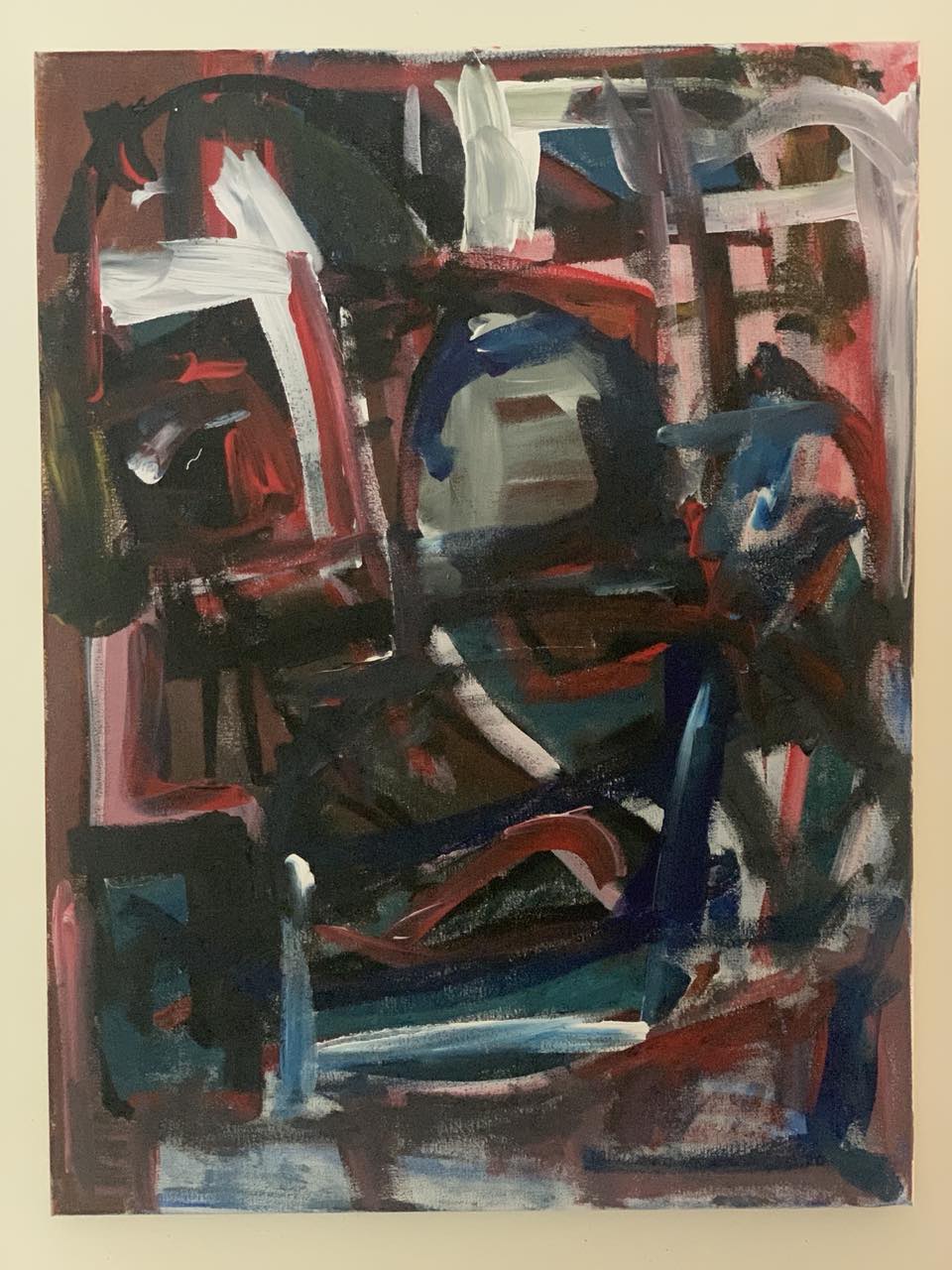
Why Modern Art Continues To Influence Contemporary Artists

The 20th century distinguished itself from the previous century with a new form of industrial revolution- one tied much more intimately to an advancing technology that propelled society into a state of speed and frenzy. Not just the streamlining of railway trains and automobiles or the advancements in transcontinental travel brought on by first lighter than airships, then seaplanes and jet airliners- the motion of advancement and relocation had a seminal effect on culture and thought. The skyscraper and new vertical constructions created its own influence and metamorphosis: hundreds of families could now be housed in a singular structure adding a homogeneity and imposing bold linear designs and influences. Two world wars and a multitude of others pushed existentialism into the minds of many academics and thus filtered into other areas of discipline such as literature, music and design. The development of the transistor created miniaturization and gadgetry that became an essential component to living spaces and personal effects. Television became a manifestation of any imaginable visual image and transfixed society into another state of readiness- a state ready for instant and dense media served quickly and directly. All of these things (and more) gave rise to new forms of art- most often recognized by the general public in modern abstract paintings. The ‘sense’ of all the above was captured by artists using new ways of communicating through their work: immediacy (action painting) and abstraction were more aligned with the zeitgeist then earlier classical forms of artwork.

Untitled abstract 11 Jarrod Barker 2024

The 21st century has seen many parallel and analogous developments. Though we are ‘only 24 years’ into this latest age, the concept of quick advancement and speed is in full effect. From the maturation of the digital age (the internet) and digital communication (email) to rapidly advancing personal communication (smartphones) and powerful and inexpensive computers to today’s exhilarating advancements in AI (artificial intelligence) and robotics. These ‘re-mapped’ and repeated driving forces from the last century continue and their effects most readily recognized are still key components of contemporary ‘neo-modern’ artwork.

MORE ABOUT HELICLINE FINE ART:
Helicline Fine Art, founded in 2008 by Roy Goldberg and Keith Sherman, specializes in American and European modernism. The gallery’s core offerings are works from the WPA period. Additionally, Helicline offers American scene, social realism, mural studies, industrial landscapes, regionalism, abstracts, and other artwork. Located in a private space in midtown Manhattan, Helicline is open by appointment. The artworks on the site represent a sampling of available works. Helicline’s offerings are also available on artsy.net and 1stDibs.com.
Caption for image at the top of this article: Simon Wachtel (1900 – 1965)Factory Yards N. 336 x 24 inchesOil on canvas, c.1930s Signed lower right

Across The Arts Vulnerability Prevails And Here’s Why It’s An Asset

Just for a moment, think about all of the many career fields in the world. Now think about those that require a personal emotional investment as a matter of course.

How many bankers make a regular practice of exposing their deepest insecurities to the world through their work? How many veterinarians routinely put on display the most precious and personal aspects of their hearts and minds? Probably not that many. As an artist, you are literally doing this all the time. Whether the emotional investment is major or minor, and whether you are exposing personal joys or defeats, the fact remains that careers in the arts by their very nature involve a whole lot of very personal investment. Unfortunately, some artists view this as a liability and allow the idea that they don’t possess the right self-esteem to affect their ability to work. It is important to find ways to lay these insecurities to rest and accept that by its very nature, art puts us in a vulnerable space. Embrace this rather than allowing it to overwhelm you, consider it an asset going forward.

Across the arts fields, vulnerability prevails. It is what often informs some of the most beautiful work. Whether we are talking about a performer or a visual artist, human nature dictates that when we put ourselves out into the world in the way that an artist does, there is a certain measure of vulnerability built in to the equation. It is a rare thing indeed to find a performer who doesn’t experience the butterflies of stage fright however subtly, no matter how seasoned he or she may be. And it is equally unlikely to find an artist who operates from a place of pure confidence free of the weight of uncertainty.

Jarrod Barker After the Rain 2016

The world of art, not to mention the world at large, would be a very different place if insecurity did not exist. If everyone walked around with stiff confidence all the time there would be no room for tenderness, bravery, courage, and the bonding commonality of vulnerability that we all experience which is often the key to connecting an audience to a work of art. Every human alive understands what it is like to feel overwhelmed and uncertain and it is often this understanding that leads people to seek out art as a means of connecting to others through this shared human emotion.

Self-esteem has become a buzz word without a strong definition to back it up. We allow it to inform us as though it is some sentient entity that can make or break our resolve as artists. The fact is, self-esteem is merely a label for the way we view ourselves. It is us, and us alone, who decide how we approach the world. Allowing a vague concept like self-esteem to stand in the way of creating something that speaks to the very soul of who you are makes as much sense as allowing a phobia of flying stop you from seeing the world. You must conquer these self-made fears and come out on the other side.

Jackson Pollock Number 1 1950 Lavender Mist

The fact is, there is no way around baring your very soul as an artist. Whether it is only a glimpse or whether you let it all hang out for the world to see, in every work you create there is, inherently, a very personal piece of you. Without this, your work would lack meaning and depth. People view art expecting the spectacle of human emotion. To deny this because of some feeling of low self-esteem is to deny an opportunity to yourself and your audience.

There are no guarantees in life, everything we do carries a risk. Every career has its risks and benefits, though these vary wildly across the spectrum depending on what field we look at. Art is no different. There are no guarantees. Sometimes you will expose your most private self and receive less than gentle feedback. Under no circumstances should this give you anything more than a moment’s pause. Brush off, stand up, and get back to it. Use these experiences to further inform your work. Explore the feeling of exposure and the insecurities of this concept of self-esteem. Look fear in the eye and let it look right back.

Ultimately it is up to you how you choose to face the very real challenges of so-called self-esteem in your work as an artist. Only you can know your own limits, and only you can be brave enough to step beyond them. No one ever achieved very much who didn’t expose their inner selves to total annihilation. While this may sound like a terrifying prospect, consider why you are sitting here reading this blog in the first place. If you’re an artist, by simply declaring to the world that you are an artist, you have already chosen the path of courage. You have willingly stepped into the ring with your heart on your sleeve. There’s no turning back now. For the Silo, Brainard Carey.

Supplemental- The start of abstract expressionism challenged “safe, established painting styles”