An international expert statement examines the performance benefits and biomechanical effects of high-performance running shoes.
High-performance running shoes, often called “super shoes”, use lightweight materials, resilient foam and stiffening elements such as carbon-fibre plates to help runners use energy more efficiently. Research shows that these shoes can improve running performance, but their effects on injury risk remain uncertain.
Understanding how footwear affects individual runners is important not only for performance, but also for supporting healthy participation in physical activity over the long term. This is particularly relevant to the broader public-health goal of helping people remain active throughout their lives.
Published in the European Journal of Sport Science, the expert statement brings together 14 researchers in running footwear, with expertise spanning biomechanics, neuromotor control, physiology, sports medicine and epidemiology. Co-authored by Maastricht University Assistant Professor Bas Van Hooren and Luxembourg Institute of Health Dr Malisoux, it reviews the evidence on advanced footwear technology and identifies priorities for future research. Dr Malisoux and Assistant Professor Bas Van Hooren also jointly launched and co-coordinate the Running Sciences Special Interest Group at the European College of Sport Science (ECSS).
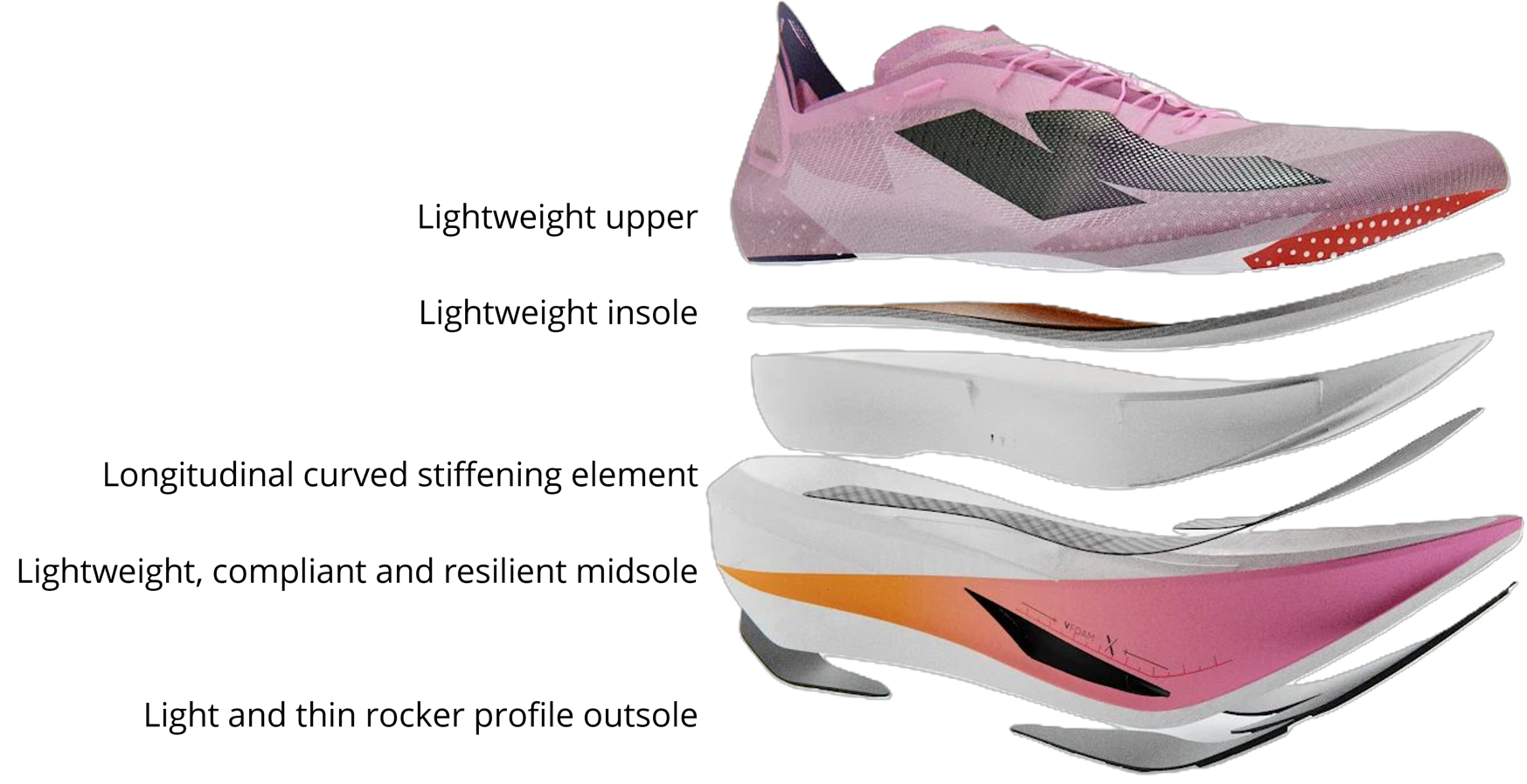
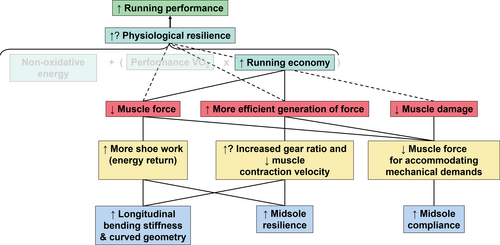
"Over the past decade, running shoes have undergone substantial innovation with the emergence of Advanced Footwear Technology (AFT). Shoes with AFT are typically characterized by highly compliant (deformable) and resilient (high energy return) midsole foams, embedded curved stiffening elements, low mass, and a rockered longitudinal geometry. This expert statement aims to synthesize established knowledge, remaining uncertainties and key directions for future research on AFT in middle- and long-distance running. Current literature demonstrates robust improvements in running economy and performance with AFT, with reported metabolic savings of approximately 2%–4%, and corresponding performance improvements of 1%–3%. These benefits likely arise from a combination of “acute” and possibly “long-term” mechanisms. Proposed acute mechanisms include decreased muscle force production due to higher positive work from energy-returning foams, lower muscle force production to accommodate mechanical running demands due to compliant midsoles, and improved mechanical efficiency associated with greater longitudinal bending stiffness and curved geometry. Importantly, AFT features have a synergistic effect, with the relative importance of each mechanism differing depending on the context. Emerging evidence also suggests potential reductions in muscle damage/inflammation and soreness, which could support better physiological resilience, and higher training volumes/quality. From a biomechanical injury risk perspective, AFT can redistribute loading, potentially increasing metatarsal and tarsal stress while reducing tibia and possibly Achilles tendon loading. However, injury risk associated with AFT use remains equivocal, with limited high-quality data. Notably, substantial inter-individual variability has been observed, influencing both running economy and potential injury risk although the determinants of this variability remain unclear." European Journal of Sport Science

How much faster can super shoes make runners?
Research shows that advanced running shoes can improve running economy (the energy required to run at a given speed) by around 2–4%. This can translate into performance improvements of approximately 1–3%.
The benefits vary depending on the shoe model, running conditions and individual runner. Some evidence also suggests that women may experience greater performance gains than men, even though both typically show similar improvements in running economy.
How do super shoes work?
Super shoes combine several design features to help runners use energy more efficiently. Their resilient foam compresses under load and returns energy, while stiffening elements, such as carbon-fibre plates, and curved soles influence how the foot bends and how forces are transmitted through the leg.
These features work together rather than in isolation. Their combined effect can reduce the energy needed to run, although the benefits depend on the shoe’s overall design and the runner wearing it.
How do super shoes affect injuries?
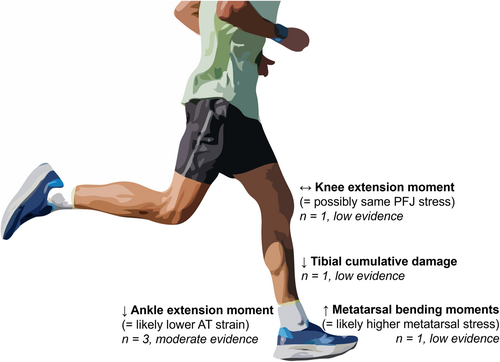
Improved performance does not automatically mean fewer injuries. Advanced footwear redistributes the forces acting on the body: some designs may reduce loading on structures such as the shin and

potentially the Achilles tendon, while increasing stress on other areas, including the bones of the forefoot.
Whether these biomechanical changes translate into more or fewer injuries remains uncertain. Understanding how footwear changes loading patterns is therefore important for assessing both its potential benefits and its possible drawbacks for runners’ long-term health.
“Physical activity is an important part of preventing chronic diseases and helping people remain active over the long term is a key public-health goal. Advanced running footwear offers clear performance benefits, and understanding how different designs affect individual runners is an important next step in exploring how footwear could support healthier, more sustainable participation in physical activity,” explains Dr Laurent Malisoux, Group Leader of Physical Activity, Sport and Health in the Department of Precision Health at the Luxembourg Institute of Health (LIH).
Could running shoes be better tailored to each runner?
Not every runner benefits equally from the same shoe. Individual responses vary, and some runners may gain little performance advantage from a particular model. Researchers are still working to identify how running technique, physical characteristics and shoe design interact to produce these differences.
A better understanding of these individual responses could inform future footwear design and help runners make more tailored choices. However, personalised shoes have not been established as a way to prevent injuries. Further research is needed to determine how footwear design affects both performance and injury risk across different runners.
“By bringing together current evidence and identifying priorities for future research, our publication clarifies what advanced footwear can achieve and what researchers still need to learn. Understanding the relationship between shoe design, individual biomechanics and injury risk could help inform future approaches to supporting performance while better understanding the implications for runners’ health,” concludes Assistant Professor Bas Van Hooren, faculty of Health, Medicine and Life Sciences, Nutrition and Movement Sciences, from the Maastricht University.
Publication details: Van Hooren B. et al. Advanced Footwear Technology in Distance Running: What We Know, What We Don’t Know, and Future Directions. European Journal of Sport Science. DOI: 10.1002/ejsc.70266.
About the Luxembourg Institute of Health (LIH)
The Luxembourg Institute of Health (LIH) is a public biomedical research organisation focused on precision health and invested in becoming a leading reference in Europe for the translation of scientific excellence into meaningful benefits for patients.
The LIH places the patient at the heart of all its activities, driven by a collective obligation towards society to use knowledge and technology arising from research on patient derived data to have a direct impact on people’s health. Its dedicated teams of multidisciplinary researchers strive for excellence, generating relevant knowledge linked to immune related diseases and cancer.
The institute embraces collaborations, disruptive technology and process innovation as unique opportunities to improve the application of diagnostics and therapeutics with the long-term goal of preventing disease.
For the Silo, Dr Sabine Schmitz.
About the Maastricht University:
At Maastricht University (UM) we aspire to empower students to become active, globally oriented citizens and critical thinkers.
• UM is a diverse and inclusive academic community; we value different perspectives.
• UM is a leading institution in the Euregion, making its mark through innovative Problem Based Learning and high quality, socially relevant research.
• We are the European University of the Netherlands.
UM is driven to continuously enhance and innovate our education and research. We strive to be at the forefront of Euregional and European development. We collaborate regionally and provide solutions that contribute to society as a whole, with a focus on the Sustainable Development Goals (SDGs).
Scientific contact:
Assistant Professor Bas Van Hooren
Faculty of Health, Medicine and Life Sciences, Nutrition and Movement Sciences Maastricht University
Featured Image- Bottega Veneta Orbit Advanced