
Tag Archives: finances

What Single People Need to Do Before Buying A Home

The usual route to home ownership tends to start with meeting a special someone. When you’re a couple and you want to begin a life together, it makes more sense to get a new home for yourself. You may plan to get a roomier home for the two of you, and especially if kids are part of your plan in the foreseeable future.

What if you’re single? That doesn’t mean that you can’t get a house in Montreal, or a condo in NDG (Notre-Dame-de-Grâce) or anywhere else in Canada. Here are some tips that can help if you’re single and determined to buy your own home:

  1. Get your finances in order. This is the first and most important rule, as money will always be an issue for you especially since you don’t have a partner to share the expenses. It can be problematic to get a mortgage when you’re single since you’re less likely to repay a loan than two people together who both work for a living. So, pay off your credit card debts, raise your credit score, finish paying for your car, and have enough money to put down 20% of the house price as down payment.
  2. Have lots of money in the bank. What if you lose your job right after moving into your own home? You’ll need money for all your expenses while you search for a new job. You need some money in your bank account that’s equal to three to six times your monthly wages. Keep in mind that as a homeowner you have to pay for your home’s upkeep along with home insurance and property taxes. 

  3. Make sure to account for all your possible expenses. First-time owners are often unpleasantly surprised when they encounter expenses that they don’t normally deal with when they were apartment tenants. Home ownership can be very costly, especially when you have to remodel your home. It’s also difficult to estimate what you’d have to spend, especially when you have a backyard to maintain.
  4. See if a condo makes more sense for you. In general, a condo unit makes a lot more sense than an actual house if you’re still single. A condo will probably be located closer to where you work. It’ll also be located right in the middle of the city you’re in, so entertainment establishments are conveniently nearer. A condo building can have amenities that you’ll appreciate when they’re nearby, such as a gym or a salon. It also provides you with more social opportunities to meet new people so that you’re no longer single (if that’s what you want, of course).
  5. Be conscious about security. Security is another reason why condos work best for singles as they usually have guards in the lobby to keep out strangers. If you’re living in your own house, you may want to put in a strong lock on your doors and perhaps on your gate. You should make friends with your neighbours, who can call the police when they see strangers in your home when you’re not there. A security camera tied into your smartphone can help as well, though a dog can also be useful.
  6. Look for houses with a friend. Couples have the advantage of having someone to discuss their home options so that they’re more certain of their choices. If you’re looking for possible homes to buy, make sure you call a friend to come along. They can help you think logically so your emotions don’t get the best of you.

Of course, one “side effect” of having your own home when you’re single is that you generally become more attractive to potential partners. Just make sure you buy the right home when you can actually afford it, so you can actually enjoy your new status as a homeowner. For the Silo, Dimitry Karloff. 
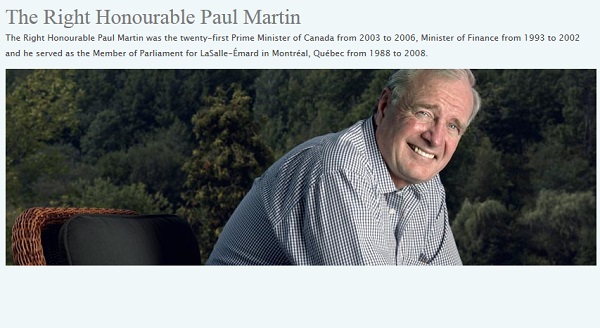
Ex-Prime Minister of Canada named Special Advisor on Retirement Income Security

Fact: Fewer than 35 per cent of workers in Ontario have a workplace-based pension plan.  Coverage for workers in the private sector is even lower, with only 28 per cent having the benefit of plan membership.
Fact:  Fewer than 35 per cent of workers in Ontario have a workplace-based pension plan. Coverage for workers in the private sector is even lower, with only 28 per cent having the benefit of plan membership.

Government Working on Made-in-Ontario Plan


Premier Kathleen Wynne announced today that the Right Honourable Paul Martin has agreed to serve as Special Advisor to the Minister of Finance. Mr. Martin will work with the government on a made-in-Ontario solution to enhance retirement income security for the people of Ontario.

Charles Sousa- Ontario's Minister of Finance will benefit from Paul Martin's experiences as Canada's Prime Minister and Federal Minister of Finances. CP
Charles Sousa- Ontario’s Minister of Finance will benefit from Paul Martin’s experiences as Canada’s Prime Minister and Federal Minister of Finances. CP


The announcement followed a meeting between the Premier and the former Prime Minister, where they discussed the urgent need to help hardworking people build a more secure retirement. As federal finance minister, Mr. Martin played an instrumental role in the 1997 federal-provincial agreement to reform the CPP. These reforms were critical to ensuring the plan would be financially sustainable.

Helping people retire with dignity and security is part of the government’s economic plan to invest in people, build modern infrastructure and support a dynamic and innovative business climate.

QUOTES

 “I want to thank Paul Martin for taking on this role as Special Advisor. Together, I know we will help protect Ontario’s hardworking people in their retirement with a made-in-Ontario solution that is viable, responsible and puts people first.”

–– Kathleen Wynne, Premier of Ontario


“I am pleased that Paul Martin has agreed to act as Special Advisor on retirement income to the government of Ontario. After the federal government failed to agree to enhance the CPP, our government announced that we will move ahead with a made-in-Ontario solution to enhance retirement savings in the province. Paul Martin will bring a wealth of knowledge and experience as we work towards ensuring that future generations have a more secure retirement.”

–– Charles Sousa, Minister of Finance

QUICK FACTS

  • The Right Honourable Paul Martin was the 21st Prime Minister of Canada from 2003 to 2006.


  • Fewer than 35 per cent of workers in Ontario have a workplace-based pension plan.  Coverage for workers in the private sector is even lower, with only 28 per cent having the benefit of plan membership.


  • Retirement savings experts suggest that individuals require 50 to 70 per cent of their pre-retirement income to maintain their standard of living in retirement. Many Ontarians, including middle- and higher-income earners, may not be saving enough to meet this target.


LEARN MORE

 Read Securing Our Retirement Future: Consulting with Ontarians on Canada’s Retirement Income System

Disponible en français. Envoyer la demande à   [email protected]

Ontario Wants To Intro Financial Accountability Officer

Liberals Financial Accountability OfficerThe Ontario government will introduce legislation to establish a Financial Accountability Officer, an independent officer of the Legislative Assembly. Ontario is the first province in Canada to introduce this oversight measure.

If the legislation is passed, the Financial Accountability Officer would provide independent analysis to all MPPs about the state of the province’s finances, including the Ontario Budget, as well as trends in the provincial and national economies. In addition, at the request of a legislative committee or an MPP, other types of research could be provided by the officer, including the financial cost or benefit to the province of any public bill. The Financial Accountability Officer could also be asked to review and estimate the financial cost or benefit to the province of any proposal that relates to a matter over which the Legislature has jurisdiction, such as the establishment of a new program.

Increasing financial openness is part of the government’s plan to work collaboratively, attract investment, create jobs and help people in their everyday lives.

“We are proposing the creation of a Financial Accountability Officer to further
enhance the openness and transparency of government.  This would also include the
financial assessment of any public bill brought forward to the Legislature by an
MPP.  The work undertaken by this independent officer will help better inform the
house on possible financial impacts of a proposed bill and increase information
available to Ontarians.”
– Charles Sousa, Minister of Finance

“We are fulfilling our commitments with the introduction of the Financial
Accountability Officer Act. I look forward to working with the opposition to pass
this Bill and other important legislation that we will be debating this fall.
Ontarians want to see minority government working, and I’m optimistic we’ll be able
to make progress in the Legislature.”

– John Milloy, Government House Leader

QUICK FACTS

§  The Financial Accountability Officer would be selected by a panel consisting of
one member from each recognized party, chaired by the Speaker of the Assembly who is
a non-voting member.
§  The Financial Accountability Officer would produce an annual report on or before
July 31 of each year.
§  The establishment of a Financial Accountability Officer builds on previous
government actions to enhance accountability and transparency, such as the Fiscal
Transparency and Accountability Act, 2004.

LEARN MORE

Read the 2013 Ontario Budget http://www.fin.gov.on.ca/en/budget/ontariobudgets/2013/
Disponible en français

Ontario government wants to strengthen rules for Debt Settlement Services

OntarioGovRegulationIcon


Ontario is taking steps to provide vulnerable consumers with protection against unfair business practices of some companies that offer debt settlement services.

As part of the province’s continuing commitment to strengthen consumer protection, the Ontario government intends to introduce legislation that, if passed, would impose new rules for debt settlement services, including:

 Banning companies from charging upfront fees for debt settlement services.

 Limiting the total amount of fees consumers are charged.

 Requiring clear, easy to understand contracts.

 Establishing a 10-day cooling-off period, providing consumers more time to consider their agreements.

 Allowing the licenses of non-compliant companies to be revoked.

These proposed reforms would help protect the rights of consumers and are part of the new Ontario government’s commitment to building a strong economy and a fair, safe and informed marketplace.

QUOTES

“Ontario consumers need to have confidence that they’re getting what they pay for when purchasing debt settlement services. We’re going to introduce legislation that would protect some of our most vulnerable consumers from being taken advantage of, at a time when they need the most help.”

— Tracy MacCharles, Minister of Consumer Services MPP Pickering-Scarborough-East


“Ontarians work hard for their money. Why just give it away to a company that is going to take your up-front fee but not actually settle with your creditors? I’m pleased the Ontario government is strengthening protections for consumers looking for help from debt settlement companies”

— Gail Vaz-Oxlade, financial writer and host of “Til Debt Do Us Part”

QUICK FACTS

 Ontario is joining other provinces like Alberta and Manitoba that regulated companies offering debt settlement services.

 There are currently 22 companies and 38 credit counselling providers offering debt settlement services in Ontario.

 The average consumer debt in Ontario is more than $25,000 per person.

LEARN MORE

Read more about how the Ontario government protects consumers who use companies that offer debt settlement services. www.sse.on.gov.ca

Protect yourself against scams and fraud.


ontario.ca/consumer services

Disponible en français