Tag Archives: evolution

How Termites Challenge Darwinism Theory of Evolution

Modern science lacks a unifying, interdisciplinary theory of life. In other words, current theories are unable to explain why life is the way it is and not any other way.

Dr. David Grinspoon writes about Charley Lineweaver’s review of “Scientists Debate Gaia,” a collection of essays gathered from an American Geophysical Union conference and by the published by MIT press. Charles H. Lineweaver is a Senior Fellow at Australia National University’s Planetary Science Institute.

Gaia author James Lovelock

He explained that James Lovelock (shown) proposed the Gaia hypothesis, in which Earth is an organism or system capable of self-regulation. He wondered: Can the existence of life be recognized from the chemical composition of a planet’s atmosphere? What would the Earth be like now, if life had never evolved on it? Would there be oxygen in the air? Would the surface temperature be hot like Venus or cold like Mars? In the mid-60’s, NASA consulted James Lovelock to assist in developing instruments for the Viking spacecraft to detect life on Mars.

He concluded that it wasn’t necessary to send a spacecraft to Mars. All you needed was to determine the composition of the Martian atmosphere –- if life was there, the atmosphere should be in chemical disequilibrium as it is on Earth. Recent observations, have detected methane on Mars indicating life.

Determining what life is and how to recognize it is the Holy Grail of astrobiology. To make progress, we need to explore the Martian subsurface and analyze the atmospheres of the nearest terrestrial planets. Lovelock’s Gaian chemical equilibrium test for the presence of life is fundamental to these efforts. Both NASA and ESA are putting their astrobiological money into interferometric infrared spectroscopy to look for the traces of chemical disequilibrium in planetary atmospheres as the primary biomarker.

Don't be fooled by your perspective- we all live on a rotating ball traveling through space!
Don’t be fooled by your perspective- we all live on a rotating ball traveling through space!

Lovelock thought that terrestrial life didn’t just passively produce chemical disequilibrium. There seemed to be some element of control or regulation. In 1978, he published a book called “Gaia” that described how the entire biosphere behaves like a living creature suggesting our Earth is alive.

Gaian science and astrobiology have very similar programs. Astrobiologists look at the stars and ask “What has life done to the planets out there and how can we recognize it?” Gaian scientists have been looking at the Earth for decades asking “What has terrestrial life done to our planet and how can we recognize it?” Astrobiology and Gaian science often remain separate fields of inquiry. Astrobiology attracts mainly astronomers and biologists, while Gaian science attracts atmospheric chemists, geologists and concerned ecologists.

The thin Martian atmosphere is mainly composed of carbon dioxide. Planetary scientists have studied the atmosphere of Mars for any signs of gases such as methane that could be generated by life. In this collection, Gaian scientists believe that over the past four and a half billion years, the Sun’s luminosity has increased by about 30 percent, but the temperature of the Earth’s surface doesn’t seem to have followed in step. Lovelock hypothesized that the biosphere regulates the Earth’s surface temperature. There are two obvious ways to do this: Regulate the albedo (light reflected by the planet) and/or regulate the abundances of greenhouse gases in the atmosphere.
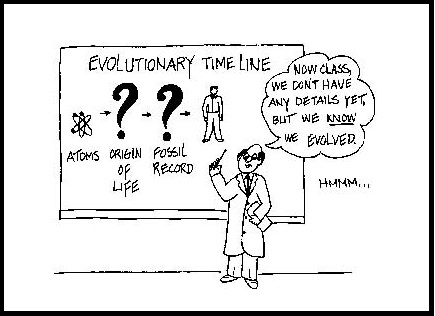
Creationist Cartoon

Lovelock invented the parable of Daisyworld to demonstrate that the biosphere could regulate the albedo. A nice Gaian extension of this idea is J. Scott Turner’s analysis of the thermo-regulation of termite colonies. So if a termite ecosystem can evolve to do it, why can’t a big one like the Earth? Thus, Gaia does what good scientific ideas are supposed to do. It extends and extrapolates a fundamental theory, from individuals to groups to ecosystems, up to the entire biosphere.

The central debate of this book is: How can Gaia (Earth) be selfish? How can it do anything “for” itself? Will it protect itself from human destruction of the environment by causing earthquakes, earth lights, an ice age, or a great flood?

Tyler Volk’s book “Gaia’s Body” “Gaia is Life in a Wasteworld of By-products.” He proposed that the atmosphere is one giant waste dump. Life produces wastes, and these wastes build up and affect the environment. They become intolerable for some forms of life, but then along come new forms of life who take advantage of these waste products. Volk’s point is that poop just happens. Thus the effects of the biosphere’s wastes are certainly “by” but not necessarily “for” the biosphere..

Volk suggests using cycling ratios to measure “by and for the biosphere” and to determine how beneficial for life something may be. A cycling ratio is the amount of an element cycling through the Earth and biosphere, divided by the amount that would be cycling through the Earth in the absence of life. Volk estimates the cycling ratio of carbon to be about 200 times more carbon flowing through the veins of Gaia than would be cycling through an Earth without life from plate tectonics and volcanism.

A collection of observations by the Earth Observing System flagship Terra were stitched together into a seamless true-color mosaic of every square kilometer (.386 square mile) of our planet.

Dorion Sagan and Jessica Hope Whiteside’s “Gradient Reduction Theory: Thermodynamics and the Purpose of Life” discussed the second law of thermodynamics as the purpose of life. Agnostics looking for purpose in their lives would do well to digest this chapter with Lovelock’s suggestion that agnostics worship Gaia to fill their religious vacuum. There is grandeur and universality in this thermodynamic view of life that can be applied to life anywhere in the universe.

I’d like to see Gaian scientists recognize that Gaia is part of a larger whole – that the Earth is not a closed system and that Gaia has a mother. We begin to wonder whether our Galaxy is a life form called Galactea. For the Silo, Jarrod Barker

“It is a must read for any life form that is even pretending to look for extraterrestrial life. /

– See more at: http://www.astrobio.net/ Note: It’s logical Mother Earth or Gaia feels totally threatened by environmental abuse from Earth’s humans and that those humans who are not loving to Mother Earth may be removed.

*Main image for this post courtesy of http://fourthdimension-celestialdreams.blogspot.ca
Supplemental-

Phylogenetic Analysis Forces Rethink of Termite Evolution | Okinawa Institute of Science and Technology OIST

More dogma in North American Archaeology ? Euro-style tools being discounted.

Levallois lithic technology in the USA? The cores tell the story by Richard Doninger  EDS. DISCLAIMER- We reproduce here a portion of our disclaimer from Doninger’s PCN Part1 article. Doninger’s collection is controversial and may indeed be a mix of genuine artifacts and geofacts.

One of the primary reasons to look at his material is the story he tells. It is one that the founders, members, and many readers of PCN (click here) are very familiar with. It involves a mainstream science community that is so dogmatic in its beliefs that it is willing to both block evidence or not even look at evidence that might challenge those beliefs. These beliefs include that there were no genuinely ancient people in the Americas and that early people throughout the world were less intelligent than us.

The idea that Lower, Middle, or Early Upper Paleolithic-style tools (in the European archaeology sense) are present in the Americas and mainstream resistance to the possibility is something that founding members geologist Virginia Steen-McIntyre (volcanic ash specialist), archaeologist Chris Hardaker, and geologist, the late Sam L. VanLandingham (diatomist) are/were all too familiar with as are also copy editors Tom Baldwin and David Campbell. This is not to mention the layout editor’s experience of censorship regarding evidence disproving cognitive evolution.

So, in a field where censorship of challenging evidence is routine—anthropology—virtually every  proclamation the field makes needs to be questioned. One thing that we can be certain of is that once someone becomes “professional” in this field, in all likelihood, they will already be strongly opinionated regarding what is possible.

Dr. Steen-McIntyre, who started this regular feature section of PCN make it as a means to encourage avocational archaeologists and to help them raise the bar above the mere collecting of artifacts (the easy part) to adopting as many professional practices as possible especially in the recording and presenting of their finds. While Doninger’s artifacts are all surface collected, with few specific details of their discoveries recorded he does, nonetheless, present an interesting case that Levallois technology was established and varied in the southwest Indiana (c. Evansville) region.

Our publishing of Rick’s series is not an endorsement of his collection per se, but a reminder that we in the U.S. need to hold our anthropologists accountable as objective scientists, and, like in the field of astronomy, take the contributions of its amateur enthusiasts with a degree of interest.

Fig.1_R.Doninger-article_PCN-may-june2015WEB

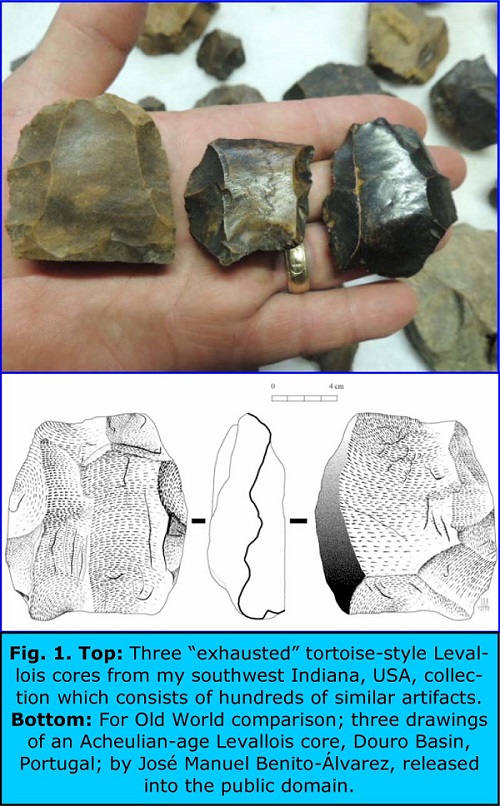
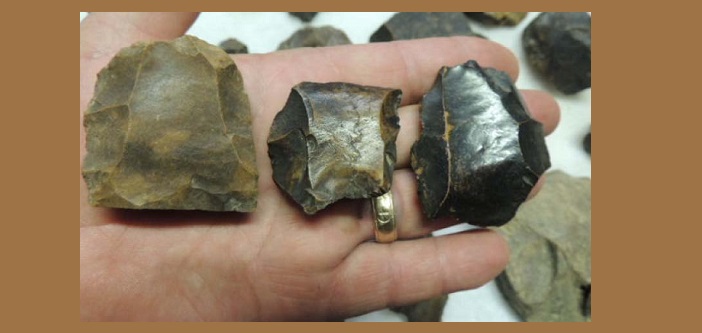
In Part 1, I shared the story of my initial experience in trying to get input from the mainstream American archaeology community regarding Levallois artifacts including cores I have found in southwest Indiana (e.g., Fig.1) They repeatedly told me that such lithic technology wasn’t present in this country. After many years of research and communication with many professionals, I came to realize a few things that I wasn’t aware of. The first thing is that just because someone is an archaeologist by profession it does not mean that they have any expertise in lithic technology from prehistoric times.

The second is that just because an archaeologist has expertise in Native American lithic technology, does not mean they have any knowledge about lithic technology of early man such as that found abroad, e.g., “Levallois.” This leads to the third and most disappointing which is that many mainstream archaeologists will pretend to know a great deal more about the subject than they actually do and, often, rather than admit that they don’t will fall into simply towing the party line and coming back with a standard mainstream answer should you offer them any kind of evidence that challenges their long held beliefs such as about our origins or how old were the “first Americans” or who might they have been.

I guess one lesson I have learned well is that PhD B.S. is still discernible as B.S. even to a window cleaner such as myself and even though the attempt to camouflage it in scholarly data is present.

After almost two decades of inquiry and research on early lithic technology it seems to me that there is still very little known by American archaeologists about what is considered late Lower or Middle Paleolithic technology such as that found in sites abroad which are “usually” associated with Neanderthal occupations. The terms “Acheulian,” “Mousterian,” or “Levallois” all seem to produce perplexed looks when mentioned in most archaeologist circles and among those who are considered experts in the area of ancient flint tools and flint knapping.

Fig.2_R.Doninger-article_PCN-may-june2015WEB

Having said all of these things, I would like to share a bit from an amateur perspective on the subject. I mentioned in my last PCN article that I was told by lithic experts abroad that the only way to identify Levallois lithic reduction was to have some of the cores from which the proposed Levallois flake tools were struck.

Levallois cores are very distinct in appearance and are rarely mistaken for later type technologies such as those blade cores from what is considered the Upper Paleolithic.

There are at least four known core preps which I have found to be considered Levallois which yield several different flake types used in producing a fairly wide variety of tools found from what is considered the late Lower and Middle Paleolithic. All of these are unmistakably different from the American Clovis and later technologies commonly found in the USA.

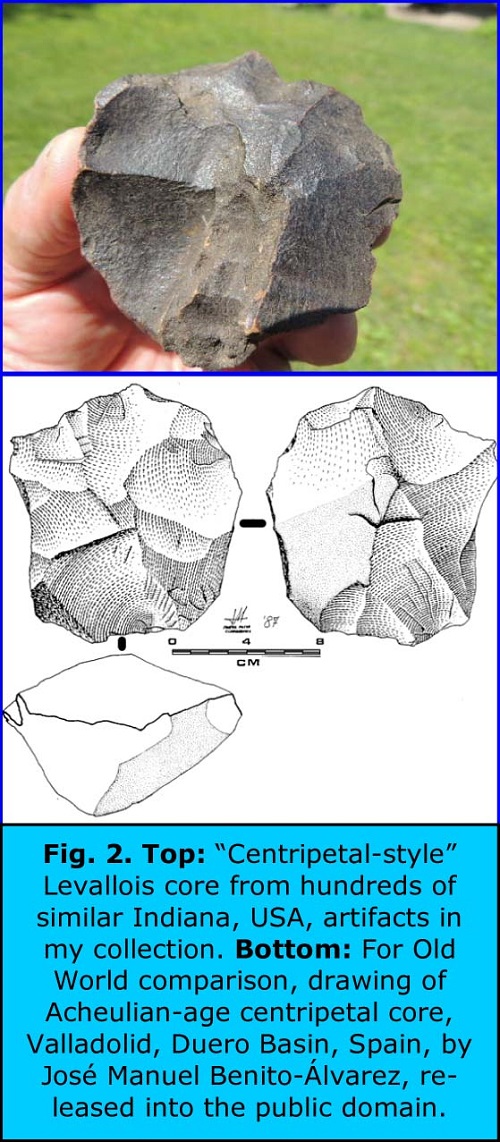
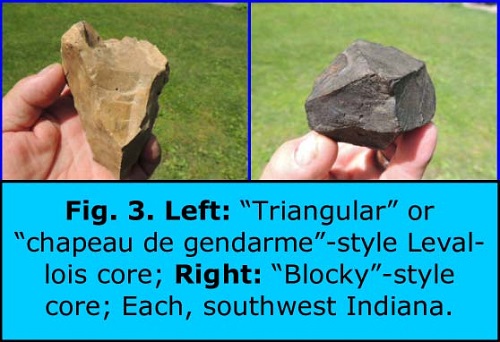
Those four include the most commonly described “tortoise” (refer to Fig. 1, above), the “centripetal or discoidal” (refer to Fig.2, above),“triangular or chapeau de gendarme,” and the “blocky” core (see Fig.3 below)- all of which yield a very specific type of tool which are similar in morphology and are mostly made on flakes rather than blades (which are the hallmark of most known Native American technologies).

When archaeologists or collectors discover lithic scatters or “debitage” left from Clovis or later archaic tool production it is very recognizable to the trained eye familiar with Native American tool industries. The same applies with Levallois technology and the debitage produced from it. It is unmistakable to the trained eye but can remain virtually invisible to the eye programmed to see Clovis and later evidence, which seems to have been the case for decades now among American archaeologists. They have been recognizing only the evidence that they have been trained to see. That can now change as there is sufficient evidence in enough quantity to recognize what has been considered late Lower and Middle Paleolithic technology all over the world and is now available for analysis here in the USA.

Fig.3_R.Doninger-article_PCN-may-june2015WEB

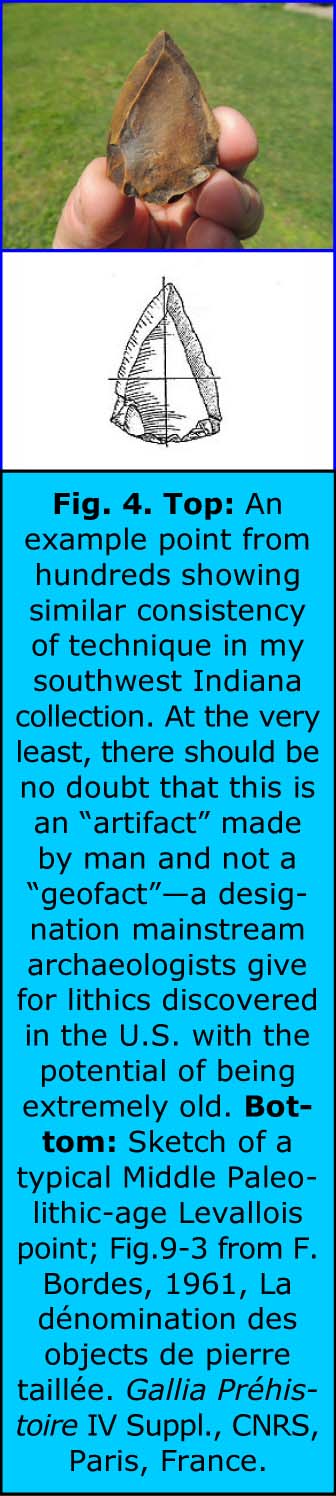
If “the cores tell the story” it can now be told because we have the cores! For this article I have included an example of each core preparation as well as an example point tool (see Fig.4 below) made on Levallois flakes from such cores. A close look at the cores will reveal the negative triangular scars from where triangular flakes were struck revealing the method of reduction.

Levallois lithic reduction has been shown to be a more productive method of tool making in general than the later blade technologies as a wider range of tools can be produced by making the tools on flakes rather than blades. Contrary to the most commonly held belief that later blade technologies such as Clovis or Solutrean were more advanced, I personally believe the Levallois reduction resulted in a much wider range of tools from the same basic core preps which leave one to conclude that it is actually more advanced and complex than those who are assumed to have come later in history.

Over the last several years I have  witnessed many who claim expertise in flint knapping who are able to produce virtually every kind of Native American “arrowhead” or bifacial blade tool commonly seen within the known Clovis or later tool industries. Some talented knappers can produce a very fine Clovis point in a matter of minutes and other arrowheads present little challenge in reproduction; but rare are the ones who can reproduce Levallois tools. How the flakes are struck so systematically and consistently from the same core preparation remains a mystery to most. One simply cannot appreciate the complexity of the industry without having such an industry to observe and most American archaeologists have never seen much less handled tools from an actual Levallois assemblage.

Fig.4_R.Doninger-article_PCN-may-june2015We have in recent years witnessed various claims of alleged “pre-Clovis” tools having been found. There are the tools from Meadowcroft Rock Shelter, Buttermilk Creek, Paisley Cave, Cactus Hill, Topper and others, each producing artifacts believed by the finders to represent cultures living here prior to those which produced the famed Clovis industry.

Unlike Clovis technology which has been found in sufficient quantity to establish an identifiable industry, none of the alleged pre-Clovis artifacts have been proven to be of an identifiable technology which has been seen anywhere else in the world in contexts believed to be older than Clovis, leaving only speculation and theory in regard to an actual identifiable “industry” to accompany the claims of a “pre-Clovis” origin.

This is not the case in regard to the assemblages of Levallois artifacts such as the ones being found in as many as eight different states now. These collections clearly display a specific identifiable technology commonly found in sites around the world which are always believed to be from contexts thousands of years older than any yet recorded in the USA. The scholarly critics of “pre-Clovis” claims often use the reasoning that none of the sites have produced a “coherent set of lithic artifacts” to justify the claims.

Having seen much of the lithic evidence from the sites such as Buttermilk Creek and Meadowcroft, I can understand the reluctance to welcome such scant evidence to support the claims because of the absence of a recognizable technology.

Levallois technology is not ambiguous when it is found, regardless of the location. The name is the first indicator in the process of identification…”prepared core.” When such cores are found, identification of the “industry” can begin and an understanding of the actual “technology” becomes comprehensive.

Although I am only showing a few cores and point tools in this article, there are hundreds more in my possession to support my claims of an actual “industry” based on Levallois reduction.

As I have stated previously, I am making no claims regarding the age of these artifacts but rather the “technology” of the tools which is clearly paralleled in the later Acheulian and Middle Paleolithic Mousterian industries of the Old World.

Although the images shown are some of the basic cores and points of the industry, there are also dozens of other tool types present in our assemblages such as burins, blades, hand axes, bolas, scrapers, planes, awls, ochers and effigies. Tools made on the cores themselves are also common, displaying the life of the core and its utilization as different tools during the reduction process of extracting flakes for points, blades and other utensils.

Although considered and labeled as “primitive man” technology when found abroad to support the proposed “out of Africa” human migration theory, I disagree with such labels and assumptions in regard to this technology. Levallois reduction obviously requires both planning and skillful execution to produce such an industry in such an efficient use of available lithic material resources.

The presence of what has been called “old world” technology here in the USA clearly shows that what is being taught in regard to our origins as a nation is wrong and needs to be acknowledged by those who are promoting such error. The evidence is as solid as the rock from which it is hewn. For the Silo (from PCN Vol7 Issue3)- Richard Doninger, a surface-artifact collector living in Evansville southwest Indiana.

Eds. Comment- Rick makes a very interesting case for a lithic technology that appears to be little-known to archaeologists in the U.S. There is still the problem that the artifacts are not documented as to the exact context of each, which, unfortunately, limits the value of the specimens.

However, if the technology is as abundant as Rick’s collection suggests, we simply recommend that he “re-collect” duplicate examples from specific locations with an exacting record of what he has found and where.

Avocational archaeology is a special section of Pleistocene Coalition News started by PC founding member, Dr. Virginia Steen-McIntyre, to encourage amateur archaeologists.

Click to view on I-tunes