- The Global Cooperation Barometer 2026 reveals strong pressures on multilateral institutions are causing global cooperation to evolve rather than retreat.
- While multilateral forms of cooperation declined, smaller and more agile coalitions of countries –and, at times, companies – were instrumental in maintaining overall cooperation levels.
- Climate and technology saw strong increases in cooperation even in the face of headwinds, health and trade stayed broadly flat and there was a sharp drop of cooperation in peace and security.
- Learn more about the Barometer and read the accompanying report here. Follow the Annual Meeting 2026 here and on social media using #WEF26.
Geneva, Switzerland, January 2026 – Global cooperation is proving resilient even as multilateralism continues to face strong headwinds, according to the World Economic Forum’s Global Cooperation Barometer 2026. However, cooperation is below where it needs to be to address critical economic, security and environmental challenges. Within a more complex and uncertain geopolitical context, open and constructive dialogue is a critical factor in identifying potential collaborative pathways that advance shared interests.
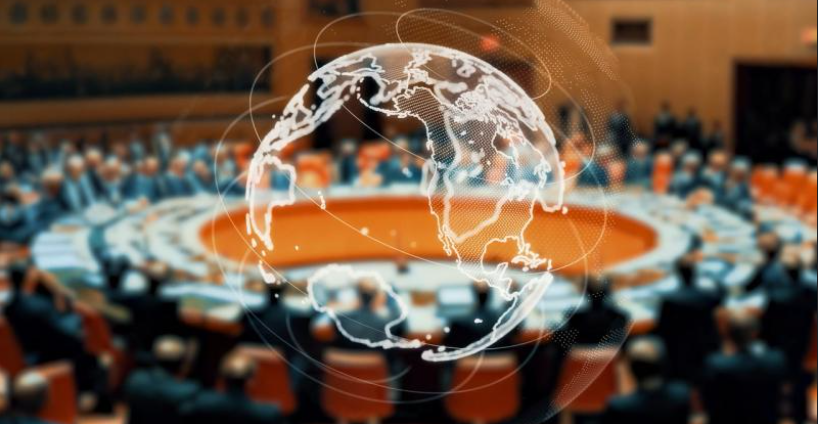
In its third year, the Global Cooperation Barometer 2026, developed in collaboration with McKinsey & Company, uses 41 metrics to assess the level of cooperation worldwide across five pillars: trade and capital; innovation and technology; climate and natural capital; health and wellness; and peace and security.
The 2026 Barometer indicates that the overall level of cooperation has largely been unchanged in recent years but the composition of cooperation appears to be evolving. Innovative, smaller collaborative arrangements are emerging, often within and between regions, as cooperation through multilateral avenues has weakened. Progress on global priorities has shown the greatest momentum when it aligns with national interests – with climate and nature and innovation and technology seeing relatively strong increases in cooperation. Other pillars, including health and wellness and trade and capital, have stayed flat. The peace and security pillar experienced the largest drop.
“Amid one of the most volatile and uncertain periods in decades, cooperation has shown resilience,” said Børge Brende, President and CEO, World Economic Forum. “While cooperation today may look different than it did yesterday, collaborative approaches are essential to grow economies wisely, accelerate innovation responsibly and prepare for the challenges of a more uncertain era. Flexible, nimble and purpose-driven approaches are most likely to withstand the current turbulence and deliver results.”
“Leaders are reimagining collaboration across borders,” said Bob Sternfels, Global Managing Partner, McKinsey & Company. “Cooperation may look different today, and involve different partners, but importantly, it continues to deliver on some critical shared priorities. Collaborative progress can, and does, continue to happen even amid global divisions.”

Global cooperation is reinventing itself
The changing dynamics of cooperation are visible in each of the five pillars of the Barometer.
- Trade and capital cooperation flattened. Cooperation remained above 2019 values, but its makeup is shifting. Goods volumes grew, albeit slower than the global economy, and flows are shifting to more aligned partners. Services and select capital flows show momentum, particularly among aligned economies, especially where they can contribute to bolstering domestic capabilities. While the global multilateral trade system faces rising barriers, smaller coalitions of countries are cooperating through initiatives such as the Future of Investment and Trade (FIT) Partnership.
- Innovation and technology cooperation rose to unlock new capabilities even amid tighter controls. IT services and talent flows are up, and international bandwidth is now four times larger than before the COVID-19 pandemic. Restrictions on flows of critical resources, technologies and knowledge expanded – especially, but not only, between the United States and China. However, new cooperation formats are rising, with instances of cooperation on AI, 5G infrastructure and other cutting-edge technologies among aligned countries.
- Climate and natural capital cooperation grew, but is still short of global goals. Increased financing and global supply chains stimulated deployment of clean technologies, which reached record levels in mid-2025. While China accounted for two-thirds of additions of solar, wind and electric vehicles, other developing economies stepped up. As multilateral negotiations become more challenging, groups of nations – for example, the European Union and ASEAN (Association of South-East Asian Nations) – are combining decarbonization with energy security goals.
- Health and wellness cooperation held steady, with outcomes resilient for now, but aid is under severe pressure. Topline cooperation in this pillar did not fall, in part because health outcomes continued to improve after the end of the COVID-19 pandemic. Although health outcomes have stayed resilient, the stability masks growing fragility. Pressures on multilateral organizations have eroded support flows and development assistance for health contracted sharply – with further tightening in 2025 – affecting low- and middle-income countries most acutely.
- Peace and security cooperation continued to decrease, as every tracked metric fell below pre-COVID-19 pandemic levels. Conflicts escalated, military spending rose and global multilateral resolution mechanisms struggled to de-escalate crises. By the end of 2024, the number of forcibly displaced people reached a record 123 million globally. However, growing pressures are creating an impetus for increased cooperation, including through regional peacekeeping mechanisms.
The Global Cooperation Barometer shows countries are rewriting the way they engage in cooperation. Creating new cooperative formats will require new structures, from trade agreements to standards alliances, and new types of partnerships, including public-private and private-private, to manage them effectively. The report concludes by highlighting the need for leaders to focus on rebuilding an effective dialogue with partners as the foundation for identifying and advancing shared interests.
About the Global Cooperation Barometer
The Global Cooperation Barometer – first launched in 2024 – evaluates global collaboration across five interconnected dimensions: trade and capital; innovation and technology; climate and natural capital; health and wellness; and peace and security. The Barometer is built on 41 indicators, categorized as cooperative action metrics (evidence of tangible cooperation, such as trade volumes, capital flows, or intellectual property exchanges) and outcome metrics (broader measures of progress such as reductions in greenhouse gas emissions or improvements in life expectancy). Spanning 2012-2025 and indexed to 2020 to reflect pandemic-era shifts, the Barometer normalizes data for comparability (e.g., financial metrics relative to global GDP and migration metrics to population levels). Given rapid developments across all the areas the barometer covers, this year’s report complements the 2024 findings with more recent 2025 data where available, through partial-year data or projections. In addition, two surveys were conducted: one with around 800 executives and another with about 170 experts who are current or former members of the World Economic Forum’s Network of Global Future Councils.
About the Annual Meeting 2026
The World Economic Forum’s 56th Annual Meeting, taking place on 19-23 January 2026 in Davos-Klosters, Switzerland, will convene leaders from business, government, international organizations, civil society and academia under the theme A Spirit of Dialogue. Click here to learn more.
For the Silo, Jarrod Barker.
en Francais

Forum Économique Mondial, [email protected]
La coopération mondiale fait preuve de résilience face aux vents contraires
géopolitiques
- Le Baromètre de la coopération mondiale 2026 indique qu’en dépit de fortes pressions sur les
institutions multilatérales, la coopération mondiale ne recule pas, mais progresse. - Alors que les formes multilatérales de coopération ont reculé, des coalitions plus petites et plus
agiles de pays, et même parfois d’entreprises, ont contribué à maintenir les niveaux de
coopération globaux. - On a pu observer une forte augmentation de la coopération en matière de climat et de
technologie, malgré les vents contraires, une relative stabilité en matière de santé et du
commerce, et une forte baisse en matière de paix et de sécurité. - Pour en savoir plus sur le Baromètre et consulter le rapport associé, cliquez ici. Suivez
l’Assemblée annuelle 2026 ici et sur les réseaux sociaux grâce au hashtag #WEF26. - Genève, Suisse, janvier 2026 – Selon le Baromètre de la coopération mondiale 2026 du Forum
Économique Mondial, la coopération mondiale fait preuve de résistance alors même que le
multilatéralisme continue d’être confronté à de forts vents contraires. Toutefois, la coopération n’est
pas à la hauteur de ce qu’elle devrait être pour relever les défis économiques, sécuritaires et
environnementaux décisifs. Dans un contexte géopolitique plus complexe et incertain, un dialogue
ouvert et constructif est essentiel pour identifier les voies de collaboration potentielles faisant
progresser les intérêts communs.
Pour la troisième année, le Baromètre de la coopération mondiale 2026, élaboré en collaboration
avec McKinsey & Company, se base sur 41 paramètres pour évaluer le niveau de coopération à
l’échelle mondiale, selon cinq dimensions : le commerce et les capitaux, l’innovation et la technologie,
le climat et le capital naturel, la santé et le bien-être, ainsi que la paix et la sécurité.
Le Baromètre 2026 indique un niveau global de coopération globalement inchangé sur les dernières
années, avec toutefois une évolution dans la composition de cette coopération. Des accords de
collaboration innovants, souvent de moindre ampleur, émergent au sein d’une même région ou entre
régions, dans un contexte de recul de la coopération multilatérale. Les avancées concernant les
priorités mondiales ont été les plus marquées lorsqu’elles s’alignaient sur les intérêts nationaux, avec
notamment une progression notable de la coopération dans les domaines du climat et de la nature,
ainsi que de l’innovation et de la technologie. Les autres dimensions, y compris la santé et le bien
être ainsi que le commerce et les capitaux, sont restées stables. La dimension paix et sécurité a
connu la plus forte baisse.
« Au sein de l’une des périodes les plus instables et incertaines de ces dernières décennies, la
coopération a fait preuve de résilience, » déclare Børge Brende, Président-Directeur général du
Forum Économique Mondial. « Bien que la coopération actuelle soit différente de ce qu’elle était hier,
les approches collaboratives sont essentielles pour faire croître les économies à bon escient,
accélérer l’innovation de manière responsable et se préparer aux défis d’une ère plus incertaine. Les
approches flexibles, souples et axées sur les objectifs sont les plus susceptibles de résister aux
turbulences actuelles et de produire des résultats. »
« Les dirigeants redéfinissent la collaboration transfrontalière », déclare Bob Sternfels, Global
Managing Partner chez McKinsey & Company. « Si la coopération se présente aujourd’hui sous un
nouveau jour, impliquant des partenaires différents, il est important de noter qu’elle continue de
1
répondre à certaines priorités communes essentielles. Le progrès collaboratif peut se poursuivre, et
se poursuit, même au milieu des divisions mondiales. »
La coopération mondiale se réinvente
La dynamique changeante de la coopération est visible dans chacune des cinq dimensions du
Baromètre. - La coopération en matière de commerce et de capitaux s’est stabilisée. La coopération est
restée supérieure aux valeurs de 2019, mais on observe une évolution de sa composition. Les
volumes de marchandises ont augmenté, quoique plus lentement que l’économie mondiale, et
les flux commerciaux se redéploient vers des partenaires plus étroitement alignés. On observe
un dynamisme des services et de certains flux de capitaux, en particulier au sein des économies
alignées, surtout lorsqu’ils peuvent contribuer à renforcer les capacités nationales. Alors que le
système de commerce multilatéral mondial est confronté à des obstacles croissants, des
coalitions de pays à moindre échelle coopèrent dans le cadre d’initiatives telles que le
Partenariat pour l’avenir de l’investissement et du commerce (Future of Investment and Trade –
FIT). - La coopération en matière d’innovation et de technologie a augmenté, libérant de nouvelles
capacités malgré des contrôles plus stricts. Les services informatiques et les flux de talents sont
en hausse, et la bande passante internationale est aujourd’hui quatre fois plus importante
qu’avant la pandémie de COVID 19. Les restrictions pesant sur les flux de ressources, de
technologies et de connaissances essentielles se sont multipliées, notamment entre les États
Unis et la Chine. Toutefois, de nouveaux formats de coopération voient le jour, avec des
exemples de coopération en matière d’IA, d’infrastructure 5G et d’autres technologies de pointe
entre les pays alignés. - La coopération en matière de climat et de capital naturel s’est développée, mais reste en
deçà des objectifs mondiaux. L’augmentation des financements et des chaînes
d’approvisionnement mondiales a stimulé le déploiement des technologies propres, avec des
niveaux record mi-2025. Si la Chine a été à l’origine de deux tiers des nouveaux véhicules
2
solaires, éoliens et électriques, d’autres économies en développement ont accéléré leurs efforts.
Les négociations multilatérales devenant plus difficiles, des groupes de nations, dont, par
exemple, l’Union européenne et l’ANASE (Association des nations de l’Asie du Sud-Est),
combinent la décarbonisation avec des objectifs de sécurité énergétique. - La coopération en matière de santé et de bien-être est restée stable, avec des résultats qui
demeurent pour l’instant résilients, mais l’aide est soumise à de fortes pressions. La coopération
en première ligne au sein de cette dimension n’a pas diminué, en partie grâce à l’amélioration
des résultats en matière de santé après la fin de la pandémie de COVID 19. La stabilité des
résultats en matière de santé masque une fragilité croissante. Les pressions exercées sur les
organisations multilatérales ont érodé les flux de soutien, et l’aide au développement de la santé
s’est fortement contractée, avec un nouveau resserrement en 2025, affectant plus
particulièrement les pays à faible revenu et à revenu intermédiaire. - La coopération en matière de paix et de sécurité a continué à diminuer, tous les indicateurs
suivis étant en-deçà des niveaux atteints avant la pandémie de COVID 19. Les conflits se sont
intensifiés, les dépenses militaires ont augmenté et les mécanismes multilatéraux de résolution
des conflits ont eu du mal à désamorcer les crises. Fin 2024, le nombre de personnes déplacées
de force a atteint le chiffre record de 123 millions. Toutefois, des pressions croissantes incitent à
une coopération accrue, y compris par le biais de mécanismes régionaux de maintien de la paix.
Le Baromètre de la coopération mondiale montre une nouvelle manière pour les pays de s’engager
dans la coopération. De nouveaux formats de coopération appelleront des structures renouvelées,
des accords commerciaux aux alliances de normalisation, et des partenariats innovants (notamment
public-privé et privé-privé) pour en assurer une gestion efficace. Le rapport conclut en soulignant la
nécessité pour les dirigeants de se concentrer sur le rétablissement d’un dialogue efficace avec les
partenaires, fondement de l’identification et de la promotion d’intérêts communs.
À propos du Baromètre de la coopération mondiale
Lancé pour la première fois en 2024, le Baromètre de la coopération mondiale évalue la collaboration
mondiale à travers cinq dimensions interconnectées : le commerce et les capitaux, l’innovation et la
technologie, le climat et le capital naturel, la santé et le bien-être, ainsi que la paix et la sécurité. Le
Baromètre s’appuie sur 41 indicateurs, classés en mesures d’action coopérative (preuves d’une
coopération tangible, telles que les volumes d’échanges commerciaux, les flux de capitaux ou les
échanges de propriété intellectuelle) et en mesures de résultats (mesures plus larges des progrès
réalisés, telles que la réduction des émissions de gaz à effet de serre ou l’amélioration de l’espérance
de vie). Couvrant la période 2012-2024 et indexé à 2020 pour refléter les changements de l’ère
pandémique, le Baromètre normalise les données pour les rendre comparables (par exemple, les
mesures financières par rapport au PIB mondial et les mesures migratoires par rapport aux niveaux
de population). En outre, deux enquêtes ont été menées : l’une auprès d’environ 800 cadres et l’autre
auprès d’environ 170 experts, membres actuels ou passés du réseau des conseils pour l’avenir du
monde du Forum Économique Mondial.
À propos de la réunion annuelle 2026
La 56e réunion annuelle du Forum Économique Mondial, qui se tiendra du 19 au 23 janvier 2026 à
Davos-Klosters, en Suisse, réunira des dirigeants d’entreprises, de gouvernements, d’organisations
internationales, de la société civile et du monde universitaire autour du thème Un esprit de dialogue.
Cliquez ici pour en savoir plus.