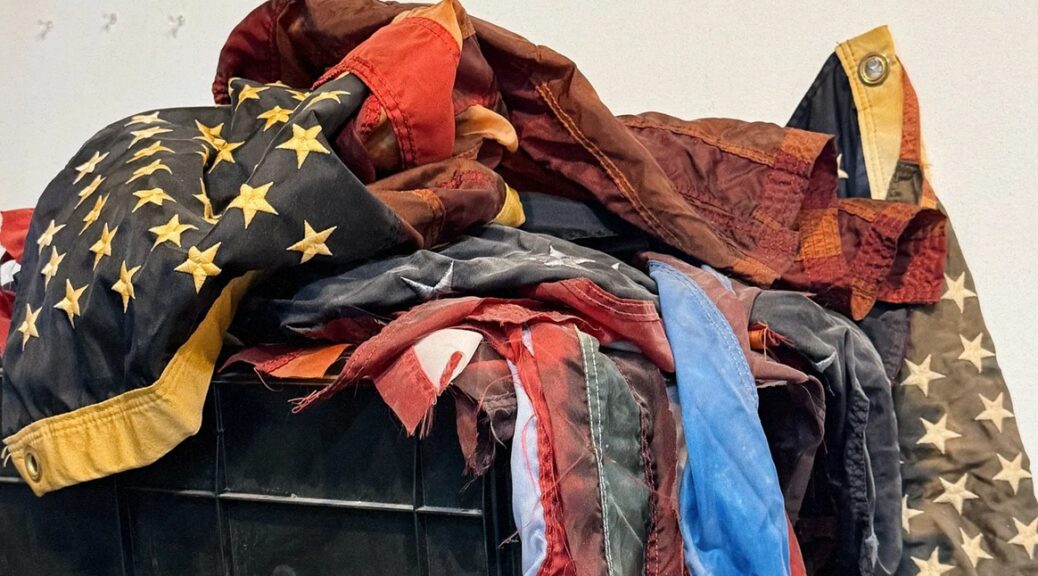
A few years ago, Keiran and I were visiting antique stores in Connecticut when we came across an American flag that had fallen from its flagpole and was lying on the steps to a manor house, which doubled as an antique store.
We looked at each other in horror. This was one of those All-American towns where flags flew proudly and the anthem played on the radio. The store owner probably played quarterback in high school. What would his reaction be to learn his flag had been desecrated?
Flags aren’t such a big thing in Canada, so I’m not entirely sure of the rules.
But I’m fascinated by the strict set of protocols for displaying and respecting flags, an inanimate object. Can you wear them? What happens if you accidentally fly one upside down? How do you store one? What spell do you have to cast if it accidentally falls on the ground? And most pressing: why?
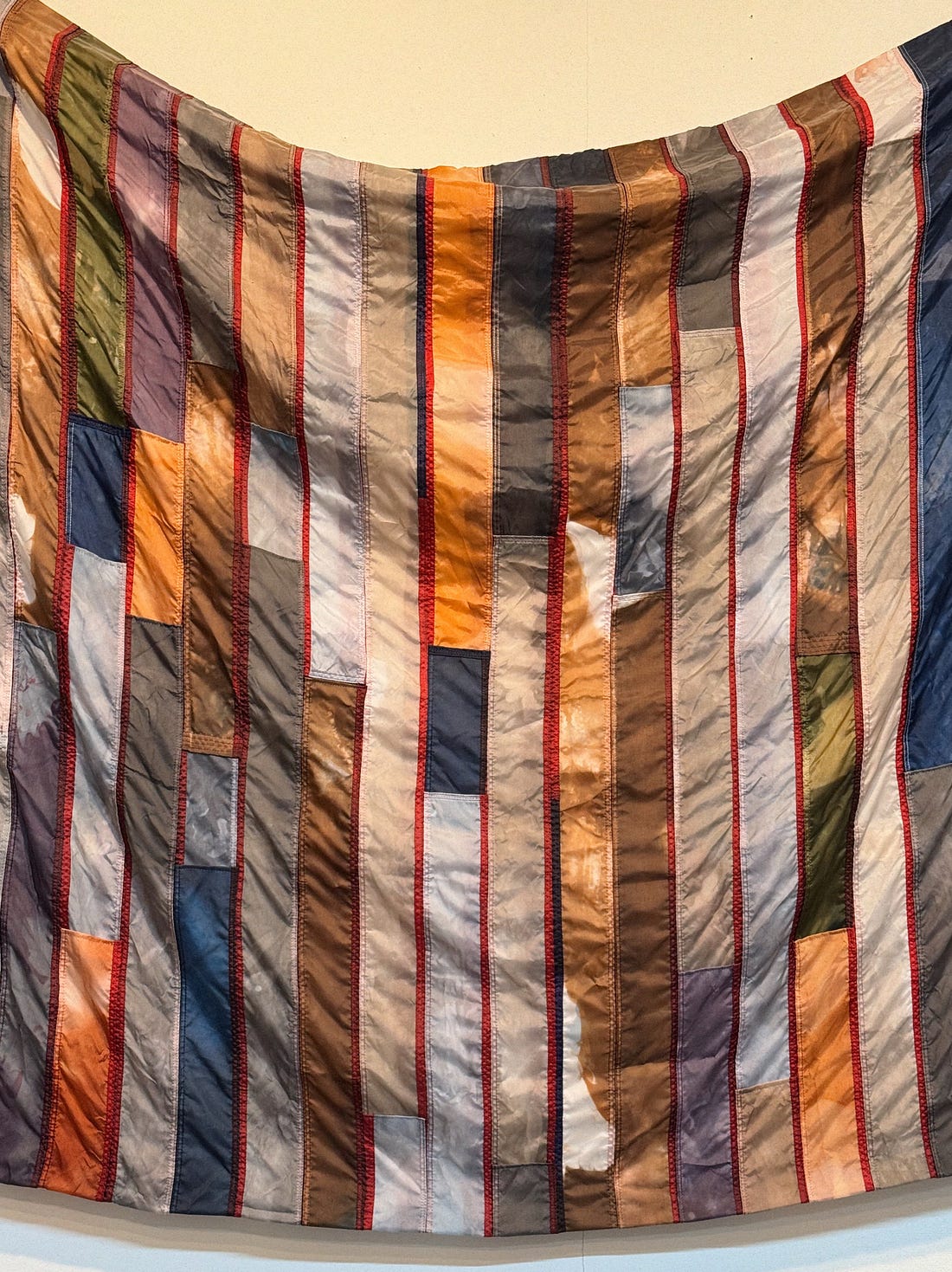
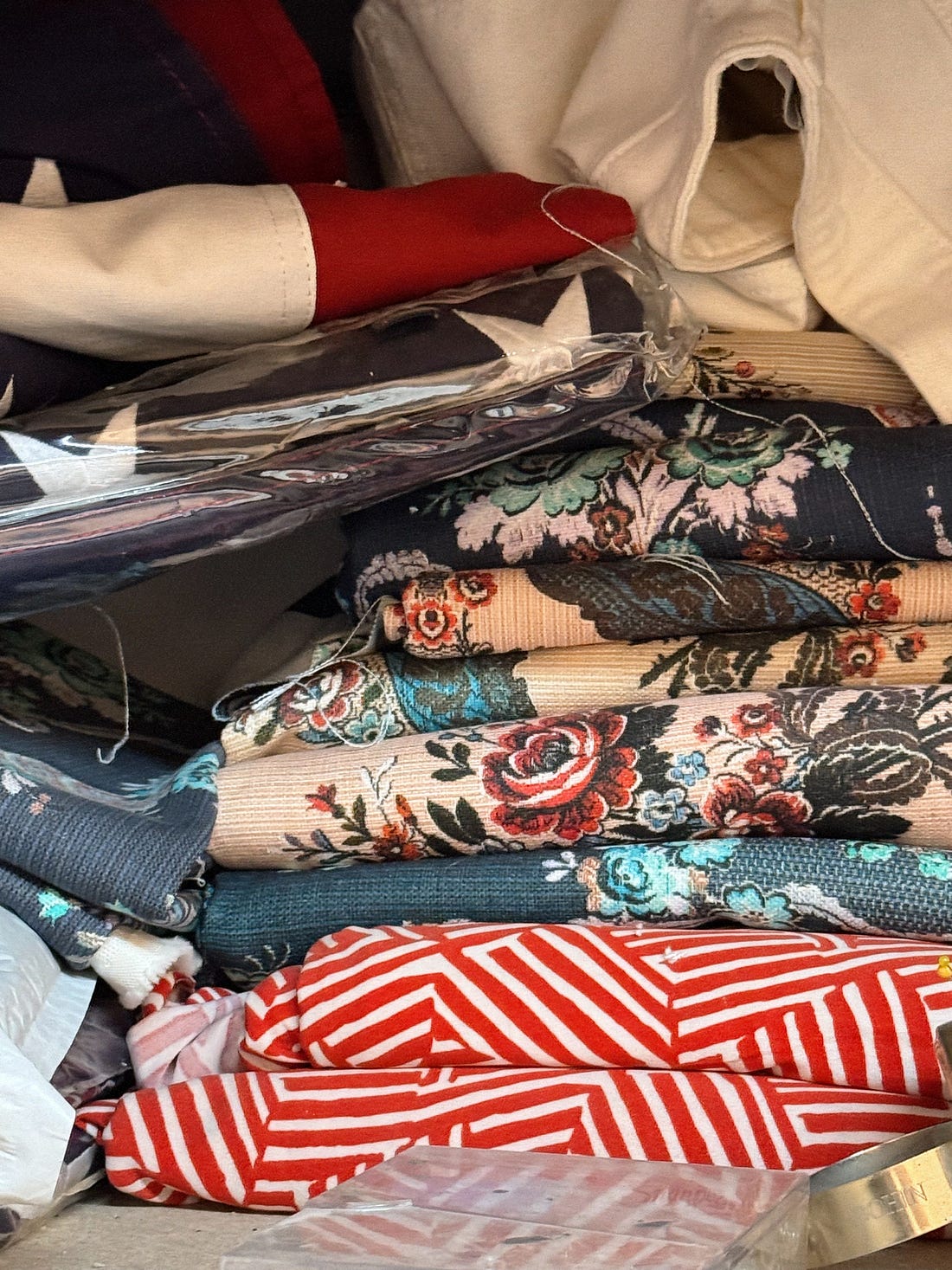
The artist Carla Edwards is also interested in the state-issued protocols for handling the American flag, and sets out to upend said formal rules by dismantling, dyeing, and reconfiguring standard-issue American flags in her Flag Series. The work becomes unrecognizable from its origin, transformed into patterned tapestries with abstractions that harken to the domestic activity of quilting.
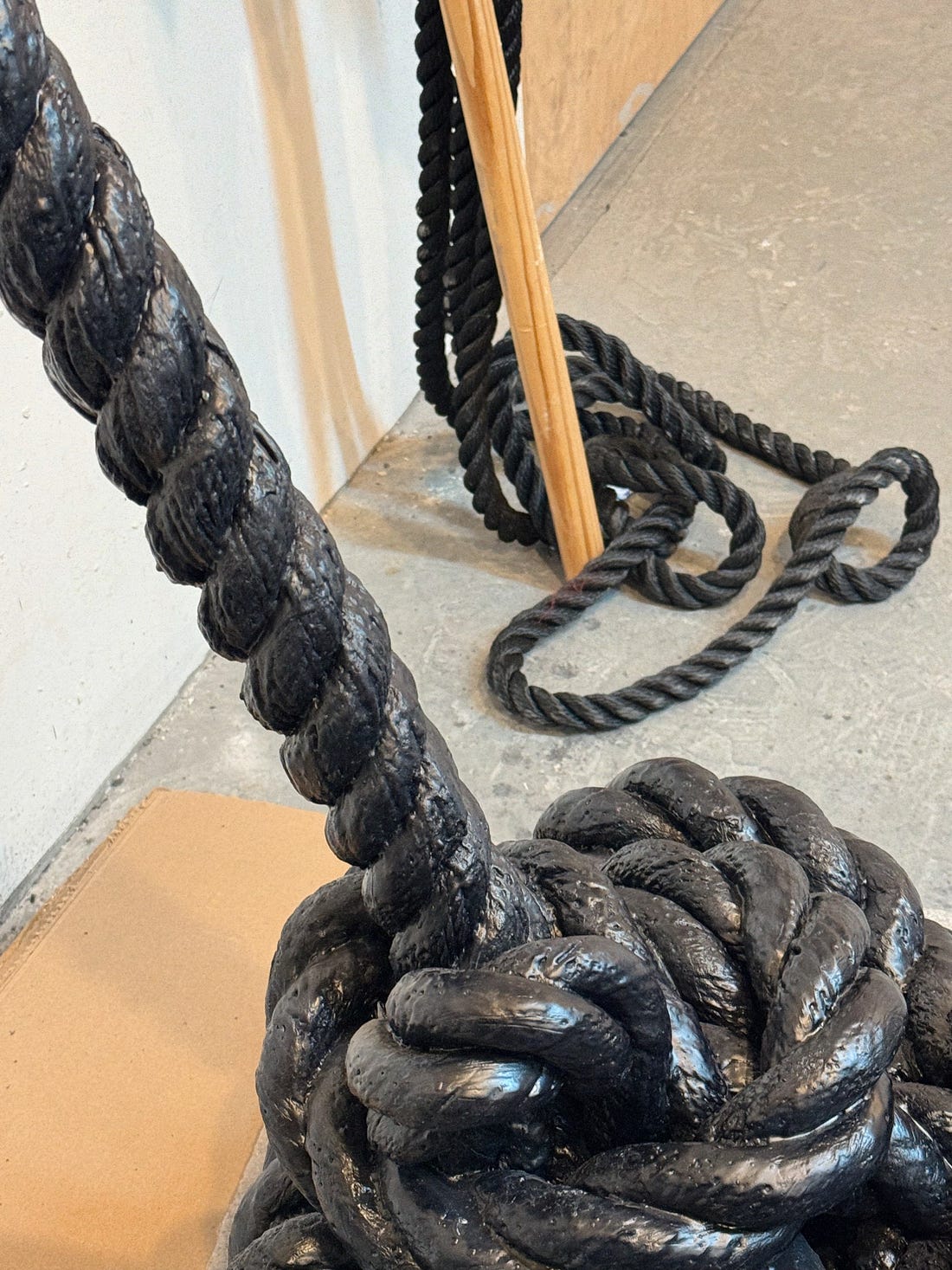
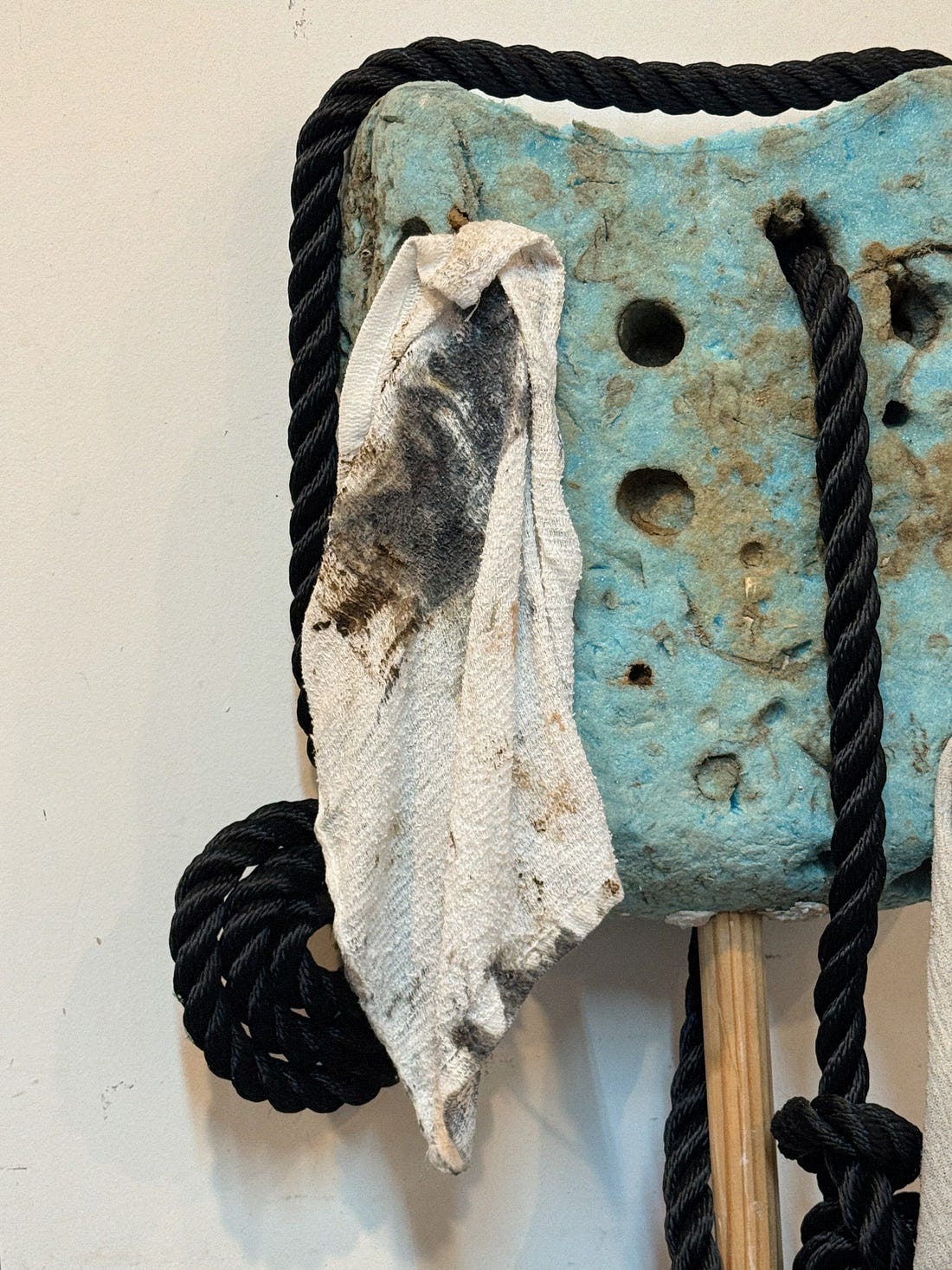
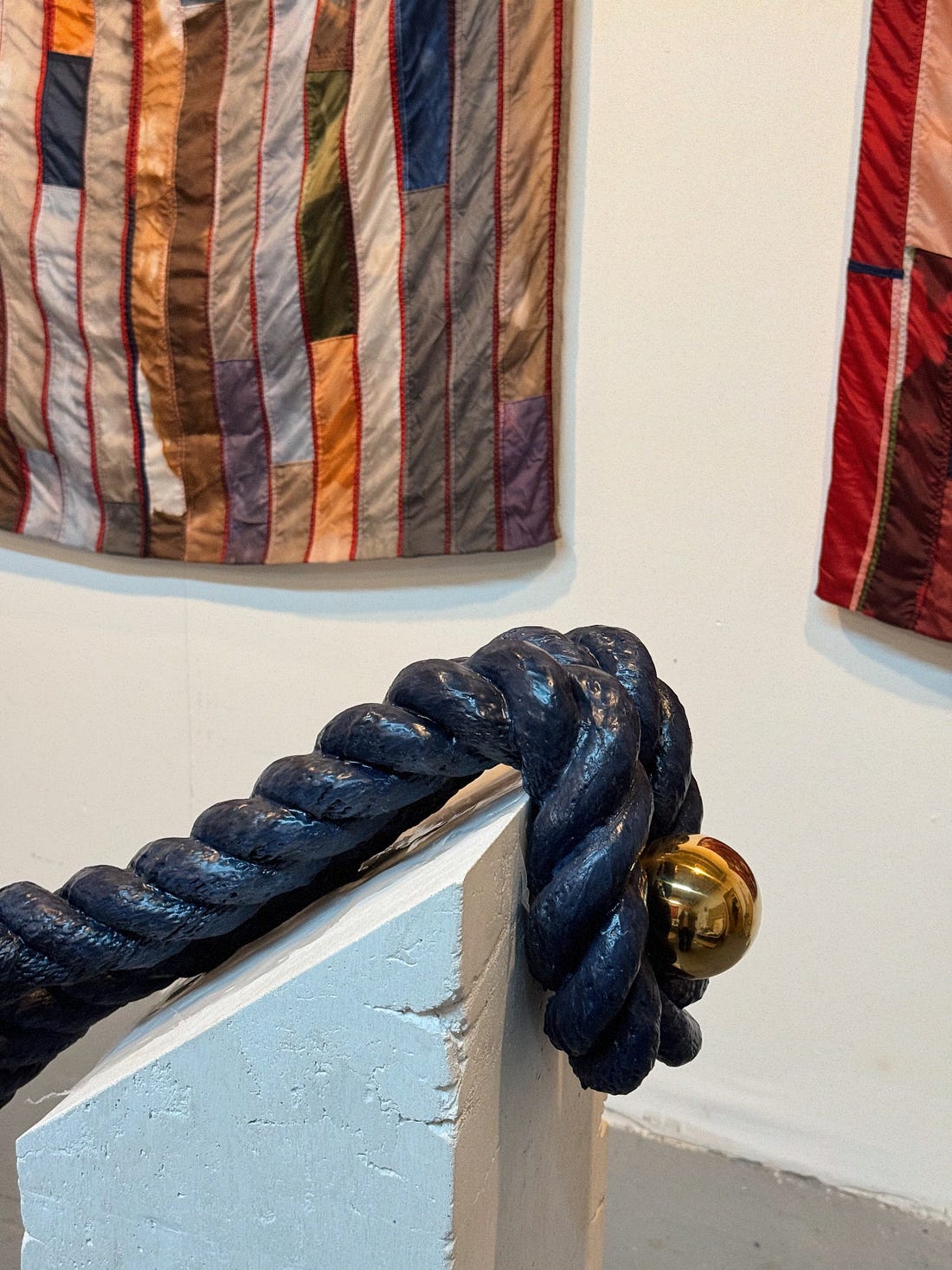
Edwards’s sculptural work, made from rope configured in gravity-dying shapes that come to take on human-like qualities, continues her pursuit of shifting materials through rigorous process. Just like a flag, it seems like ropes and knots come with their own set of rules: how to tie them properly, and the practical roles they play.
I think about all the metaphors we have for ropes and knots: walking a tightrope, enough rope to hang oneself, tied up in knots, tying the knot.
Another inanimate object takes on outsized proportions.
Edwards takes it even further, imbuing pieces with energy and anthropomorphic qualities that make the viewer think for a beat longer about what these objects mean—and, most importantly, why.
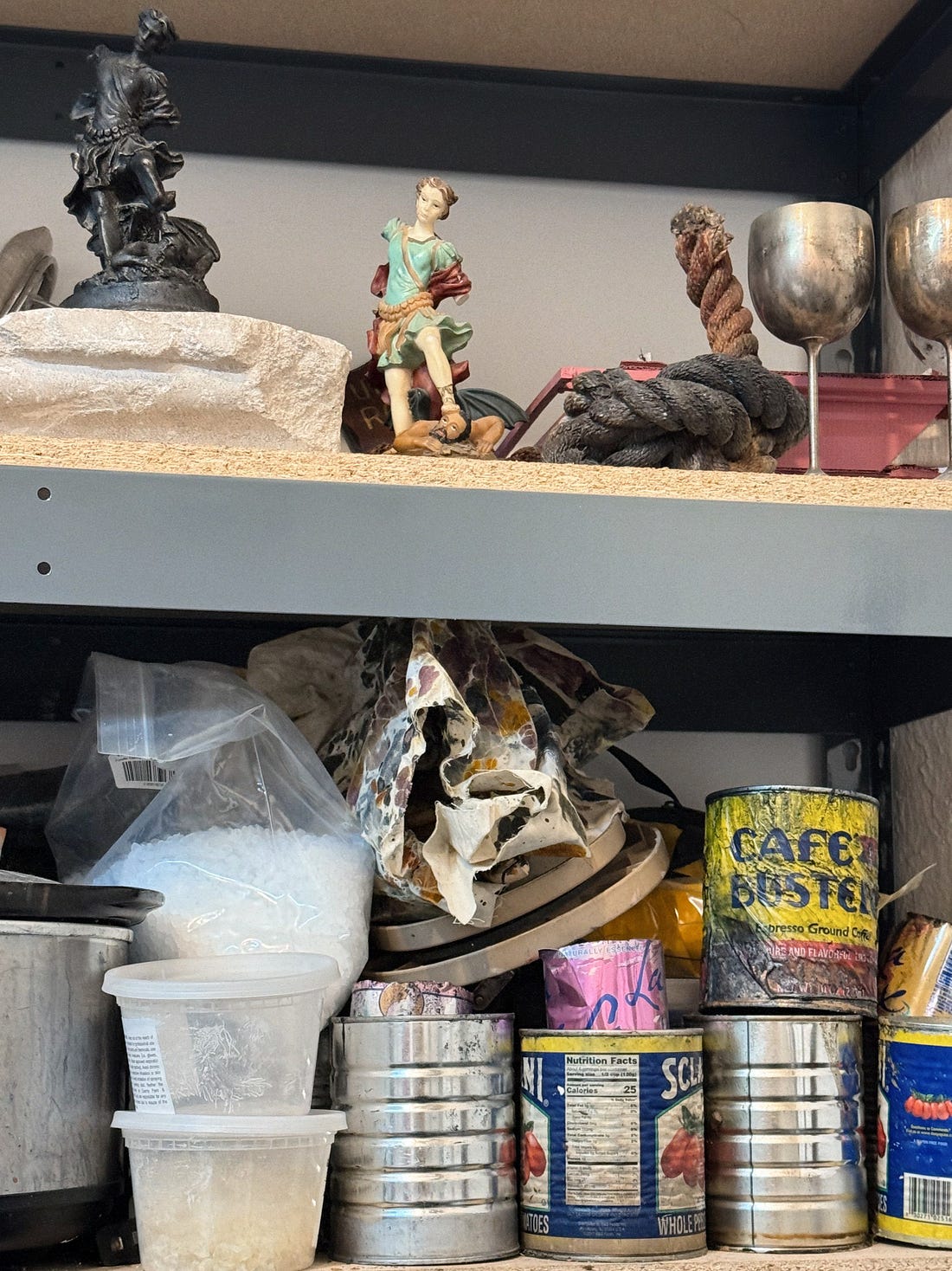
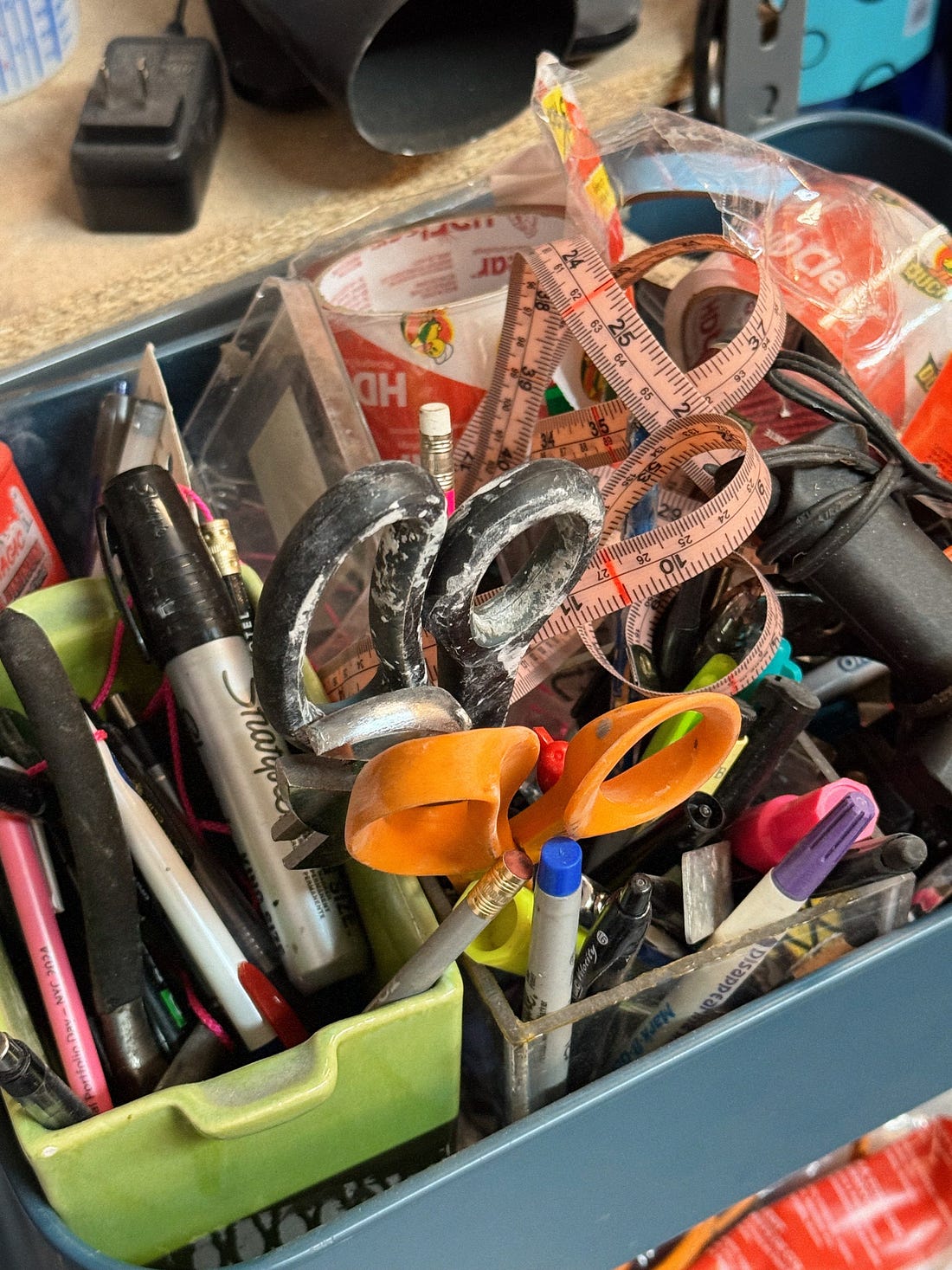
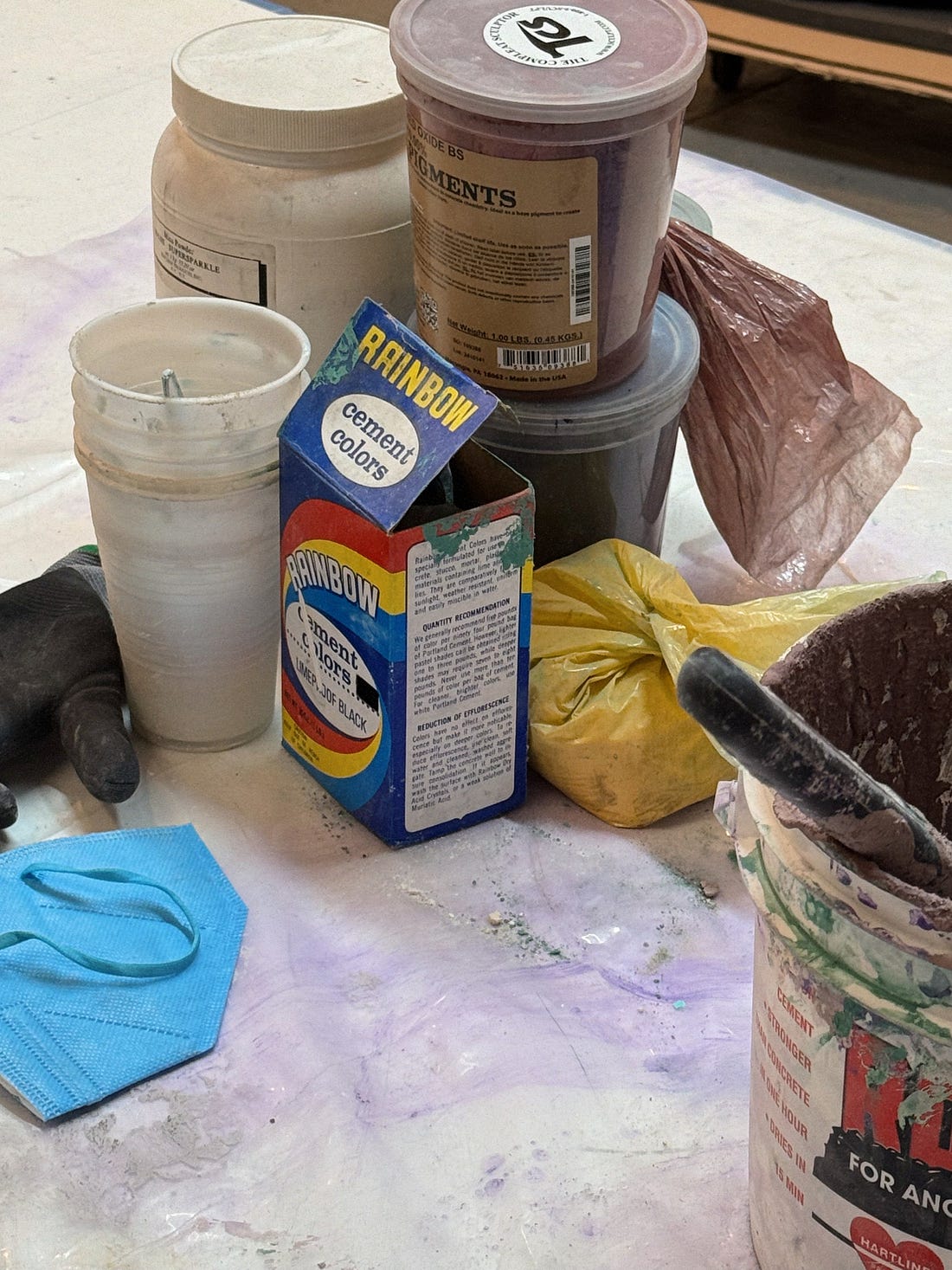
Below is a look inside Carla Edwards’s studio in Brooklyn, NY. The artist will have work at Art Basel Miami with Night Gallery.
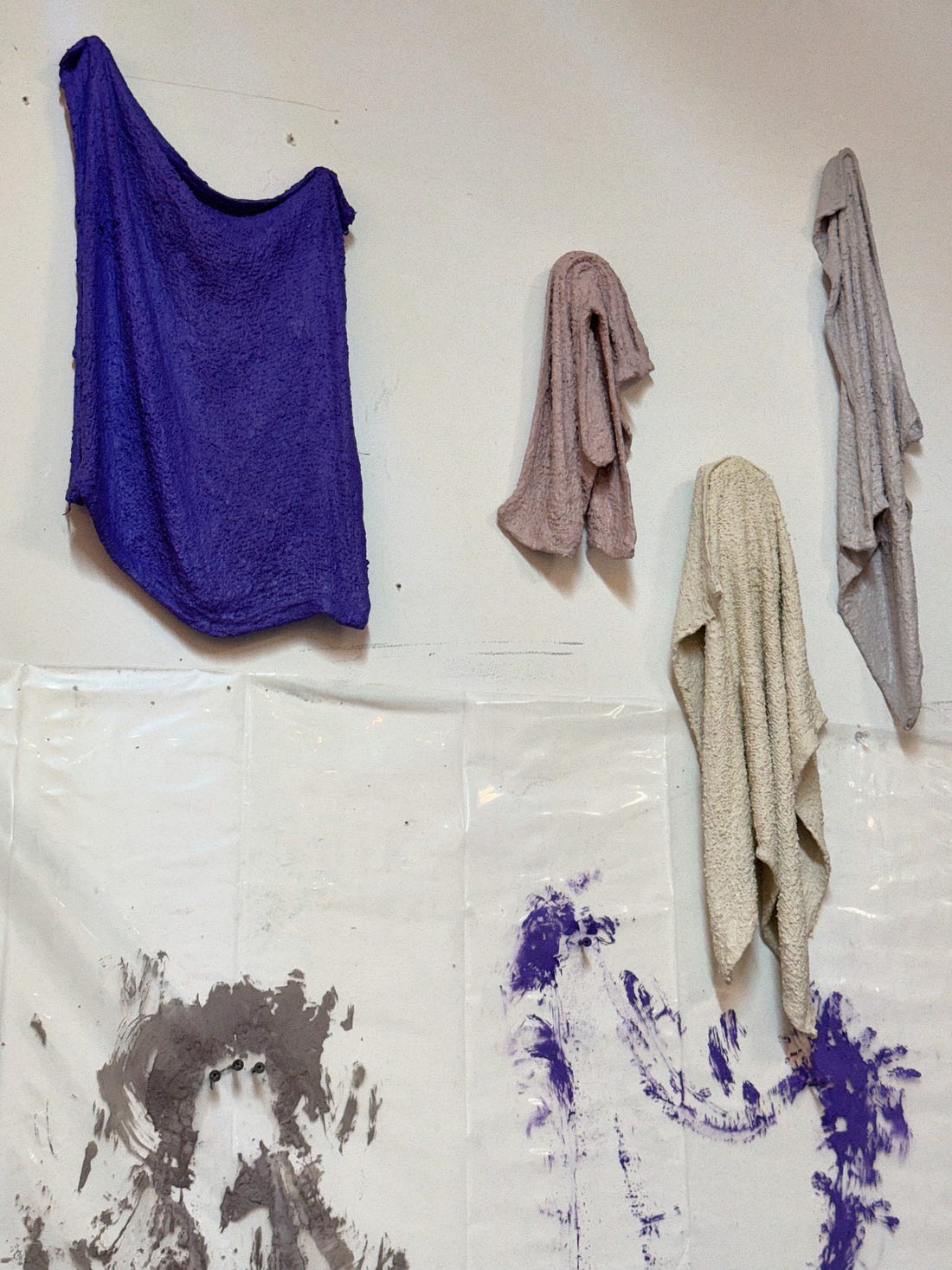
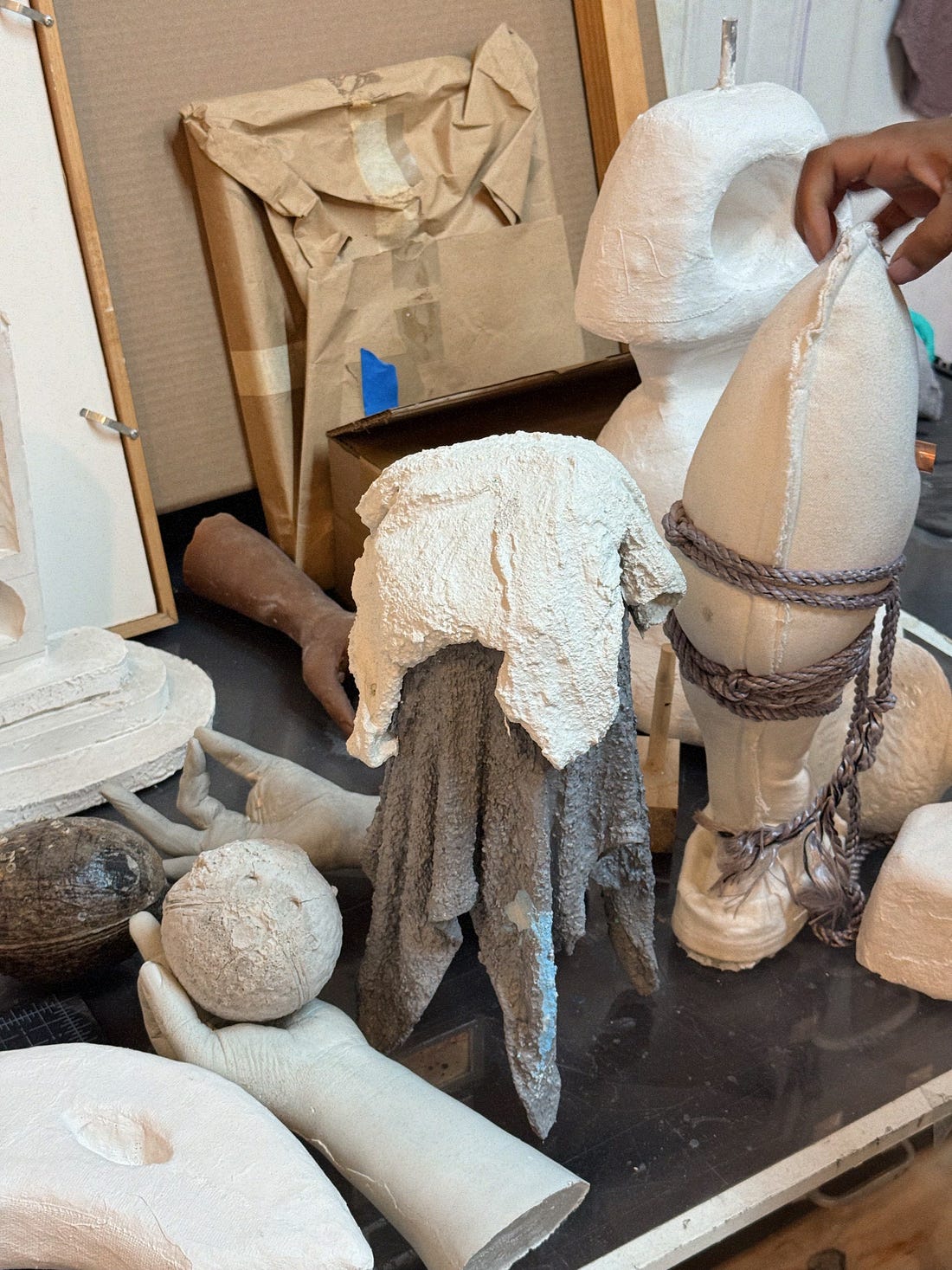
Carla Edwards (b. Illinois) received her MFA in Sculpture from the Rhode Island School of Design, Providence, RI. She has exhibited her work nationally and internationally, including at the Studio Museum in Harlem, New York, NY; Louisiana State University Museum of Art, Baton Rouge, LA; Crystal Bridges Museum of American Art, Bentonville, AR; Paula Cooper, New York, NY; Nuit Blanche Toronto, Canada; Volta5, Basel, Switzerland; Night Gallery, Los Angeles, CA; and Lyles & King, New York, NY, among other venues. She has exhibited public sculpture at the Socrates Sculpture Park in Queens, NY and at Lighthouse Works, NY. The artist is an alumna of Skowhegan School of Painting and Sculpture and was a studio fellow in the Whitney Independent Study Program. Her works are included in numerous private collections and the public collections of Crystal Bridges Museum, Bentonville, AR; Institute of Contemporary Art, Miami, FL; Vera Institute of Justice, Brooklyn, NY; and JP Morgan Chase. She lives and works in Brooklyn, NY.
 You have probably always wanted to write a book. You have probably tried to start writing it several times and gave up. Or maybe you did write it, but it didn’t quite turn out the way you wanted it to. You have most likely been scared and frustrated by the writing process, as well as exhilarated and thrilled. And you probably wondered how you could tell exactly what you wanted to tell, and tell it well.
 you get stuck you will get unstuck, and with new knowledge keep charging forward. You will see that learning how to write well takes time, and you will allow your tale to be bad and awkward and messy, because you will know that it’s normal, and this is what will keep you from quitting. That’s huge. I wish someone told me this when I started.