Tag Archives: caregiver

What Are the 4 Functions of Child Behavior?

When a child misbehaves—either through screaming, hitting, or freezing up—parents will naturally feel flabbergasted or at a loss. One might ask, “Why is this occurring?” or “Is this simply bad behavior?” The reality is, behavior is communication. Regardless of the action, even behavioral actions, it’s for a reason.

Knowing the four functions of behavior allows support persons and professionals to respond with strategy and empathy. The functions are not simply clinical ideas—men can be observed with these functions around the block and with both kids and grown-ups. With proper support, families are able to more effectively handle these behaviors and bring about positive change with the help of something like Toronto, ON’s SenseBloom Therapy or at-home ABA therapy.

What are the 4 Functions of Behavior?

In Applied Behavior Analysis (ABA), all the behavior—particularly troublesome behavior—always comes under four basic functions:

  • Attention
  • Escape or Avoidance
  • Access to Intangibles (Services or Events)
  • Reinforcement

Image- autismspeaks.org

Sensory or Automatic Reinforcement

Both these functions account for the fact that the behavior is occurring. The proper function is the first step toward responding with a view to training for preferable behavior and the diminishment of suffering—for all parties.

1. Attention Seeking Behavior in Daily Life

Kids are naturally attention seekers, and that is all part of the developmental process. But if the attention is sparse or delayed, then the child will utilize negative actions to receive it. Some examples include whining, interrupting, or even violent temper flailing.

Real-life example: A kid begins screaming at dinner. The parents immediately go to try to settle the child down. The child learns that screaming gets an immediate response—albeit a negative one.

What to do: Integrate frequent, positive attention throughout the day. Reward tiny, proper behaviors (“Good job, waiting your turn”) and dismiss meek attention-seeking actions when it is safe to do so. Such services as at-home ABA treatment tend to assist parents in identifying and reacting to these instances with calm consistency.

2. Escape or Avoidance Behavior

When an activity is overwhelming, boring, or challenging, a child will attempt to escape it with tantrums, fleeing, or freezing. The function is particularly prevalent with transitions or new procedures.

Real-world application: The child balks at doing homework. The parent withholds the task until the child is relaxed. The child now equates that action with evading work.

How to assist: Divide tasks into minuscule steps. Apply visual schedules and explicit expectations. Reward effort, not merely completion. When the function is escape, do not reinforce it by retaining expectations and providing support. SenseBloom Therapy applies personalized strategies for children to eventually tolerate and execute challenging tasks.

3. Tangible Commodites Access

Occasionally, behavior is exhibited due to the want of something—such as a toy, a snack, or TV time. When an object is provided for following through with a behavior such as crying or hitting, that behavior tends to follow.

Real-world example: The child yell at the store for a candy bar. To prevent a scene, the parent purchases it. The child learns that yelling results in a reward.

How to assist: Educate children to ask for items politely. Give choices and incorporate “yes” opportunities the remainder of the day. Enforce boundaries firmly and steadily. Speak with a calm, firm voice and support waiting or saying the words. Instruction of these substitutes is an integral component of ABA therapy at home, aiding skill acquisition for the child within the natural environment.

4. Automatic or Sensory Behavior

Certain behaviors are to serve a sensory purpose—they are comforting or assist with emotional regulation. These are not other PEOPLE’s reactions, but rather self-needs. Some examples are hand-flapping, dancing or rocking, or humming.

Real-world example: A child rotates around and around. Even without an audience or reactions, the child repeats it because the feeling is soothing or exciting.

How to assist: Offer sensory-safe, age-appropriate outlets for sensory requirements. Fidget tools, movement time, or sensory routines are potential examples. Family collaboration with occupational specialists and ABA specialists is able to assist relatives to determine what sensory supports are the most effective. Clinics for sense, for example, SenseBloom Therapy, utilize sensory-sensitive areas to facilitate this process.

Why Knowing the Function Matters

Responding to a behavior without an understanding of why it’s occurring can result in band-aids for the moment—but not permanent repairs. Taking punishment for an attention-seeking child, for instance, can inadvertently strengthen the action if it affords interaction.

When the behavior is understood, the caregiver is able to substitution with a healthier, more effective behavior. The consequence is the encouragement of the emotional safety and ultimate success.

Effective Strategies for Caregivers and Parents

Note patterns: Carry around a mini-journal to mark when behaviors occur, what causes them, and the consequence.

Remain constant: Kids do best with clear expectations and definite consequences.

Model communication: Encourage children to verbalize with words, use gestures, or point with visuals.

Use soothing reactions: Refrain from reacting angrily. Remaining regulated enables the child to remain regulated too.

Receive professional help: Consulting with ABA therapists, particularly with in-home ABA therapy, allows for personalized techniques with your child’s requirements. A Humane Response to Behavior Behavior always has a meaning. Kids are not being obstinate—kids are communicating the best that they can. When families understand the four functions of behavior, families can respond with patience, with structure, with an awful lot of loving. With proper direction, all children can be taught to do it differently. Whether through formal sessions at SenseBloom Therapy or child-centered support at home, change is always achievable.

World Economic Forum Report Highlights Retirement Trends as Life Expectancy Increases

  • Due to longer lifespans, governments and employers must reshape approaches to retirement to ensure ageing populations can live fulfilling, healthy lives
  • New survey indicates shifting views on retirement and stark differences in how younger and older people see their future
  • World Economic Forum report provides new approaches to retirement that governments, employers and individuals can consider

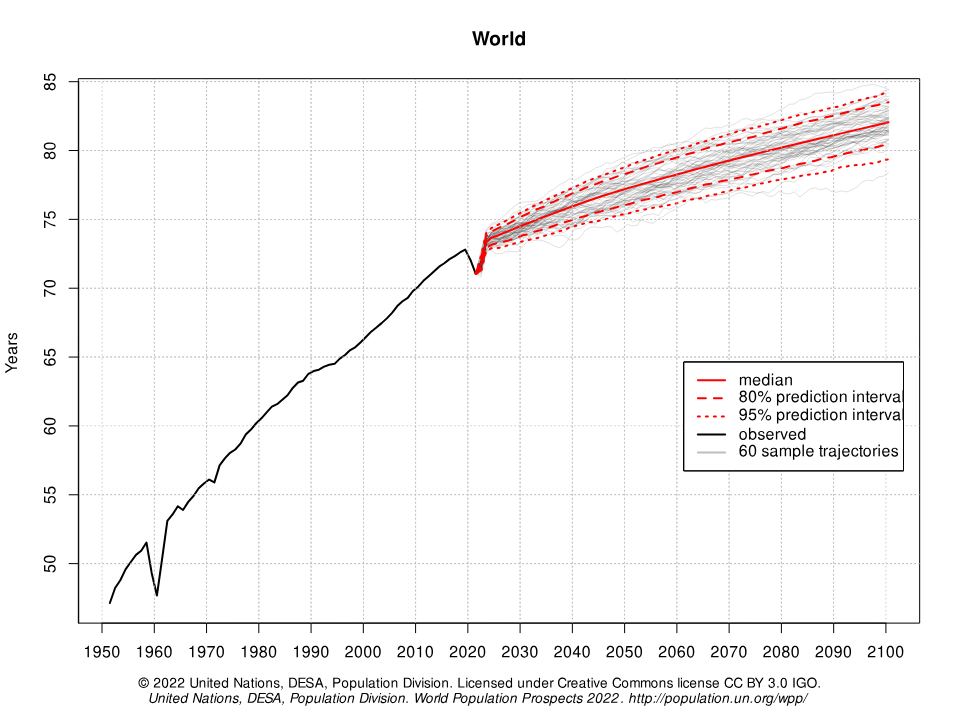
New York, USA, June 2023 – Life expectancy increased from an average of 46 to 73 years between 1950 and 2019 and the United Nations forecasts further increases, estimating that global average life expectancy will reach about 81 years by 2100. Longer lifespans are causing individuals, governments and business leaders to rethink their approach to work and retirement.

Living Longer, Better: Understanding Longevity Literacy, a new World Economic Forum report, in collaboration with Mercer, a business of Marsh McLennan, explores how lengthening lifespans are reshaping how individuals view their working lives and retirement. The report offers recommendations for government and employers to ensure they are adequately supporting people in multiple stages of work and retirement.


The report highlights purpose and quality of life in addition to financial health and resilience – themes that are traditionally associated with retirement planning. It offers options that individuals can consider to ensure they are approaching work, learning and retirement in ways that best meet their needs.

“When it comes to longevity and living longer, healthier lives, everyone has a role on this critical topic,” said Haleh Nazeri, Longevity Lead, World Economic Forum. “How will business support an older workforce and one with growing caregiving needs, what will policymakers do to help all citizens reach retirement equity, and finally, what can individuals do at every life stage to ensure they are able to stay financially resilient in a longer life.”

“Employers are thinking more about the current age distributions within the areas of talent needed to operate their organizations and how to influence the trajectory of these distributions,” said Rich Nuzum, Executive Director, Investments & Global Chief Investment Strategist, Mercer. “To leverage longevity and fight the war for talent effectively, moving from individual roles to team-based roles can help employers take full advantage of the diverse strengths of teams that comprise a combination of older and younger workers.”

Views on Retirement  
A new survey, Pulse Poll, of almost 400 professionals indicates that women and men view retirement differently. Women, for example, are 55% more likely to say they don’t know if they have saved enough for retirement.

The poll also reveals differences in how younger and older populations view their retirement futures. Both women and those under 40 are more willing to reskill but worry about associated costs. Both groups are also more likely to feel isolated.

Further results from the Pulse Poll can be found below and in the report:

  • Health is a top concern with two thirds of respondents indicating they expect to have caring responsibilities
  • Days of “Bank of Mum and Dad” may be reversing; many younger people are likely to have to financially support older family members
  • Pulse Poll respondents over 40 target lower income replacement levels in retirement
  • People are generally unaware of how to achieve their target levels of retirement income
  • More men looking forward to retirement, while more women need to understand their financial situation
  • Women are 55% more likely to say they don’t know if they have saved enough
  • Younger people are eight times more likely to use social media for financial advice
  • 44% of under-40s want to retire by 60
  • Women and younger people are more willing to reskill but are also worried about associated costs

The respondent profiles to the Pulse Poll were homogeneous and predominantly included those who had undertaken higher education, were in more senior positions, were likely to be in employment at major global organizations and with a high level of individual agency and financial literacy.

While there are some sample limitations, the survey suggests how the findings can help start a conversation about the challenges faced and can contribute to the development of solutions for the population this group of respondents represents.

Recommendations for Governments and Employers
As people are living longer lives, business and government need to restructure their approach to later life planning. Failing to adopt a multi-stakeholder approach towards longevity will inevitably result in a significant portion of people retiring into poverty.
Recommendations are cover three key areas of work and retirement including quality of life, purpose and financial resilience.

 Government

  • Facilitate upskilling of older workers and clamp down on ageism
  • Provide incentives for employers to offer more robust leave policies for caregiving needs
  • Explore the wider use of default auto-enrollment and default investment strategies to increase and maximize savings
  • Establish safety nets such as minimum pension levels provided by government
  • Enact enabling legislation to make all jobs flexible for longer-life working if desired and to accommodate all life-stage needs
  • Offer digital skills training and equipment to ensure equitable access to opportunities for all

Employers

  • Implement programmes offering support such as carers’ leave, information and advice for those who have caregiver responsibilities
  • Understand what impact the company’s retirement plan design has on the trajectory of retirement-readiness and labour flow – check if people can actually afford to retire
  • Provide flex-work programmes for caregivers, such as job-shares; allow part-time workers to contribute to defined contribution plans; provide training programmes for workforce re-entry, similar to those for early-career employees
  • Implement and review financial wellness programmes to:
    • Cover specific life-stage needs that account for gender, cultural and ethnicity differences
    • Consider personalized models to show the impact of different working arrangements and retirement ages on pay and pension
    • Cater to low-income earners who are likely to need the most support saving and planning for retirement

Individuals can also reimagine what their longer lives might look like as the three-stage life of school, work and retirement makes way for a multi-stage life that could include lifelong learning, career breaks and new occupations in later life. This includes pursuing upskilling and reskilling opportunities, as well as prioritizing retirement and pension planning if possible.

Increasing longevity globally will require new innovations and solutions to address how people can stay financially resilient in a retirement that may be 20 years longer than their grandparents. With supportive actions from government and employers, individuals will have a chance to try new approaches to longer lives and reassess how they want to study, live, work, save and retire in ways that are different from what has been done in the past century. For the Silo, Madeleine Hillyer/World Economic Forum.

Coronavirus Could Convert All Of Us Into Becoming Family Caregivers

One of the largest sectors in North American culture is Family Caregivers. There are currently an estimated 65 Million Americans are Currently Family Caregivers

But that number is undoubtedly ready to soar because at the Rate the Coronavirus is Spreading, virtually 100% of us may become Caregivers sometime this year.

Joining us is Peter Rosenberger, the leading authority on family caregiving in the United States and author of the book 7 Caregiver Landmines and How to Avoid Them.  

Q&A:

1) Did I have the current number right? There are 65 MILLION family caregivers? Perhaps it’s 6.5 million, right?

Answer: No. You had it right the first time. There are an estimated 65 million family caregivers in America today. 

2) At the rate the Coronavirus is spreading, is it possible that virtually 100% of Americans will soon be Caregivers?

Answer: Yes, so it’s better to learn something about caregiving while you’re healthy rather than wait until it becomes ‘the sick leading the sick.’ 

3) What is the best outcome for us if hospitals announce they are full and start turning patients away?

Answer: Every home has some similarity to hospitals. We need to adopt many of the same healthy procedures in our homes. 

4) Who’s at Risk for Coronavirus?

Answer: Coronavirus targets elderly, overweight, diabetic, and other otherwise at-risk individuals.

5) What are some things that caregivers struggle with? 

Answer: Excessive Weight Gain is significant issue for many caregivers. Caregivers often fail to see to their medical needs …while struggling to care for another. Caregivers consistently deal with high stress circumstances which comprise our abilities to stay healthy.

6) What has your experience been with hospital stays caregivers and those they care for?

Answer: Staying out of the hospital is imperative …they can be a brick and mortar petri dish.  

6) Tell us about your own caregiving experience of your wife

7) Give us some general tips on caregiving:

Answers: 

Reducing FALL RISKS

More than 9 Million ER Visits each year due to falls

Over 65 group represent 69% of hospitalization caused by falls

Caregivers can reduce fall risks for themselves and their loved ones by:

Keep well-lit rooms

Remove fall hazards such as throw rugs

Install grab bars in bathrooms

If you have a pedestal sink in bathroom, replace with a cabinet or ensure it’s secured properly (People use it to lean on)

Wear comfortable shoes and avoid heels.

Make multiple trips to the car …instead of trying to carry too much into the house. Caregivers are often in a hurry …and that’s when accidents happen

Keep bathrooms and kitchen areas clean

Watch for mold/mildew buildup

Hydrate

Make sure to thoroughly clean CPAP and other breathing assisted devices (for both caregivers and patients)

More healthcare treatment goes on in the home with caregivers than in the doctor’s office.  Rest UP! 

Tech:

Consider an app/telemedicine service to avoid getting loved ones out for routine physician visits …particularly on damp days.

When it comes to fighting this virus, all hands need to be on deck—but the caregiver’s hands are often overlooked.  

Roll up those sleeves, wash those hands (singing “Happy Birthday” twice while washing ensures the proper amount of time), and keep yourself healthy.  For the Silo, Peter Rosenberger/specialguests.com

“Healthy Caregivers Make Better Caregivers!”

ABOUT PETER ROSENBERGER
Peter Rosenberger is the host of the national radio program, HOPE FOR THE CAREGIVER and the author of several books including 7 Caregiver Landmines And How You Can Avoid Them. He’s cared for his wife, Gracie, for more than 30 years through her 80+ operations and multiple amputations. www.hopeforthecaregiver.com @hope4caregiver