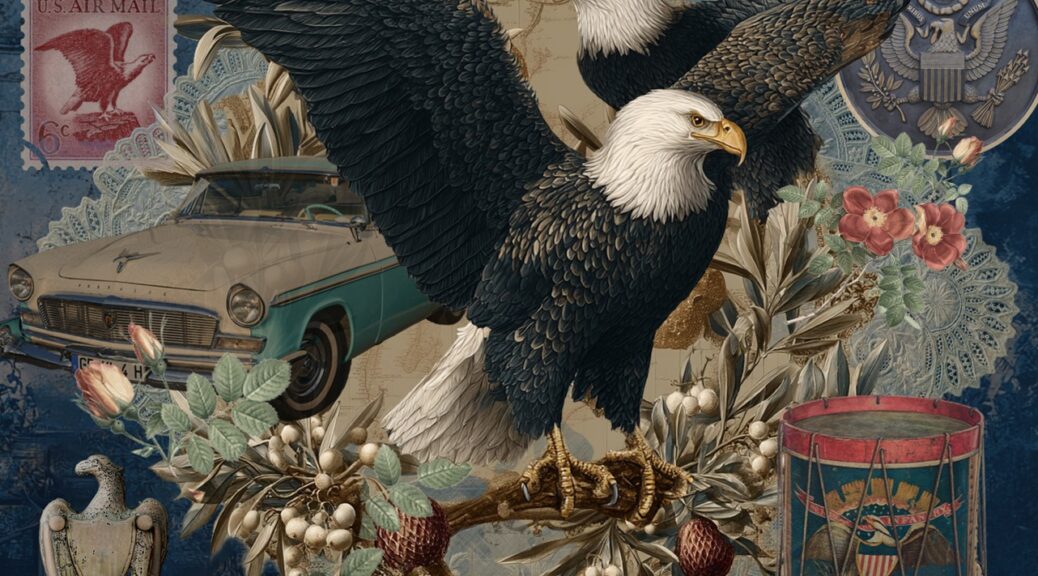
When designing the Great Seal of the United States, the Founding Fathers wanted a symbol to convey the strength and independence of the new nation. So they chose the bald eagle.
On the seal — used to authenticate treaties and other official documents — the white-crowned eagle clutches an olive branch (representing peace) in one talon and arrows (representing war) in the other. The eagle faces the olive branch, symbolizing America’s preference for peace.
After the adoption of the seal on June 20, 1782, the bald eagle quickly spread through American culture as a symbol of freedom, patriotism and power , says Preston Cook, a collector of eagle memorabilia and author of American Eagle: A Visual History of Our National Emblem.
The majestic bird, with a wingspan of 1.8 to 2.3 meters (6 feet to 7.5 feet), can spot prey 5 kilometers (3 miles) away, making it a match for a country of natural grandeur and vast, wild landscapes.
The bald eagle has become a decorative motif for everything from furniture and textiles to metalwork. U.S. gold coins have been known as eagles since 1795. Eagle-inspired hood ornaments adorned classic American cars of the 1930s through the 1950s. Philadelphia, which served as the first U.S. capital, has adopted the eagle as its professional football team’s mascot.

The eagle as a symbol of power
Eagles have symbolized power since ancient times, when Roman legions decorated their battle flags with images of the raptors. The Founding Fathers chose the bald eagle to represent their nation because the bird is indigenous to North America, according to Jack E. Davis, author of The Bald Eagle: The Improbable Journey of America’s Bird. But by the 20th century, bald eagles’ numbers in the wild had declined from habitat loss, illegal hunting and the pesticide DDT.
Conservation measures, including the U.S. government’s 1972 DDT ban, increased bald eagle populations. The species was removed from the endangered species list in 2007 and now lives in every U.S. state except Hawaii and in many areas of Canada as well.
The National Eagle Center , located in Wabasha, Minnesota, showcases bald eagles and highlights their connection to American values of freedom and courage. Visitors can meet live birds and, in the summer, take river cruises to spot bald eagles in their natural habitat.
Cook, the collector, donated some 40,000 eagle-related items to the National Eagle Center, including a drum from the U.S. Civil War painted with a bald eagle.

After years of researching the bald eagle’s ties to American culture, Cook was surprised to learn the bird had never been officially recognized as a national symbol.
Members of the U.S. Congress from his home state of Minnesota offered legislation he drafted to make the bald eagle the U.S. national bird. In December 2024, Congress unanimously passed the bill and it was signed into law.
Cook continues working with the National Eagle Center and with curator Alex Lien on bald eagle exhibits. The center is planning a new educational exhibit for the United States’ 250th anniversary in 2026.
Eagles, especially bald eagles, “are in every aspect of American culture throughout the past 250 years,” Lien
For the Silo, Lauren Monsen/ShareAmerica. Featured image via State Dept./S. Gemeny Wilkinson.