Commonwealth collaboration is vital to the recovery of the sport sector which has suffered a crushing blow from essential measures to stem the spread of COVID-19. This was the recurring theme as sports ministers from Africa, Asia, the Caribbean, Europe and the Pacific met at a landmark forum on the impact of the pandemic on their sector.
Countries spoke about the deep health and economic scars left by the closure of community sport, gyms and exercise facilities, the decimation of the local and international sporting calendar, and the loss of revenue from broadcasting and sponsorship deals.
According to a recent Commonwealth study, while the overall economy of the 54 member countries would contract on average by 3.2 per cent in 2020, the contribution of sport sectors to GDP could drop by well over 20 per cent in several states.
Commonwealth Secretary-General Patricia Scotland said: “Our countries are shouldering many very heavy burdens as a result of the pandemic. Among these, necessary restrictions affecting the sport sector make much of its future is uncertain and are preventing it from making its much-needed contributions to physical well-being, mental health and economic activity. So it was really encouraging to see how Sports Ministers in our member countries are responding to the effects of COVID-19 with powerful and imaginative initiatives. Return-to-play tool kits, grants for community clubs and virtual programs to help people of all ages to be physically active were among examples shared at the forum. What also came through loud and clear is that by continuing to work together our chances of success in overcoming the impacts of the pandemic are greater, and our recovery will be swifter and more sustainable. Building on existing cooperation and momentum already achieved, the Commonwealth Secretariat has launched a range of innovative projects and programs, based on careful research and analysis, so that in all our member countries sport can be used more effectively to build communities that are socially and economically more resilient with healthier populations”
Resources such as the new Commonwealth Moves program was shared with ministers to support efforts to get more people active while complying with the rules imposed to suppress the pandemic. The online tool is tailored to tackle the ongoing ‘pandemic’ of immobility, exacerbated by COVID-19 disruptions. It includes activities for all demographics, including young people, the elderly and persons with disabilities. Forum participants expressed strong support for the Secretariat’s initiatives.
This includes its program on measuring sport’s contribution to the sustainable development goals and its recent online course on designing effective policies and programs.
Kenya’s Cabinet Secretary for Sports, Culture and Heritage, Amina Mohamed chaired the forum. She said: “This forum was timely and critical for many governments still working very hard to fight the devastating pandemic that ambushed the globe early this year. The forum confirmed an unmistakable desire among Commonwealth Sport Ministers to collaborate, share solutions and pool their collective knowledge aided by the Commonwealth Secretariat including a newly developed pool of resources, carefully crafted to support countries resuscitate sport sectors choked by COVID-19, and ensure that we re-build healthier, more resilient, inclusive and sustainable economies and populations. “
Ministers at the forum presented how they are responding to the current challenges and planning the safe and staged return-to-sport.
These range from guidelines for cross border competitions and provisions of economic support for grassroots clubs to investment in the e-sport sector and helplines to address abuse in sport. In a statement released after the forum, sports ministers agreed that future policies, programs and competitions should integrate delivery modifications and virus suppression measures, and that the sector should be a focus of recovery and rebuilding efforts. For the Silo,Snober Abbasi.
The tradition of archaeology in the Americas (both North and South America) is defined by cross-cultural comparative research that draws heavily on an innovative tradition of regional-scale fieldwork.
Many early archaeo-pioneers worked in multiple culture areas of the Americas, seeking direct connections between the archaeological record and living or historical indigenous peoples, and fostering close ties with the related field of anthropology as a result.
WPA trowel men at work,Thompson Village Site,Tennessee. Image courtesy of the Frank H. McClung Museum, University of Tennessee (62HY5[B]This brief overview covers seminal developments in stratigraphic excavation (the idea that time deposits artifacts in successive layers- the lower the layer, the older the artifact), regional survey, and other field methods within their historical and geographic context.
Such pioneering archaeological efforts across the globe are often lauded for their early attention to stratigraphy and the association of geological or cultural strata with change in human societies over time. In the Americas, as in other parts of the globe, such attention was often the result of non-systematic excavations into mounds of anthropomorphic origin. In other words- ‘grave robbers’. Continue reading by clicking here.For the Silo, David M. Carballo /academia.edu / Department of Archaeology, Boston University/ Jarrod Barker.
Featured image- Archaeological Pioneers Of The Americas Gordon Willey Tula Mexico
Cahokia – Kunnemann Group submitted by durhamnature. Excavation of Kunnemann Mound, one of 6-11, from “Cahokia Mounds” via Archive.org
PORTLAND, OR. July, 2020: Discogs, the world’s record store, recently released its latest Top 30 Most Expensive records list for items sold in the Discogs Marketplace during May. The complete list for May 2020 can be viewed on the Discogs Blog, while the following are the highest priced records sold with all prices in US dollars (multiply by 1.36 for current CAD dollar exchange rate) :
1
Jay Richford & Gary Stevan – Feelings
Sold for $5,660.00 Label: Carosello Format: LP, Album Country: Italy Released: 1974 Genres: Jazz, Funk / Soul |Styles: Jazz-Funk, Easy Listening, Soul-Jazz, Psychedelic
2
Charlie Parker – Bird Blows The Blues
Sold for $4,999.00 Label: Dial Records Format: LP, Album, Comp Country: US Released: 1949 Genres: Jazz | Styles: Bop
3
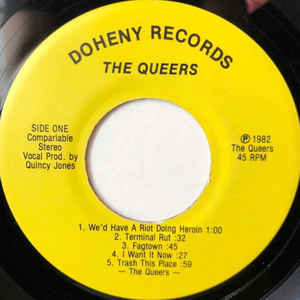
The Queers – Love Me
Sold for $4,000.00 Label: Doheny Records Format: 7″ Country: US Released: 1982 Genres: Rock | Styles: Punk
4
Willie Tee – Teasing You Again / Your Love, My Love Together
Sold for $3,813.00 Label: Gatur Records Format: 7″ Country: US Released: 1972 Genres: Funk / Soul | Styles: Soul
5
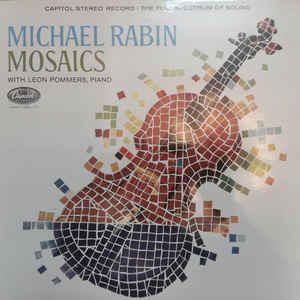
Michael Rabin With Leon Pommers – Mosaics
Sold for $3,527.00 Label: Capitol Records, Capitol Records Format: LP, Album Country: UK Released: 1959 Genres: Classical | Styles: N/A
6
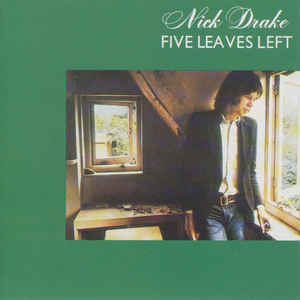
Nick Drake – Five Leaves Left
Sold for $3,409.00 Label: Island Records Format: LP, Album, Gat Country: UK Released: 1969 Genres: Rock, Folk, World, & Country | Styles: Folk Rock
7
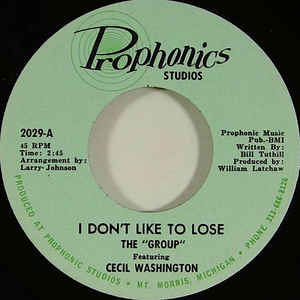
The “Group”* Featuring Cecil Washington – I Don’t Like To Lose
Sold for $3,236.00 Label: Prophonics Studios Format: 7″ Country: US Released: 1966 Genres: Funk / Soul | Styles: Soul
8
AC/DC – Can I Sit Next To You, Girl
Sold for $3,139.00 Label: Albert Productions Format: 7″, Single, Promo, A-l Country: Australia Released: 1974 Genres: Rock | Styles: Hard Rock
9
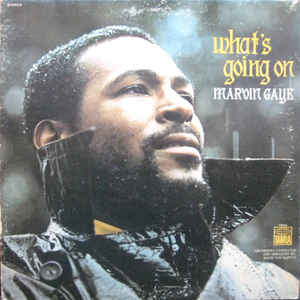
Marvin Gaye – What’s Going On
Sold for $3,000.00 Label: Tamla, Tamla Format: LP, Album, Gat Country: US Released: 1971 Genres: Funk / Soul | Styles: Soul
10
Delaney & Bonnie – The Original Delaney And Bonnie
Sold for $2,752.00 Label: Apple Records Format: Acetate, LP Country: UK Released: 1969 Genres: Rock | Styles: Southern Rock
In case you missed it, on June 30, France and the other Member States of the European Union adopted a recommendation on the reopening of Europe’s external borders from July 1, 2020, to a first list of fourteen countries, including Canada, Japan, South Korea, Australia [this may not be the case considering Covid developments there the past few days] , Thailand, as well as China, subject to reciprocity. This list will be reviewed every two weeks.
In view of the satisfactory epidemiological evolution on European territory, new measures have been adopted following the decisions taken on June 15 with regards to the reopening of European borders (Schengen area) and the opening of borders to international visitors after July 1.
The first countries eligible for this reopening are: Australia, Canada, South Korea, Japan, New Zealand, Rwanda, Thailand, Uruguay, three North African States (Algeria, Morocco, Tunisia), two Eastern European States (Montenegro, Serbia) and Georgia.
The United States, Russia, Israel, Turkey and Saudi Arabia are, at this stage, excluded from this list, as the situation of the Covid-19 pandemic is considered to be more serious there than in Europe. The reopening of borders with China is moreover suspended on the principle of reciprocity (China has not yet reopened its borders to European travellers).
As a reminder, the internal borders of the European Union – Schengen area reopened June 15 (and Spain’s on June 21). All health and security measures are being taken on a case-by-case basis to ensure that the border restrictions are lifted in the best possible conditions.
However, the British government (the United Kingdom being, in the post-Brexit transition period, still considered as an EU Member State) has decided to impose since June 8 a 2-week period quarantine on foreign travellers, therefore France is applying the rule of reciprocity until further notice. However, the 2-week period quarantine measure should evolve in the near-future. For the Silo, Marie-Andree.Boucher.
France was visited by 1.2 million Canadians in 2018.
More information on reopening and sanitary precaution’s in France can be found on France.fr.
As parts of the globe cautiously begin to open up, the focus is on what travel freedom and global mobility will look like in a post–Covid-19 world. Last week the EU released a list of countries whose residents would be allowed entry into the bloc from 1 July based on coronavirus-related health and safety criteria. Included on the welcome list are countries such as Australia, Canada, Japan, and South Korea that traditionally score highly on the Henley Passport Index — the original ranking of all the world’s passports according to the number of destinations their holders can access without a prior visa. However, in a move perceived as a stinging rebuke for its poor handling of the pandemic, the US was notably excluded from the list, as were Brazil and Russia.
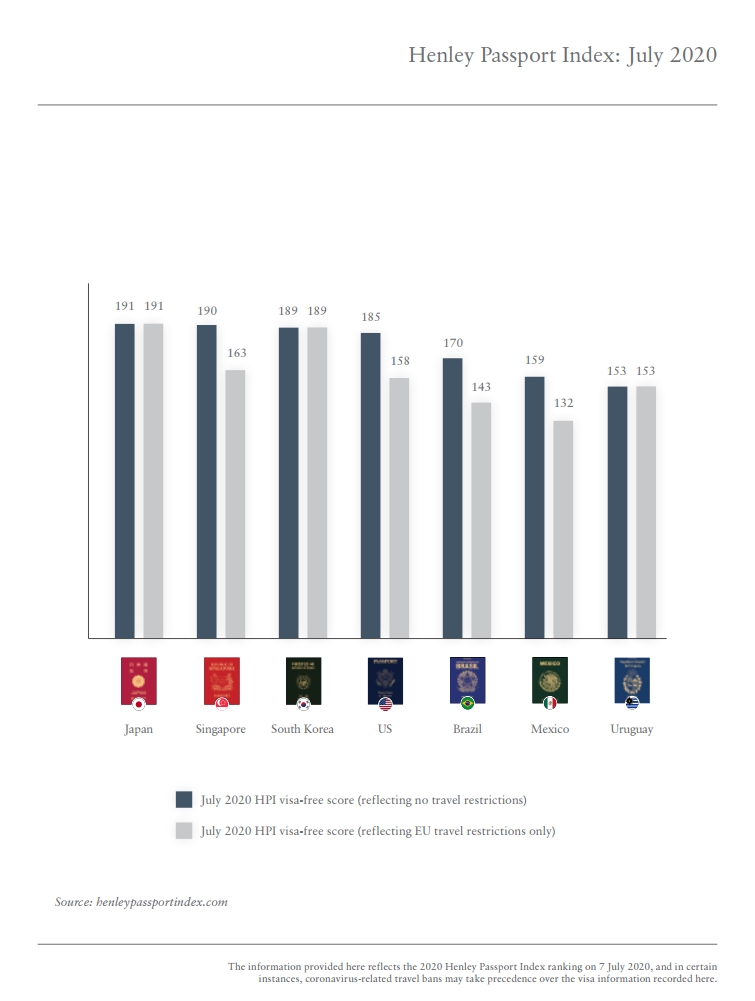
Although not reflected in the latest ranking, which does not take temporary travel bans into account, it is eye-opening to consider what travel freedom currently looks like for the holders of once-prestigious passports. For instance, before Covid-19 the US passport usually ranked within the top 10 on the Henley Passport Index in 6th or 7th place, with its citizens able to access 185 destinations around the world without requiring a visa in advance. However, under the current EU ban, the picture looks starkly different. US nationals now have roughly the same level of travel freedom as citizens of Uruguay (included on the EU’s list of welcome countries), which ranks 28th on the index, with a visa-free/visa-on-arrival score of 153. In another striking inversion, the US’s dramatic decline in passport power means that Americans find themselves with a similar level of travel freedom usually available to citizens of Mexico (25th on the index, with a score of 159), current travel bans notwithstanding, albeit temporarily.
This is one of many extraordinary shifts in passport power caused by the temporary pandemic-related bans. Brazilian passport holders, for example, find their passport strength greatly diminished. The country usually ranks highly on the index ¾ most recently placed 19th, with a visa-free/visa-on-arrival score of 170 ¾ but the loss of access to the EU means Brazilians currently have roughly the same extent of travel freedom as citizens of Paraguay (36th on the index, with a score of 142).
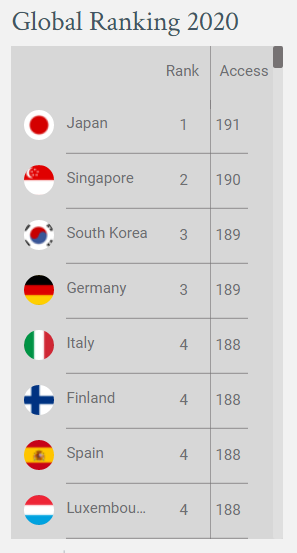
Without taking the various travel bans and restrictions into account, Japan continues to hold the number one spot on the Henley Passport Index with a score of 191. Singapore remains in 2nd place with a score of 190, while Germany and South Korea are in joint-3rd place, each with a score of 189. Both Japan and South Korea have been included on the EU’s list of ‘safe’ countries, while Singapore has been excluded, which means Singaporean passport holders currently have far less travel freedom than their closest competitors on the index, which is based on exclusive data from the International Air Transport Association (IATA).
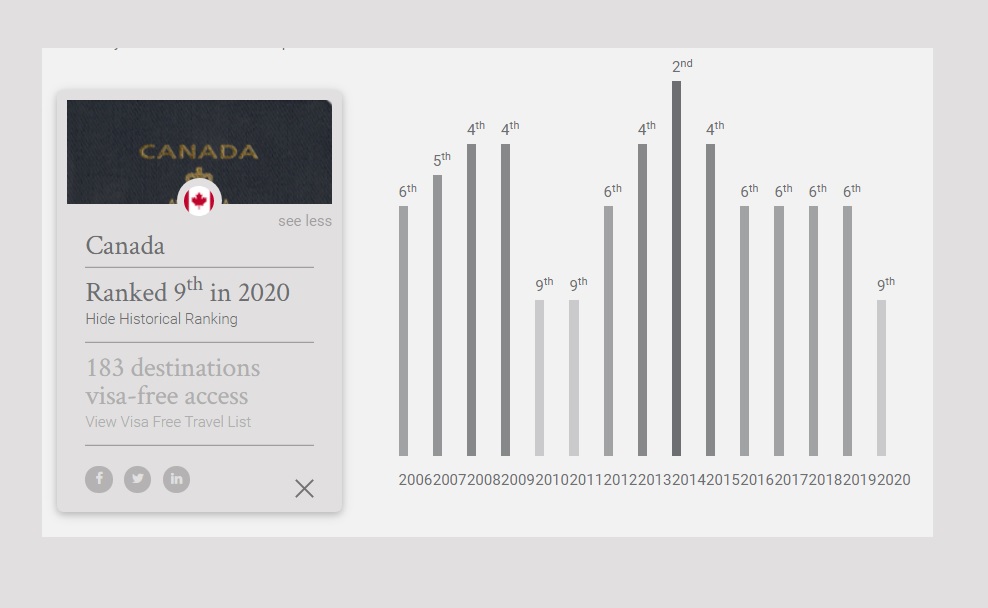
Dr. Christian H. Kaelin, Chairman of investment migration firm Henley & Partners and the inventor of the passport index concept, says the EU’s recent decision will have far reaching effects. “As we have already seen, the pandemic’s impact on travel freedom has been more drastic and long lasting than initially anticipated. This latest decision by the EU indicates that there is more upheaval to come. Look at the US passport, for example ¾ in 2014, it held the number one spot in the world on our index, but US nationals currently have far less travel freedom than most citizens of other wealthy, industrialized nations and even of some less developed nations, being effectively locked out of Europe. We see an emergence of a new global hierarchy in terms of mobility, with countries that have effectively managed the pandemic taking the lead, and countries that have handled it poorly falling behind.”
Immigration controls in US and UK tighten amid calls for co-operation
While the US looks set to be significantly affected by the EU’s latest decision, it has issued stringent immigration controls of its own over the past few months. Greg Lindsay, Director of Applied Research at NewCities, says that the Trump administration’s temporary suspension of all work visas will have far-reaching effects. “The executive order, signed on the 22 June, will bar as many as 525,000 foreign workers from entering the country for the rest of the year.” As Lindsay points out, this decision is only the latest salvo in White House aide Stephen Miller’s years-long campaign to curtail worker visas, arguing that they harm employment prospects for Americans.
In the UK, the pandemic’s effect on mobility has also been severe. Robert McNeil, Deputy Director of the Migration Observatory at the University of Oxford, says that the almost complete cessation of international arrivals into the country has generated serious challenges for industries that have become dependent on seasonal migrant workers from the EU. McNeil says that despite public attitudes around immigration softening, the Brexit process has not slowed down. “In May, the government pushed through the new Immigration Bill, paving the way for a new ‘points-based’ immigration system. The new restrictions would prevent many people from becoming key workers in the UK in future. Around half of the EU citizens currently in key worker positions in the UK would not meet the new salary and skills thresholds required to move to the country from 2021.”
Changing priorities in a transformed world
As premium passports lose their shine in a post-Covid world, experts suggest that the crisis is likely to make international mobility more restricted and unpredictable in the longer term. “Even as countries open their borders, it is expected that numerous governments will use epidemiological concerns as a justification for imposing new immigration restrictions and nationality-targeted travel bans that will mainly be aimed at citizens of developing countries,” says Prof. Dr. Yossi Harpaz, Assistant Professor of Sociology at Tel Aviv University. Noting the recent decision by the EU with respect to the US and other countries, Harpaz says, “The passports of both developing and developed nations stand to decrease in value, at least temporarily. In such uncertain times, global demand for dual citizenship and investor visas is expected to increase.”
Discussing the impact of the pandemic on global migration trends, Charles Phillips, researcher and consultant for Oxford Business Group, suggests that environmental health concerns could become a priority for those seeking alternative residence or citizenship. “We can expect places that are governed well and better equipped to deal with pandemics to become destinations people will seek to move to. Just as travel choices will likely be more strongly influenced by health considerations, we may see those acquiring alternative residence or citizenship placing a greater emphasis on a country’s health policies when deciding where to reside.”
Dr. Juerg Steffen, CEO of Henley & Partners, says the growing demand for additional residence and citizenship options comes as no surprise. “We have seen extraordinary upheaval over the past few months, with many certainties falling away. For investors and their families, having a second citizenship or an alternative residence is an even more precious asset than ever before, as concerns over access to first-rate healthcare, global mobility, and quality of life take on a new urgency. In turn, investment migration programs provide invaluable economic security to the countries that offer them.
As we enter the worst recession since the Great Depression, a small country like Montenegro, for instance, is better equipped to weather the storm. The recently launched Montenegro Citizenship-by-Investment Program provides permanent access and the right to stay in this beautiful and safe European country. It also provides the country with an immediate liquidity injection of much needed debt-free foreign capital that can be used to buffer the impact of the pandemic and create significant societal value.” For the Silo, Sarah Nicklin.
About the 2020 Henley Passport Index
Boasting cutting-edge expert commentary and historical data spanning 15 years, the Henley Passport Index is the original ranking of all the world’s passports according to the number of destinations their holders can access without a prior visa. The ranking is based on exclusive data from the International Air Transport Association (IATA), which maintains the world’s largest and most accurate database of travel information, and it is enhanced by extensive, ongoing research by the Henley & Partners Research Department. Along with the Kälin – Kochenov Quality of Nationality Index, it is considered a major reference tool for global citizens and the standard reference for governments in this field.
LOS ANGELES: JULY , 2020 – Wood Entertainment is proud to announce the August 18 digital/VOD release of the highly anticipated documentary feature PRETENDING I’M A SUPERMAN – THE TONY HAWK VIDEO GAME STORY. Wood Entertainment acquired Worldwide rights to the film in May at the Mammoth Film Festival in a deal negotiated between CEO Tara Wood and Producer Ralph D’Amato (“Tony Hawk Pro Skater” series, “Gun”) on behalf of D’Amato Productions.
Arriving just ahead of the eagerly-awaited reboot of the $1.4 USD billion Tony Hawk Pro Skater video game series coming this September, this definitive documentary from Director Ludvig Gür tells the story of skater turned video game mogul Tony Hawk, and the near extinction of skateboarding culture before exploding back into the mainstream in the early 2000s.
“PRETENDING I’M A SUPERMAN is a robust, real-life story of our successful videogame series as told by those who created it, and many who were inspired by it” said multi-record-breaking skateboarder and documentary subject Tony Hawk.
“I’m really excited to partner with Wood Entertainment” said director Gür. “It’s been a long journey making the documentary and I’m stoked it will finally be released for skateboarding and Tony Hawk’s Pro Skater fans worldwide. The art form and video game had an enormous impact on Generation Y / Z and the story behind it is even more fascinating.” In 1999, the video game Tony Hawk’s Pro Skater shook the world when it sold 9 million copies upon release and changed the skateboarding scene forever. Pretending I’m a Superman is the story of the skaters and developers who came together to create the best-selling game as well as a look into how skateboarding became a part of the mainstream. Featuring never-before-seen footage and interviews with the legendary skater Tony Hawk as well as industry stars interviews with Steve Caballero, Rodney Mullen, Chad Muska, and Jamie Thomas, Gür takes audiences through an intimate yet extraordinary journey, chronicling the meteoric rise of skate boarding’s most famous name.
“Tony Hawk has one of the most inspiring stories ever told, from groundbreaking skater to gaming mogul” said Wood. “We are thrilled to present it to its worldwide audience.” For the Silo, Scott Motisko.