Machinarium Videogame Combines Art And Visual Storytelling

Machinarium is not a new videogame. But if, like many gamers, you overlooked it when it was released in late 2009, you owe it to yourself to go back and pay it some attention. Machinarium may look simple or perhaps even a touch primitive at first glance, but in reality the game is an inspirational fairy tale set in a wondrous, grimy world of living machines; a touching story of struggle, heroism and robot-love.

One of Machinarium’s most remarkable qualities is the way its tale is woven without a single word—there’s not one instance of speech or text in the entire game. Instead, everything is told visually. Dialog between characters unfolds as brief animations, while plot details are filled in through flashbacks.

Even the physical appearances of the game’s denizens, from the diminutive main character to his ruffian tormentors and the strutting, tin-pot police who, in theory at least, guard over the city, figure prominently in the storytelling process, as the pint-sized underdog struggles against bullies and thugs to be the hero his doe-eyed beloved has always believed him to be.

That may be a lot to read into a game that, bizarre setting aside, is a fairly straightforward point-and-click adventure. From a gameplay standpoint, Machinarium is solid if not particularly noteworthy. But the details of its world most definitely are. Each level and everything in it is entirely hand-drawn, providing a unique and whimsical visual style, while the soundtrack, both musical and ambient, is every bit as impressive—possibly more so. The combined effect is nothing short of extraordinary.

Gamers unfamiliar with the standards of “adventure logic,” in which odd, occasionally arbitrary sequences of actions are required to complete tasks and move things forward, may need a little time to get settled, but veterans of the genre will feel right at home. You will collect objects, you will combine objects, and you will use those objects on other objects to make things happen. But the game mechanics are actually quite simple, because everything is visual and its various regions are fairly tightly compartmentalized. Some of the problems you’ll face are real stumpers, however, and while one hint is available for each of the game’s screens, don’t expect it to do much more than give you a very gentle nudge in the right direction.

But that’s okay. Machinarium is a slow-burning experience that’s best savored rather than merely consumed. It crafts gripping beauty out of an ugly world in a way that elevates it from the merely good to the truly memorable. It’s not for everyone: twitchy Halo junkies probably won’t find too much to like in it. But for anyone in the mood for something a little more thoughtful, or who’d just like to see the videogame medium stretch its legs a little bit, Machinarium is a wonderful, magical game that simply should not be missed. For the Silo, Andy Chalk. 
 

Netflix Is The Good Life Without Cable

I’d about had it with Bell Canada. My internet, home phone and basic satellite TV charges had incrementally and infuriatingly risen each month until I was red-faced steaming every time the outrageous bill appeared in my mailbox. I needed to reduce that burden, but….I needed some sort of plan.

The first step, I thought, would be to get rid of the TV portion of my package. I didn’t think I could go cold turkey though, so I had to come up with a solution for replacing what I was going to lose. I continued to stew and pay the bills, but in the meantime I started exploring what I could get for free online. I also experimented with some old-school rabbit ears, but those things didn’t really cut it.

Then, out of nowhere, like manna falling from heaven, the sweetness known as Netflix became available in Canada. I pounced. Now for only $7.99 a month I have an all-you-can-eat buffet of TV series and movies right at my fingertips. It’s all available through my wireless internet, works in combination with my Nintendo Wii (you can also use an xbox360 or Playstation3) and is viewable on my television. All for the price of two video rentals.

Once my mind was suitably blown by Netflix, let me tell you how satisfying and liberating it was to call Bell and cancel my TV service. It went something like this: “Hey, Bell , just wanted to tell you that you can go screw yourself. Instead of dealing with your over-priced and over-rated service, I’ve got something that meets my viewing needs at next to no cost at all”. Ahhh. Now that was nice.

Bell has since been mailing thank you notes for my long time patronage, encouraging me to “give them a call” to learn about all the “savings they have in store for me.” I mean really, give me a break. Couldn’t the money they’re spending on that embossed greeting card, and postage, be better used? And why don’t they offer these “great deals” when you’re already a subscriber? Oh man, I’m starting to burn again…

Okay, with Netflix there are some serious sacrifices that you might not be willing to make. First of all: no live sports. For some this may be impossible to accept. However I’ve been a staunch Toronto Raptors fan since their inception, and I thought I’d miss them big time. But I found that I just stopped caring. Of course the Raptors extreme ineptitude certainly made things easier.

Overall, I found that if it’s out of sight it really is out of mind. Trust me, your mind will get filled up with something else. No American Idol? Maybe it’s time to challenge yourself. There’s always YouTube if you absolutely have to see that results show. What about reading a book as an alternative?

The movies on Netflix are not “right out of the theatre” but that doesn’t seem to bother me. There are so many genres to choose from, and so many films I’ve missed or forgotten about, that it’s all new to me anyway. If you still can’t bear the thought of losing your cable, consider using Netflix as a supplement.

Next on the agenda is to get rid of my home phone, another huge part of my bill with *****. When I called to cancel my TV they delighted in telling me I was under contract for telephone service until June, and would have to pay a $200 termination fee to cancel it. Like, whatever. Why am I even surprised? For the Silo, John McIntosh. 

The Social Network Movie Blows My Mind

Movie expectations are a dangerous bag. We savor anticipation, but envisioning a positive experience before you’ve actually had the experience can warp perception and lead to anti-climax: the proverbial let down.

Hype is another form of expectation, one that is projected from external sources. And how many times have we heard the phrase: “It just doesn’t live up to the hype.” We get suckered by marketing and take solace in acerbic criticism. We love to hate the let down.

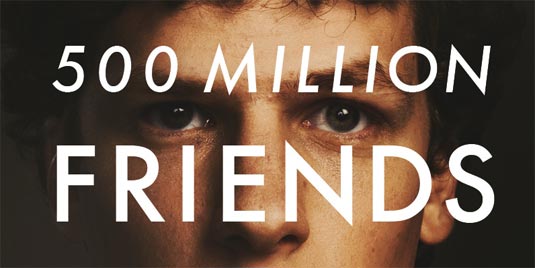
I went to my local video store a couple of weeks ago on a mission. It was time, I decided, to watch The Social Network, the much acclaimed film by director David Fincher (Seven, Fight Club) about the founding of Facebook.

Rarely do my trips to Super-A Video feel like such an event. First of all, Columbia Pictures has gone all out on a gorgeous, deluxe box for this film. I felt like I was in a record store again, holding in my hands, for the first time, a new album I had been waiting for. Some of you will remember what that was like…

On the cover, a host of superlatives from the likes of The New York Times, New Yorker, and Rolling Stone Magazine. “Stupendous!” “Exhilarating!” “Absolutely emblematic of its time and place!” The list of ecstatic declamations was exhilarating in itself. But it also made me nervous. Will it live up to the hype[rbole]?

So this was my Friday night. I dimmed the lights and sank into my couch, prepared for what was, in the educated opinion of many, a defining cinematic event. This is my substitute for romance, I guess. And in this case: no anticlimax.

The film starts at a blistering pace with a scene of two people sitting relatively still. The momentum is in the dialogue, in the intellectual animation of two brains on fire. I watched the movie again on Saturday, this time with a friend, and he was literally on the edge of his seat, concentrating to following the rapid-fire repartee which is the opening salvo of Fincher’s film. And then he said, “Wow. What a way to start a movie.” Certainly makes you pay attention.

Screenwriter Aaron Sorkin (A Few Good Men, TV’s The West Wing), who is known for his dense, tightly scripted approach to writing, has already won the Golden Globe for this piece of work and the Oscar seems likely. But don’t let my description of the opening scene scare you off. The Social Network is not an exhausting experience. It chronicles a moment of great creative outpouring in the lives of brilliant people who think very quickly, and it finds a way to carry you along, and in, to the tale of their accomplishments and relationships.

The DVD extras illuminate what can happen when a great director, writer and actors work collaboratively on a project like this, providing a rare glimpse into the artistic process of an incredible team. Fincher (Golden Globe, Best Director), comes off as an affable perfectionist, admired in spite of the fact that he will do 99 takes of a scene—ie: that electric opening. And the newly feted Jesse Eisenberg, with a host of Best Actor nominations for his role as principle Facebook architect Mark Zuckerberg, seems almost as smart as the genius he portrays.

The other star of this film is Trent Reznor and Atticus Ross’ original soundtrack. At times haunting, at times propulsive, these long-time musical partners (Nine Inch Nails) have created a techno film score that will make your home theatre sing. Never obtrusive, always complimentary, it adds tone and depth, feeling and movement to this film. And it is cool. This is important. Zuckerberg knew that, with Facebook, he was on to something cool. He also knew that there is no more precious commodity—aside from sex—when it comes to marketing to young adults.

The Social Network, too, is that rare constellation of co-factors: it is a document, and example, of pop-culture that is blisteringly smart, sophisticated, exciting, funny, sexy, and cool. It is also a work of art, and for all of these reasons it is, truly, an emblem and anthem of our time.  For the Silo, Chris Dowber.