Did you know that the majority of Ontario Wasaga beaches are no longer protected, including critical piping plover habitat? That’s because the Ontario government recently removed Wasaga’s beaches from the Provincial Park and are giving them to the municipality despite fierce opposition from Ontarians, including many of you.
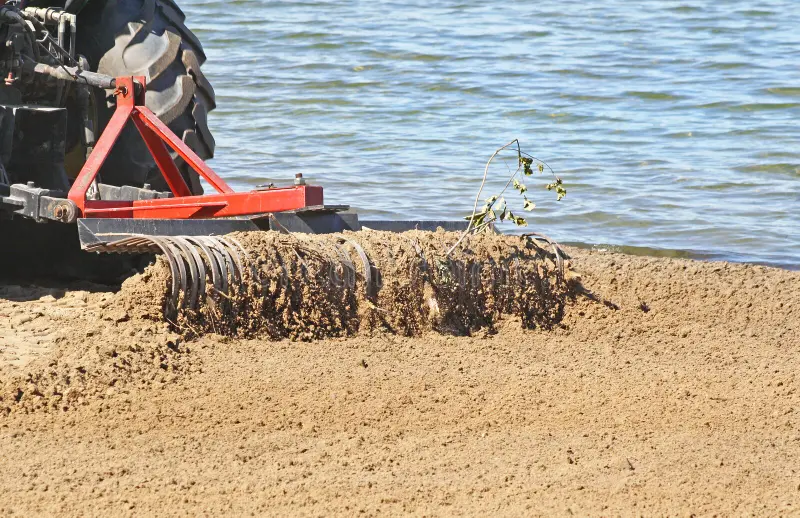
Wasaga’s beaches are the birthplace of 70 percent of all Ontario-fledged piping plovers that have survived to adulthood since the species returned to Ontario in 2007. This irreplaceable habitat is now at immediate risk from destructive mechanical beach and sand dune raking planned by the Town Council for as soon as this spring.
Emergency Order
Although Wasaga’s beaches are no longer in a Provincial Park, there is still a way to protect the piping plover. The Federal government can and should issue an Emergency Order under the Species at Risk Act to protect this endangered shorebird from the destruction of the places where it eats and raises its young.
While this solution seems obvious, ensuring the Federal government does the right thing is not guaranteed. That’s why we urgently need your help. We want to launch a comprehensive public awareness campaign to mobilize Ontarians to push the federal government to fulfill its responsibility and protect Wasaga’s critical piping plover habitat. Will you help us?
Mechanical Raking Of Beaches
Time is running out. The Town of Wasaga Beach has already purchased mechanical raking equipment and announced a development plan that would bring beach clearing and raking to known piping plover nesting and feeding sites.
Mechanical beach raking destroys the natural debris piping plovers need to nest, forage, and hide from predators. Evidence from other Ontario beaches shows that once raking occurs, plovers often fail to return. With only three other active breeding sites left in Ontario, the loss of Wasaga would be catastrophic.
Environmental Defence has successfully fought and saved the homes of this bird before. After years of advocacy, we stopped the illegal bulldozing of piping plover habitat at Saugeen Beach (formerly known as Sauble Beach), and we will use our experience to fight the habitat destruction now threatening Wasaga. We know that only the immediate action of the federal government stands between the loss and the survival of the endangered piping plover on Wasaga’s beaches. The time for action is now.
Tourism Balance Can Be Established
The Town of Wasaga Beach is, and can continue to be, both a thriving home for endangered piping plovers and a world-class tourism destination. Together, we must demand that the federal government issue an Emergency Act under the Species at Risk Act and prevent the irreversible loss of Wasaga’s piping plover habitat. We hope we can count on your support by clicking here.
From toothpaste to shampoo, to all-purpose cleaner and dish soap, cleaning and personal care products are essentials that we use every day.
Whether we choose a product based on the price or the brand, we often don’t realize that the ingredients in these products can contain harmful ingredients not indicated on the labeling.
Findings from focus groups conducted by Environics Research on behalf of Environmental Defence show that long-term health impacts are not at the top of consumers’ minds when choosing which cleaning or personal care products to buy. That’s not because people don’t care about the chemicals that they’re exposed to, but because interviewed Canadians trust that the products found on store shelves are tested and proven to be safe by government agencies and industry. Sadly though, under current regulations Canadian manufacturers don’t need to prove that chemicals are safe before they’re added to products. (Listen to Executive Director Tim Gray on Radio Canada International speak about this issue).
Cleaning products such as window, counter and toilet bowl cleaners are not required to have a full ingredient list. Although an ingredient list is required on cosmetics and personal care products, it is often incomplete. What many people don’t know is that in order to get that citrus-y or fresh scent found in our deodorants, cleansers and moisturizers, manufacturers are only required to mention “parfum” or “fragrance” on the label without listing the actual chemicals. This is due to an outdated legal exemption that deems scents a “trade secret”.
It’s on you to look it up to see what you’re ingesting or putting on your skin…but we’re not scientists. Within reason, they should be putting warnings on stuff.
Why Canada needs to strengthen its product labeling rules
Warning labels have been used for decades as a useful tool to inform consumers of potential health risks associated with using a certain product. Mandatory warning labels on tobacco products have helped reduce smoking rates around the world by informing the public about the dangers of smoking.
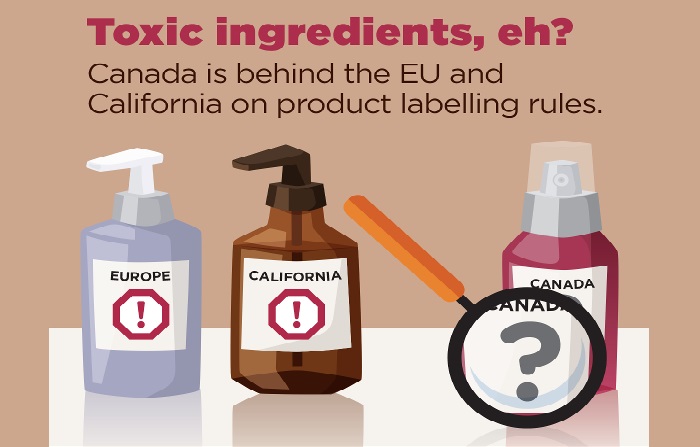
Another example comes from Proposition 65 in California which requires manufacturers to put warning labels on their products if they contain specific chemicals of concern, such as BPA. To avoid warning labels, manufacturers are reformulating their products to remove harmful chemicals.
Policies in the European Union require the use of graphic health warning labels on cleaning products to caution consumers of possible skin irritation, chronic health hazards and if a product may be toxic to aquatic life.
Canada needs to step up and do the same. That’s why we are calling on the federal government to update its labeling rules and make full ingredient disclosure and easy-to-understand warning labels a reality.
What you can do?
1. Make your voice heard and tell the Canadian government to strengthen Canada’s toxics regulations.
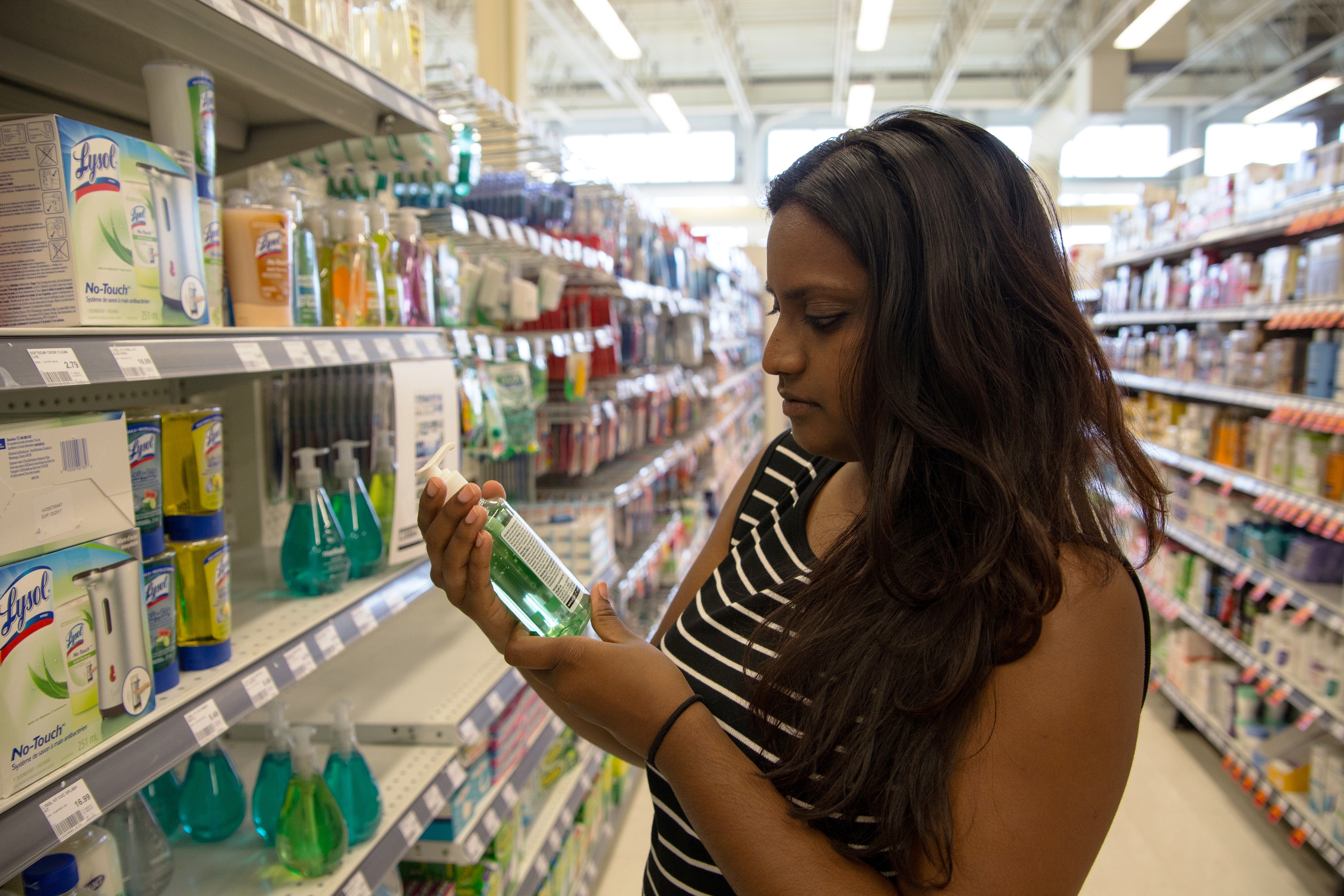
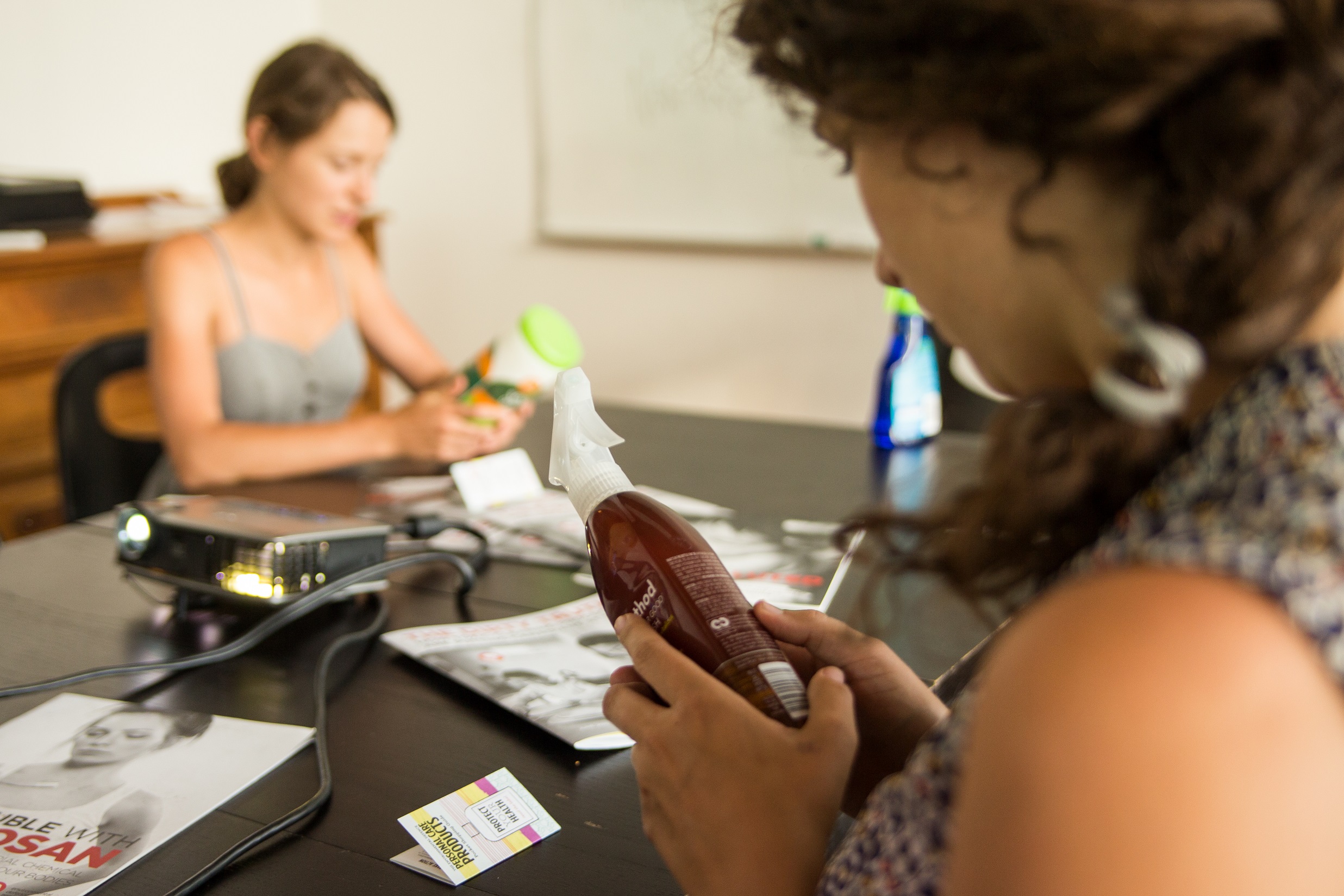
2. When you shop for cleaning or personal care products, always check the ingredient list (if provided) for harmful ingredients – especially those listed in our Toxic Ten Pocket Guide.
3. Go the extra step and look for eco-certified alternatives that use plant-based ingredients instead of harmful chemicals.
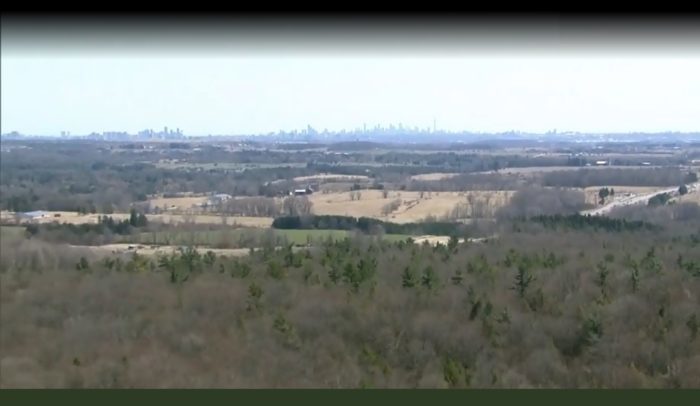
Last week, a video was released showing Ontario’s PC Party leader Doug Ford promising to open up a “big chunk” of the Greenbelt to allow development on its protected areas, an idea he attributed to the “biggest developers in this country.”
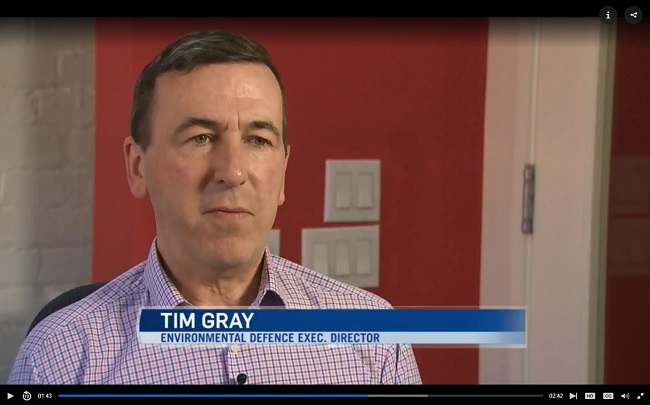
Our Executive Director, Tim Gray responded in the news that this would have severe consequences and allow land speculators to build massive subdivisions, at immense profits, on farms, forests and natural areas currently protected in the Greenbelt.
Watch Tim Gray’s interview on CTV news.
Ontario’s PC Party leader Doug Ford later reversed his position. This is consistent with polls that suggest more than 89 per cent of Ontarians support the protection of the Greenbelt. Ontarians like you.
The good news is that now all parties support the Greenbelt and recognize its immense values. Thank you for your help in securing the future of farmland, forests and water systems in Ontario.
Over the last few months, many of you signed petitions supporting expansion of the Greenbelt. Your voice matters now more than ever. We encourage you to ask candidates questions on their views during the upcoming provincial and municipal elections.
It’s time to set the record straight.
The Greenbelt does not constrain housing supply or cause high house prices. In fact, municipal data shows that there is enough land available to provide for housing development within existing Greater Toronto and Hamilton Area urban boundaries until 2031.
The best way to address housing prices and supply in our region is by directing growth to existing urban areas, limiting sprawl, and building different kinds of affordable homes close to transit.
Read our latest blog highlighting 7 facts about the Greenbelt and what really impacts housing prices in the Greater Toronto and Hamilton Area.
Thank you,
Susan Lloyd Swail
Livable Communities, Senior Manager