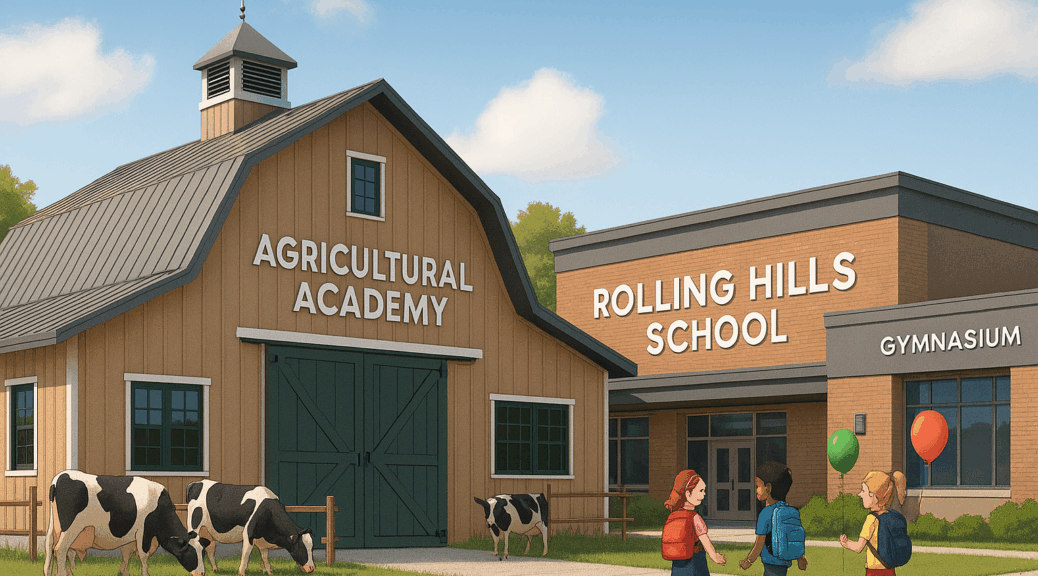
Rolling Hills School: Where Classrooms Meet the Fields
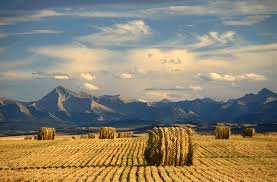
ROLLING HILLS, Alberta — On a crisp fall morning, the hum of tractors in the distance blends with the chatter of children filing into Rolling Hills School. For many of these students, the day began not with cartoons or cereal, but with feeding calves or checking irrigation lines before the bus arrived. Here, agriculture isn’t just a subject in the curriculum—it’s the backbone of the community, and the school has embraced that identity wholeheartedly to create a unique practical learning environment that is innovating and providing students with real world skills.

A School Where Learning Meets The Land
Rolling Hills is a small K–9 school in a hamlet of just a few hundred people, surrounded by endless prairie fields. “Our kids live and breathe farming,” says one teacher. “It only makes sense that their education reflects that.”
From science lessons on soil composition to math problems based on crop yields, the school finds ways to connect classroom learning to the realities of rural life. Students don’t just read about ecosystems in textbooks—they see them unfold in the fields outside their windows.
The Community as a Classroom
What sets Rolling Hills apart is the way the wider community steps in as co-educators. Parents and neighbors, many of them farmers, regularly bring their expertise into the school. A rancher might arrive with a trailer of calves for a hands-on biology lesson, while a grain farmer explains the mechanics of GPS-guided combines during harvest.
“It’s not unusual for a student to raise their hand in class and say, ‘That’s how we do it on our farm,’” notes the principal. “That lived experience enriches the whole classroom.”
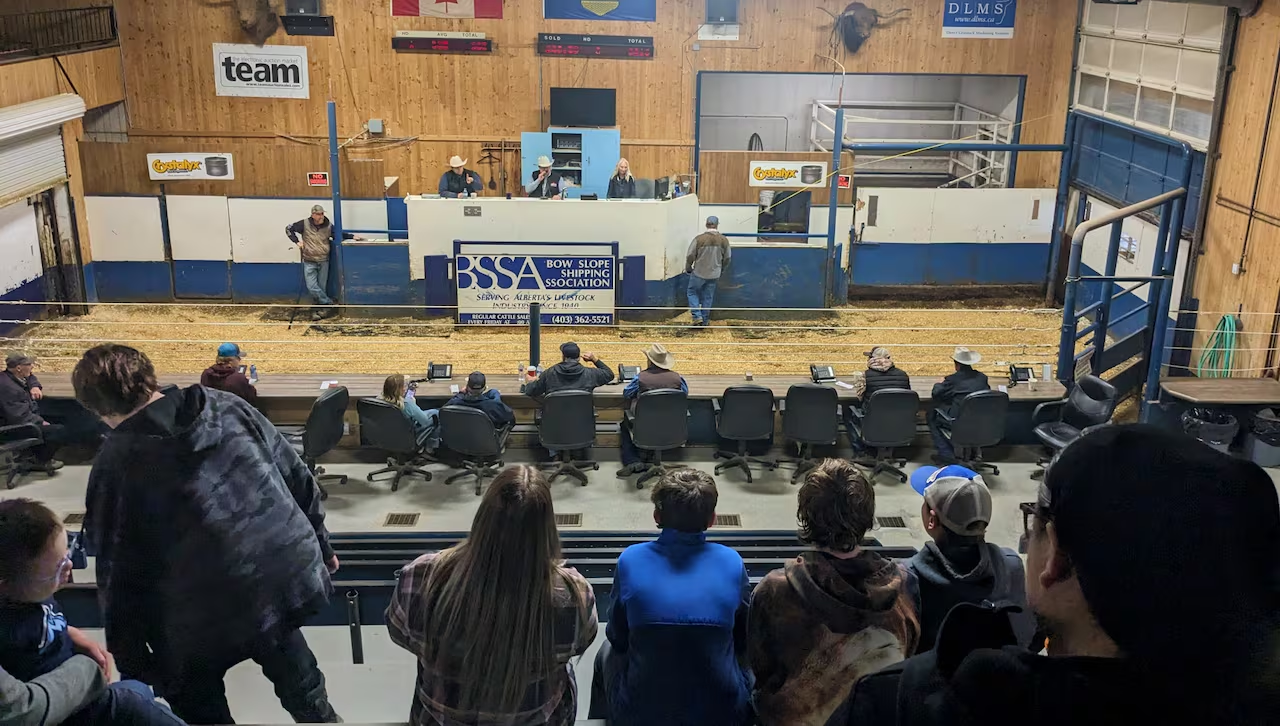
Students attend a live stock auction.
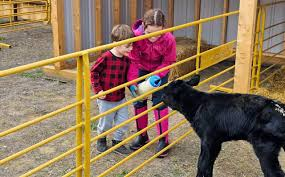
The school also doubles as a gathering place. Harvest suppers, farm safety days, and 4-H showcases bring families together, blurring the line between school events and community traditions.
A New Chapter: The Agricultural Academy Barn
This year, Rolling Hills School received a $10,000 cad grant to support the construction of an Agricultural Academy Barn on school grounds. The barn will serve as a hub for hands-on learning, giving students the chance to work directly with animals, crops, and agricultural technology in a structured environment.
“This is a game-changer for us,” says a staff member involved in the project. “The barn will allow students to experience agriculture in a way that goes beyond the classroom or even their family farms. It’s about creating a shared space where learning, innovation, and tradition come together.”
The barn is expected to host projects ranging from animal care and feed management to experiments in sustainable farming practices. For younger students, it will be a place to nurture curiosity; for older ones, it will provide practical skills that could shape future careers.
Learning by Doing
The barn will complement existing initiatives like the school garden, where students plant, tend, and harvest vegetables. Together, these projects reinforce the idea that education is not just about absorbing information but about applying it in meaningful ways.
Older students already take on complex projects—experimenting with irrigation techniques, studying crop rotations, or shadowing local farmers. With the barn, these opportunities will expand, offering a year-round space for agricultural exploration.
Growing More Than Crops
Agriculture teaches patience, responsibility, and resilience—qualities Rolling Hills School works hard to instill. Students who care for animals through 4-H or classroom projects learn that consistency matters, whether it’s feeding livestock or showing up prepared for class.
Environmental stewardship is another theme. With water scarcity and soil health pressing concerns in southern Alberta, the school emphasizes conservation and sustainable practices. “We want our students to see themselves as caretakers of the land,” says a teacher. “That’s part of their legacy.”
A Model for Rural Education
In an era when many rural schools struggle to maintain enrollment and identity, Rolling Hills stands out as a model of resilience. By leaning into its agricultural roots—and now investing in the Agricultural Academy Barn—the school has created a learning environment that is both relevant and inspiring.
Graduates leave with more than academic knowledge. They carry with them a sense of pride in their heritage, practical skills rooted in real-world experience, and a deep connection to their community.
As one parent put it during a recent harvest supper: “This school doesn’t just teach our kids—it raises them, alongside the land that raises us all.” UFA Foundation/ Copilot.

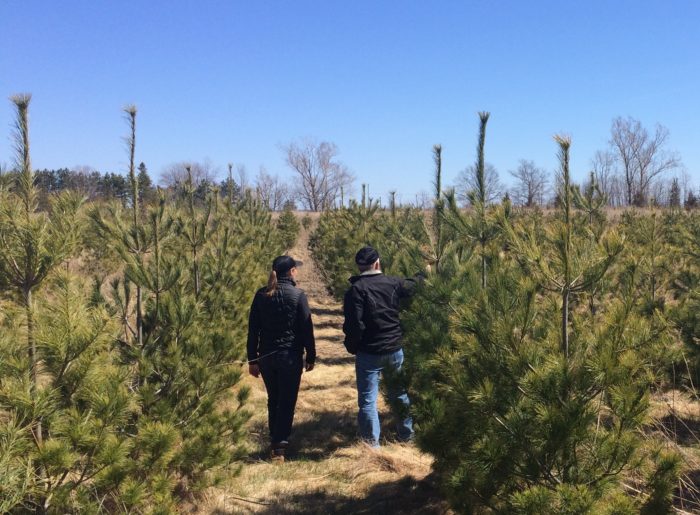
 Spring is for new ideas. Do you have idle land or extra acreage that could be enhanced? Planting trees is an excellent way to add value to your property and has never been easier. If you have 2.5 acres or more of open land, you may be eligible for the 50 Million Tree Program, and the trees are planted for you!
 About Forests Ontario