
A moving estimate is more than a number. It is a starting point for understanding what a move will involve, what information the mover needs, and which details could affect the final bill.
As the owner of Born to Move, I believe customers should understand how their belongings are being assessed and what is included in the estimate before they commit to a moving company. A little preparation on the front end can make it easier to compare options and avoid misunderstandings.
A while ago, a customer booked a move with us for a “studio apartment.” On paper, that sounds like a small job: a couple of movers, a few hours. But when we reviewed his photos and video with our AI estimating tool, the numbers didn’t match. The “studio” was a single open room of more than 1,000 square feet on the ground floor, filled with large furniture and enough belongings for at least a large one-bedroom apartment. Because we caught it before moving day, we planned the right crew, truck and time from the start. If we had gone by the word “studio” alone, we would have shown up understaffed, the move would have taken far longer, and the customer would have faced a much bigger bill and a stressful day. The lesson is simple: a label like “studio” or “two-bedroom” tells a mover very little. What matters is how much you actually own.

Here are five questions every customer should ask before booking a move.
1. What information was used to prepare the estimate?
An estimate is only as useful as the information behind it. If a mover has not received a complete inventory or enough information about the home, the estimate may not reflect the full scope of the job.
Before accepting a quote, explain what you plan to move. Include furniture, boxes, storage areas, outdoor items and anything that may require special handling. If you expect to add items before moving day, ask how those changes should be communicated.
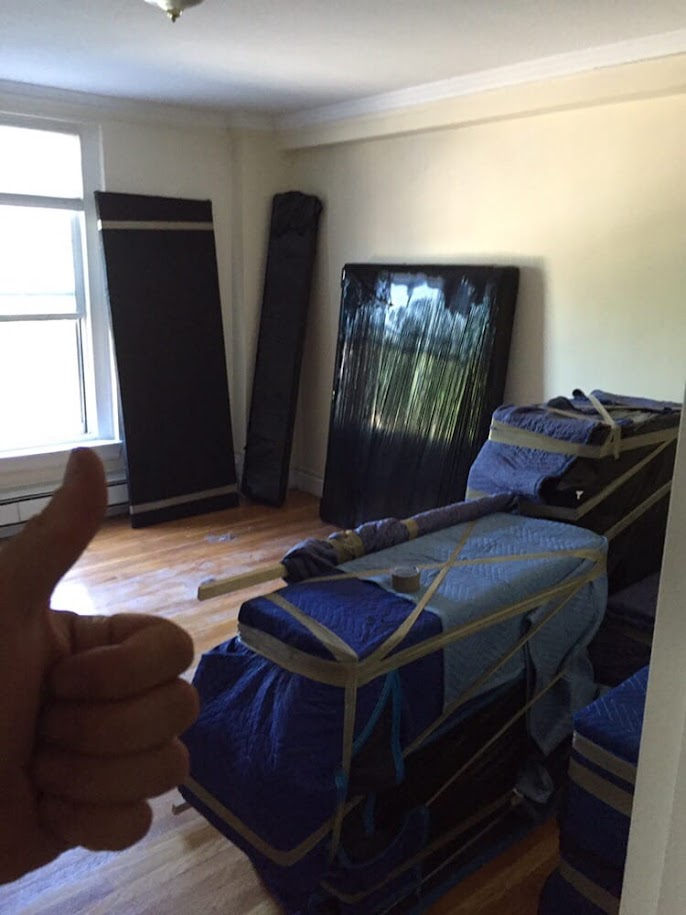
2. Is the estimate based on an inventory, cubic footage or another method?
Customers may receive estimates prepared in different ways. Some approaches rely on an inventory of individual items; others use information about the overall volume of the belongings or other job details.
Ask the mover to explain the method in plain language. If the estimate is based on cubic footage, find out how the volume was calculated and whether the inventory includes everything you intend to move.
The goal is not to assume that one method is always best. It is to understand what the estimate represents and what information might change it.

3. What is included—and what could cost extra?
Ask for a clear explanation of the services included in the estimate. Depending on the job, relevant details may include packing, materials, stairs, long carries, bulky items, access restrictions, storage or other services.
Do not assume that every company defines its services in the same way. Request written clarification for anything that matters to your move. If you live in a building with booking requirements or restricted loading access, raise those details before moving day.

4. What happens if my inventory or circumstances change?
Plans change. You may pack additional boxes, decide to move another piece of furniture or discover items that were not included in the original inventory.
Ask how the company handles changes, when you need to report them and whether a revised estimate will be provided. Sharing updates early gives both sides a better opportunity to plan.
Customers should also tell the mover about access details that may affect the job, such as stairs, elevators, parking limitations or building rules.
5. How should I compare estimates from different companies?
The lowest number is not necessarily the most useful basis for comparison if the estimates cover different services or rely on different assumptions.
Compare the scope of work, inventory, services, exclusions, timing and terms. Ask each company to clarify anything that is missing or difficult to understand. Review the written agreement and make sure you know whom to contact with questions.
It is reasonable to ask a mover to explain how the estimate was prepared. A professional conversation before booking can help establish expectations on both sides.

A better move starts with clearer information
Preparing an accurate inventory, sharing relevant access details and asking direct questions can help customers make more informed decisions. It also gives a moving company a clearer picture of the work involved.
My advice is simple: do not compare estimates by price alone. Understand what each estimate includes, ask questions before booking, and keep the details in writing.
For the Silo, Dmitrii Malashkin.
Dmitrii “Dima” Malashkin is the Founder and Owner of Born to Move, a Boston-based moving company serving Massachusetts, Rhode Island, New Hampshire, Connecticut, New York City, Chicago and Los Angeles, and a SmartMoving Best of Movers 2026 honoree. He is also Co-Founder and CEO of VirtualEstimateAI, Inc., which uses AI and computer vision to calculate the cubic footage of household belongings from photos and video.