Tag Archives: lingo

New Dictionary Offers Glimpses Of North American Life

Words like “sweatshirt” and “motel” are so common in Americans’ and Canadians everyday speech that it’s hard to imagine they were ever new. Yet in 1925 those were among the words just coming into regular use in U.S. society, according to Merriam-Webster .

A century later, in 2025, the Springfield, Massachusetts-based company issued the 12th edition of its Collegiate Dictionary, adding 5,000 new words to the volume that the editors call an “up-to-date reference for the current, active vocabulary of American English.”

The new words in Merriam-Webster’s first new Collegiate Dictionary in 22 years offer insight into how American English and the U.S. culture that influences it have evolved over the past two decades.

New additions, like “teraflop,” a measure of computer calculating speed, reflect the technological innovation  that is a hallmark of American society.

In a nod to the internet’s continuing influence on North American life, Merriam-Webster President Greg Barlow notes that 1 billion visitors search the company’s website for definitions each year. “But people still love books,” Barlow said, announcing the new Collegiate Dictionary is “thoroughly updated and redesigned for students, professionals and word lovers.”

“Telework” is among the new words that reflect changing cultural trends. Others include “cold brew,” for coffee steeped 12 to 24 hours at room temperature or below, and “farm-to-table,” for food producers sell directly to consumers.

And there are new words for romance. “Love language,” a noun, is “a person’s characteristic means of showing love or care for another,” while “friend zone” is a state of friendship where one person’s romantic interest is unreturned.

The inclusion of informal, slang terms speaks to Merriam-Webster’s mission to “tell the truth about words by describing the language as it’s actually used.” While “rizz” conveys charisma or charm, “adulting” means performing the tasks of a responsible adult. “Doggo” even earned a place as an informal, relaxed term for man’s best friend. (U.S. State Dept./D. Thompson)


Words Are Powerful. Use With Care, Media Expert Warns

See what we mean?

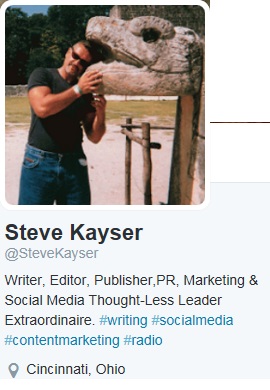
It’s easy to take words for granted; most of us use them as effortlessly as we breathe. But words hold power that we often overlook at our own peril, says media expert Steve Kayser.

“Language is the code that translates ideas so they can be shared. They give us an advantage in the natural world, which has enabled us to evolve as human beings,” says Kayser, author of “The Greatest Words You’ve Never Heard,” (hyperlink below).

“But in our personal and public lives, we are inundated with empty words; words that are used incorrectly; words that are drained of all meaning; and so fail to accurately convey the intended message; and words that carry unwarranted connotations and stigma.”

Words can change lives, destroy relationships and alter the course of entire civilizations, Kayser notes.

[A must read about the power of word usage via Toltec wisdom:  thefouragreements CP]

He shares examples of what to avoid, what to embrace and what to reconsider when trying to make your language more effective. 

•  Avoid John Kerry’s “crystal clear” nugget. Back in 2016 amid the ongoing foreign policy crises in the Middle East, secretary of state John Kerry, who has a linguistic reputation for long-winded political jargon, seemed to contradict himself in a single breath.

“I want to make this crystal clear,” he said. “The president is desirous of trying to see how we can make our best efforts in order to find a way to facilitate.”

It’s this kind of language that makes people cynical about our elected officials – when a politician’s mouth is moving and producing sounds, but he’s not saying anything. Or, if they are saying something, they use words that are overused and unnecessary. Businesses, too, can be notorious for this using corporate gobbledygook to obfuscate all meaning, Kayser says.

“What people want is authenticity in language, to say what you mean and mean what you say.”

•  Emulate Mark Twain, the “straight shooter,” who employed wit, charm and incisive commentary in communications. No, most people cannot pick up where Twain, arguably America’s greatest writer, left off. But language and the way in which it’s used can be highly contagious. If you want to inspire authenticity and engage employees and friends alike with genuine communication, consider styling your speech more along the lines of Twain, rather than a dry business manual:

“Twenty years from now you will be more disappointed by the things that you didn’t do than by the ones you did do,” Twain wrote. “So throw off the bowlines. Sail away from the safe harbor. Catch the trade winds in your sails. Explore. Dream. Discover.”

•  If you’re in business, there are advantages to embracing the jargon. “Can we blue sky this synergy later?” “Cascade this to your people and see what the pushback is.” … Business lingo could fill a dictionary, and in many cases, requires one! Unlike political babble, business jargon has its purpose, according to a new study from the University of Southern California’s Marshall School of Business. Business speak is code for “upper management material,” showing that the speaker is in a company’s inner circle and is a “big picture” person, the study reveals.

“Some of the language you come across in the business world can seem absurd to outsiders; some of these phrases, however, may actually reveal ambition in an employee,” Kayser says.

Matthew 15:11 Bad Use of Language In Bible

“The beauty of language is that it’s a common tool for everyone to use, yet it can be tailored to an individual. My primary suggestion is to do that in a way that authentically reveals your meaning.”  

Steve Kayser Author Radio Host

About Steve Kayser

Steve Kayser is an award-winning writer, editor, publisher, former radio host and founder of Kayser Media. He has had the great fortune to interview and collaborate with some of the best minds in the business world, and his eclectic approach to public relations and marketing has been widely documented. He recently published “The Greatest Words You’ve Never Heard,” (www.stevekayser.com).