Take it from our friends at rennlist, Porsche has built some truly remarkable engines over the years. The air-cooled 911/83 engine that powered the 1973 911 2.7L Carrera RS is just one example. But if you were asked to go on and list the ten all-time greatest Porsche engines there is a good chance the list would be dominated by various Mezger engines.
The 12-cylinder found in the Le Mans-winning Porsche 917? That’s a Mezger. The 3.6L flat six in the 996 GT3? That’s a Mezger. The 4.0L in the 997 GT3 RS 4.0? That’s a Mezger.
How about going all the way back to the original 901/911 engine? Yup, that’s a Mezger.
But what is a Mezger engine, and why are they so special? That is what we are going to discuss here today. We have come up with 9 reasons why the Mezger engine is so special. And there is no other place to begin the discussion than the legendary man behind these engines, Hans Mezger.
1. Hans Mezger
A single slide can in no way capture all that the legendary Hans Mezger accomplished. He joined Porsche back in October of 1956. He loved Porsche sports cars, but his first job was working on diesel engine development. In 1960, he began to work on the type 753 flat-eight engine for Porsche’s first Formula 1 car. Soon after he designed the 6-cylinder boxer engine for the 901/911. He was then promoted to the head of race car design. He was responsible for the 917 and the 12-cylinder engine that powered it to Porsche’s first Le Mans victory in 1970. He then was responsible for the turbocharged 917/10 and 917/30 cars that dominated Can Am. He designed and developed the six-cylinder turbo engines for the Type 935 and 936 race cars.
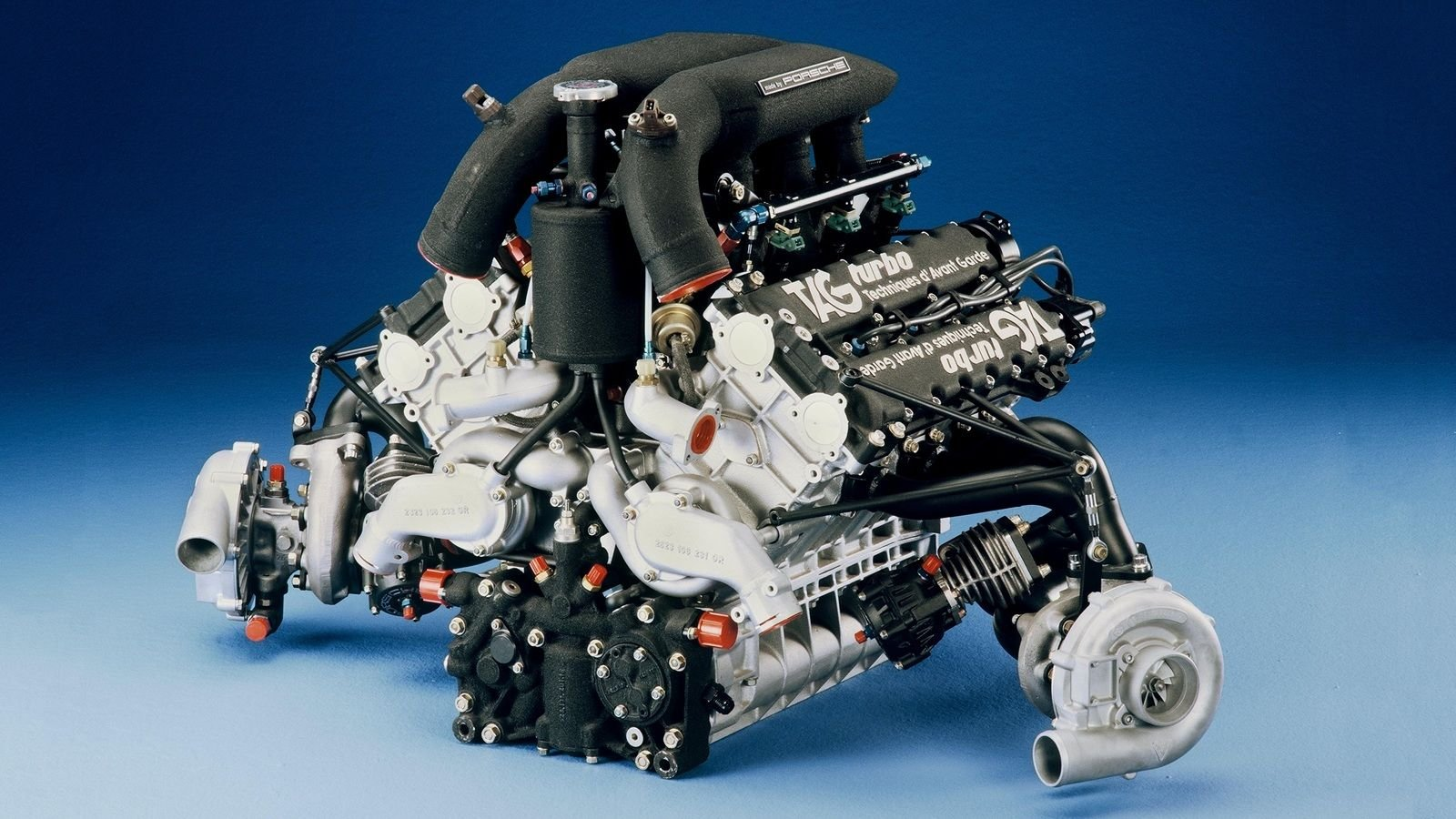
Mezger designed the 1.5L V6 engine known as the TAG Turbo that powered the McLaren Formula 1 cars to championships in 1984, 1985 and 1986. His engines would eventually be found in the most performance-oriented Porsche road cars such as the 996 GT3, GT2 and Turbo. Mezger remained closely connected with the Porsche brand until he passed away on June 10, 2020, at the age of 90.
2. Motorsport Pedigree
Mezger built engines for the most demanding races in the world. His engines that were put into Porsche road cars have the same engineering approach. These engines are designed for long-term high performance. They are essentially overbuilt for road use. These engines were not designed to meet a certain price point. They were designed to provide the best performance. There were no corners cut with any Mezger engine.
3. Birth of the GT3
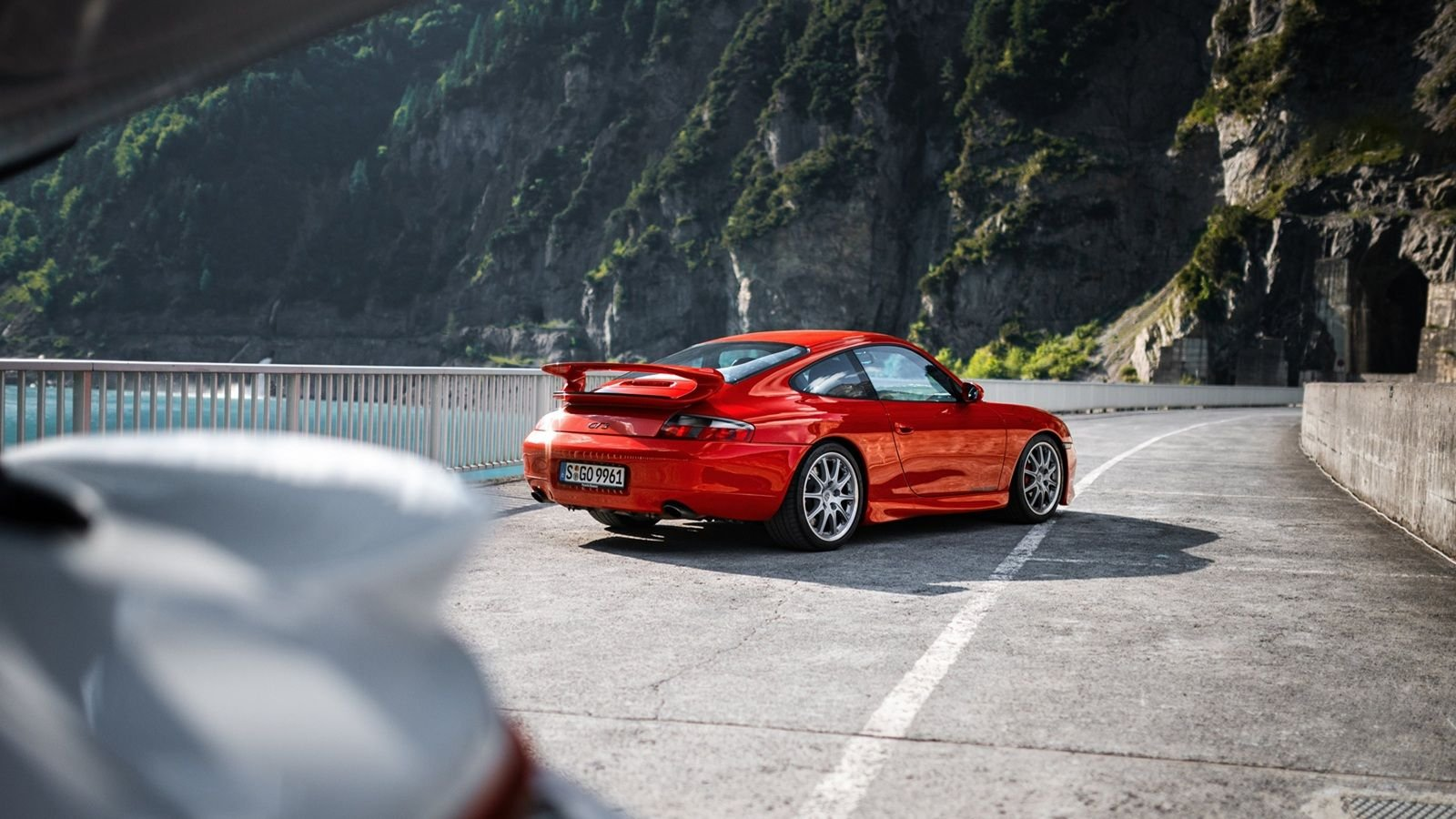
Many people view the 911 GT3 models as the pinnacle of the 911 range. One of the main reasons why is because of the track-focused, high-revving flat-six engine out back. It all started with the M96.79 engine found in the 996 GT3. The European market got the GT3 a few years before us and had the M96.76 engine, but the point is the same. The GT3 legend began in large part because of the incredible engine that powered it. This dry sump engine could rev to 8,200 rpm all day long. The engine was derived from the Porsche 911 GT1-9,8 which happened to win a little race called the 24 Hours of Le Mans. The street version of this engine is nearly bulletproof,f and the GT3 legend was born.
4. Turbocharged Versions
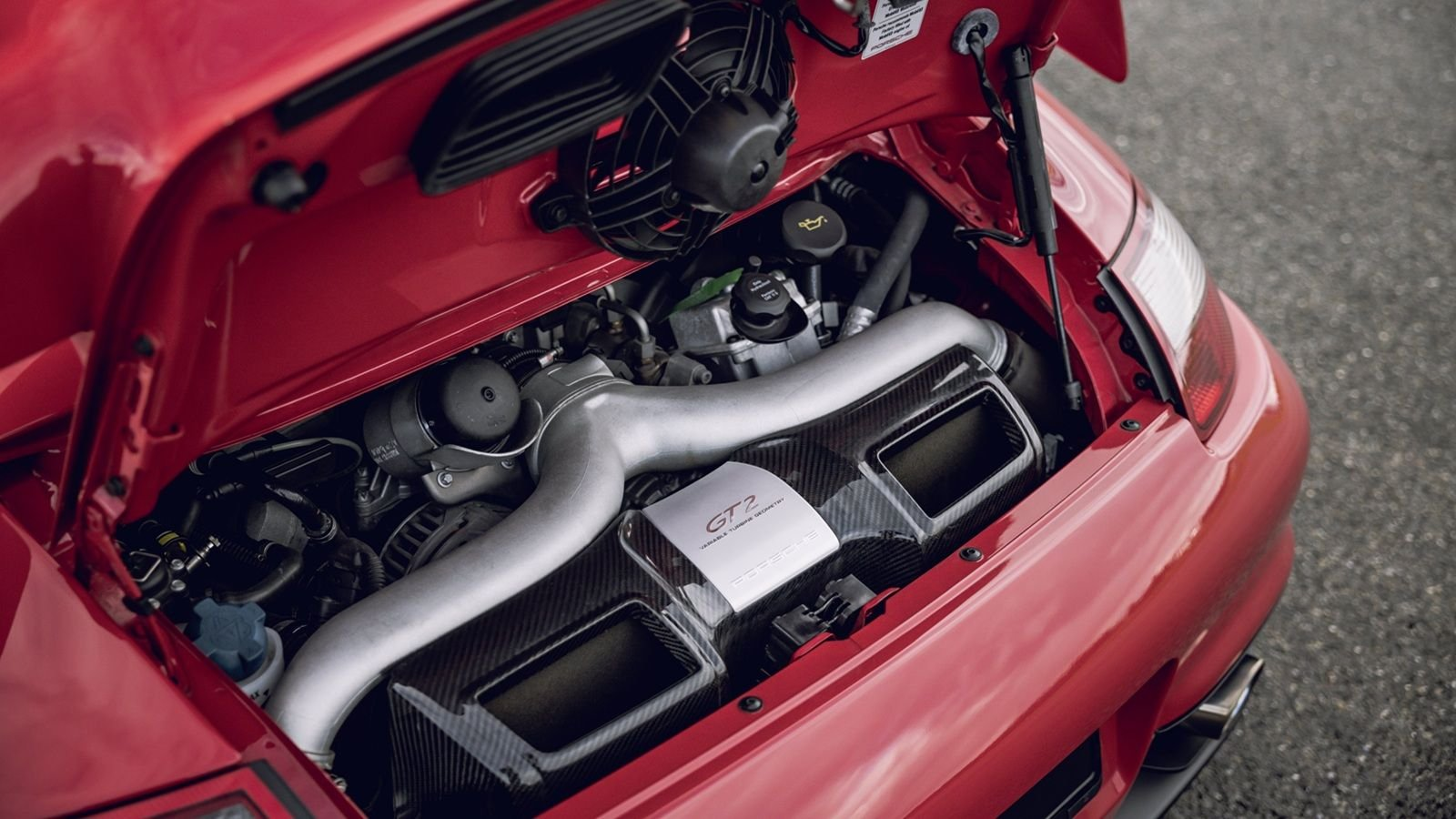
If the GT3 was just not powerful enough for you, Porsche had a solution. The GT2 and Turbo also used Mezger engines, but with a pair of turbochargers. They are not as high-revving as the normally aspirated units, but they offer more power and a lot more torque. And these engines are just as reliable.
5. Reliability
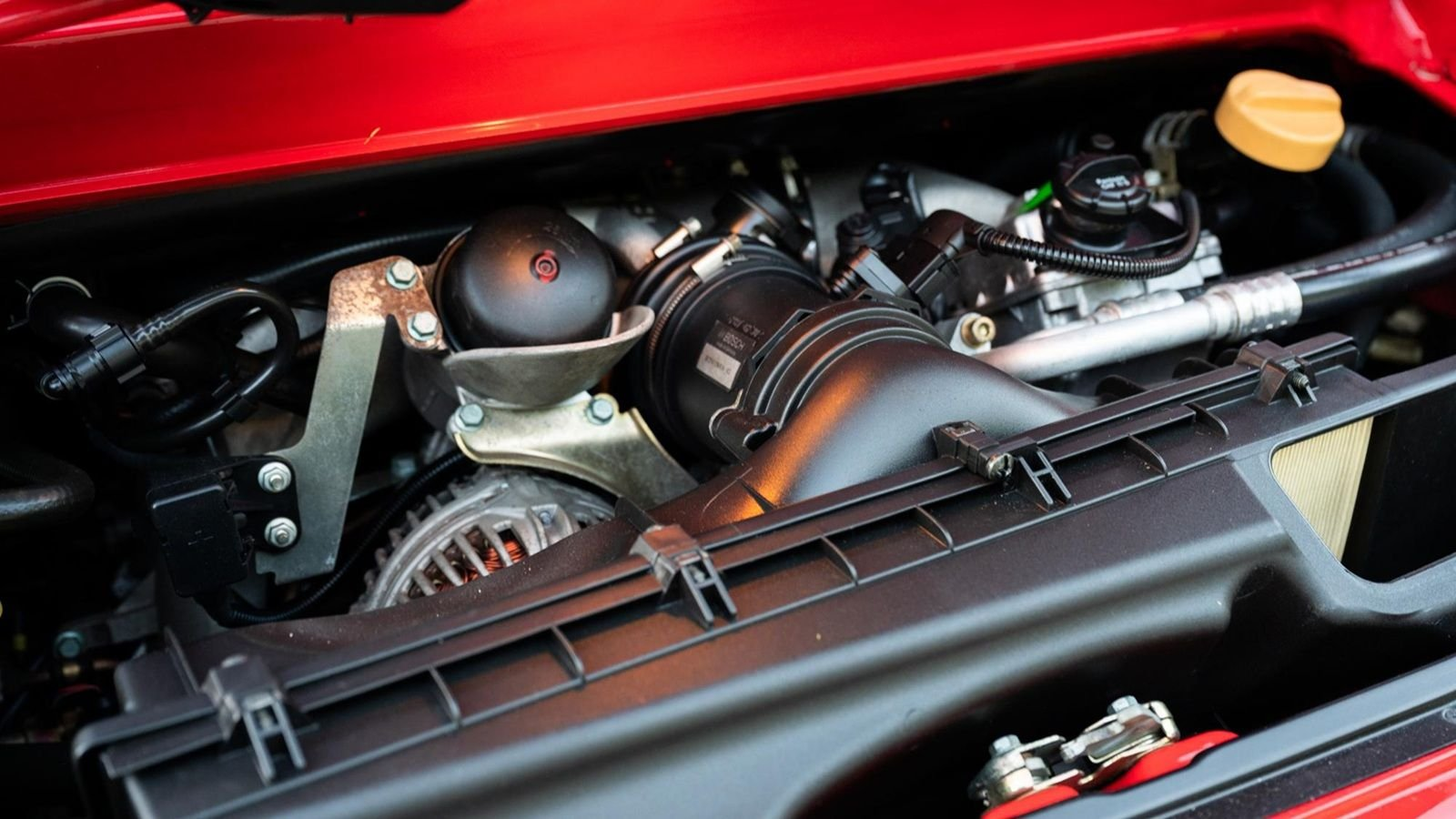
The Mezger engines are not just more powerful but also more reliable. The knock on the M96 and M97 engine series has long been the IMS bearing. But the Mezger versions don’t have the same design. Instead, they use plain bearings that are pressure-fed engine oil for lubrication. These bearings don’t fail. That alone makes the Mezger significantly more reliable.
6. Sound
Even if these engines were not more durable and powerful, people would buy them for their sound alone. It is not just their high-revving nature in naturally aspirated form. But the design of the engine itself, with features such as dual timing chains that give these engines a more characterful sound. They are more gravely and “motorsporty” sounding than the non-Mezger engines.
7. Power Upgrades
These engines were overbuilt and as such, are typically able to comfortably handle more power if you want to modify them. The turbo versions can easily be tuned to reliably make more power. Of course, every engine has its limitations, but the Mezger engine is robust enough to make more power without hurting reliability.
8. The 997 GT3 RS 4.0
Many people consider the 997 GT3 RS 4.0 to be the best Porsche 911 road car of all time. It just so happens to be equipped with the last Mezger engine. A 4.0L jewel making nearly 500 naturally aspirated horsepower. The engine revs to 8,500 rpm and has more character in it than an entire truckload of new 992.2 Carreras. The 4.0L marked the end of an era. It is the last and possibly the best road-going Mezger engine ever produced.
9. Rarity and Desirability
Not every Porsche got a Mezger engine. Technically, all the air-cooled 911s have a Mezger-designed engine, but they have been out of production for over a quarter of a century now. Only a small percentage of water-cooled Porsche engines were a Mezger design. And Porsche is not building any more of them. So, what is out there today is all that will ever be out there. These engines are found in the most desirable Porsche models, and these cars are collectible today and will continue to be collectible for the foreseeable future. If you buy a Porsche with a Mezger engine today, the chances are good that it will be worth the same or even more tomorrow. For the Silo, Joe Kucinski.
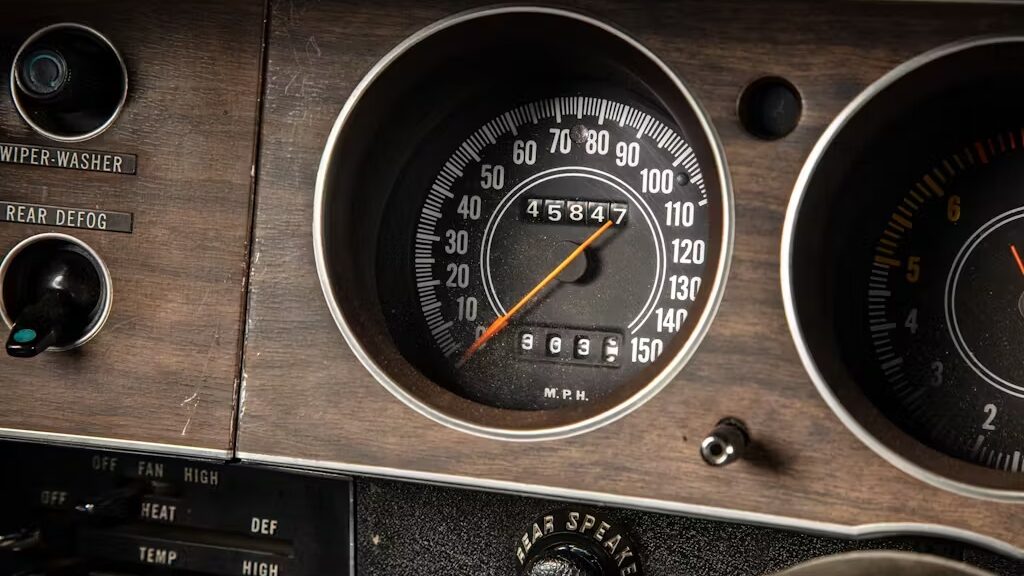
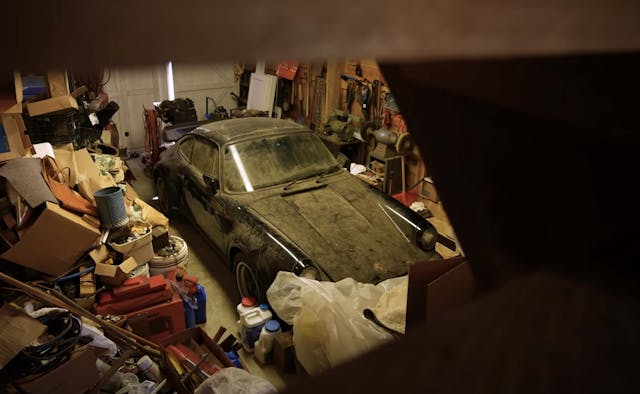
The trouble is that automobiles, like everything else, are subject to the law of entropy. “Preservation” is about more than just keeping the odometer reading low. “Like-new” means something different after one, two, or three decades, even if the car still has plastic wrap on the steering wheel. The paint, upholstery, and trim may look flawless—but what about the bits you can’t see, like the complex systems and different materials that make up the driveline? Just because a car is like-new doesn’t mean it actually is new, or that you can just hop in and drive it home. We decided to call up some experts across the industry to answer a big question: What exactly is happening to a car when it sits?
The Henry Ford Museum/Wes Duenkel
First off, what’s happening to it while it sits depends on where it sits. Imagine a car in a museum—perhaps the Le Mans–winning Ford Mark IV at the Henry Ford Museum in Dearborn, Michigan. Now, think of that old pickup you once saw sitting in a field. Technically, they’re both decaying. One is just decaying far more slowly than the other.
The race car lives in a perfectly curated world. The temperature in the museum is consistent and the humidity is just so: Low enough to deter moisture-loving insects and mold, high enough to prevent the tires and other rubber seals from drying out. A museum car’s tires may barely touch the ground, because the chassis sits on jack stands. The fluids in the car—fuel, coolant, oil—have either been drained or supplemented with stabilizing agents. The upholstery is regularly vacuumed to eliminate pests. Dust barely gathers on the body before someone gently sweeps it off.
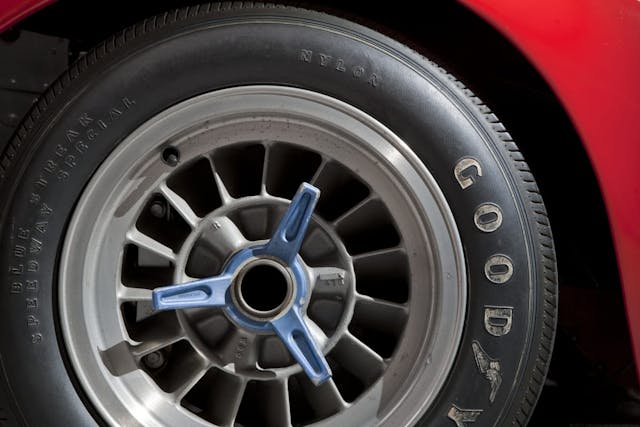
The wheel of The Henry Ford’s 1967 Ford Mark IV race car, with its original tire. The Henry Ford Museum
The pickup, meanwhile, has been at the mercy of the weather for who knows how long. The tires have cracked and rotted. Salty air might be corroding metal. Insects and/or rodents might be living inside the cabin and engine bay. The engine’s cylinders may be dry, the gas in its rusty fuel tank a kind of goo, the oil gray instead of honey-colored. Its paint may be bubbling, its carpets mildewing.
Those are two extreme examples, of course, but when it comes to the condition of a car, the storage (or display) environment makes all the difference, whether the car is Henry Ford’s original Quadricycle from 1896 or a brain scientist’s sporty Sentra from 1992. To keep a “like-new” car living up to its descriptor, the temperature must be consistent; otherwise, even the most immaculate car will bake, sweat, and/or freeze. The moisture in the air needs to be high enough to slow the decay of organic materials like tires but low enough to protect from rust. The room itself needs to be well-sealed to deter pests. The vehicle also needs a barrier (or two) between the paint and the dust, dirt, and grime that will accumulate. And that’s only the parts of the car you can see …
The Odometer Doesn’t Tell the Whole Story
Tom’s 16,000-mile/ 25,750-kilometer Porsche, where he found it. Youtube / Hagerty
No one is more familiar with finding automotive diamonds in rough storage situations than Tom Cotter, known as The Barn Find Hunter. When I called him to discuss this story, the consequences of bad storage were especially fresh on his mind: He had just bought a barn-find car (a 1986 Porsche 930 Turbo) with 16,000 miles. “That’s the good news,” he said. “The bad news is that it has not been driven since 1996, so nearly 30 years. And even though it had a plastic sheet on it, somehow it got filthy. Filthy. My heart breaks.” Even worse, the windows were open, and the car was infested with mice. It needs a thorough recommissioning: brakes, gas tank, fuel lines, fuel injection unit, fuel injector, fuel pump—and those are just the major areas, says Tom. He’s still in the process of figuring out how much the car needs, but if everything needs to be replaced, the work could cost as much as $40,000 usd/ $58,000 cad. Oh, and he’ll need a new set of tires—the car was parked on its original set from 1986.
“Just because a car has low miles doesn’t mean it was well cared for,” says Cotter. “Cars go bad when they sit.” A perfect storage environment and a sedentary life don’t guarantee stasis, either: “There are things that happen inside the systems of a car that break down, like the rubber in a brake system or the rubber in our fuel system. It doesn’t matter if the car is hot or cold or clean or dirty, those things are going to break down.” One interesting system that is especially prone to degrading when a car sits is the exhaust, he says. “For every gallon (3.785 liters) of fuel that’s burned in a car, a gallon of water comes out the tailpipe. It’s just part of the combustion process. And so if you run the car and then turn it off and park it for 20 years, you’ve got at least a gallon of water (3.785 liters) sitting in the exhaust system—most of it, in the muffler. Unless it’s made of stainless steel or something, it’s going to just rot right out. There’s really nothing you can do about that.”
The fluids and the metals in a car are often conspiring against each other. “One of the biggest challenges you have managing large collections—and with cars that sit, too—is coolant system corrosion,” says Scott George, curator of collections at the Revs Institute in Naples, Florida, who knows a thing or two about keeping old cars in peak health. “You’ve got brass, copper, aluminum, iron, steel, all coming in contact with water, and it can create a battery of sorts. It can almost create its own internal energy, which can attack certain metals that are most vulnerable,” like the vanes in a water pump, which are often made of a different metal than the pump itself. Using antifreeze doesn’t eliminate the problem: Those systems can corrode, too, damaging hose connections and water chambers in cylinder heads. “Corrosion in radiators, and things that attack solder and solder seams, are also a big challenge for anybody with large collections.”
Proper storage requires understanding of the car’s construction, because certain materials require special attention and/or precautions. Wool and horsehair, materials that are especially common in the upholstery of cars built before World War II, can attract cloth moths and carpet beetles. Cuong Nguyen, a senior conservator at The Henry Ford, who is heavily involved in the care of the museum’s 300-car collection, suggests vacuuming such cars each season. He also warns that some more modern wiring harnesses are made with soy-based materials that, while eco-friendly, attract mice. Sticky traps, he says, especially those without pheromones, can be good preventive measures for furry pests.
Understanding how a car is built also helps set expectations for how it ages, even in the best conditions. For instance, different sorts of paints wear differently: Lacquer-based paint, used on most cars built before the late 1980s or early ‘90s, doesn’t hold up as well as the more modern, urethane-based version. Another notoriously finicky modern material covers the soft-touch buttons found in some Italian exotics from the 1990s or early 2000s. The black material gets sticky over time.
Cotter, who owns a storage facility called Auto Barn in North Carolina, encourages enthusiasts to store their vehicles thoughtfully because they’re protecting their financial investment. “It might take you a half-day to get a car ready to lock up, but put a little bit of effort into it. You are maintaining your investment. It’s a mechanical portfolio. A car that’s parked haphazardly will more than likely go down in value.”
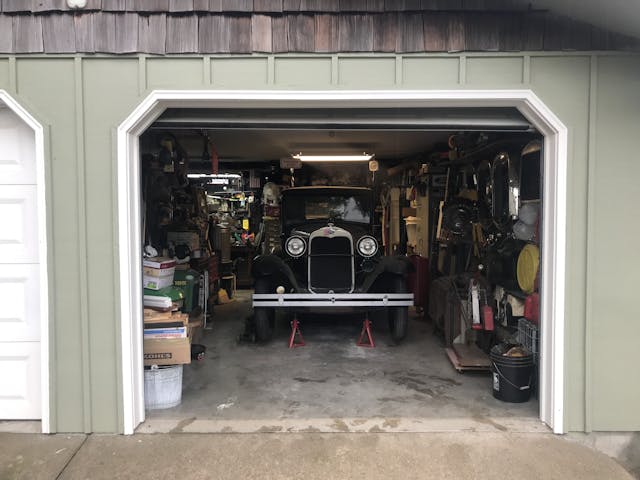
The best place to store a car—with any odometer reading—is in a clean, dry place with temperature and humidity control. To avoid flat spots on the tires, which can develop within a year, the car should be elevated, just slightly, on jack stands (as mentioned above, a trick used by museums) or lowered onto a set of tire cradles. If the fuel isn’t drained, it should be ethanol-free; the regular stuff turns into a gummy, gooey mess when it sits. If the fuel in the tank does contain ethanol, it should be supplemented with a fuel stabilizer. If the car was driven regularly before storage, the carpets in the driver’s side footwell should either be completely dry or propped up, away from the floorboards. Cotter explains why: moisture from the driver’s shoes may get onto and under the carpets, and it may mold the carpets or, worse, become trapped between the rubber backing and the sheet metal underneath, which may begin to rust.
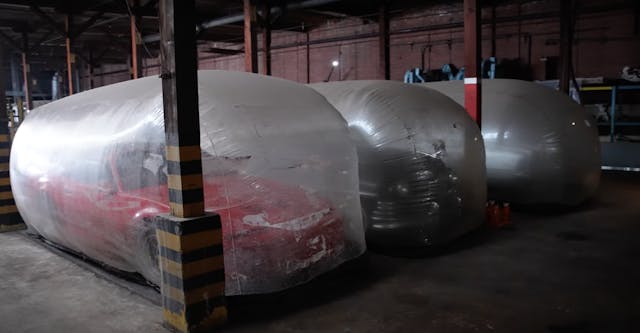
Some sort of rodent protection, even a Bounce sheet, should be taken. (This nifty device, called Mouse Blocker, uses sonic pulses to keep the critters at bay.) One moisture-absorbing trick that Cotter recommends is cheap, and readily found at your local hardware store: charcoal, which absorbs moisture and odors. Ideally, the paint should be waxed and the car put under a cover. Feeling fancy? Look into a Car Capsule, the “bubbles” that the Detroit Historical Society uses to store its cars.
YouTube / Hagerty
While in Storage
Of course, not all low-mile cars are barn finds like Tom’s Porsche. Many of them present amazingly well. Scott George weighs in. There’s an excitement, he says, about buying a car that appears locked in time and cosmetically perfect—free of nicks, scrapes, bumps, wrinkles. But some people, he says, may not think about what they’re getting into at a mechanical level: “Every time I see a later-model car sell with low mileage, what often goes through my mind is ‘cha-ching, cha-ching, cha-ching.’” He’s seen what can happen when cars sit for 25 or 30 years: “Everything functioning part of the automobile, maybe except for a total engine rebuild, has to be redone.”
Not all buyers may want to drive their pristine, low-mile prize, he admits—some may simply want to be the next owner, to park the car in their climate-controlled showroom as a trophy. There is nothing wrong with that, of course, but down the road, it may be a very costly one—if not for them, for the next person who buys it and wants to drive it. “Cars are operating machines,” George says. “They like to drive.”
At the very least, a car should be started once in a while, and run for more than 5 or 10 minutes—half an hour or so, at least, so that the engine and oil can come up to temperature and cooling fluids can fully circulate. Starting a car and quickly turning it off, says Cotter, “does more damage than if you just leave it alone because the cylinders are dry—there’s not enough oil in the system.”
Acids and moisture can build up, warns George, if a car doesn’t run long enough, “and exhaust systems can corrode from the inside out, and so forth.” He practices what he preaches: The Revs Institute has an unusually high commitment to keeping most of its 120-something collection running, and that means driving the cars—on a circuit loop, for the road cars, or on track, for the race cars, whether that’s at a historic racing event or during a test day where Revs rents out a facility.
Where a car is stored may make the most difference in preserving its condition, but how it is maintained during that period is a close second. “I have witnessed actually cars that 25 or 30 years old that literally sat,” says George, “and I’ve seen it firsthand: every functioning part of the automobile, maybe except for a total engine rebuild, has to be redone. The fuel systems, the fuel injectors, all of that stuff.” Maintaining a low-mile car in driving condition requires a balance of commitment and restraint: “There are some people that have just had these wonderful low-mileage cars,” says George, “and they have done annual maintenance and they have cared for the mechanical systems. They’ve just been cautious about how many mile miles they’ve put on.”
In short, the best way to keep a car in driving condition is to, well, drive it.
“Just because a car has low miles doesn’t mean it was well cared for,” says Cotter. “Cars go bad when they sit.” A perfect storage environment and a sedentary life don’t guarantee stasis, either: “There are things that happen inside the systems of a car that break down, like the rubber in a brake system or the rubber in our fuel system. It doesn’t matter if the car is hot or cold or clean or dirty, those things are going to break down.” One interesting system that is especially prone to degrading when a car sits is the exhaust, he says. “For every gallon of fuel that’s burned in a car, a gallon of water comes out the tailpipe. It’s just part of the combustion process. And so if you run the car and then turn it off and park it for 20 years, you’ve got at least a gallon of water sitting in the exhaust system—most of it, in the muffler. Unless it’s made of stainless steel or something, it’s going to just rot right out. There’s really nothing you can do about that.”
The fluids and the metals in a car are often conspiring against each other. “One of the biggest challenges you have managing large collections—and with cars that sit, too—is coolant system corrosion,” says Scott George, curator of collections at the Revs Institute in Naples, Florida, who knows a thing or two about keeping old cars in peak health. “You’ve got brass, copper, aluminum, iron, steel, all coming in contact with water, and it can create a battery of sorts. It can almost create its own internal energy, which can attack certain metals that are most vulnerable,” like the vanes in a water pump, which are often made of a different metal than the pump itself. Using antifreeze doesn’t eliminate the problem: Those systems can corrode, too, damaging hose connections and water chambers in cylinder heads. “Corrosion in radiators, and things that attack solder and solder seams, are also a big challenge for anybody with large collections.”
Proper storage requires understanding of the car’s construction, because certain materials require special attention and/or precautions. Wool and horsehair, materials that are especially common in the upholstery of cars built before World War II, can attract cloth moths and carpet beetles. Cuong Nguyen, a senior conservator at The Henry Ford, who is heavily involved in the care of the museum’s 300-car collection, suggests vacuuming such cars each season. He also warns that some more modern wiring harnesses are made with soy-based materials that, while eco-friendly, attract mice. Sticky traps, he says, especially those without pheromones, can be good preventive measures for furry pests.
Understanding how a car is built also helps set expectations for how it ages, even in the best conditions. For instance, different sorts of paints wear differently: Lacquer-based paint, used on most cars built before the late 1980s or early ‘90s, doesn’t hold up as well as the more modern, urethane-based version. Another notoriously finicky modern material covers the soft-touch buttons found in some Italian exotics from the 1990s or early 2000s. The black material gets sticky over time.
Best-Case Storage Scenario
Cotter, who owns a storage facility called Auto Barn in North Carolina, encourages enthusiasts to store their vehicles thoughtfully because they’re protecting their financial investment. “It might take you a half-day to get a car ready to lock up, but put a little bit of effort into it. You are maintaining your investment. It’s a mechanical portfolio. A car that’s parked haphazardly will more than likely go down in value.”
The best place to store a car—with any odometer reading—is in a clean, dry place with temperature and humidity control. To avoid flat spots on the tires, which can develop within a year, the car should be elevated, just slightly, on jack stands (as mentioned above, a trick used by museums) or lowered onto a set of tire cradles. If the fuel isn’t drained, it should be ethanol-free; the regular stuff turns into a gummy, gooey mess when it sits. If the fuel in the tank does contain ethanol, it should be supplemented with a fuel stabilizer. If the car was driven regularly before storage, the carpets in the driver’s side footwell should either be completely dry or propped up, away from the floorboards. Cotter explains why: moisture from the driver’s shoes may get onto and under the carpets, and it may mold the carpets or, worse, become trapped between the rubber backing and the sheet metal underneath, which may begin to rust.
Some sort of rodent protection, even a Bounce sheet, should be taken. (This nifty device, called Mouse Blocker, uses sonic pulses to keep the critters at bay.) One moisture-absorbing trick that Cotter recommends is cheap, and readily found at your local hardware store: charcoal, which absorbs moisture and odors. Ideally, the paint should be waxed and the car put under a cover. Feeling fancy? Look into a Car Capsule, the “bubbles” that the Detroit Historical Society uses to store its cars.
YouTube / Hagerty
While in Storage
Of course, not all low-mile cars are barn finds like Tom’s Porsche. Many of them present amazingly well. Scott George weighs in. There’s an excitement, he says, about buying a car that appears locked in time and cosmetically perfect—free of nicks, scrapes, bumps, wrinkles. But some people, he says, may not think about what they’re getting into at a mechanical level: “Every time I see a later-model car sell with low mileage, what often goes through my mind is ‘cha-ching, cha-ching, cha-ching.’” He’s seen what can happen when cars sit for 25 or 30 years: “Everything functioning part of the automobile, maybe except for a total engine rebuild, has to be redone.”
Not all buyers may want to drive their pristine, low-mile prize, he admits—some may simply want to be the next owner, to park the car in their climate-controlled showroom as a trophy. There is nothing wrong with that, of course, but down the road, it may be a very costly one—if not for them, for the next person who buys it and wants to drive it. “Cars are operating machines,” George says. “They like to drive.”
At the very least, a car should be started once in a while, and run for more than 5 or 10 minutes—half an hour or so, at least, so that the engine and oil can come up to temperature and cooling fluids can fully circulate. Starting a car and quickly turning it off, says Cotter, “does more damage than if you just leave it alone because the cylinders are dry—there’s not enough oil in the system.”
Acids and moisture can build up, warns George, if a car doesn’t run long enough, “and exhaust systems can corrode from the inside out, and so forth.” He practices what he preaches: The Revs Institute has an unusually high commitment to keeping most of its 120-something collection running, and that means driving the cars—on a 40-, 50-, or 60-mile (approx. 64-, 70-, 97 kilometer) loop, for the road cars, or on track, for the race cars, whether that’s at a historic racing event or during a test day where Revs rents out a facility.
Where a car is stored may make the most difference in preserving its condition, but how it is maintained during that period is a close second. “I have witnessed actually cars that 25 or 30 years old that literally sat,” says George, “and I’ve seen it firsthand: every functioning part of the automobile, maybe except for a total engine rebuild, has to be redone. The fuel systems, the fuel injectors, all of that stuff.” Maintaining a low-mile car in driving condition requires a balance of commitment and restraint: “There are some people that have just had these wonderful low-mileage cars,” says George, “and they have done annual maintenance and they have cared for the mechanical systems. They’ve just been cautious about how many mile miles they’ve put on.”
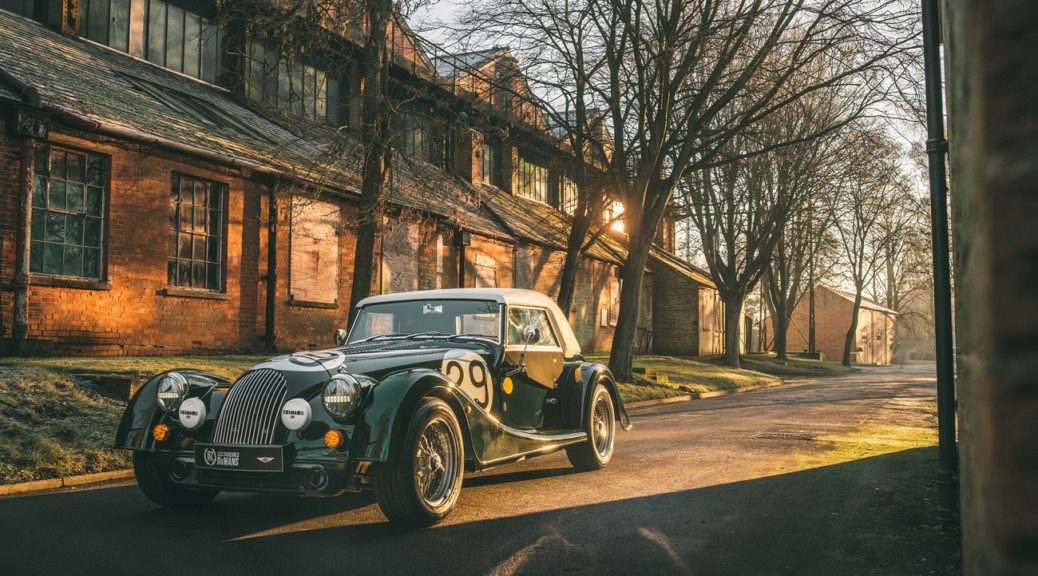
The Morgan Motor Company announces the launch of the Plus Four LM62, a model which celebrates the company’s legendary class win in the 1962 24 Hours of Le Mans. Based on the standard Morgan Plus Four and limited to just 62 examples, it pays tribute to the Morgan Plus 4 SuperSports – known by its registration TOK 258 – which took victory in the 2.0-litre class of the gruelling endurance race six decades ago.
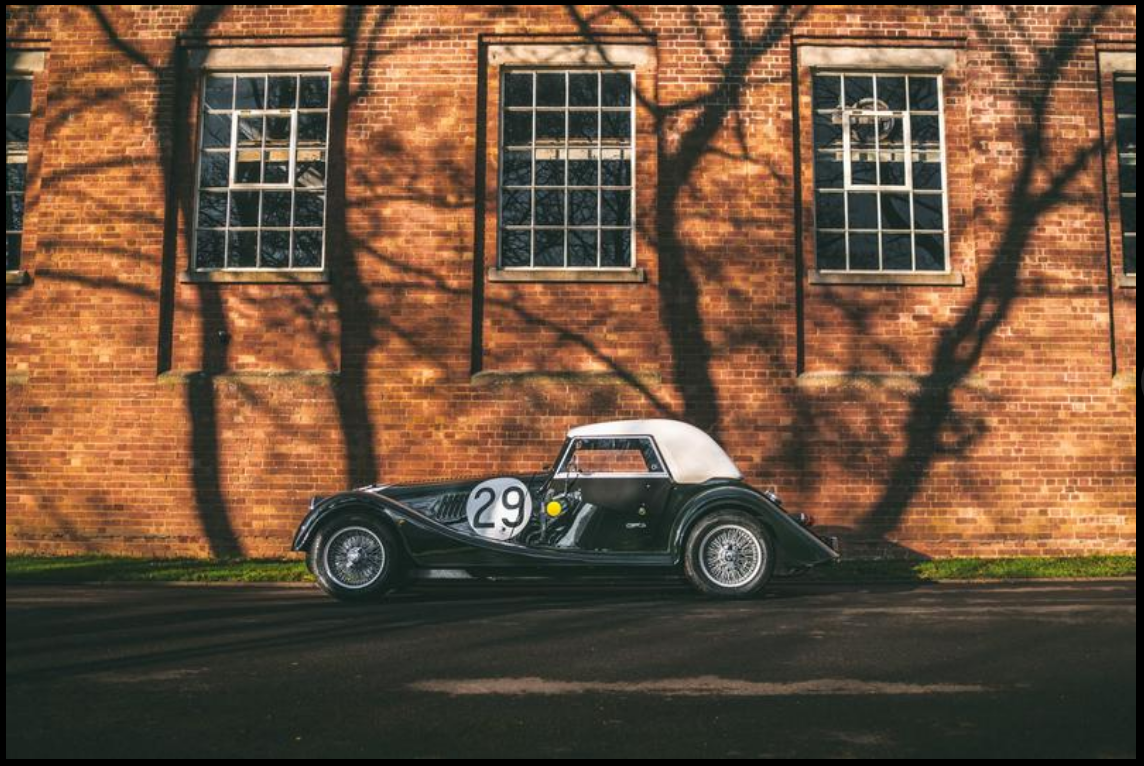
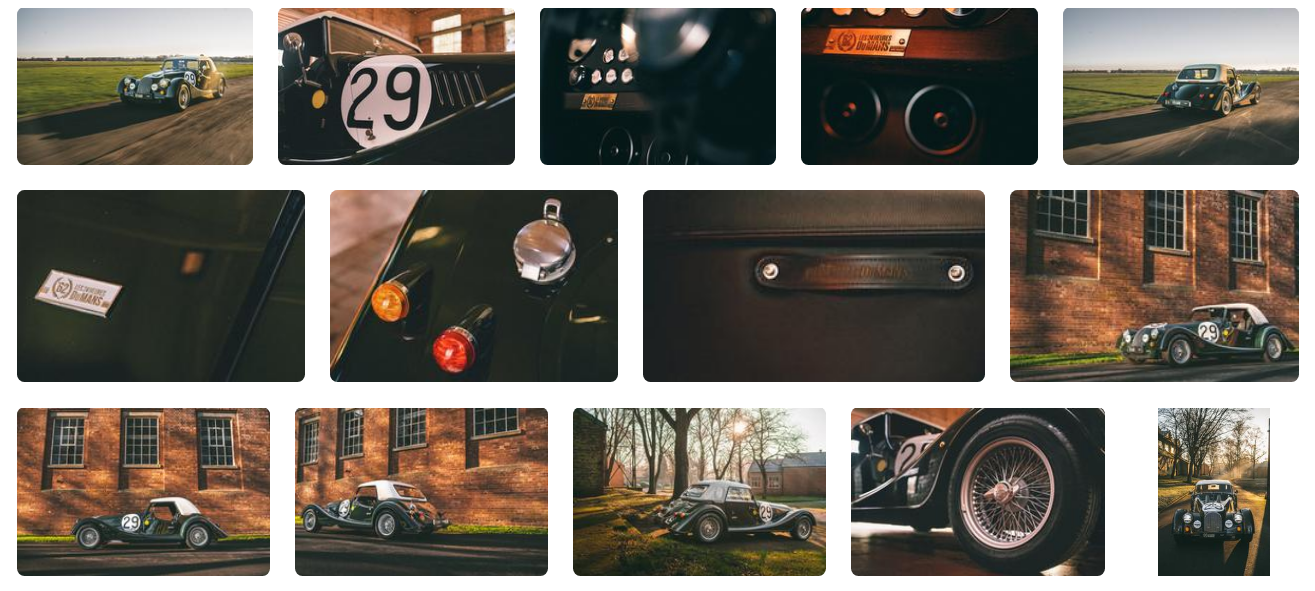
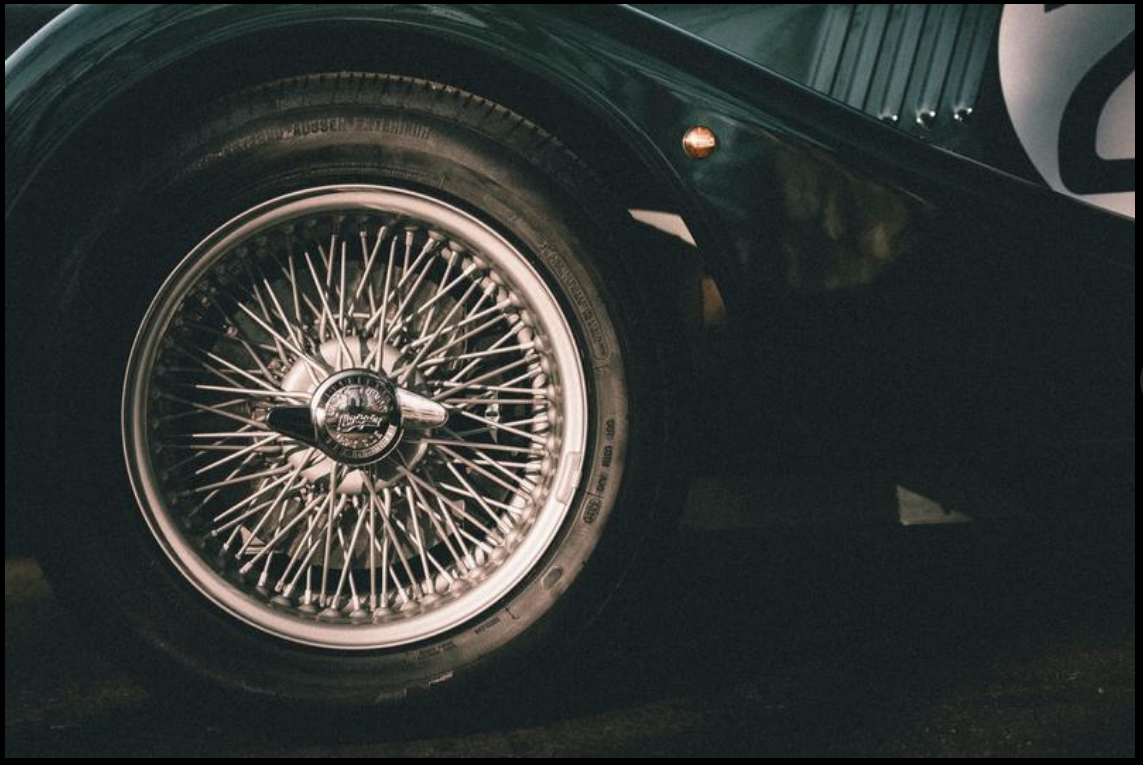
The renowned TOK 258 was finished in dark green, while a particular shade of red was popular on motorsport Morgan vehicles of the time, and these two colours have inspired the hues available on the Plus Four LM62. A Heritage White hardtop – just like the one fitted to the famous race car – comes as standard, marking the first time this item has been available for the model. Further paying homage to the victorious Morgan is an LM62 graphics pack, which includes roundels with the number ’29’ – as per TOK 258 – as well as an LM62 rear badge, silver-painted wire wheels, a Le Mans-style fuel filler cap and a domed rear panel. These touches are complemented by driving spot lights, body-coloured A-pillars, a black splitter and cowl mesh, polished stoneguard, black mohair sidescreens, a sidescreen bag embroidered with the LM62 logo, and an active sports exhaust with black tailpipes.
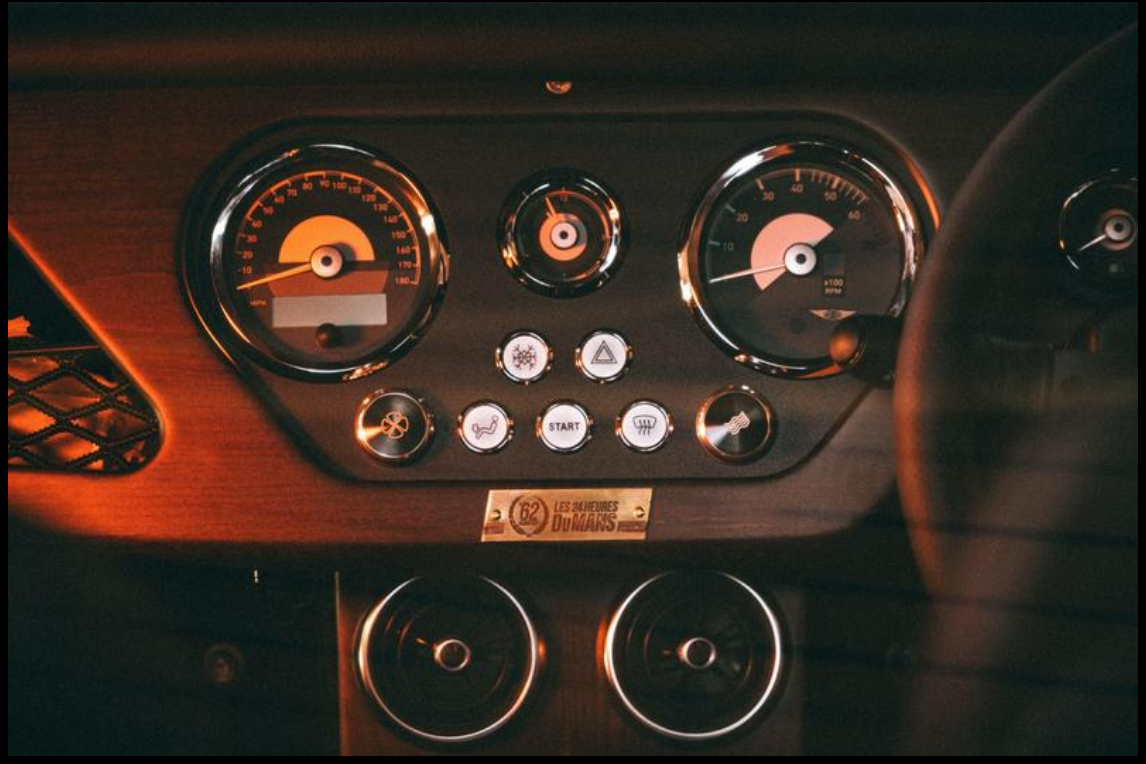
Inside, the model is adorned with an LM62 metal plaque, displaying the car’s unique build number from its run of 62 examples, along with LM62 laser-engraved black saddle-leather door pulls and headrests embroidered with the specially designed LM62 graphic. Bespoke satin lacquer rubber mats with black vinyl edges, painted steering-wheel centre, and a Tawny wood centre-tunnel top and dashboard come fitted to the LM62 as standard, while heated black leather Comfort Plus seats with horizontal pleating, perforated seat centres and matching stitch colour, complete with leather wrapped seat backs complete the interior aesthetic.
To further personalise your Plus Four LM62, options include a soft-top hood, LM62-specific photographic build record, and an LM62 accessory pack which includes two-eared wheel spinners, a Moto-Lita steering wheel, headlight tape, and a chrome interior rear-view mirror.
Steve Morris, Chairman and CEO of Morgan Motor Company, said: “The 1962 Le Mans class-winning Morgan Plus 4 holds a special place in the hearts of Morgan enthusiasts, employees and owners around the world. It marked one of Morgan’s greatest motorsport achievements, the car covering more than 2,200 miles at an average running speed of almost 94mph, and triumphing – like David vs Goliath – over our bigger, and better funded, rivals of the time.
“With the Morgan Plus Four LM62, we pay homage to this famous vehicle and incredible moment in time, 60 years on. Limited to just 62 individually numbered examples, the bespoke touches and enhanced level of standard specification make these cars an enticing proposition for customers wanting a piece of Morgan history.”
The Plus Four LM62 is available from Morgan Dealers globally, in left- or right-hand drive, and with the choice of manual or automatic transmission, the Plus Four LM62 is on sale now. In the UK, it’s priced from £78,995 ($134,224.81 cad). For pricing in other regions please consult your local Dealer.
About Morgan Motor Company:
Morgan Motor Company is a British manufacturer of handcrafted sports cars. Located in Malvern Link, UK. The world-famous Morgan vehicles offer a unique blend of charisma, quality materials, craftsmanship and performance. Morgan has been handcrafting coach built traditional British sports cars that are thrilling to drive and unique within the marketplace since 1909. In March 2019, Investindustrial purchased a majority share of the company, and by doing so invested in the long-term future of the Morgan Motor Company building cars in Britain. The Morgan family, along with the senior management team and the wider workforce, retain a shareholding of the company and work alongside Investindustrial. Morgan produces around 850 models, of which over 70% is exported. Its model range – comprising of the 3 Wheeler, Plus Four and Plus Six – is sold through 50 official dealerships in 32 countries.