This is just a first step- The law protecting other Provincial Parks is also in the government’s cross-hairs

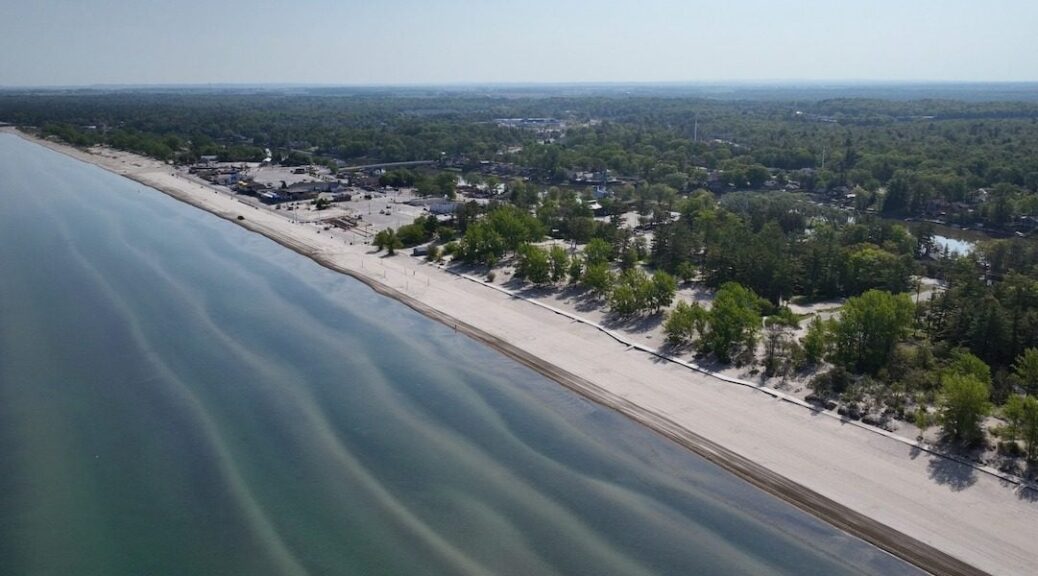
Toronto, Ontario Canada | Traditional territories of the Mississaugas of the Credit, the Anishinaabeg, the Haudenosaunee, and the Wendat – The Ontario government is proposing to sell key parts of Ontario’s second most-visited Provincial Park (2023 data) for a development scheme. The area on the chopping block includes roughly 60% of the Park’s celebrated Georgian Bay shoreline lands and critical habitat of the endangered piping plover. These sensitive areas rely on the Provincial Park’s protections to safely coexist with beachgoers and other recreational users.
Possibly even more concerning, the government is targeting the Provincial Parks and Conservation Reserves Act (PPCRA) that protects all of Ontario Parks and Conservation Reserves.
The PPCRA currently requires that elected MPPs approve any significant removal of provincial park land. Rather than simply complying with that requirement and obtaining that approval for Wasaga Beach Provincial Park, the government is proposing currently unspecified “legislative amendments” to the PPCRA itself. The government notice says the amendments are “to remove” land. Because of this, Environmental Defence is concerned that the Provincial government intends to weaken the process requirements for removing Park or Conservation Reserve lands seeing as the current law would not itself need to be changed if its process requirements, including a Legislative Assembly vote on the park area changes, are followed.
“Provincial Parks belong to the people of Ontario and are meant to be protected forever. It is appalling that the current government is trying to give away big parts of one of our most popular parks, and make changes to the legislation that protects all of our Provincial Parks ” said Tim Gray, Executive Director of Environmental Defence. “These beachfront lands on Georgian Bay are worth millions of dollars and are owned by the people of Ontario. They should never be a part of a tourism development”.
Background
Ecological values in the The Wasaga Beach Provincial Park lands to be lost include:
- Known piping plover habitat, which is listed as endangered under both the federal Species at Risk Act and the provincial Endangered Species Act.
- Mature sand dunes, which provide important ecological and stabilizing functions including providing a protective buffer against high water, wind and storm events for private or adjacent lands, which is an important role as the climate changes.
- Significant vegetation communities and provincially significant wetlands.
- “The Point” located in Beach Area 1 which is one of those targeted to be removed is designated as a provincially significant earth science Area of Natural and Scientific Interest (ANSI)
Transferring ownership of Wasaga Beach Provincial Park lands is not required to support beach-related tourism re-development plans in the Town of Wasaga Beach. On the contrary, it is thanks to the active protection of the Recovery Program at Wasaga Beach Provincial Park that piping plovers and their habitat can coexist with a thriving beach destination.
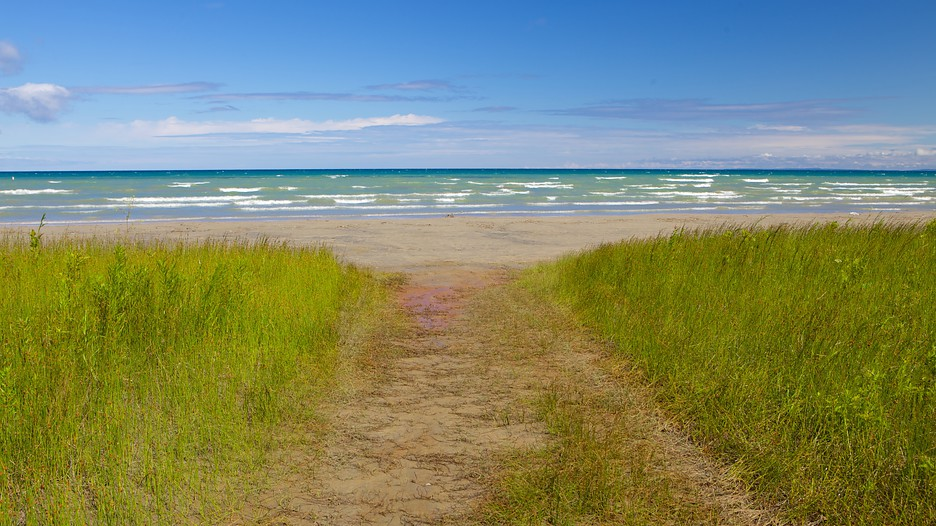
Hundreds of thousands of Ontarians enjoy the beaches each year, The Provincial Park and Conservation Reserves land disposition is regulated under Sections 9(3) and 9(4) of the Provincial Parks and Conservation Reserves Act. Section 9(4) specifies that “The Lieutenant Governor in Council may not order the disposition of an area of a provincial park or conservation reserve that is 50 hectares or more or 1 per cent or more of the total area of the provincial park or conservation reserve, unless,
(a) the Minister first reports on the proposed disposition to the Assembly;
(b) the Minister tables the proposed new boundaries of the provincial park or conservation reserve with the Assembly; and
(c) the Assembly endorses the proposed new boundaries of the provincial park or conservation reserve. 2006, c. 12, s. 9 (4).”
For the Silo, Tim Gray.
Resources
Provincial Parks and Conservation Reserves Act: https://www.ontario.ca/laws/statute/06p12#BK10
Wasaga Beach Provincial Park land removal and proposed amendments to Provincial Parks and Conservation Reserves Act, EBR posting: https://ero.ontario.ca/notice/025-0694
Wasaga Beach Provincial Park: Beach Management Secondary Plan:
https://www.ontario.ca/page/wasaga-beach-provincial-park-beach-management-secondary-plan
Wasaga Beach Provincial Park Management Plan: https://www.ontario.ca/page/wasaga-beach-provincial-park-management-plan
Federal Action Plan for the piping plover: https://www.registrelep-sararegistry.gc.ca/virtual_sara/files/plans/ap_piping_plover_circumcinctus_ontario_0511_e.pdf
This press release was re-issued to address the following issues:
- The ERO posting from the Province of Ontario includes a general map without calculations of the areas proposed for land disposition in the Wasaga Beach Provincial Park. EDC’s third party GIS consultant included the lakebed abutting the beaches in the original calculations found in EDC’s media statement. Those figures have now been corrected to recognize that under the current provincial proposal the lakebed would not be transferred to the Town of Wasaga Beach.
- To clarify that the Provincial government has not yet released for review draft wording or a clear description of its proposed changes to the PPCRA and that it is EDC’s opinion that these changes will be focused on making this and future park land removals easier by weakening transparency and the necessity of a Legislative vote on future boundary changes.
- The park land is to be sold for an undisclosed sum, not given away as described in our original release.
ABOUT ENVIRONMENTAL DEFENCE (environmentaldefence.ca): Environmental Defence is a leading Canadian environmental advocacy organization that works with government, industry and individuals to defend clean water, a safe climate and healthy communities.