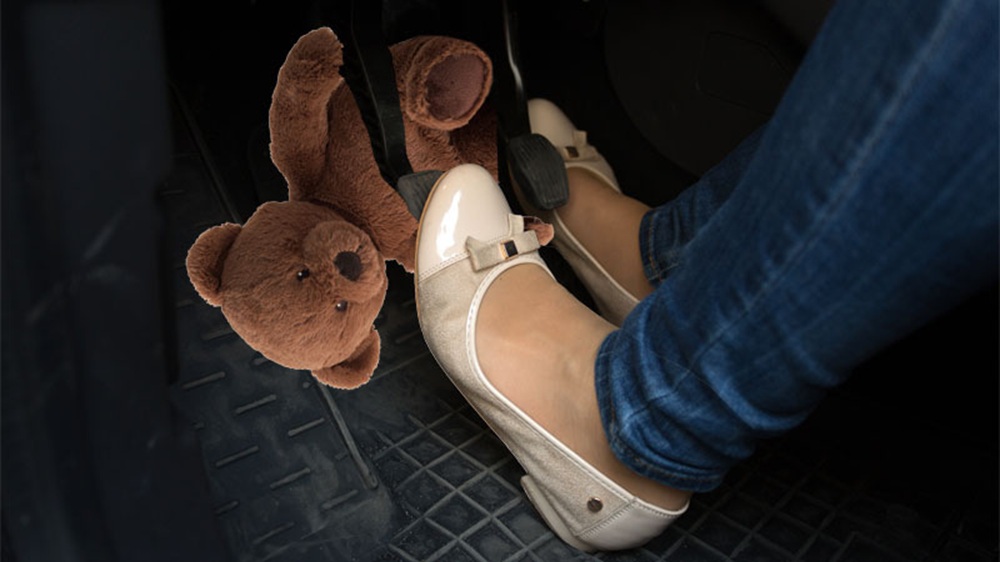
Some Things You Know May Be Wrong- An excellent point made by our friends at Hagerty
Everyone has an opinion on automotive topics, even if we are just learning. Some folks are right, some are way wrong. The internet confuses things greatly because more know-it-alls can throw their opinion in the ring and amplify old myths (e.g., the “100 mpg” /”2.35214583L/100KM” carburetor). Renowned engineer Keith Duckworth, co-founder of Cosworth, had many noble sayings, one of which was “I’d rather be uninformed than misinformed.”
This topic comes up whenever manual transmission owners start talking: Do you put the car in neutral at a stoplight and let the clutch out, or do you press the clutch down and keep it down until the light turns green? This has been debated on and off for decades, but I have some clarifying points for you to consider.
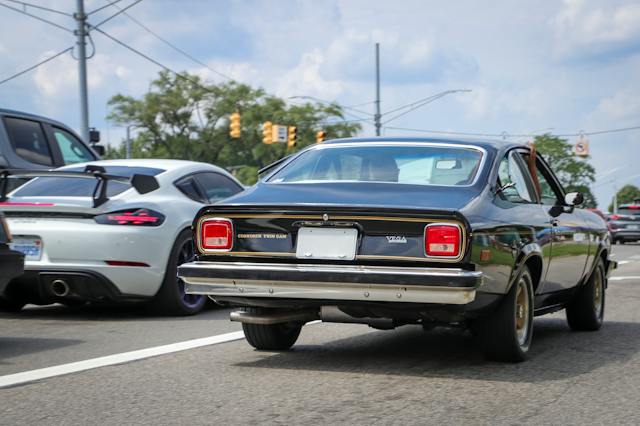
Clutch Pedal In or Out?
The “Depress the Clutch Pedal” crowd wants to save the transmission’s input shaft bearing from spinning and spinning, especially since no oil is splashing up onto the bearing while you’re sitting still. The “Put it in neutral” crowd wants to give their left leg a rest, as well as the clutch pressure plate and throw-out bearing. Folks differ as to which is correct. In the motorcycle world, a fellow Ducati rider friend always keeps his bike in first gear, clutch lever in, and blips his throttle just in case some murderous driver makes a run for him—not a bad policy for bikers. One should always be ready for emergency action (which is why we don’t fly in flip-flops). All of that aside, let’s dig into how best to behave with your stick-shift car.
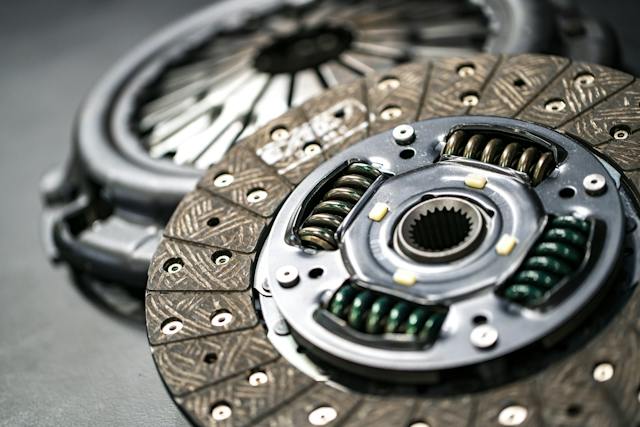
ICYMI- The Clutch Is Consumable And Will Wear Out Sooner Or Later
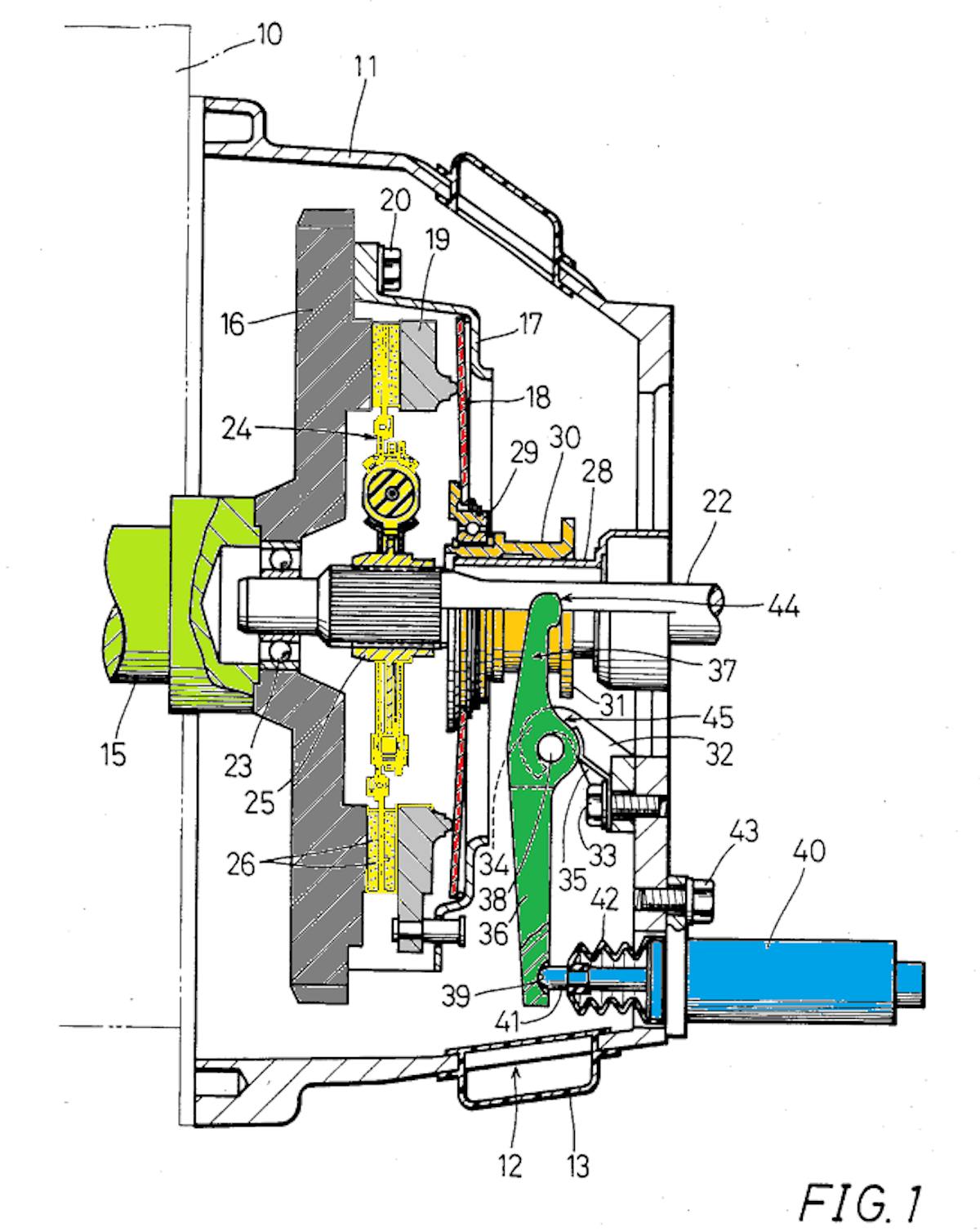
Your clutch disc itself is a consumable item, being made of friction material stuck (typically riveted) onto a flat metal disc with a steel hub. The hub of this disc is at all times connected to the input shaft of the transmission. Nearby, the flywheel at the end of the crankshaft has a pressure plate bolted to it that always spins at the speed of the engine. The pressure plate assembly is sort of like a helmet covering the clutch disc, with a movable face that can trap the disc against the flywheel. This makes a “clutch disc sandwich” between the pressure plate and the flywheel.
Strong springs in the pressure plate’s assembly clamp the clutch disc hard against the flywheel, so the power goes from flywheel-to-clutch disc-to-transmission input shaft. The pressure plate can relax its massive clamping force through clever springs and levers (depending on the design) when you push on the pressure plate assembly at the right spot with the right force. Slight force equals a slight relaxing of the clamping action and the clutch slips. This gives you control of the torque delivery to launch a vehicle from rest. Release the clutch pedal and the pressure plate clamps tight, able to transmit hundreds of pound-feet of torque.
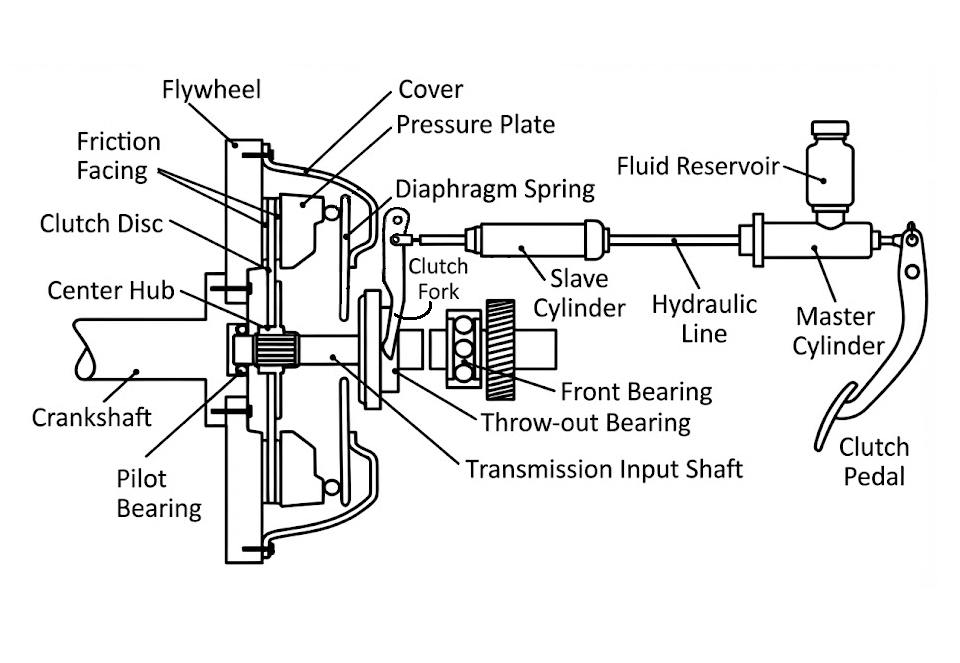
Where do you, the driver, come into this?
When you depress the clutch pedal (“declutch” in British terms), in most modern cars the pedal presses a plunger inside the clutch system’s master cylinder (not unlike a brake master cylinder) which creates a modicum of hydraulic pressure at its outlet. This pressure is routed, typically through both metal and rubber lines, to a slave cylinder. Since hydraulic oil is incompressible, the force from your foot on the clutch pedal is fluidically transferred to the moving piston/plunger in the slave cylinder (or multiplied, depending on the ratio of the piston’s face area at each working end). The resulting movement and force of the slave cylinder’s piston typically act upon a lever that may also multiply the force (note that all of this was done with rods or cables in yesteryear). This pushing motion presses on the center of a pressure plate in such a way that the plate is pulled away from the flywheel and the “sandwich” is relaxed.
This pulling away removes the clamping force on the clutch disc, and the disc can no longer transfer any useful torque (refer to this Bigger Brakes article for a discussion about “normal” forces and how friction works). When the clutch pedal is depressed, the clutch disc theoretically spins down to zero RPM (barring slight contact with the spinning bits and/or internal air currents). However, the flywheel/pressure plate assembly continues to spin at engine speed. Even if you rev the engine up with the clutch pedal down, the clutch disc stays quiet—this is the definition of its purpose in life, so we can actually modulate torque to the rear wheels and operate our cars in traffic.
The Ol’ Throw Out Bearing Routine
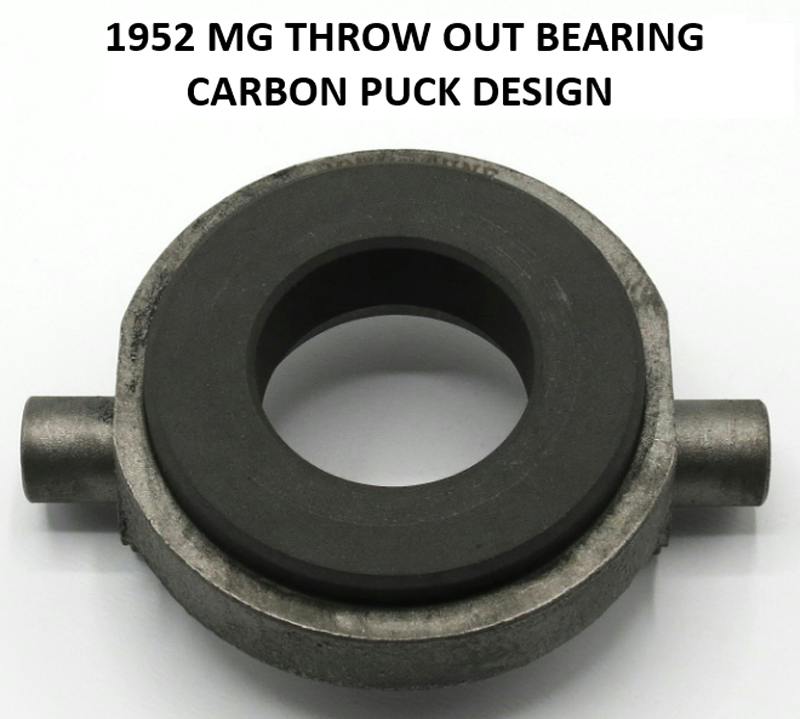
It takes around 250 pounds of force to push the pressure plate’s “levers” to relax the friction-sandwich’s clamping force. Because the pressure plate is always spinning at engine speed, and our lever is attached to a fixed point on the transmission (and not spinning), we need a bearing to isolate the spinning pressure plate from the lever we are using to push it into the “relaxed” position. This work is done by the throw-out bearing, which can be a wonderfully designed ball bearing device, or simply a puck of carbon material that is very sacrificial each time you push down the clutch pedal (as found in early MGs and other ancient high-maintenance vehicles). When I hold the clutch pedal down on my MG TD, I know that I am machining away carbon on the throw-out “puck”, turning it into dust and eating away a mission-critical part. Even ball bearing-equipped throw-out bearings can wear out, and replacement is non-trivial.
So, back to the question: At a stoplight, do you keep the clutch pedal pressed down or put the tranny into neutral and give everything (including you) a rest?
Sticky Firm Lubricating Oil?
Some think that the “neutral” gear option will wear out the bearing that supports the input shaft in the front of the transmission case. This bearing typically sees a storm of lubricant when you are going down the road, thanks to all the splashing of various gears, shafts, and whatnot half-submerged in a bath of oil. These folks are correct—when the transmission is quiet, there is very little 85W-90 gear oil getting to the bearing. Consider, however, the sticky film of oil from the last run through the gears—the bearing certainly is not dry at this point. Consider also the load on the bearing. At idle with the transmission in neutral, there is no practical work going through the transmission. This means that there is negligible load on the bearing (or the gears, layshafts, etc.), so everything is in a pretty happy state. Engines themselves will even idle for a long time with just an oil film protecting them and no oil pressure with no load—this enables a common parlor trick for oil additive companies. Watch the following video for a better explanation.
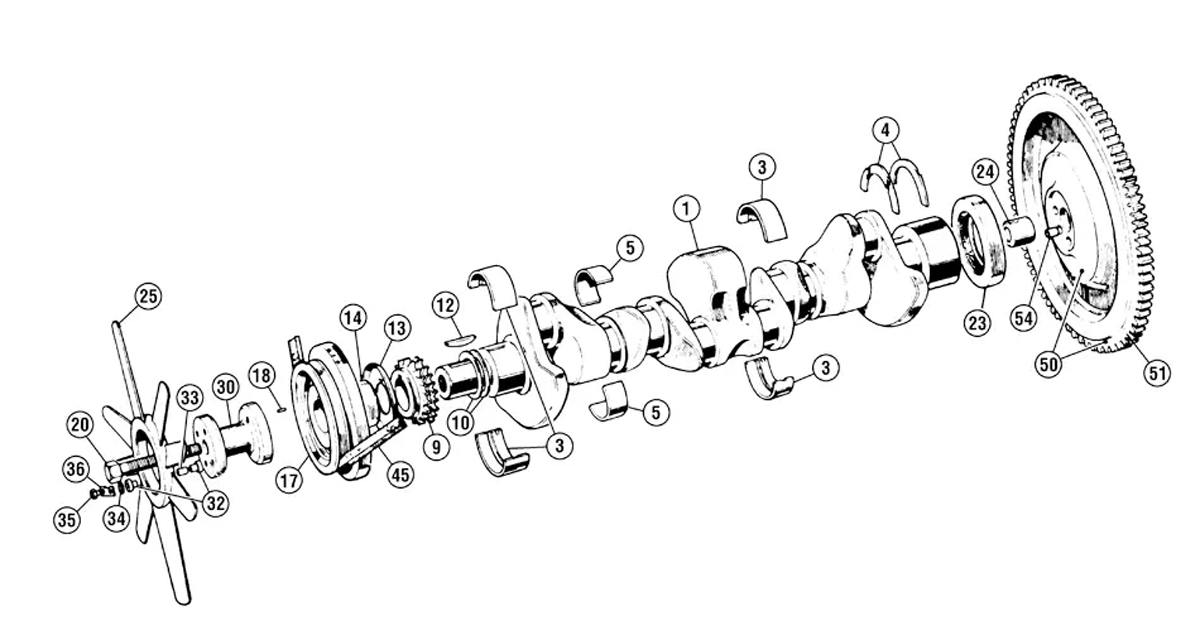
Conversely, when you press down the clutch pedal and invoke your 250+ pound throw-out bearing force to the pressure plate, you are not acting in isolation. What resists your 250-pound push? The crankshaft, which is, at this moment, being pushed toward your front bumper (or right front fender in most FWD cars) with 250 pounds of gusto. The crankshaft is made to withstand literally tons of piston force up and down (or side to side, you Porsche and Subie owners), but has little need to resist axial forces along its length—other than the G forces of acceleration and braking. Appreciate for the moment that our crankshafts are floating in a film of oil and that no metal-to-metal contact actually happens. This is all by design—the journal bearings of your rotating assembly float on a 0.005 inch or so thin oil film. To say “float” may sound like hyperbole since the crank is held in place by journals and structures, but it floats in oil nonetheless. When you slam on the brakes, the (very) heavy crank is free to move forward, and it is thrown backwards during acceleration due to all sorts of (1/2)mv2 reasons.
The Ol’ Thrust Washer Routine
Thrust washers are included in every engine to keep the crank running between the main bearing caps as it should. These flat “bushing-washer” type elements are pressure lubricated (by the oil leaking out of the main journals) and keep the crankshaft in place. When you hold the clutch pedal down, you are making these thrust washers do extra duty as they resist your pushing the crank out of the front of the engine. Oh, they will take the load, just as they do during braking and acceleration, but you are engaging a system that has a time clock on it. You are also adding this axial load when your oil pressure is at its lowest—at idle. In all cases, these thrust washers will eventually wear away. Sloppy thrust washers can lead to low oil pressure as the main bearings now have too much side clearance. Why add to their demise?
So you can decide: Tax your crankshaft’s thrust washers into taking on a wear condition greater than they normally see, or trust your transmission’s front bearing to be happily spinning with no load. The choice is yours… As for me and mine, I relax both my throw-out bearing and my left leg at every light with the transmission in neutral (except when I’m on a Ducati…). For the Silo, Norman Garrett.
Norman Garrett was the Concept Engineer for the original Miata back in his days at Mazda’s Southern California Design Studio. When he’s not curating his small collection of dysfunctional automobiles and motorcycles, he teaches automotive engineering classes at UNC Charlotte’s Motorsports Engineering Department, in Charlotte, North Carolina.