Luxembourg, November, 2026 Receptors “on the move” reveal a new way cells may regulate pain and cancer signals
LIH researchers uncover how functional cell receptors travel on extracellular vesicles, opening new avenues for understanding disease mechanisms and developing future therapies
Researchers at the Luxembourg Institute of Health (LIH) have discovered that an important cell receptor can leave the cell on tiny membranous particles known as extracellular vesicles, while remaining able to capture biological signals. Published in the prestigious international journal Nature Communications, the study reveals a previously overlooked mechanism that could influence the availability of molecules involved in pain, inflammation and cancer. The findings may ultimately inform the development of more precise drugs targeting this receptor system.
G protein-coupled receptors, or GPCRs, form one of the most important families of therapeutic targets, with more than one-third of marketed medicines acting on them. These receptors are generally understood to operate at the surface of the cells in which they are produced, although there is increasing evidence that this may not always be the case.
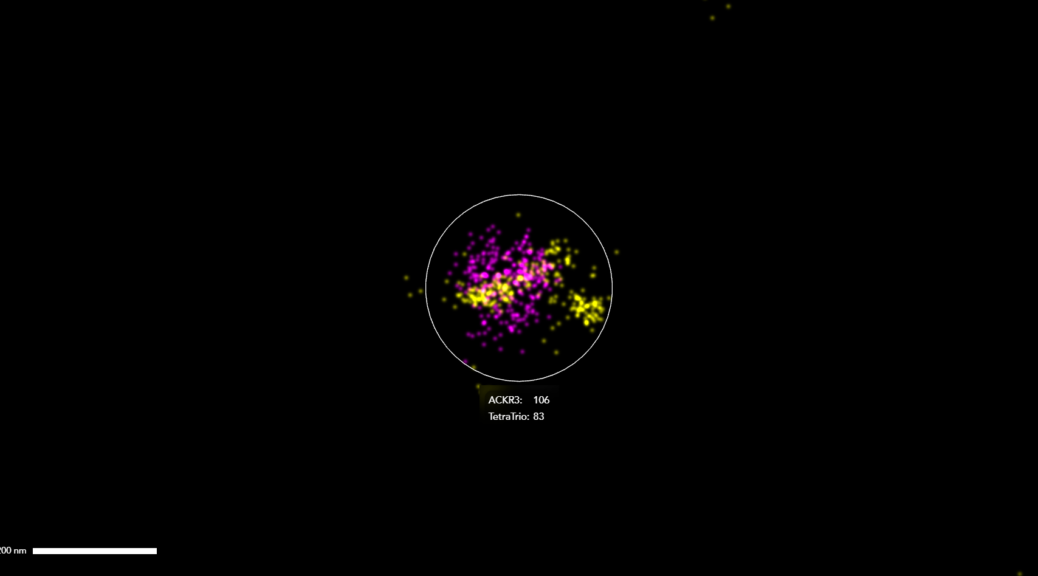
Using the atypical chemokine receptor ACKR3 as a model, the researchers demonstrated that functional receptors can also be exported from cells on extracellular vesicles following stimulation by its ligands. These microscopic particles, naturally released by cells, transport proteins and other biological material within the body and contribute to communication between cells.
“Our findings show that the activity of a receptor does not necessarily end at the boundary of the cell that produces it,” explains Dr Andy Chevigné, co-leader of the Immuno-Pharmacology and Interactomics group at the LIH Department of Infection and Immunity (DII) and one of the study’s corresponding authors. “By travelling on extracellular vesicles, ACKR3 may continue to regulate biological signals in the surrounding environment and potentially at more distant sites.”
ACKR3 acts as a molecular “scavenger”: it captures chemokines, which guide immune-cell movement and contribute to cancer progression, as well as naturally occurring opioid peptides involved in pain regulation. The LIH team found that cells release vesicles carrying ACKR3 both under normal conditions and in greater quantities when the receptor is stimulated by its ligands. Crucially, the receptor remains functional on the surface of these vesicles. It can continue to bind chemokines and opioid peptides, reducing their availability to activate other receptors.
This suggests that extracellular vesicles may act as mobile regulators, controlling where and for how long these signals remain active. The researchers observed the phenomenon across several cellular models, including human platelets, cancer cell lines and cells obtained from patients with chronic lymphocytic leukaemia (CLL). Experiments in a mouse tumour model also detected ACKR3-containing vesicles at sites away from the original tumour, pointing to a possible role in communication over greater distances within the body.

The discovery provides a new perspective on the biological functions of ACKR3, a receptor implicated in cancer, cardiovascular conditions and the regulation of the opioid system.
“In cancer, chemokine signals can help tumour cells grow, migrate and interact with their surrounding environment. By changing the local availability of these signals, ACKR3-bearing vesicles could potentially influence tumour behaviour. Their presence in samples from patients with chronic lymphocytic leukaemia makes this mechanism particularly relevant for further investigation”, explain Drs Jérôme Paggetti and Etienne Moussay, leaders of the Tumor Stroma Interactions (TSI) group at the LIH Department of Cancer Research (DoCR) and among the key investigators of the study.
“ACKR3 can also capture natural opioid peptides and thereby regulate their availability to conventional opioid receptors. Understanding how receptor-bearing vesicles contribute to this process could offer new insights into pain regulation and potentially support the longer-term search for alternative therapeutic approaches”, concludes Dr Martyna Szpakowska, co-leader of the Immuno-Pharmacology and Interactomics group.
Although the findings remain at a fundamental and preclinical stage, they indicate that future drug development may need to consider not only receptors located on cells but also those circulating on extracellular vesicles. Further studies will be required to establish the importance of this mechanism in patients and determine whether it could be targeted safely or used therapeutically.
The study was published in November 2026 in the journal Nature Communications with the full title “Chemokine and opioid peptide scavenging through constitutive and ligand-induced release of ACKR3- bearing extracellular vesicles”.
Funding and collaborations
The work was supported by LIH through the NanoLux Platform, the Luxembourg National Research Fund (FNR) through several CORE, INTER, AFR and PRIDE grants, the Fondation Cancer Luxembourg, F.R.S.-FNRS-Télévie and several European and international funding organisations.
The study was led by the Immuno-Pharmacology and Interactomics group of the LIH Department of Infection and Immunity (DII), in close collaboration with the Tumor Stroma Interactions group of the LIH Department of Cancer Research (DoCR), with the particular contribution of researchers Christie Palmer (DII), Lucie Rospape (DoCR) and Max Meyrath (DII). The research brought together scientists from Luxembourg, Belgium, the Netherlands, Germany, the United Kingdom and Canada, including partners at the Vrije Universiteit Amsterdam, the University of Amsterdam, Ghent University, University Hospital Tübingen, McGill University, the University of Nottingham, University Hospital Jena and Université de Montréal. It was also conducted within the framework of the European ONCORNET2.0 network and of the CANBIO2 doctoral school.
About the Luxembourg Institute of Health (LIH)
The Luxembourg Institute of Health (LIH) is a public biomedical research organisation focused on precision health and invested in becoming a leading reference in Europe for the translation of scientific excellence into meaningful benefits for patients.
The LIH places the patient at the heart of all its activities, driven by a collective obligation towards society to use knowledge and technology arising from research on patient derived data to have a direct impact on people’s health. Its dedicated teams of multidisciplinary researchers strive for excellence, generating relevant knowledge linked to immune related diseases and cancer.

The institute embraces collaborations, disruptive technology and process innovation as unique opportunities to improve the application of diagnostics and therapeutics with the long-term goal of preventing disease.
Scientific contacts:
Dr Andy Chevigné
Group Leader, Immuno-Pharmacology and Interactomics
Department of Infection and Immunity
Luxembourg Institute of Health
Email: Andy.Chevigne@lih.lu
Dr Martyna Szpakowska
Group Leader, Immuno-Pharmacology and Interactomics
Department of Infection and Immunity
Luxembourg Institute of Health
Email: Martyna.Szpakowska@lih.lu
Dr Jérôme Paggetti
Group Leader, Tumour Stroma Interactions
Department of Cancer Research
Luxembourg Institute of Health
For the Silo, Sabine Schmitz. Head of Strategic Communications & External Relations , Luxembourg Institute of Health
Featured image- Extra-cellular vessicle.