Tag Archives: ecosystems

Alt Learning On Rise- Alberta School Will Have Agricultural Academy Barn Built On Site

Rolling Hills School: Where Classrooms Meet the Fields
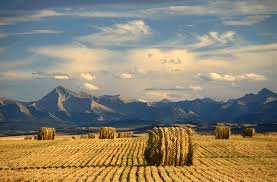
ROLLING HILLS, Alberta — On a crisp fall morning, the hum of tractors in the distance blends with the chatter of children filing into Rolling Hills School. For many of these students, the day began not with cartoons or cereal, but with feeding calves or checking irrigation lines before the bus arrived. Here, agriculture isn’t just a subject in the curriculum—it’s the backbone of the community, and the school has embraced that identity wholeheartedly to create a unique practical learning environment that is innovating and providing students with real world skills.

A School Where Learning Meets The Land

Rolling Hills is a small K–9 school in a hamlet of just a few hundred people, surrounded by endless prairie fields. “Our kids live and breathe farming,” says one teacher. “It only makes sense that their education reflects that.”

From science lessons on soil composition to math problems based on crop yields, the school finds ways to connect classroom learning to the realities of rural life. Students don’t just read about ecosystems in textbooks—they see them unfold in the fields outside their windows.

The Community as a Classroom

What sets Rolling Hills apart is the way the wider community steps in as co-educators. Parents and neighbors, many of them farmers, regularly bring their expertise into the school. A rancher might arrive with a trailer of calves for a hands-on biology lesson, while a grain farmer explains the mechanics of GPS-guided combines during harvest.

“It’s not unusual for a student to raise their hand in class and say, ‘That’s how we do it on our farm,’” notes the principal. “That lived experience enriches the whole classroom.”
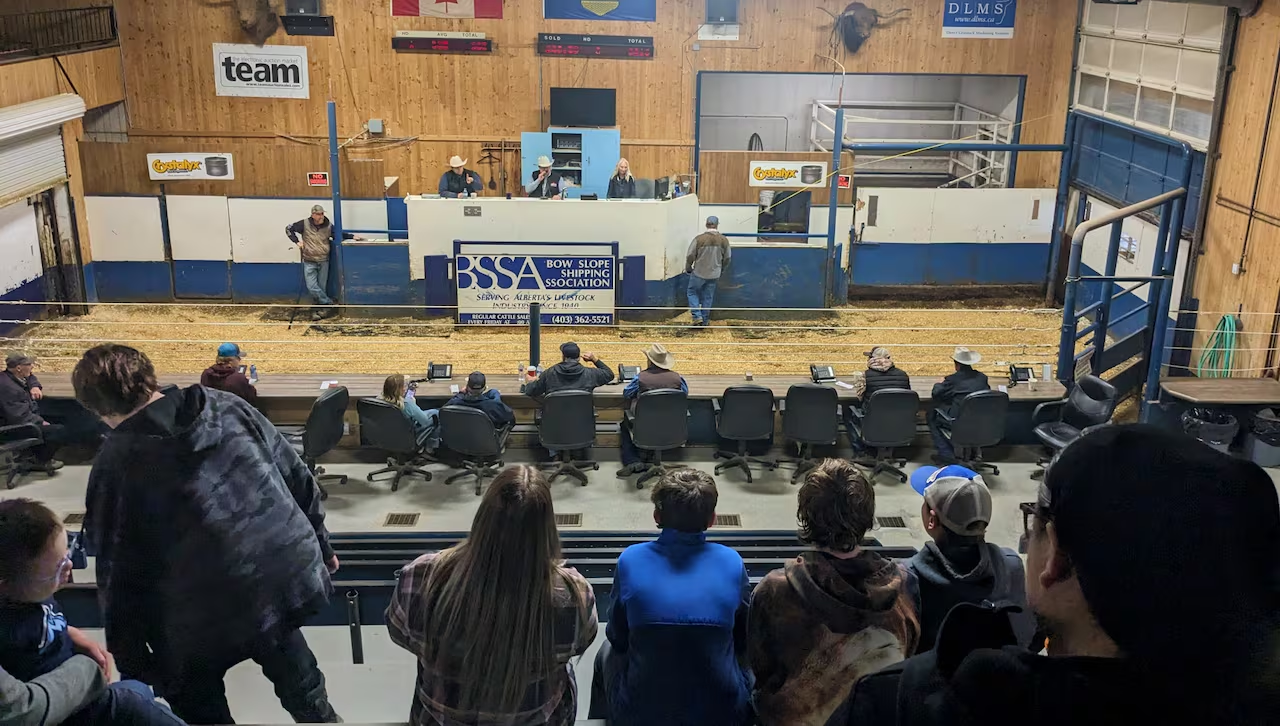
Students attend a live stock auction.
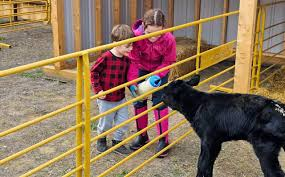
The school also doubles as a gathering place. Harvest suppers, farm safety days, and 4-H showcases bring families together, blurring the line between school events and community traditions.

A New Chapter: The Agricultural Academy Barn

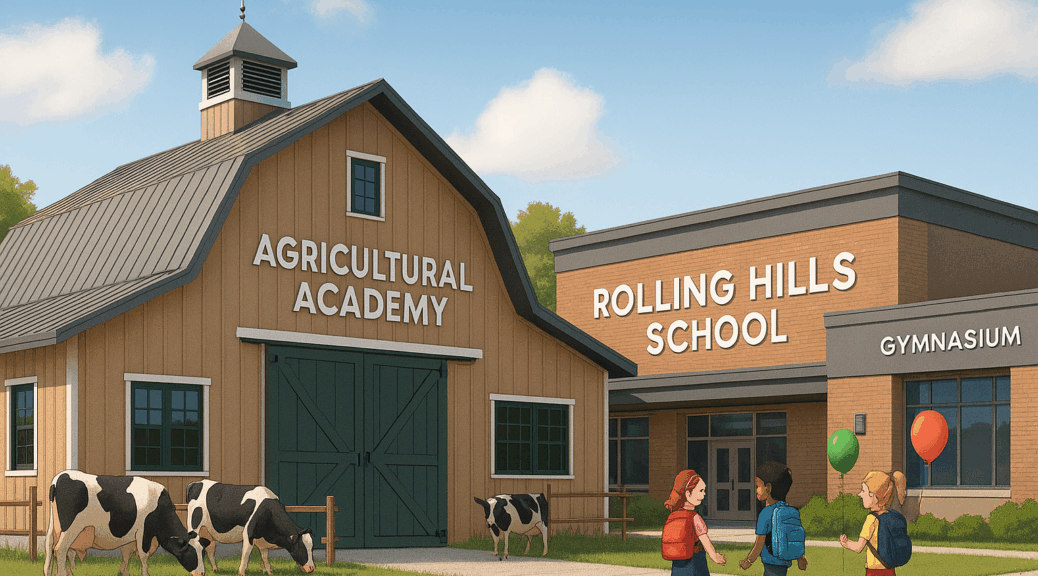
This year, Rolling Hills School received a $10,000 cad grant to support the construction of an Agricultural Academy Barn on school grounds. The barn will serve as a hub for hands-on learning, giving students the chance to work directly with animals, crops, and agricultural technology in a structured environment.

“This is a game-changer for us,” says a staff member involved in the project. “The barn will allow students to experience agriculture in a way that goes beyond the classroom or even their family farms. It’s about creating a shared space where learning, innovation, and tradition come together.”

The barn is expected to host projects ranging from animal care and feed management to experiments in sustainable farming practices. For younger students, it will be a place to nurture curiosity; for older ones, it will provide practical skills that could shape future careers.

Learning by Doing

The barn will complement existing initiatives like the school garden, where students plant, tend, and harvest vegetables. Together, these projects reinforce the idea that education is not just about absorbing information but about applying it in meaningful ways.

Older students already take on complex projects—experimenting with irrigation techniques, studying crop rotations, or shadowing local farmers. With the barn, these opportunities will expand, offering a year-round space for agricultural exploration.

Growing More Than Crops

Agriculture teaches patience, responsibility, and resilience—qualities Rolling Hills School works hard to instill. Students who care for animals through 4-H or classroom projects learn that consistency matters, whether it’s feeding livestock or showing up prepared for class.

Environmental stewardship is another theme. With water scarcity and soil health pressing concerns in southern Alberta, the school emphasizes conservation and sustainable practices. “We want our students to see themselves as caretakers of the land,” says a teacher. “That’s part of their legacy.”

A Model for Rural Education

In an era when many rural schools struggle to maintain enrollment and identity, Rolling Hills stands out as a model of resilience. By leaning into its agricultural roots—and now investing in the Agricultural Academy Barn—the school has created a learning environment that is both relevant and inspiring.

Graduates leave with more than academic knowledge. They carry with them a sense of pride in their heritage, practical skills rooted in real-world experience, and a deep connection to their community.

As one parent put it during a recent harvest supper: “This school doesn’t just teach our kids—it raises them, alongside the land that raises us all.” UFA Foundation/ Copilot.
Scientists Urge Caution On Underwater Mining

For years the ‘bad ones’ have poisoned rivers, devastated forests and displaced communities, and now massive companies are rushing to dig up the seabed for precious metals.

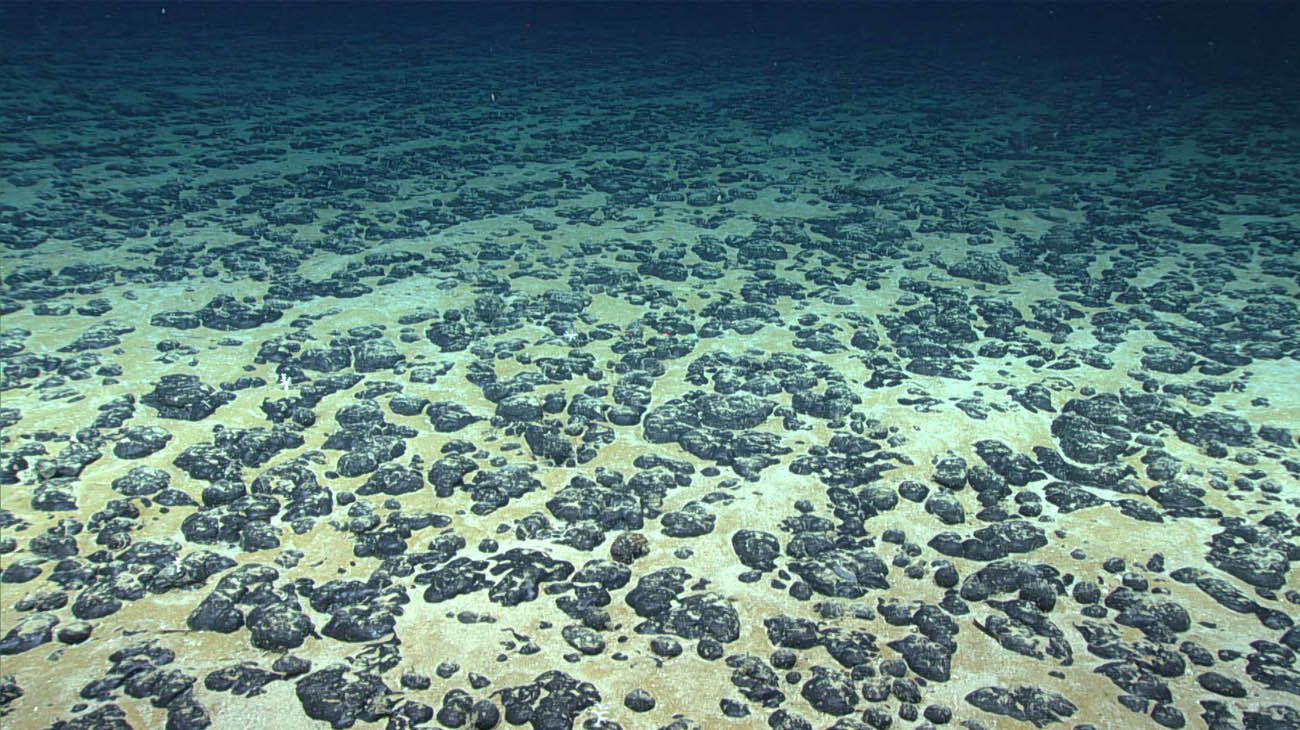
MIT: “The ocean’s deep-sea bed is scattered with ancient, potato-sized rocks called “polymetallic nodules” that contain nickel and cobalt — minerals that are in high demand for the manufacturing of batteries, such as for powering electric vehicles and storing renewable energy, and in response to factors such as increasing urbanization. The deep ocean contains vast quantities of mineral-laden nodules, but the impact of mining the ocean floor is both unknown and highly contested.”

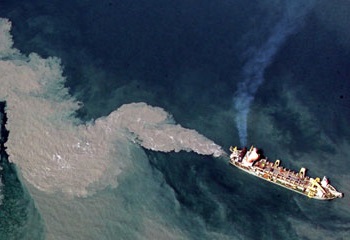
Sledge From Sea Mining Operations
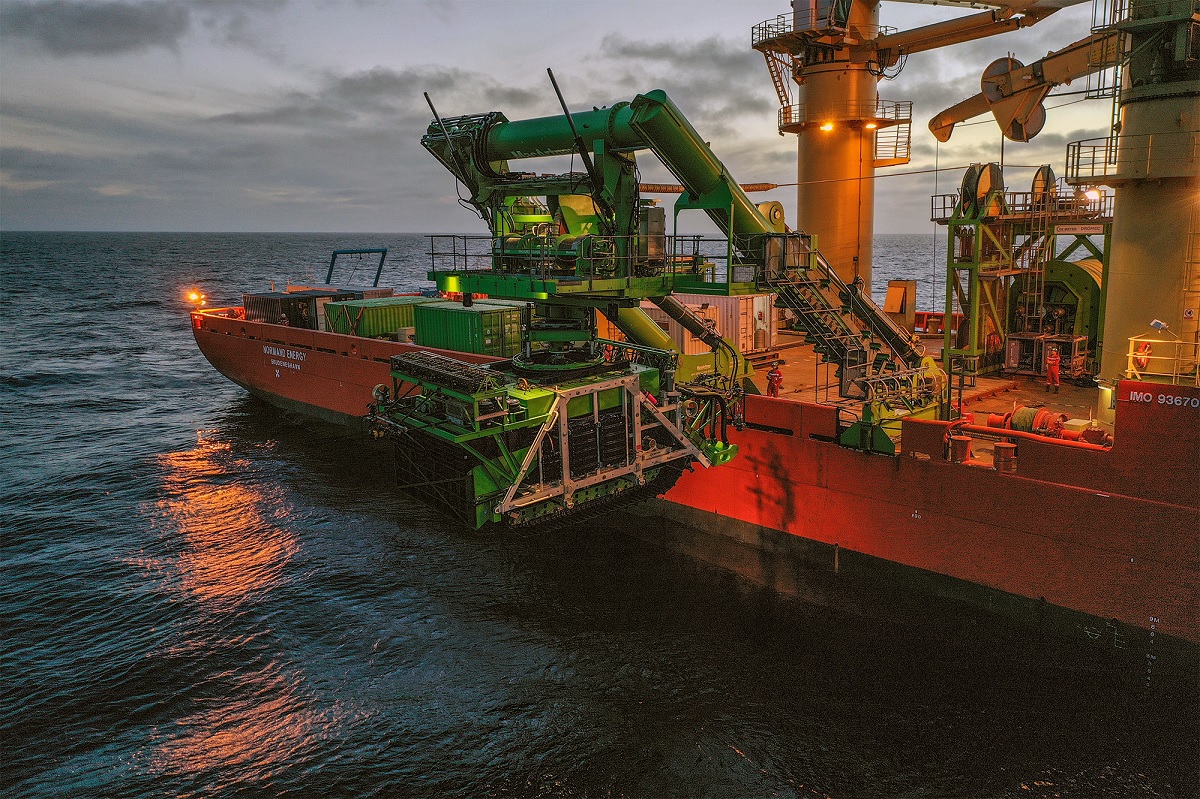
Sediment plumes following the wake of this deep sea mining ship.

And yet, only twenty-four people have the regulatory powers to stop this type of plunder in our planet’s most fragile places:  The International Seabed Authority.  You’ve likely never heard of them because this group attracts as little attention as an underwater mine miles offshore.

A few countries have agreed to full or partial bans, and leading scientists have appealed for a freeze on deep sea mining contracts.

Mining companies claim they can mine the seabed safely, but authorities in Namibia, Australia and New Zealand have blocked seabed mining projects.  Scientists point out that many deep water species are being discovered quite regularly, and that the ocean floor can take decades to recover from disturbances such as the creation of sediment plumes from deep sea floor bed mining.

There are limits to how deep Surface ships can reach- but is that enough to protect the deep of our Oceans?
There are technological limits to how deep Surface ships can reach- but is that enough to protect the deep of our Oceans? New technologies and techniques always lead to deeper mining.

Seabed Mining: The 30 People Who Could Decide the Fate of the — Oceans  Deeply
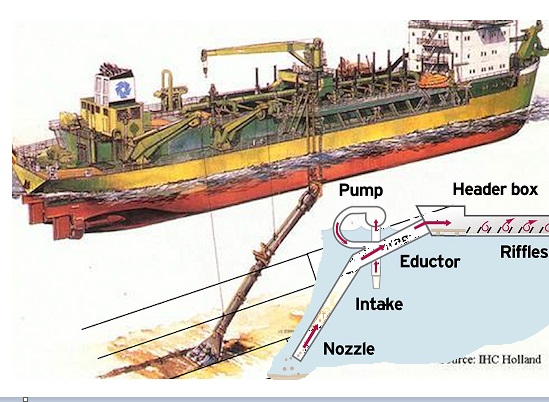
New technology allowing for deeper mining and intensified mining: A massive seafloor EV rover.

The International Seabed Authority has already issued licenses for exploratory mining across 1.2 million square kilometers of ocean floor. As mentioned earlier, this regulatory body is almost unknown, and its 24-person Legal and Technical Committee is solely responsible for the detailed scrutiny of proposals and environmental safeguards.

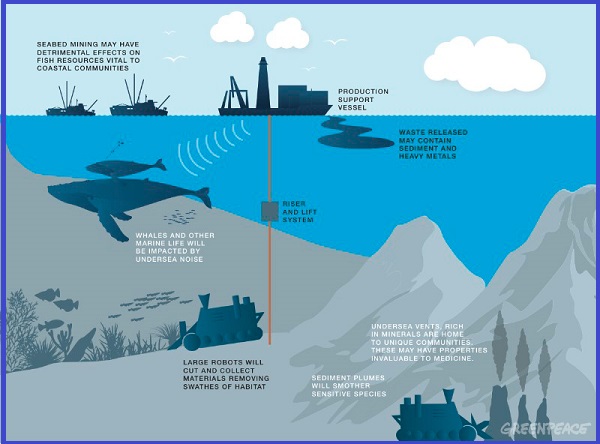
GreenPeace Graphic Deap Seabed Mining

Supplemental:

Deep sea mining: the new resource frontier? (Al-Arabiya)
http://english.alarabiya.net/en/views/news/world/2014/11/12/Deep-sea-mining-the-new-resource-frontier-.html

Marine mining: Underwater gold rush sparks fears of ocean catastrophe (The Guardian)
http://www.theguardian.com/environment/2014/mar/02/underwater-gold-rush-marine-mining-fears-ocean-th… 

New Interest in Seafloor Mining Revives Calls for Conservation (National Geographic)
http://voices.nationalgeographic.com/2013/12/11/new-interest-in-seafloor-mining-revives-calls-for-co… 

Deep sea mining hopes hit by New Zealand decision (Financial Times)
http://www.ft.com/intl/cms/s/0/6edaeea8-b894-11e4-a2fb-00144feab7de.html#axzz3VFC8Wm1y 

Scientists call for temporary halt on new deep sea mining projects (Popular Science)
http://www.ft.com/intl/cms/s/0/6edaeea8-b894-11e4-a2fb-00144feab7de.html#axzz3VFC8Wm1y

Shedding some light on the International Seabed Authority (University of Southampton)
http://moocs.southampton.ac.uk/oceans/2014/03/09/shedding-some-light-on-the-international-seabed-authority/

Fined $2K For Possessing Living Snakehead “Frankenfish”

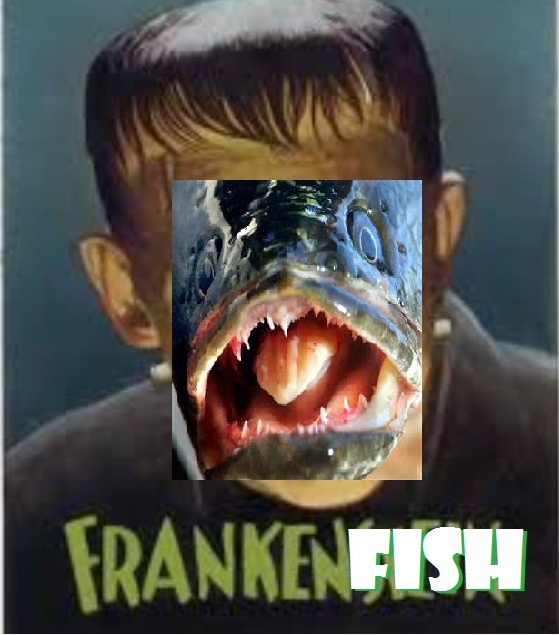
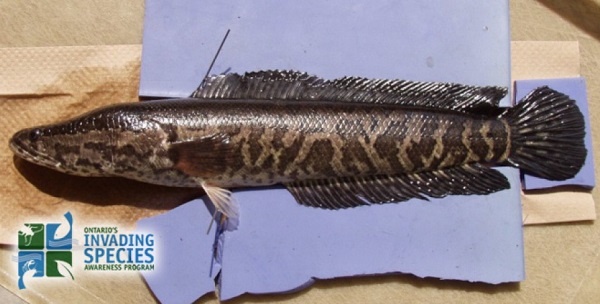
Frankenfish- the other name for the Snakehead. Frankenfish usually refer to genetically modified fish (search genetically modified salmon for more) but due to the 2004 movie "Frankenfish" which starred a Snakehead- this term is being used more and more for The northern snakehead, (Channa argus). This invasive species is now being discovered throughout North America and the United Kingdom. CP
Frankenfish- the other name for the Snakehead. Frankenfish usually refer to genetically modified fish (search genetically modified salmon for more) but due to the 2004 movie “Frankenfish” which starred a Snakehead- this term is being used more and more for The northern snakehead, (Channa argus). This invasive species is now being discovered throughout North America and the United Kingdom. CP

A Chatham man has been fined $2,000 for illegal possession of snakehead fish. Yung-Chieh Liu pleaded guilty to illegally possessing live invasive fish. In addition to the fine, two snakehead fish were also forfeited to the Crown.

Justice of the Peace Malcolm Rogers heard the case in the Ontario Court of Justice, Blenheim, on April 17, 2013.

The Ministry of Natural Resources reminds residents that it is against the law to have certain invasive species in your possession, because they pose a serious threat to native species and ecosystems. 

“The Northern Snakehead might enjoy life in Canada, but it would not be welcome here. This fish, native to eastern Asia, has invaded parts of the United States, where it threatens to disrupt ecosystems and native fish species unaccustomed to its presence. Scientists at Fisheries and Oceans Canada (DFO) want to stop the snakehead from establishing a base in Canadian waters – and building a strong defence is the key to success.

The risk posed by snakeheads is very real. Several of the 36 species have a long history of invasions, and are very hardy. They can even live out of the water for a time – to pursue their prey or find a new home if the former one dries up. They survive winter under the ice of northern lakes; some have even recovered from being frozen! The Northern Snakehead, in particular, thrives on conditions that are similar to many Canadian waters. It is a voracious predator, and it grows rapidly to an adult length of 1.5 metres or more.

In their native waters, some snakehead species are fished for food or used for aquaculture. Many are exported to other countries where they may be sold live in food markets and pet shops. Scientists believe that the Northern Snakeheads found in lakes in some US cities may have originated from food markets. Some may have been released to the wild in an ill-advised attempt at fish stocking or because they were no longer wanted as pets.” Department of Fisheries and Oceans Canada

Be on the lookout for the Snakehead. Report any sightings and help keep this invader out of Ontario's waters.
Be on the lookout for the Snakehead. Report any sightings and help keep this invader out of Ontario’s waters.

For further information about fishing regulations, please consult the 2013 Recreational Fishing Regulations Summary, available at ServiceOntario/Government Information Centres, licence issuers and at ontario.ca/fishing.


To report a natural resources violation, call 1-877-TIPS-MNR (847-7667) toll-free any time or contact your local ministry office during regular business hours.  You can also call Crime Stoppers anonymously at 1-800-222-TIPS (8477).