
Tag Archives: Back to the Future

The Biggest Art Collecting Mistake I Made

Before I started collecting art, I dipped my toe in the water by buying prints and art posters (the latter still has a soft spot in my heart). One thing that often gets overlooked when collecting works on paper in the pursuit of affordable art is just how expensive framing is. Now, when given a choice between a painting on canvas or paper, I’ll sometimes choose the former to avoid the cost of framing.

Polish Rocky Poster

Polish Back to the Future poster.

Years and years ago, on a trip to Cincinnati for the FotoFocus Biennial, I picked up this Polish theatre poster for a production of Who Killed Virginia Woolf. I love the history of Polish film posters, which have a distinct style that circumvented strict rules of the Stalinist regime around art making (you can read more about the history of that here). I love the weirdness and darkness of the posters, and with this particular poster, I love(d) the deeply pigmented pink.

Now I present my biggest art mistake:

The poster four years ago:

Hi, Raffi

And the poster now:

I’m sure being directly beside a window doesn’t help matters

All the pink pigment is gone. Remember when Kim Kardashian wore Marilyn Monroe’s dress to the Met Gala and everyone was furious that she ruined something archival? That’s basically how I feel.

Lesson Learned: Go for the more expensive glass or acrylic option!

I emailed Mitch Robertson at Superframe, a top-of-the-line frame shop in Toronto, to ask about how I could have prevented this. His first response was to express disbelief: Were they really the same poster? Yes, unfortunately, it is.

He followed up with an in-depth breakdown of why the glass, specifically the UV protection, is important to consider when framing:

For art or anything that is light sensitive, the type of glass or acrylic used is one of the most important decisions in framing. The sun and any source of UV light can bleach or shift the colours in a print or photograph in particular and warm colours like red are the most susceptible.

To prevent this, clients should choose a glass or acrylic with a high UV filter. Standard glass and acrylic typically block around 50% of UV light. Conservation options block 99% of UV light but look much like regular glass. Finally, low reflection glass and acrylics offer a much better viewing experience and offer 92 to 99% UV protection.

There is a price difference between the three levels so deciding which option is right for you can depend on budget as well as the location the art will hang as well as how vulnerable the art is to UV light. A reputable framer should have a range of options available and can explain the pros and cons for each.

While the glazing is a very important part of the decision for protecting your new art, other factors such as how the art is hinged and the quality of matboard and backing will also affect the art over time and can lead to discoloration if the materials and hinging methods are not to museum standards.

Mitch’s response demonstrated something I came to learn the hard way: it’s not the time to cut costs when choosing the type of UV glass. A sidenote is I’ve also had polaroids fade after framing in store-bought frames, so if there are family photos that are important, the same lesson applies.

I then started thinking about a conversation I had in 2021 with Monique Palma Whittaker, an art conservator who works between Toronto and Italy. We discussed the importance of collectors being stewards of artworks, propelling them into the future for the next generation. This conversation has always stuck with me because it answers a question I think about often: What is the purpose of art collecting? The answer might be as simple as taking care of art for our lifetime, so that it can exist into the future. It’s a question of maintaining history!

When collecting, it’s not just about the cost of the artwork, but the cost to properly take care of it for its lifespan. If that price is too high, whether it be framing or a properly temperature-controlled room, then it’s better to collect something you can holistically afford to take care of. For the Silo, Tatum Dooley.
Circular Economy Is New Direction For Waste Free Ontario

In late Spring 2016, Ontario passed legislation to divert more waste from landfills, create jobs, help fight climate change and lead towards a waste-free province. Currently, Ontario is producing too much waste, and not recycling enough. Over eight million tonnes of waste is sent to landfill each year. Absolute greenhouse gas emissions from Ontario’s waste have risen by 25 per cent between 1990 and 2012 as the amount of waste disposed in landfills has increased.

The Waste-Free Ontario Act  will: encourage innovation in recycling processes and require producers to take full responsibility for their products and packaging, lower recycling costs and give consumers access to more convenient recycling options to help fight climate change by:

-reducing greenhouse gas pollution that results from the landfilling of products that could otherwise be recycled or composted
-overhaul Waste Diversion Ontario into the Resource Productivity and Recovery Authority, a strong oversight body with new compliance and enforcement powers that will oversee the new approach and existing waste diversion programs until transition is complete.

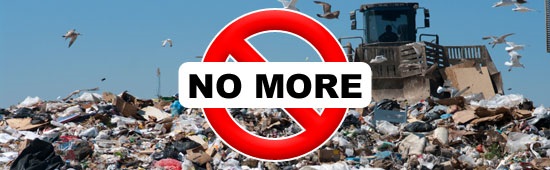
Solid Waste No More

The province will also be finalizing its draft Strategy for a Waste-Free Ontario: Building the Circular Economy, within three months of the legislation coming into effect. The strategy outlines Ontario’s vision for a zero waste future and proposed plan to implement the legislation.
Harnessing the value of waste as a resource is part of the government’s economic plan to build Ontario up and deliver on its number-one priority to grow the economy and create jobs. The four-part plan includes investing in talent and skills, including helping more people get and create the jobs of the future by expanding access to high-quality college and university education. The plan is making the largest investment in public infrastructure in Ontario’s history and investing in a low-carbon economy driven by innovative, high-growth, export-oriented businesses. The plan is also helping working Ontarians achieve a more secure retirement.

QUOTES
“Ontario is moving in an exciting new direction for managing waste in the province. The Waste-Free Ontario Act is an important step in creating Ontario’s circular economy — a system in which products are never discarded, but reintroduced and reused or recycled into new products. Managing our resources more effectively will benefit Ontarians, our environment and economy and support our efforts to fight climate change.”
Glen Murray, Minister of the Environment and Climate Change

QUICK FACTS
Every 1,000 tonnes of waste diverted from landfill generates seven full-time jobs, $360,000 in wages (paying above the provincial average) and $711,000 in GDP.
Every year in Canada, an estimated $1 billion in valuable resources is lost to landfill.
Eventually the Waste-Free Ontario Act will eliminate industry funding organizations such as the Ontario Tire Stewardship and Ontario Electronic Stewardship.
The Blue Box program is available in about 95 per cent of Ontario households and keeps approximately 65 per cent of residential printed paper and packaging from landfills.

LEARN MORE
Read about the draft Strategy for a Waste-Free Ontario: Building the Circular Economy
Learn more about Ontario’s current waste programs

BACKGROUNDER via Ministry of the Environment and Climate Change
The Waste-Free Ontario Act and Strategy
Ontario has passed the Waste-Free Ontario Act and will be finalizing the draft Strategy for a Waste-Free Ontario: Building the Circular Economy, within three months of the legislation coming into effect.
Together, the proposed legislation and strategy would:
-Foster innovation in product and packaging design that encourages businesses to design long-lasting, reusable and easily recyclable products
-Boost recycling across all sectors, especially in the industrial, commercial and institutional sectors, which will reduce waste and lower greenhouse gas emissions
-Incent companies to look for ways to make their recycling processes more economical while staying competitive
-Shift the costs of the blue box from municipal taxpayers to producers while continuing to provide convenient collection services for Ontarians.
-Develop an action plan to reduce the amount of organic materials going to landfills.

The draft Strategy embraces a vision of “an Ontario where we have zero waste and zero greenhouse gas emissions from the waste sector and where all resources, organic or non-organic, are used and reused productively, maximizing their recovery and reintegrating recovered materials back into the economy.”
Ontario’s vision would be fulfilled with the draft Strategy’s two goals: a zero waste Ontario and zero greenhouse gas emissions from the waste sector. To achieve these goals Ontario would work towards systematically avoiding and eliminating the volume of waste, while maximizing the conservation and recovery of resources. This would also help the province meet its climate change commitments and help Ontario build a low-carbon economy.
Disponible en Français