| Featuring over 120 works from more than 80 U.S. and international lenders, this exhibition marks the first major New York presentation of either artist’s work in over two decades—and their first at The Met. |
Exhibition Dates: October 4, 2026–January 31, 2027
Exhibition Location: The Met Fifth Avenue, Gallery 899, The Tisch Galleries
(New York, February, 2026)—Krasner and Pollock: Past Continuous at The Metropolitan Museum of Artis a major exhibition that charts the full arc of the careers of Lee Krasner (1908–1984) and Jackson Pollock (1912–1956) in parallel, examining the distinct yet connected practices of these artistic peers and life partners. On view October 4, 2026, through January 31, 2027, it marks the first major New York presentation devoted to either artist in more than 20 years, introducing their work to a new generation while reassessing their enduring impacts on modern and contemporary art.
A meeting of two great artists
Krasner and Pollock were emerging artists in New York when they met on the occasion of being included in a 1942 exhibition organized by the artist John Graham. They married in 1945 and moved to Springs, Long Island, where they remained entwined personally, artistically, and professionally until Pollock’s death in 1956. Pollock’s life’s work had secured his legacy, while the nearly three decades that Krasner survived him marked some of the most transformative years of her career. Drawing its subtitle, Past Continuous, from a 1976 painting by Krasner, the exhibition traces parallel lives and practices, first forged by lived experience and then shadowed by memory. It foregrounds the range and art historical significance of Krasner’s work while offering a sustained examination of Pollock’s rich and complex practice.
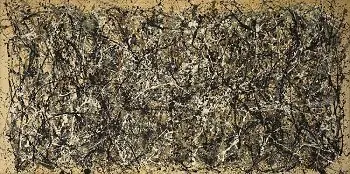
Number 31. 1950. Jackson Pollock
Outstanding philanthropy
The exhibition is made possible by Kenneth C. Griffin and Griffin Catalyst, Marina Kellen French, and the Barrie A. and Deedee Wigmore Foundation.
Additional support is provided Trevor and Alexis Traina, the Aaron I. Fleischman and Lin Lougheed Fund, The Huo Family Foundation, and Joyce Kwok.
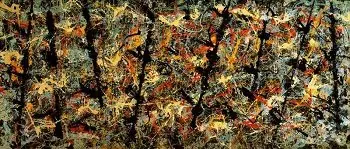
Number 11. 1952. Jackson Pollock
A novel way of reexamining modern art
“With its distinctive premise and scope, Krasner and Pollock: Past Continuous exemplifies The Met’s commitment to reexamining modern art through rigorous scholarship and fresh perspectives,” said Max Hollein, Marina Kellen French Director and Chief Executive Officer of The Metropolitan Museum of Art. “By considering each artist on their own terms while also foregrounding their consequential relationship, the exhibition situates Krasner’s and Pollock’s work within a broader cultural and artistic context—an approach central to the mission of The Met’s Department of Modern and Contemporary Art and to the vision of the forthcoming Oscar L. Tang and H.M. Agnes Hsu-Tang Wing, opening in 2030. This project affirms Krasner and Pollock not only as defining figures of their moment, but as artists whose work continues to shape and inspire future generations.”
What makes an artist revolutionary?
“Krasner and Pollock: Past Continuous begins with the fundamental premise that these artists are equals, partners in life, giants in the history of art, and revolutionaries who defined what abstraction could be,” said David Breslin, Leonard A. Lauder Curator in Charge, Department of Modern and Contemporary Art, The Met. “Each found a partner who would insist on the primacy of art over life; and they both aspired to an art that was forged out of historical connections but that also promised freedom and radical possibility in a world forever changed by war. The exhibition concerns entwined lives but is also about how different artistic directions come from shared terrain.”
“Krasner and Pollock: Past Continuous approaches these artists not as a single story, but as two practices unfolding in proximity over time,” said Brinda Kumar, Associate Curator, Department of Modern and Contemporary Art, The Met. “The exhibition examines how Krasner and Pollock shared a commitment to testing the possibilities of abstraction—through shifts in scale, material, and form—and how those investigations continued to evolve along distinct trajectories.”
Krasner and Pollock: Past Continuous follows each artist’s life and work.
The exhibition highlights their differences as much as their interrelation, with some galleries that place the artists together and others where they are presented independently. Krasner and Pollock were shaped by their distinct upbringings and formative trainings. Krasner adopted and negotiated the tenets of the European avant-garde, particularly Pablo Picasso, Henri Matisse, and Piet Mondrian. Her training under Hans Hofmann was key to her development. Pollock’s network of broad influences included Thomas Hart Benton and American Regionalism, Mexican mural traditions, Surrealism, and even his own family of artists.
Their early paths unfold as complementary divergences, tracing distinct strands of American modernism that would ultimately converge in the rupture known as Abstract Expressionism. For Pollock, his breakthrough was the “drip” technique, a radical mode of painting that flourished in a condensed but prolific period from 1946 to 1951. Krasner’s varied practice was typified by ceaseless explorations of abstraction, often cued by her abiding interest in the possibilities of nature and color. This manifested in bold collages, gestural canvases and vividly hued hard-edge painting. Historically, Pollock’s reputation has eclipsed Krasner’s. LIFE Magazine asked in 1949 if Pollock was “the greatest living painter in the United States.” His early death and posthumous media attention further amplified his fame and eclipsed critical appraisal of Krasner’s contributions. Today, both artists’ practices are rightly recognized as key to the innovations of art from the mid-20th century onwards. This exhibition continues and amplifies this reevaluation.
Rarely loaned works
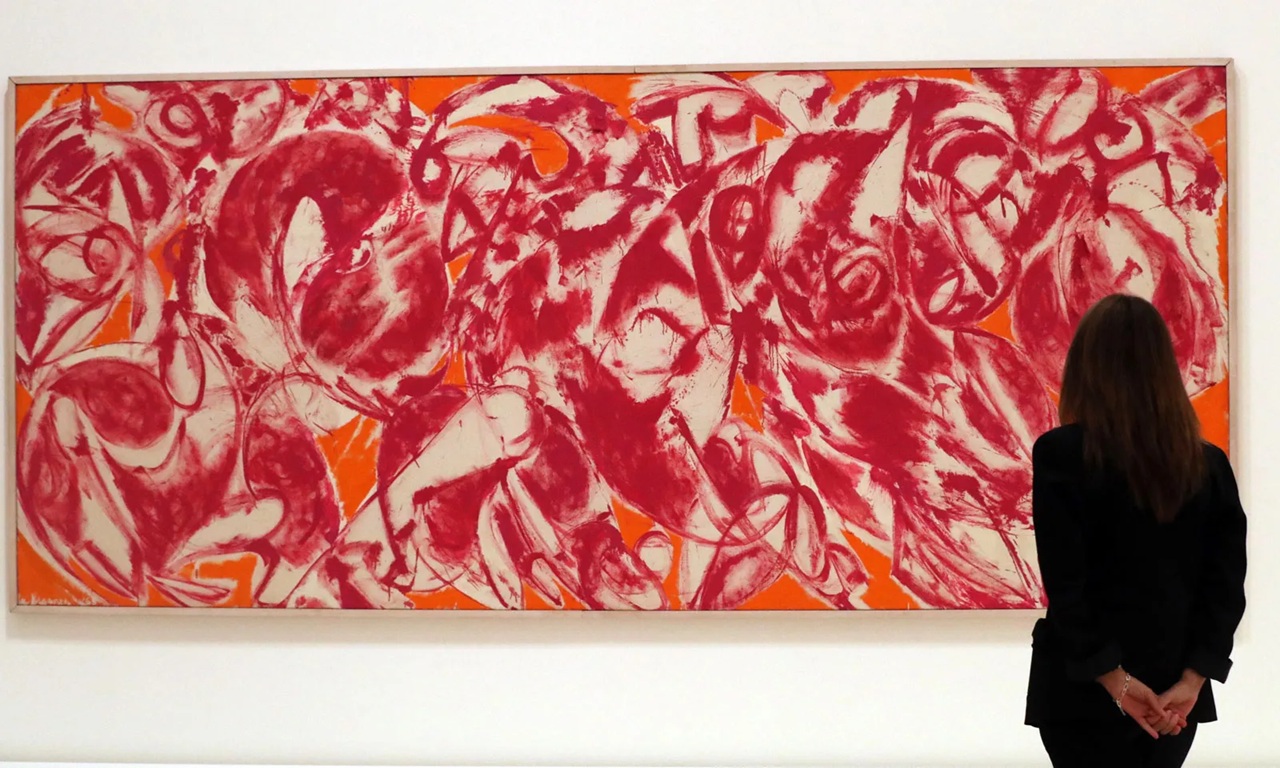
Combat. 1965. Lee Krasner
The exhibition draws on The Met collection and rarely loaned works from more than 80 U.S. and international lenders, bringing together over 120 paintings, works on paper, and ephemera to reconsider Krasner’s and Pollock’s careers—both on their own terms and in dynamic relation to each another and their shared artistic context. Major institutional lenders include Peggy Guggenheim Collection, MoMA, the Whitney Museum of American Art, Tate, National Gallery of Art, National Gallery of Victoria, Centre Pompidou, Buffalo AKG Art Museum, Dallas Museum of Art, The Art Institute of Chicago, and SFMoMA. The exhibition will also include several rarely seen works from important private collections.
Organized into 12 chapters that span each artist’s career and are punctuated by defining moments, Krasner and Pollock: Past Continuous unfolds from the 1930s through the postwar years to the end of their respective lives, moving between moments of convergence and difference. The exhibition’s design, informed in part by historic spaces and installations, enhances moments of exchange—across time and practices—while allowing for discrete encounters with works by each artist, from Krasner’s Little Images series and Pollock’s drip paintings of the late 1940s to his monumental canvases in the 1950s and Krasner’s Umber and Earth Green series. The exhibition charts ongoing dialogues—Pollock’s late return to earlier motifs in the mid-1950s and Krasner’s extended engagement through the 1960s and 1970s with artists such as Klee, Picasso, Mondrian, and Matisse. This presentation will reveal two artists in constant negotiation with each other, themselves, and the cultural, political, and aesthetic stakes of their time.
A constellation of landmark works anchor the exhibition’s exploration of both artists’ practices, including Lee Krasner’s Composition (1949), The Seasons (1957), The Eye is the First Circle (1960), and Combat (1965), along with Jackson Pollock’s Stenographic Figure (1942), Guardians of the Secret (1943), Number 1, 1950 (Lavender Mist) (1950), and The Deep (1953). Two earlier exhibitions, Krasner/Pollock: A Working Relationship (co-organized by Guild Hall and Grey Art Gallery, 1981) and Lee Krasner-Jackson Pollock: Kunstlerpaare Kunstlerfreunde (Kunstmuseum Bern, 1989–90), concentrated on the approximately 15-year overlap in the artists lives, from 1941, when they met, until Pollock’s death in 1956. Krasner and Pollock: Past Continuous is the first exhibition to consider both artists’ practices, in their full chronological sweep, together.
The Met has long been significant for both Krasner and Pollock.
Pollock first exhibited a painting at The Met in 1943 in an exhibition in support of World War II. By the end of the decade, he would be among the artists—The Irascibles—who mounted a notable critique of the Museum’s then-prevailing attitude to contemporary art. However, a short while after Pollock’s death, The Met acquired the landmark painting Autumn Rhythm (Number 30) (1950). The Met’s collection of works by Lee Krasner—from her earliest self-portraits to her late magnificent Rising Green (1972)—includes important gifts to the Museum by the artist during her lifetime. The Met was notably also the venue for Krasner’s memorial service in 1984. Krasner and Pollock: Past Continuous builds on this history, marking the Museum’s first major exhibition devoted to either artist. A focused survey, the exhibition traces the arcs of their artistic developments, offering fresh perspectives on two of the most influential figures of 20th-century art.
The exhibition also reflects The Met’s commitment to showcasing artists whose work continues to shape how art is made and understood today. Krasner’s and Pollock’s contributions to modernism and their serious engagement with the possibilities of painting continues to be significant for the work of contemporary artists. In advance of the opening of the Tang Wing for Modern and Contemporary Art, opening in 2030, Krasner and Pollock: Past Continuous models a curatorial approach that reexamines canonical narratives and connects 20th-century innovations to the concerns of today’s artists and audiences.
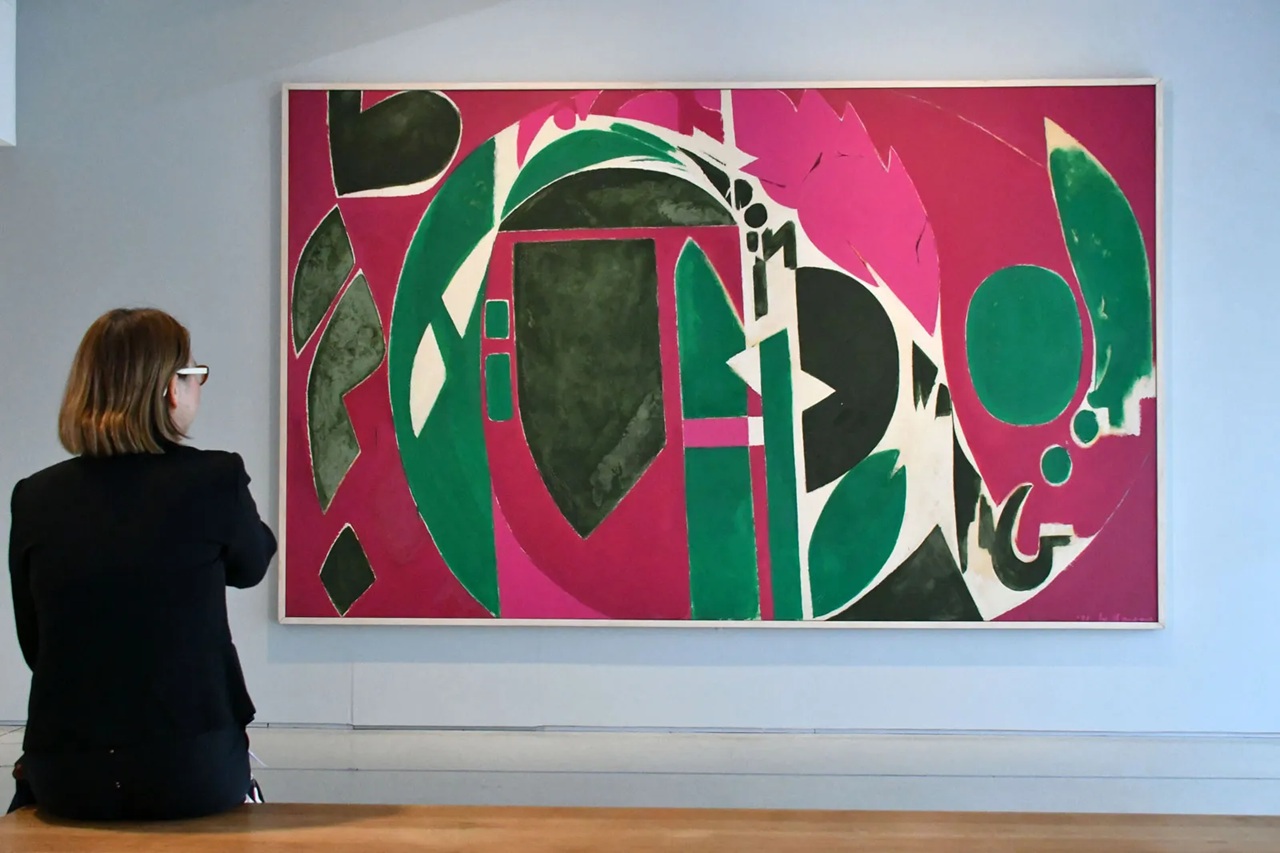
Palingenesis. 1971. Lee Krasner
Exhibition Catalogue
The exhibition’s accompanying catalogue, Krasner and Pollock: Past Continuous, expands the project’s central themes through newly commissioned texts. Featured essays by the exhibition’s curators as well as Johanna Fateman, Prudence Peiffer, and Matthew Holman consider a range of topics, including Krasner and Pollock’s intertwined creative lives as an artist couple, their strategies of abstraction in the 1950s, and the transatlantic reception of their work, while artist Amy Sillman offers a contemporary painter’s perspective on artistic breakthrough and legacy. The volume also includes an illustrated, interwoven chronology as well as reflections by leading contemporary artists, underscoring the enduring resonance of Krasner’s and Pollock’s work across generations.
The catalogue is made possible by the Pollock-Krasner Foundation.
Additional support is provided by the Aaron I. Fleischman and Lin Lougheed Fund, The Robert David Lion Gardiner Foundation, Karen and Sam Seymour, the Wyeth Foundation for American Art, Suzanne Deal Booth, and Kelly Williams and Andrew Forsyth.
For the Silo, Julie Niemi.
Credits and Related Content
Krasner and Pollock: Past Continuous is curated by David Breslin, Leonard A. Lauder Curator in Charge, and Brinda Kumar, Associate Curator, with the assistance of CJ Salapare, Research Associate, all of the Department of Modern and Contemporary Art, The Met.
The Met will host a variety of exhibition-related programs, to be announced at a later date.
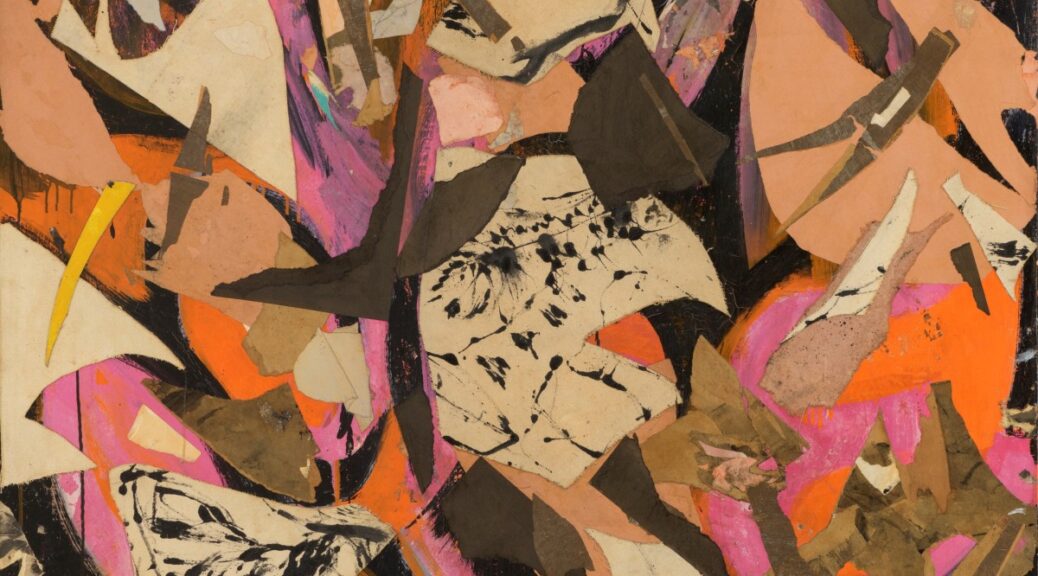
Featured Image: Lee Krasner (American, 1908–1984), Bald Eagle, 1955, Oil, paper, and canvas collage on linen, 77 × 51 1/2 in. (195.6 × 130.8 cm), ASOM Collection © 2026 Pollock-Krasner Foundation / Artists Rights Society (ARS), New York