
1972 Lamborghini Miura P400 SV
June, 2024. Monterey Jet Center, California, USA
Estimate:$2,800,000 – $3,500,000 USD/ $3,834,000 CAD – $4,792,900 CAD

2 / 128

3 / 128

4 / 128

5 / 128

6 / 128

7 / 128

8 / 128

9 / 128

10 / 128

11 / 128
12 / 128

13 / 128

14 / 128

15 / 128

16 / 128

17 / 128

18 / 128

19 / 128

20 / 128

21 / 128

22 / 128

23 / 128

24 / 128

25 / 128

26 / 128

27 / 128

28 / 128

29 / 128
30 / 128

31 / 128

32 / 128
33 / 128

34 / 128

35 / 128

36 / 128
37 / 128

38 / 128

39 / 128

40 / 128

41 / 128

42 / 128

43 / 128

44 / 128

45 / 128

46 / 128
47 / 128

48 / 128

49 / 128

50 / 128

51 / 128

52 / 128

53 / 128

54 / 128

55 / 128

56 / 128
57 / 128
58 / 128

59 / 128

60 / 128

61 / 128
62 / 128

63 / 128

64 / 128

65 / 128

66 / 128

67 / 128

68 / 128

69 / 128

70 / 128

71 / 128

72 / 128

73 / 128

74 / 128

75 / 128

76 / 128

77 / 128

78 / 128

79 / 128

80 / 128

81 / 128

82 / 128

83 / 128

84 / 128

85 / 128

86 / 128

87 / 128

88 / 128

89 / 128

90 / 128

91 / 128

92 / 128

93 / 128

94 / 128

95 / 128

96 / 128

97 / 128

98 / 128

99 / 128

100 / 128

101 / 128

102 / 128

103 / 128

104 / 128

105 / 128

106 / 128

107 / 128

108 / 128

109 / 128

110 / 128

111 / 128

112 / 128

113 / 128

114 / 128

115 / 128

116 / 128

117 / 128

118 / 128

119 / 128

120 / 128

121 / 128

122 / 128

123 / 128

124 / 128
125 / 128

126 / 128

127 / 128

128 / 128


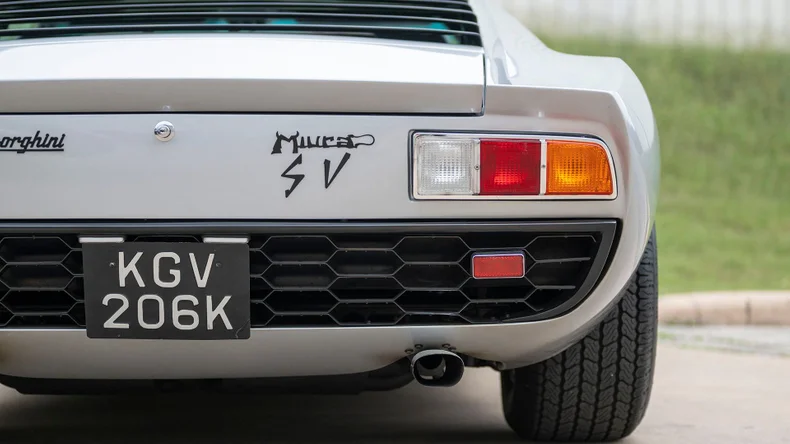




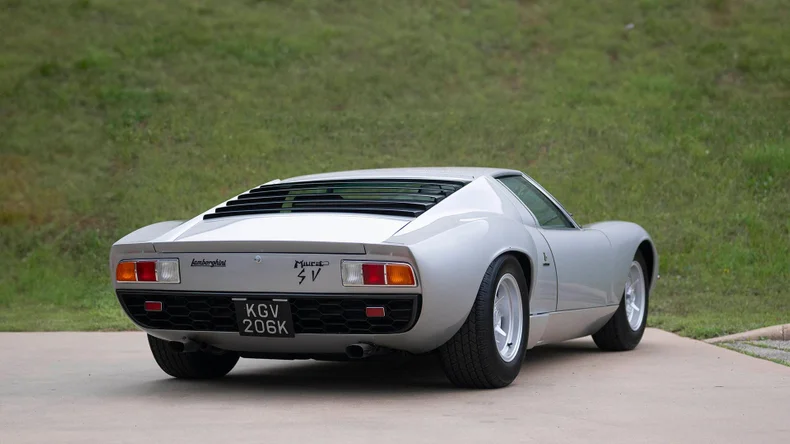


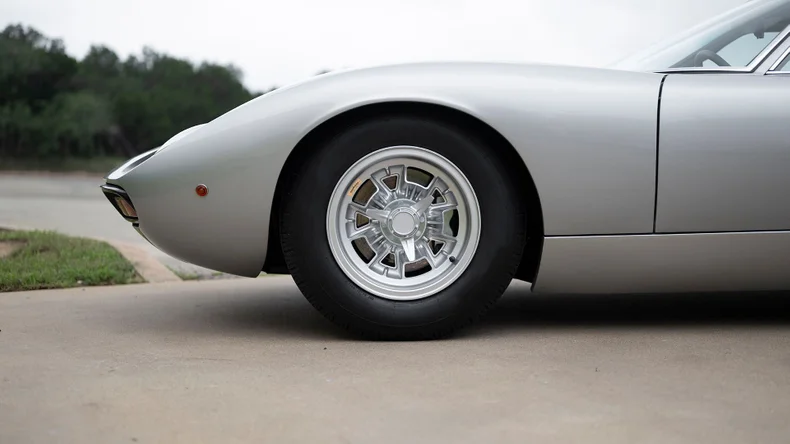








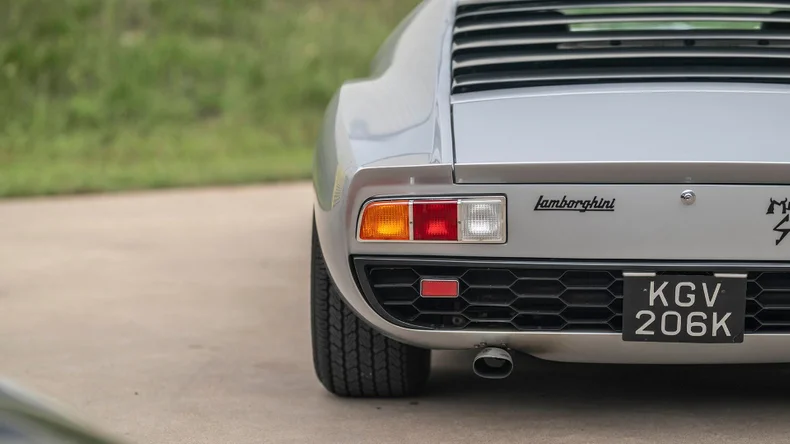












- One of 150 Miura SVs (Sprinto Veloce) built from 1971-1973
- One of just 96 late-production “split-sump” Miura P400 SVs, and one of a mere 76 examples completed during the final year of production
- German delivery example originally equipped with rare factory air conditioning
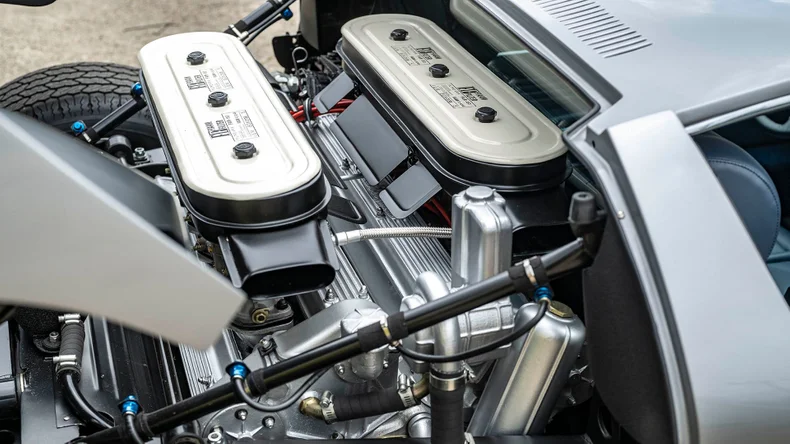
- Retains its matching-numbers engine benefitting from a rebuild by Top Motors Salvioli of Nonantola Modena, Italy and Team CJ Works of Austin, TX
- Recipient of a meticulous restoration by ex-Lamborghini factory workers and original Lamborghini parts suppliers, overseen by legendary Lamborghini test driver Valentino Balboni
- Well documented example of the groundbreaking Miura in its most desirable SV specification
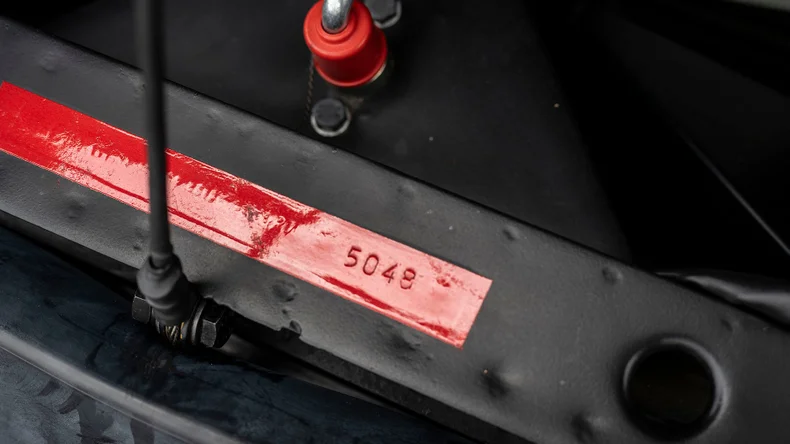
Chassis No. 5048
Engine No. 30735
Body No. 835
Few cars deserve to be mentioned in the same breath as the all-conquering Ford GT40, yet the Lamborghini Miura is just such a car.
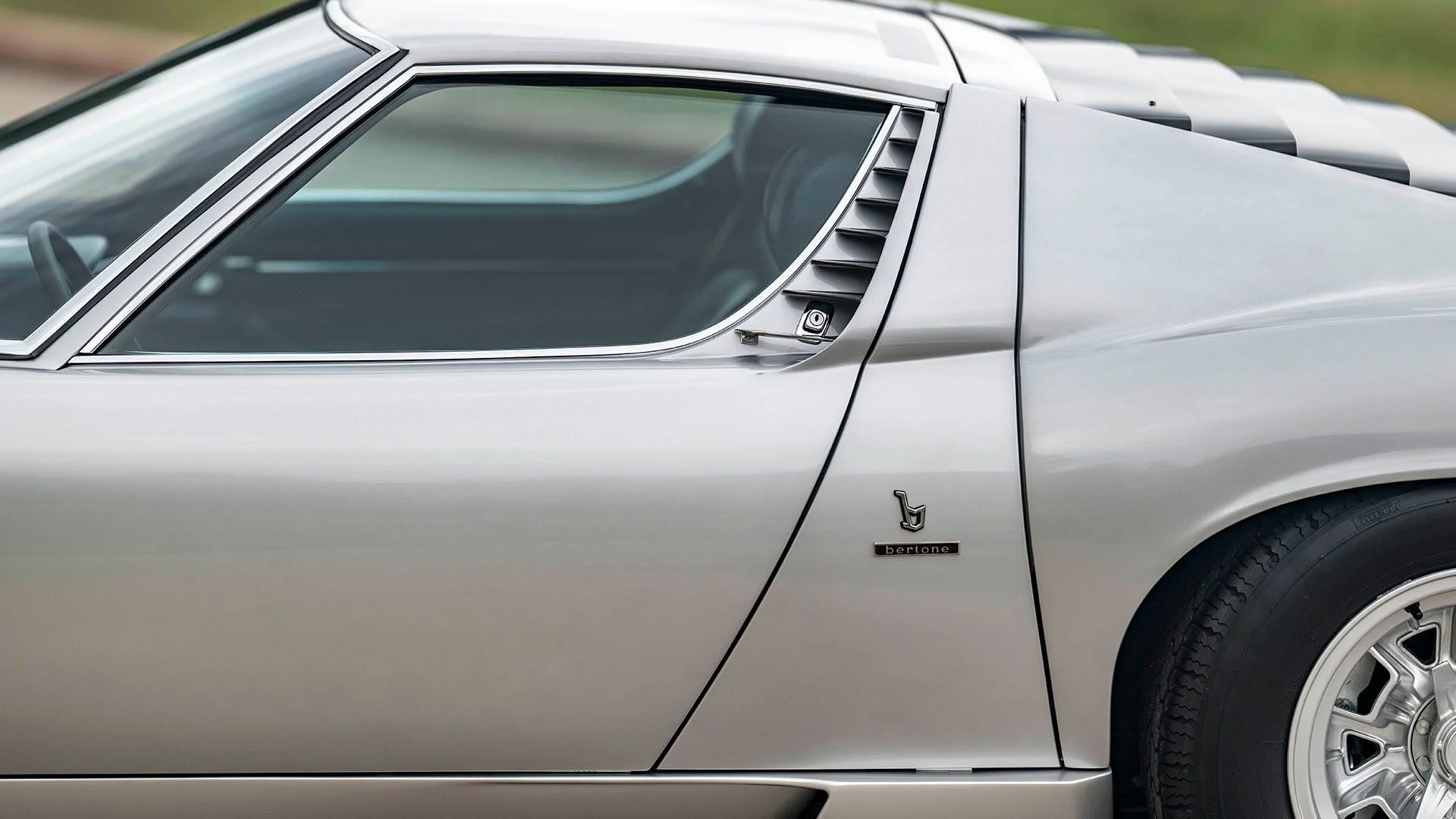
Months before the mid-engined Ford would topple Ferrari at the 1966 24 Hours of Le Mans in one of the most famous 1-2-3 finishes in motorsport history, precocious Lamborghini engineers Giampaolo Dallara and Paolo Stanzani set out to implement the radical mid-engined architecture into a road-going chassis. The unclothed P400 was presented at the 1965 Turin Auto Show with a massive Giotto Bizzarrini-designed V12 mounted transversely in the middle, appearing again just a year later at Geneva with coachwork that, to this day, is viewed by many as Bertone’s crowning achievement. The pen of 25-year-old Marcello Gandini was responsible for the Miura’s dramatic shape, which stunned attendees of the 1966 Geneva Motor Show with its impossibly low stance, voluptuous rear quarters, bulging air intakes, and distinctive “eyelash” headlights. Just as Ford had outclassed Ferrari with the ingenious packaging of the GT40, the Prancing Horse was caught flat-footed yet again when the P400 Miura went on sale in 1967, waiting until 1971 to respond with its own mid-engined 365 GT4 BB.
The disgruntled former Ferrari owner Ferruccio Lamborghini had achieved his quest of building a more outlandish and capable sports car than Enzo Ferrari.
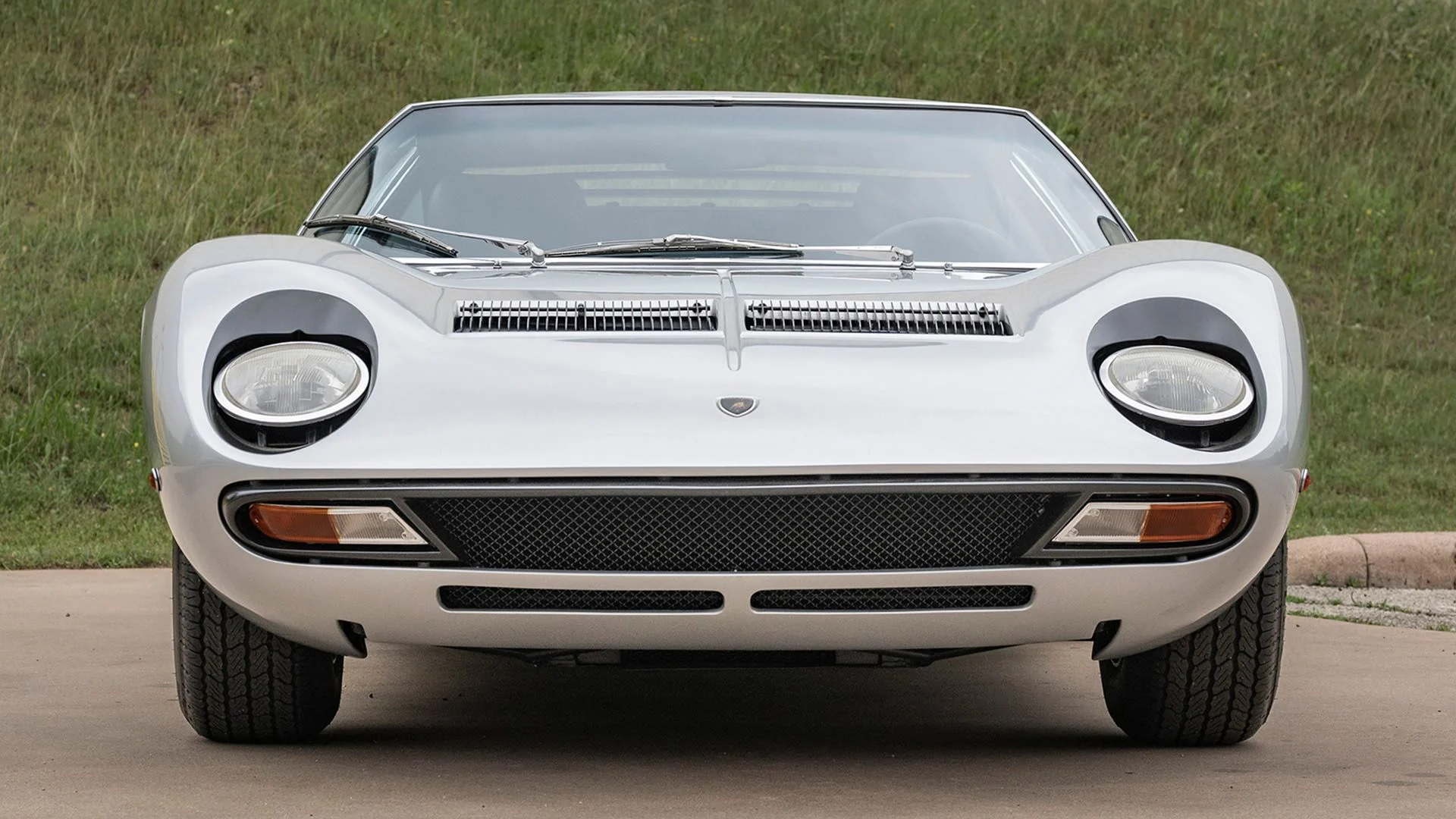
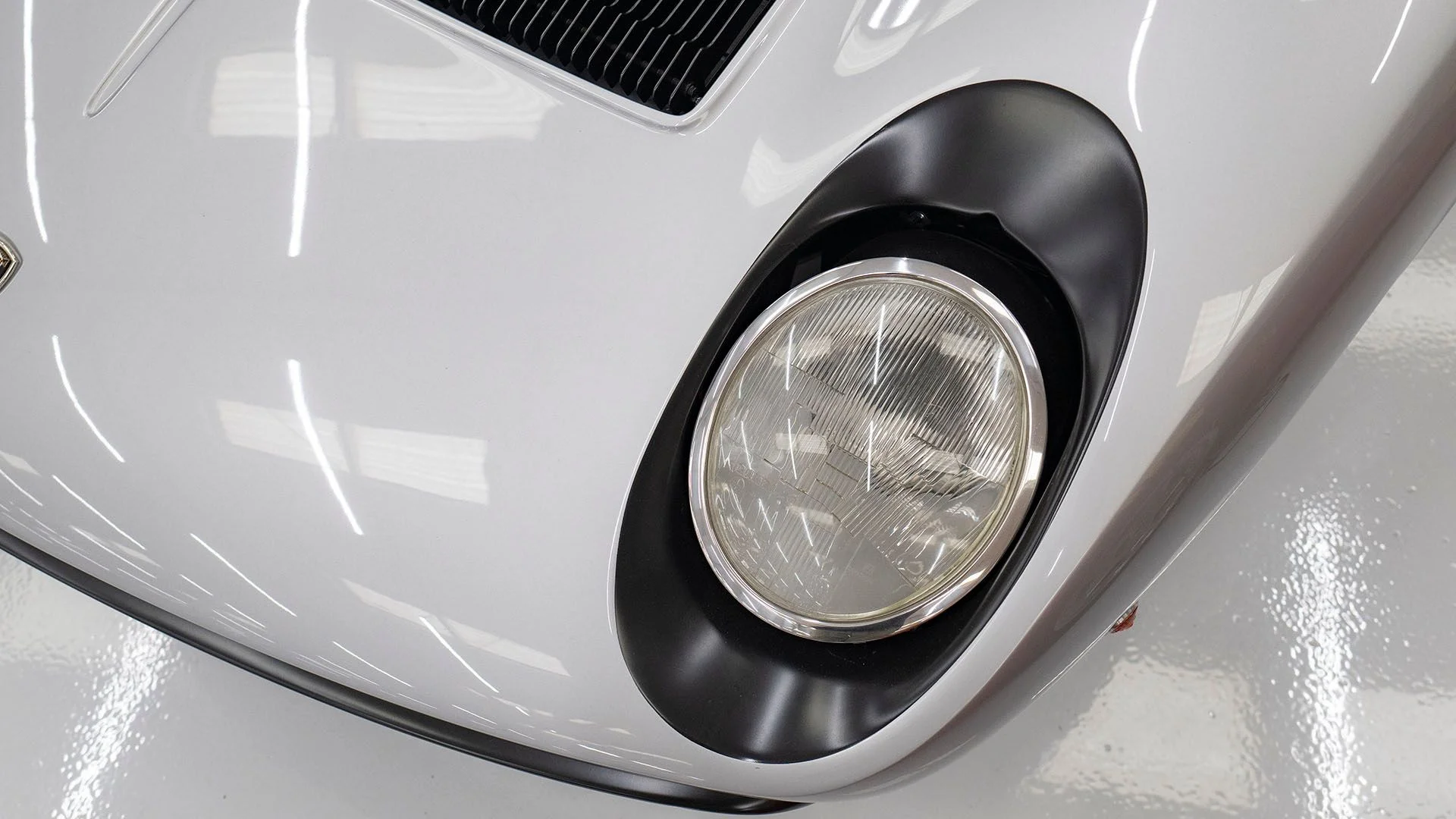
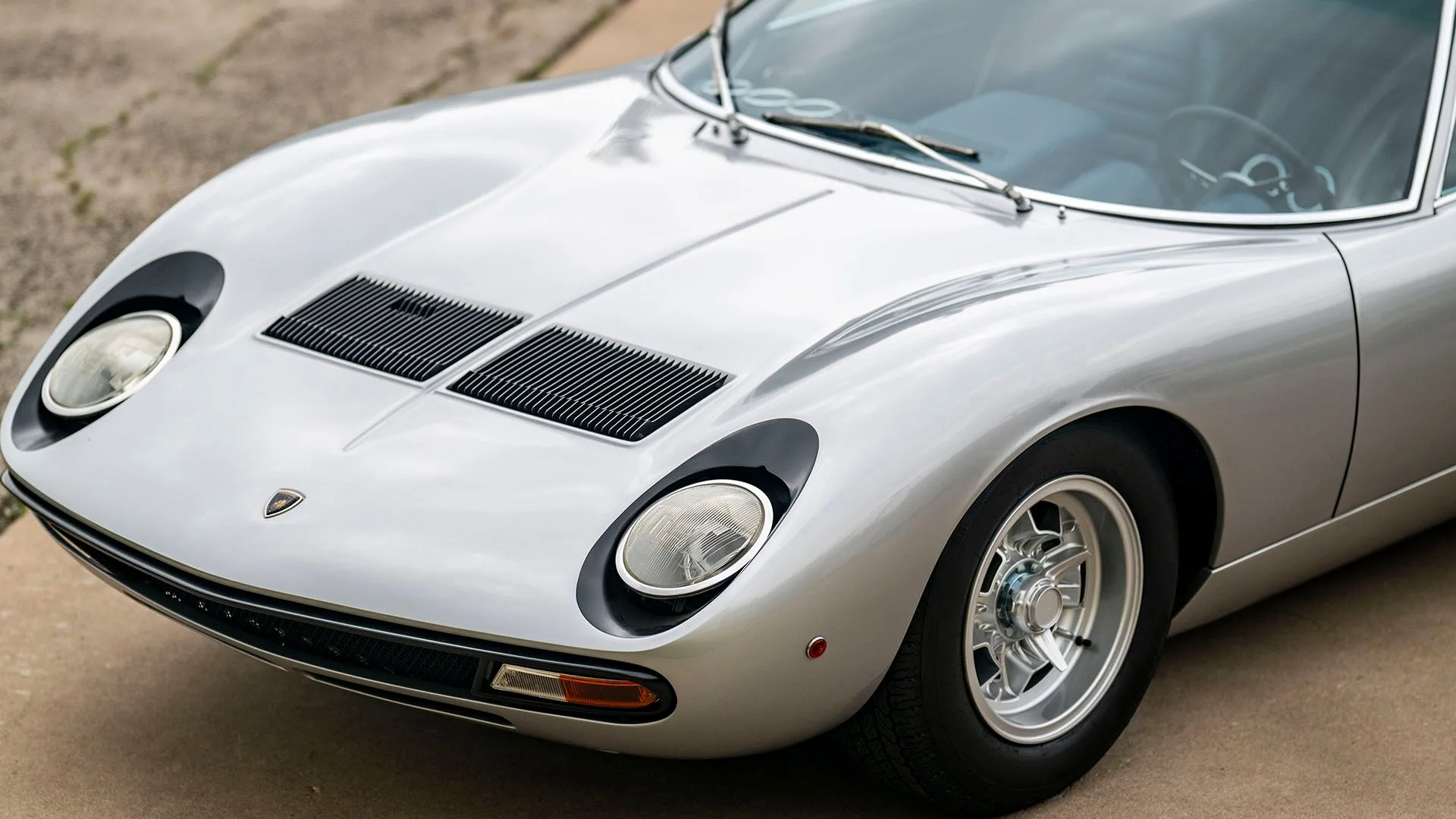
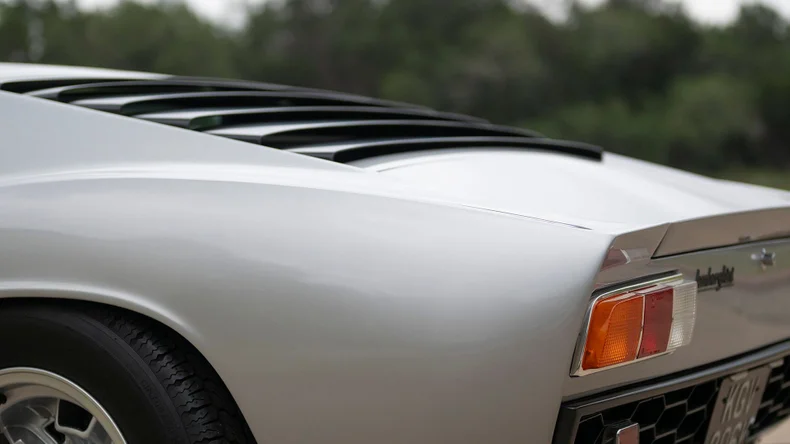
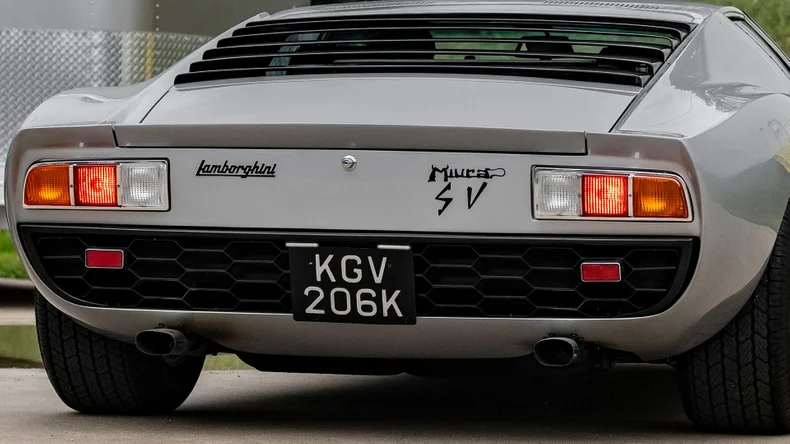
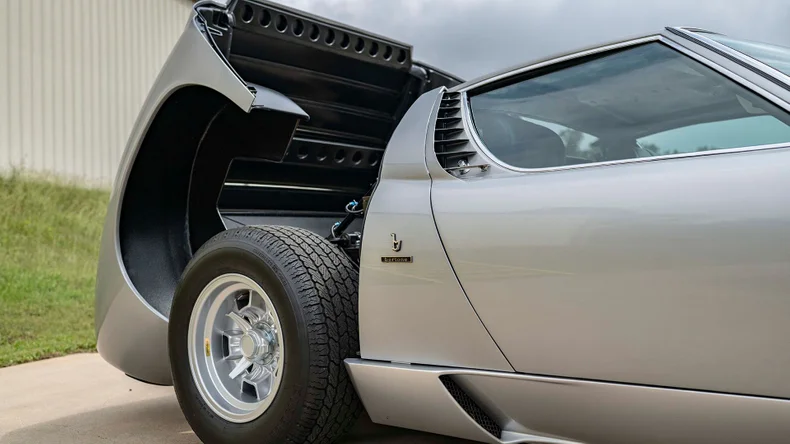
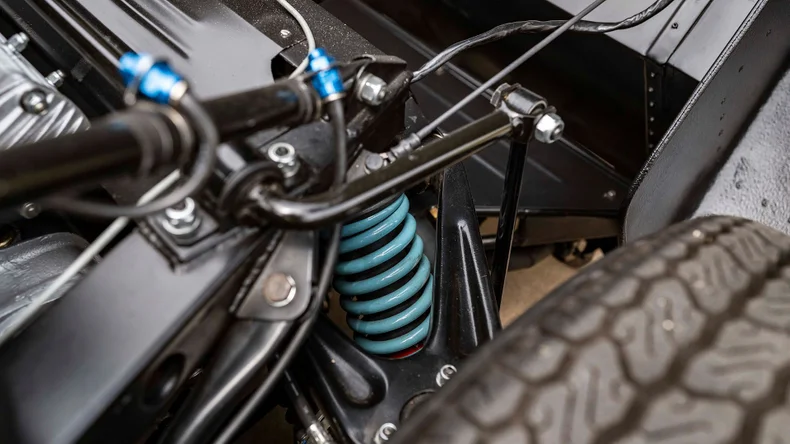
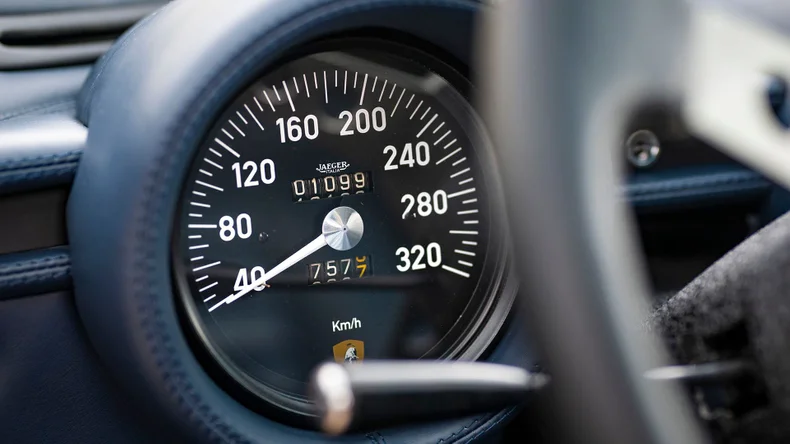
In 1971, the industry-disrupting Miura reached its final and most developed iteration – the Sprinto Veloce, or SV. A mere 150 examples of the much-improved Miura P400 SV were produced between 1971 and 1973, characterized by their lack of headlight lashes and the addition of flared rear wheel arches to accommodate a five-inch-wider rear track. Less immediately apparent were its extensive chassis stiffening measures and its redesigned rear suspension architecture, which consisted of a conventional lower A-arm replacing the inverted A-arm and trailing link arrangement of the P400 and P400 S. Lastly, the SV received an additional 40 horsepower through altered cam timing and the use of four Weber 40 IDL30 triple carburetors, helping it achieve a production car record top speed in excess of 180 miles per hour.
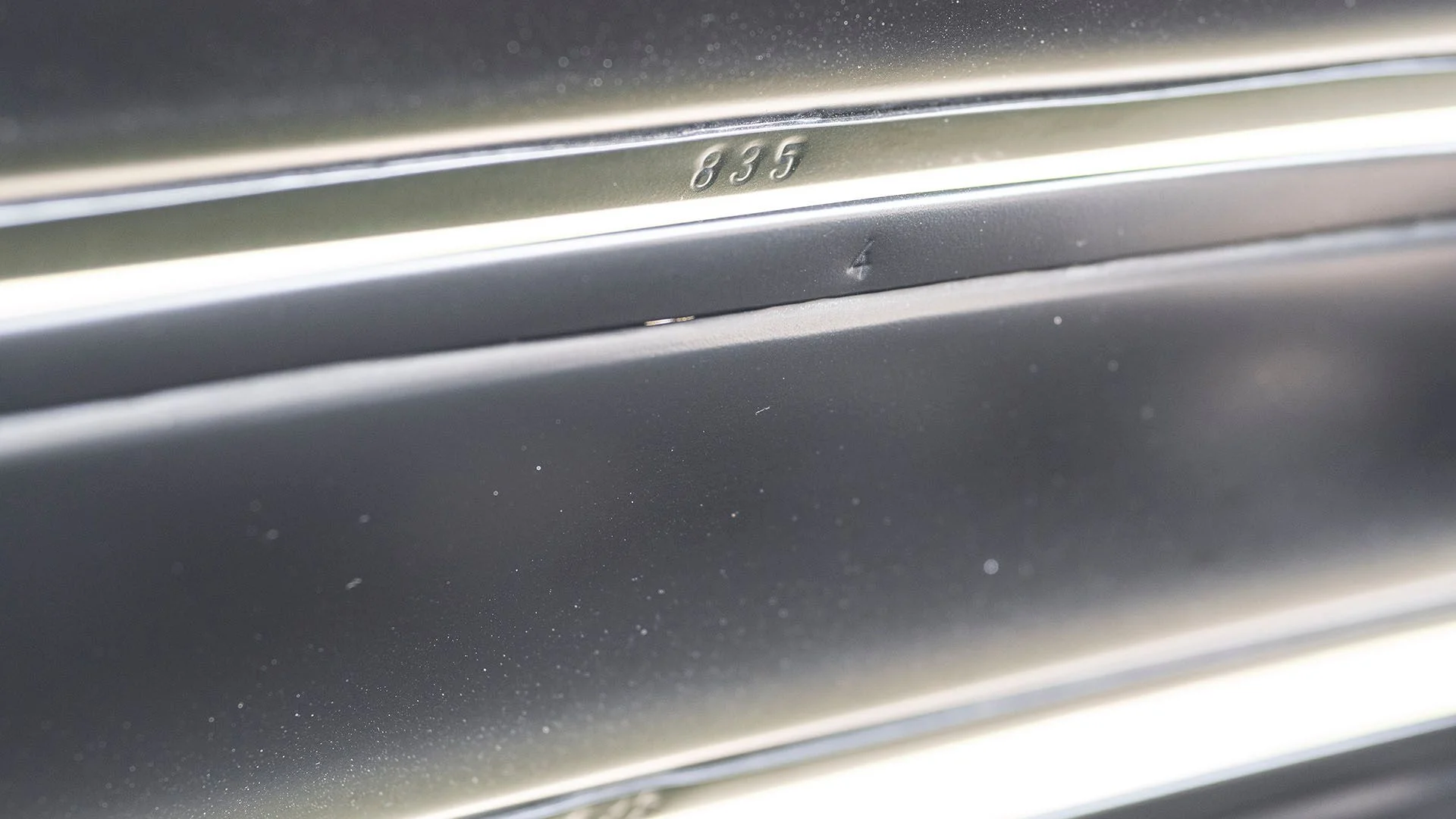
The final and most significant improvement to the Miura during its production run came in the form of a split-sump lubrication system which alleviated oil starvation under hard cornering while also allowing for the use of different types of oil for the engine and transaxle. This particular Miura P400 SV, chassis number 5048, is one of just 96 late-production examples factory equipped with a split-sump system. A left-hand-drive, German delivery example, chassis 5048 was built by Marchesi & C. in Modena and dispatched to Bertone in Turin where it was clothed in body number 835 and finished in Giallo Fly (Fly Yellow). According to Bertone records sourced under previous ownership, this is one of only 19 Miura P400 SVs originally finished in vibrant Giallo Fly, and even fewer specified with a Nero leather interior featuring desirable contrasting beige cloth seat inserts, a Voxson stereo with an eight-track player, and exceedingly rare factory air conditioning. The car was sent from Bertone to Lamborghini in Sant’Agata for completion in May 1972 – making it one of 76 Miuras built during the final year of production – before joining its first German owner, Fischer Schulze, on 10 June 1972.
The Miura is understood to have remained in continental Europe until its recorded history resumes in 1983, when the car was imported to the United States via JFK International Airport by New York-based collector Stan Zagorski.
After a short time in Zagorski’s collection, the Lamborghini was relocated to the West Coast with Len Renwick of Fullerton, California, where it joined his collection of important classics including his Miura P400. While in Renwick’s care, the SV’s original engine was treated to a rebuild and its original Bertone coachwork was refinished in red with gold rocker panels and matching gold wheels. In 1990, chassis 5048 was shipped overseas yet again, this time to Kanagawa, Japan with new owner Tomohiro Utski. The SV remained in the island nation for the next 17 years, seeing only moderate use, until passing in 2007 to SPS Automotive in Hong Kong. Shortly thereafter, the highly original Lamborghini was purchased by an English collector based in Western Australia, who saw fit to conduct a comprehensive cosmetic and mechanical restoration to factory specifications. The monumental undertaking, which is said to have exceeded £130,000/ $225,100 CAD, encompassed a bare metal repaint in its original shade of Giallo Fly, retrimming the interior with correct beige cloth seat inserts, servicing the engine and transaxle, recharging the factory air conditioning system, and overhauling various mechanical systems in need of attention.
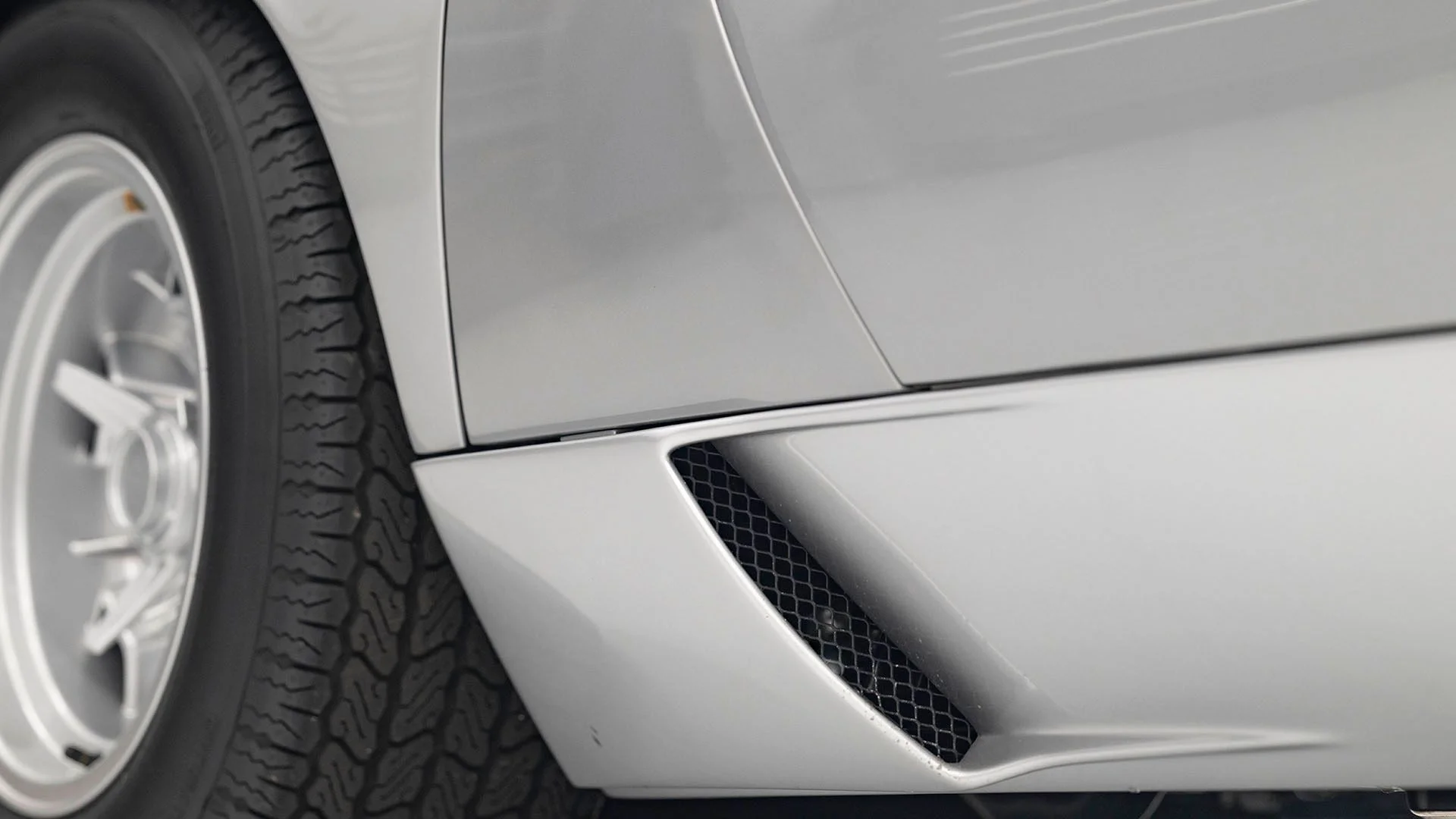
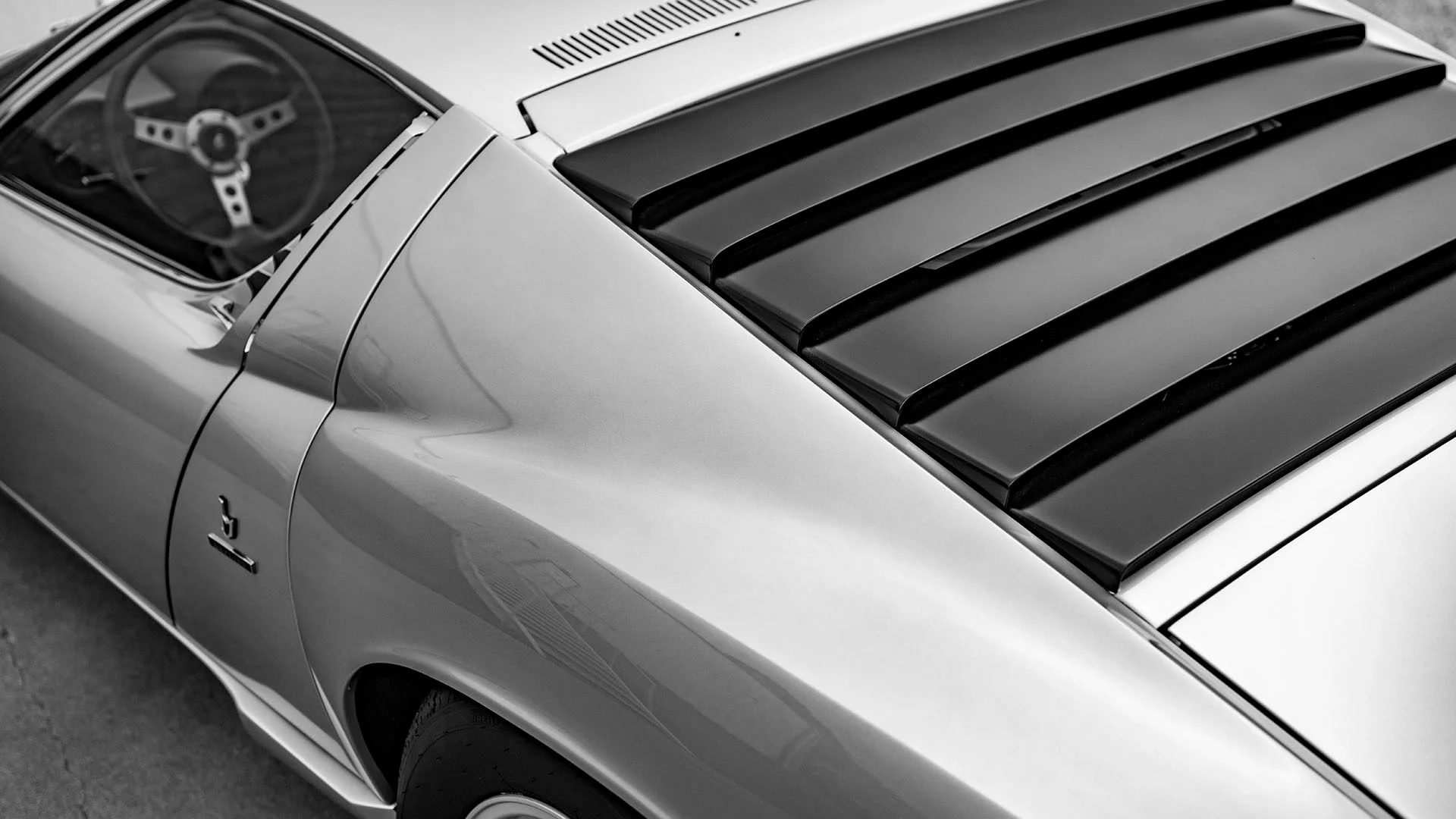
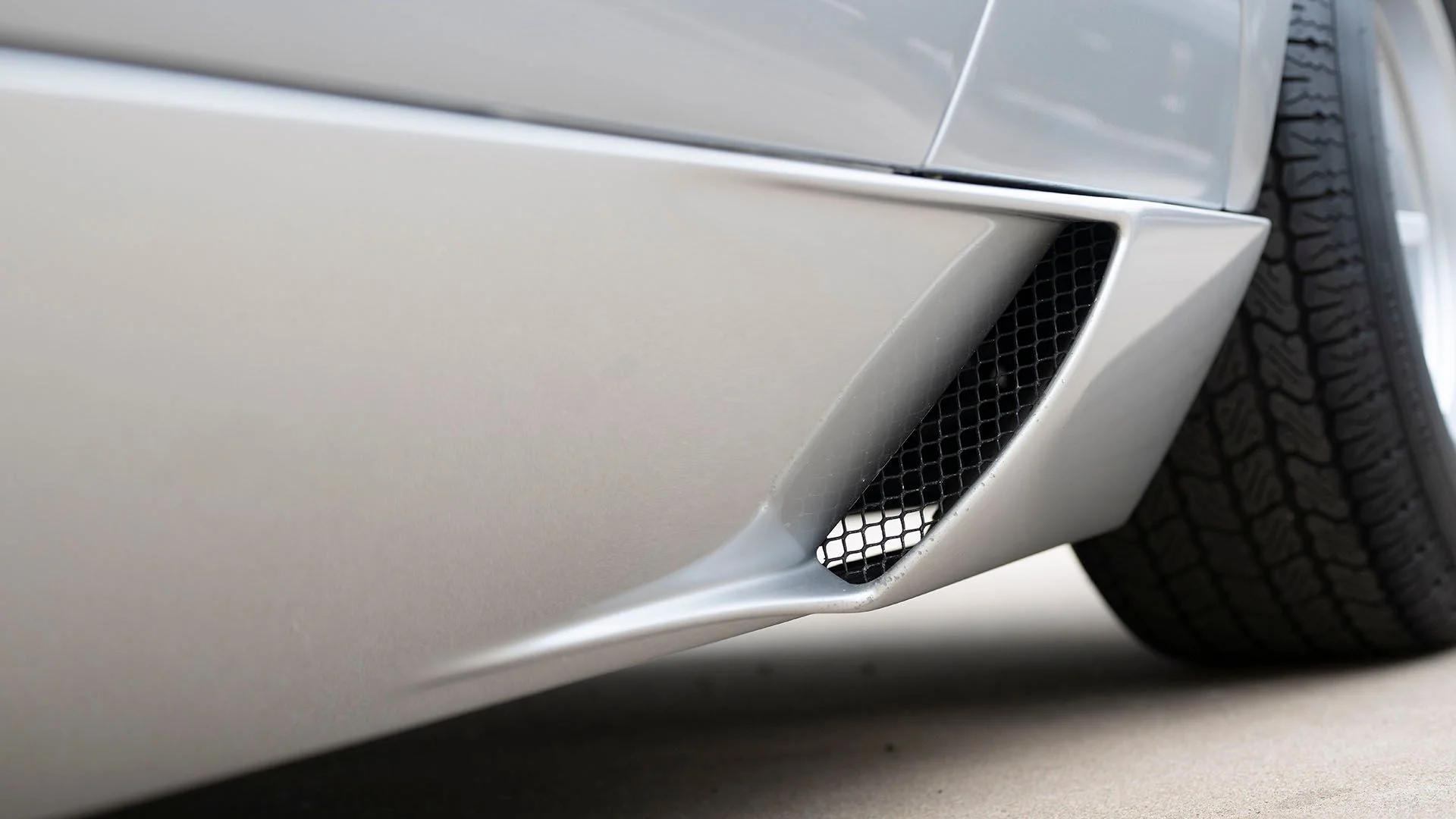
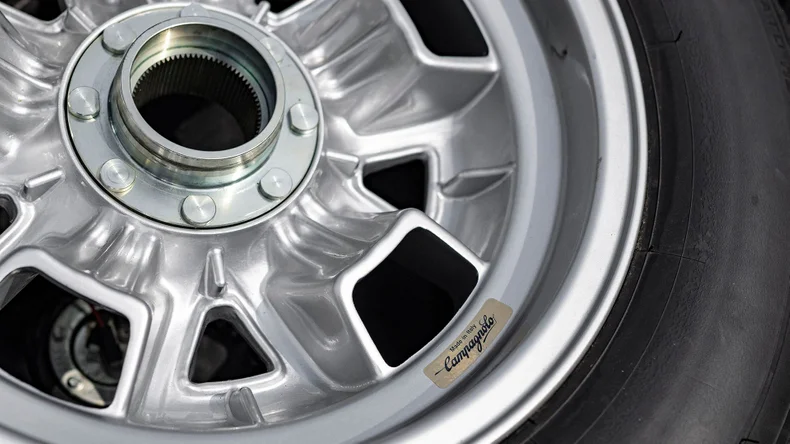
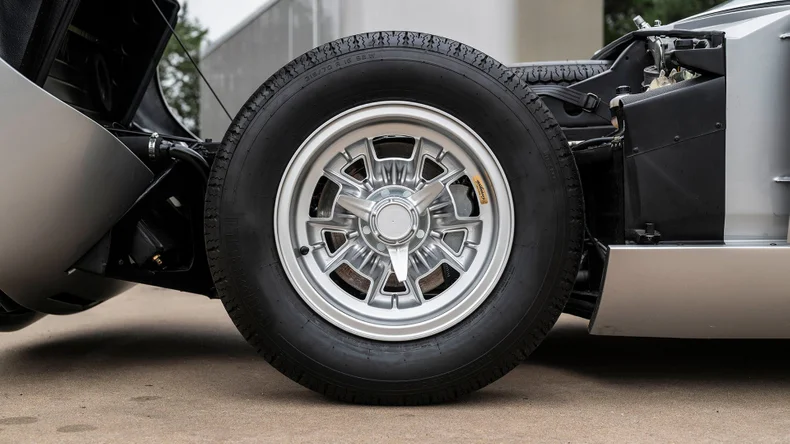
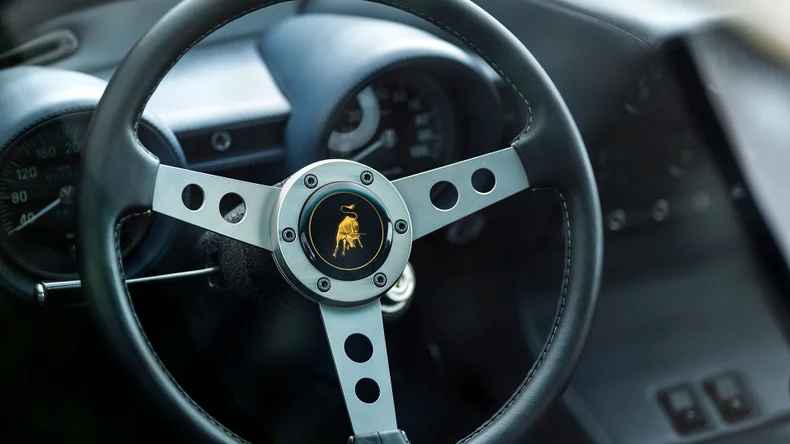
Tragically, while newly under the ownership of noted English collector Jon Hunt, chassis 5048 caught fire in the streets of London in 2013 shortly after leaving the shops of H.R. Owen following a recent service. All of the original Bertone body panels save for the passenger’s-side rear quarter, as well as the original engine were deemed salvageable and subsequently shipped to Italy by 2015 for a total restoration. According to a letter on file from legendary Lamborghini test driver and supervisor of the restoration, Valentino Balboni, chassis 5048 was entrusted to many of the same Lamborghini experts and official suppliers who manufactured the Miura at the time of its production in May 1972! This included S.C.N. Carrozzai of Nonantola Modena, an official Lamborghini supplier, responsible for repairing the Bertone coachwork and renewing it in period-correct Argento (Silver). The major mechanicals, including the engine, transaxle, brakes, and suspension, were all salvaged and carefully rebuilt by Top Motors Salvioli of Nonantola Modena, led by ex-Lamborghini Service Department Head Orazio Salvioli. Even the wiring harness – a highly specialized component – was sourced from Christian Gatti, son of William Gatti, Lamborghini’s original wiring supplier. And finally, the interior was trimmed in period-correct blue leather by Bruno Paratelli of Interni Auto Barbieri & Bussolai in Ferrara, the original upholsterer of Lamborghini interiors since 1972.
Rarely is this level of care and attention lavished by ex-Lamborghini factory workers and original parts suppliers on a restoration, never mind being overseen and fine-tuned by the very same test driver who would have driven the car prior to its delivery to its original German owner. Following its completion, the car was briefly in the custody of Joe Macari Classics before joining its current U.S.-based owner, a prominent collector and restorer of significant European sports cars. Under current ownership, there is a further $106,734.10 USD/ $146,162 CAD worth of invoices on file from work performed by Team CJ Works in Austin, TX.
As a matching-numbers, split-sump, factory air conditioning car, this exceptionally rare final-year example of the ultimate Miura variant would be a landmark acquisition for the dedicated collector of groundbreaking Italian sports cars.