
Big Money! When North America’s Most Expensive Home Was For Sale

In 2016, the most expensive home on the U.S. market was in Manalapan, Florida and priced then at USD$195 million. Let’s take a look back in this feature via our friends at TopTenRealEstateDeals.com. as North America’s elite homes get more elaborate and expensive every year.

Looking for privacy?

The mansion that was at the top of the price list a year earlier in 2015 near Fort Lauderdale, Florida was priced at USD$159 million and came with its own IMAX theater, a USD$2 million staircase and an entry gate decorated with 22-karat gold leaf. This year, Southern California has the #2 home on the market at USD$150 million with 38,000 square feet that was built on the site of Barbara Streisand’s former estate in Holmby Hills. In third place is Palazzo di Amore on 25 acres in Beverly Hills with 12 bedrooms and 23 baths at USD$149 million. An 11-acre estate in the Hamptons comes in at #4 for USD$140 million.

In 2016, Florida again claimed the top for-sale spot with the Gemini Estate near Palm Beach at USD$195 million. Designed by architect Marion Sims Wyeth and built in the 1940s for the Lambert pharmaceutical family (“Listerine kills germs that cause bad breath”), the Gemini estate was eventually sold to high-society couple Loel and Gloria Guinness as a winter retreat. It was purchased by the current owners, the Ziff publishing family, in the 1980s and underwent a four-year expansion and reconstruction that was completed in 2003.

Chillax zone.
Chillax zone.

Sited on almost 16 acres on a barrier island in Manalapan with over 1,500 varieties of tropical trees and plants acting as a nature preserve and privacy hedge from coastal highway traffic, the estate stretches from its 1,200 feet of Atlantic Ocean beachfront to 1,300 feet on the Intracoastal Waterway. The coral-clad main residence with over 62,000 square feet includes 12 bedrooms, 12 baths, two libraries, golf trophy room, kitchen with hand-painted tiles and three dishwashers.

Also, a seven-bedroom home named Mango House, a manager’s house with four apartments and two four-bedroom beach cottages with private quarters for extended family and friends. Grounds are thoughtfully planned with both activity and relaxation in mind. A sports complex offers a half basketball court, tennis court, practice golf course with two greens, a swimming pool surrounded by cultivated jungle, treehouse and butterfly garden, miniature golf course, a wide deserted beach and a boat dock with ocean access. A tunnel with its own living room and fireplace runs under South Ocean Boulevard to connect the mansion with the estate’s guest house and boat dock on the Intracoastal Waterway. Overall, the property totals almost 85,000 square feet of living space with 33 bedrooms and 47 baths.

InteriorThe walled compound can be self-sufficient with two generators, gas pumps and propane tanks. America’s most expensive home is listed by Joseph Liguori of Premier Estate Properties in Boca Raton, Florida at USD$195 million. For the Silo, Terry Walsh.

5G Technology And Induction Of Coronavirus Into Skin Cells

NOTE- the journal paper was retracted by the author a few days after receiving publication. We do not hold that the paper is factual or not, only that the content is interesting and deserves speculative consideration.

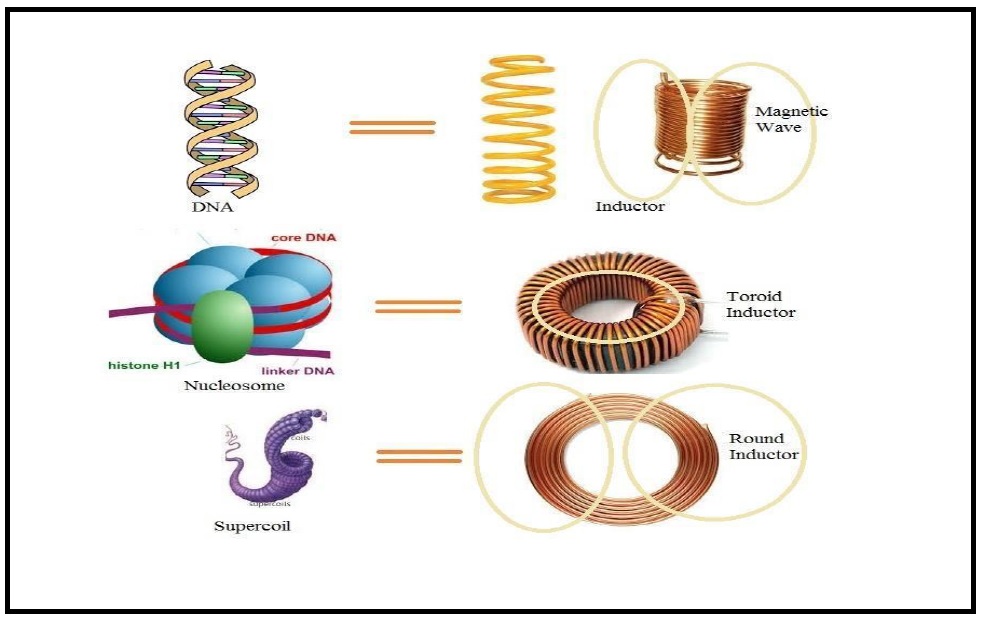
In this research, we show that 5G millimeter waves could be absorbed by dermatologic cells acting like antennas, transferred to other cells and play the main role in producing Coronaviruses in biological cells. DNA is built from charged electrons and atoms and has an inductor-like structure. This structure could be divided into linear, toroid and round inductors. Inductors interact with external electromagnetic waves, move and produce some extra waves within the cells. The shapes of these waves are similar to
shapes of hexagonal and pentagonal bases of their DNA source. These waves produce some holes in liquids within the nucleus. To fill these holes, some extra hexagonal and pentagonal bases are produced.

These bases could join to each other and form virus-like structures such as Coronavirus. To produce these viruses within a cell, it is necessary that the wavelength of external waves be shorter than the size of the cell. Thus 5G millimeter waves could be good candidates for applying in constructing virus-like structures such as Coronaviruses (COVID-19) within cells.

Coronavirus disease (COVID-19) is the main problem this year involving the entire world (1- see full PDF below).

This is an infectious disease caused by a newly discovered coronavirus. This virus is a member of related viruses that cause diseases in mammals and birds. In humans, coronaviruses cause respiratory tract infections that can be mild, such as some cases of the common cold (among other possible causes, predominantly rhinoviruses), and others that can be lethal, such as SARS, MERS, and COVID-19.

Among them, COVID-19 is an enveloped virus with a positive-sense single-stranded RNA genome and a nucleocapsid of helical symmetry. The genome size of coronaviruses ranges from approximately 27 to 34 kilobases, the largest among known RNA viruses (2, 3 see full PDF below). To date, many scientists have tried to find a method to cure this disease (4, 5 see full PDF below); however, without success.

COVID-19 may have effects on different types of cells. For example, it has been argued that this virus may have some effects on dermatologic cells (6 see full PDF below). On the other hand, it has been known that some waves in 5G technology have direct effects on the skin cells (7 see full PDF below).

Thus, there are some similarities between effects of COVID-19 and waves in 5G technology.

A new question arises regarding a relationship between 5G technology and COVID-19. The 5G technology is the fifth-generation mobile technology in which its frequency spectrum could be divided into millimeter waves, mid-band, and low-band. To find out how this may cause the creation of COVID-19 in human cells continue here to read the full PDF.

Silo article via – Biolife 0393-974X (2020)
Copyright © by BIOLIFE, s.a.s.
This publication and/or article is for individual use only and may not be further reproduced without written permission from the copyright holder.
Unauthorized reproduction may result in financial and other penalties
DISCLOSURE: ALL AUTHORS REPORT NO CONFLICTS OF
INTEREST RELEVANT TO THIS ARTICLE. 3
JOURNAL OF BIOLOGICAL REGULATORS & HOMEOSTATIC AGENTS Vol. 34, no. 4, xx-xx (2020)

Dr Massimo Fioranelli,
Department of Nuclear,
Sub-nuclear and Radiation Physics,
Guglielmo Marconi University,
Via Plinio 44-00193, Rome, Italy
e-mail: m.fioranelli73@gmail.com
5G Technology and induction of coronavirus in skin cells
M. Fioranelli1, A. Sepehri1, M.G. Roccia1, M. Jafferany2, O. Yu. Olisova3,
K.M. Lomonosov3 and T. Lotti1,3
1Department of Nuclear, Sub-nuclear and Radiation Physics, G. Marconi University, Rome, Italy;
2Central Michigan Saginaw, Michigan , USA; 3Department of Dermatology and Venereology, I.M.
Sechenov First Moscow State Medical University, Moscow, Russia

How Videogames Are Classified As Age Appropriate

Christmas is coming and  kids across Canada and the World will be telling their parents, and Santa Claus himself, about the latest and greatest video game excitement they want under the tree on the big day. Buying age-appropriate videogames can be a daunting proposition but a great place to start if you’re feeling overwhelmed is the Entertainment Software Rating Board’s video game classification system, a series of easy-to-use ratings designed to help parents pick out the right games for their kids.

The Entertainment Software Rating Board was established by the video game industry in 1994 to provide age-based purchasing guidelines for games. ESRB rankings, which are used in both Canada and the United States, have been applied to nearly 20,000 individual video game titles since then, making it easier to decide what to bring home by providing a snapshot of what’s in the box.

The ESRB assigns virtually every video game on the market one of four rankings: E (Everyone), T (Teen), M (Mature) and AO (Adults Only.) The E rating indicates that a game is suitable for all players, while games rated T are considered appropriate for gamers aged 13 and up. Games with an M rating are for players who are at least 17 years old, and AO games are reserved for those of at least 18 years of age and generally aren’t sold by mainstream retailers. Age ratings are prominently displayed on the front of the game box, while “content descriptors” on the back provide details about specific game content, like alcohol and drug references, mature humour, strong language and violence.

ESRB ratings are a fantastic tool and studies by the U.S. Federal Trade Commission have consistently shown that the video game industry boasts better rating compliance than any other entertainment medium in North America- better, even, than MPAA ratings for movies. But ultimately, only parents can decide what their kids should play. Not sure about what they’re asking for? Check the box and then make the call.

To learn more about video game ratings, have a look at the Rating Board’s website  where you can also access a detailed list of all currently-rated games. For the Silo, Andy Chalk.