Ontario’s Hunting, Fishing and Outdoors Heritage

Toby Barrett, MPP Column Available Ahead of Print Publication
Support our hunting, fishing, outdoors heritage

Gun owners and those concerned with the waste of money should be glad to see the end of the long gun registry –  an issue that has long frustrated farmers, hunters and recreational shooters.

Ending the registry was part of the federal Conservative platform. It’s expected legislation to that end will be introduced this fall and will be similar to the Private Member’s Bill voted down jointly by the Liberals, NDP and Bloc Quebecois last year.

I have been a critic of the long gun registry and Bill C-68 since the Chretien Liberals proposed it in the 1990s. I rode the bus to Ottawa with constituents to march on Parliament Hill to protest the then-pending legislation.

Estimates put the amount of money wasted on tracking farmers and duck hunters at more than $2 billion while doing nothing to address criminals. By definition criminals don’t obey the law, so why would they register their guns?

And while the federal gun registry may soon be history, I remain concerned about the potential for a provincial registry.

In Quebec, there is speculation about the provincial government implementing its own registry. And there has been media speculation that Premier McGuinty might take similar measures.

As Official Opposition we are opposed to any long-gun registry, federal or provincial. Can we trust that Mr. McGuinty will not implement a provincial long gun registry?

By way of contrast, Mr. McGuinty asked the federal government for a handgun ban in 2007. The federal Conservatives denied his request, saying it might do more harm than good. The NDP also support a comprehensive handgun ban.

The other piece of legislation affecting gun owners is Ontario’s Ammunition Regulation Act, of 1994. In 1996, I appeared before the Red Tape Commission arguing to scrap the Ammunition Act – it duplicates federal legislation and is redundant. In addition to support in our riding, I was backed by the Ontario Federation of Anglers and Hunters, the Ontario Handgun Association, the National Firearms Association and the Canadian Sporting Arms and Ammunition Association. Even the province’s Chief Firearms Officer recommended scrapping the bill, with concerns about privacy. Despite the opposition and a petition I helped organize against the legislation, the Ammunition Act remains to this day.

Several years ago, after purchasing a rifle at a Ducks Unlimited fundraiser, I went to a local gun store to pick up shells. The paperwork and list-making required under provincial legislation kept people waiting. The store owner told me his list hadn’t been checked in two years.

Firearms regulations are just one issue facing those who are concerned about our hunting, fishing and outdoors heritage. Last week, I met with the president of the Ontario Federation of Anglers and Hunters and heard further concerns – including cormorants, about access in the north, the potential spread of Chronic Wasting Disease and the Endangered Species Act. Sadly, many of these issues haven’t been resolved since I was Parliamentary Assistant to MNR 10 years ago.

A new issue the OFAH is concerned about is the red tape facing volunteer-run fish hatcheries. These operations provide nearly half the fish stocked in the province, but in some cases, they have to go through the same environmental approvals as industrial polluters.

It’s time Government supports, not interferes, with our hunting, fishing and outdoors heritage.

Jeff Helsdon
Office of Toby Barrett
519-428-0446
1-800-903-8629
39 Norfolk St. N.
Simcoe, ON
N3Y 3N6
www.tobybarrett.com
Follow Toby on Twitter @ TobyBarrettMPP

Strenghtening Human Rights In Ontario

McGuinty Government Announces Appointment

Ontario is taking the next step to strengthen the Human Rights System to provide faster, more accessible justice for those who have faced discrimination, and to ensure better protection of the human rights Ontarians cherish.

Andrew Pinto has been appointed to conduct a review of the implementation and effectiveness of changes resulting from amendments to the Human Rights Code that came into effect on June 30, 2008.

Mr. Pinto of Pinto Wray James LLP is a prominent human rights and employment lawyer. He is an adjunct professor at the University of Toronto where he teaches administrative law with a focus on tribunals, agencies, boards and commissions. He is also past chair of the administrative law section of the Ontario Bar Association, and past chair of the equity advisory group of the Law Society of Upper Canada.

Public consultations will be held. This review is expected to be complete by spring 2012. For updates on the status, please visit: Human Rights Review

QUICK FACTS

In June 2008, the Ontario Human Rights system was reformed to include:

  • The Human Rights Tribunal of Ontario to offer direct, early access to additional adjudicators with the expertise to fairly resolve discrimination claims.
  • The new Human Rights Legal Support      Centre’s team of lawyers and paralegals provides free assistance throughout Ontario to people who believe they may have faced discrimination.
  • The Ontario Human Rights Commission to address the underlying causes of discrimination with a strengthened capacity for public education, policy development, research and monitoring.
  • A commitment to conduct a review of the new system’s progress after an initial three-year period.
  • Under the new system, parties have direct access to expert adjudicators and more claims are settled before an application needs to be filed at the Tribunal.

LEARN MORE

Terms of Reference

Find out more about human rights in Ontario.


Li Koo, Minister’s Office, 416-326-3266

Brendan Crawley, Communications Branch,

416-326-2210

ontario.ca/attorneygeneral-news

Disponible en français


Goal: Ontario’s Clean Energy Plan To Create 50,000 jobs By 2012

More Jobs For Families In Ontario’s Clean Energy
Economy

McGuinty Government Making Ontario The Place To Be
For Clean Energy

Premier Dalton McGuinty visited the workers who are developing Siemens Canada’s new plant in Tillsonburg today, thanking them for their hard work in helping Ontario become a global leader in clean energy.

Siemens Canada Limited is creating 900 jobs — 300 direct and 600 indirect — in clean technology at this plant, which will build wind turbine blades. The Tillsonburg plant is one of four under Ontario’s revised, enhanced agreement with Samsung that will provide 16,000 clean energy jobs across Ontario.

Ontario is back on track and moving forward in the clean energy economy. Because of the changes we’ve made, together, Ontario has added 20,000 new, high-skills clean energy jobs since 2009.

Building a clean, modern and reliable electricity system is part of the government’s plan to attract clean energy investments and create good jobs in communities across Ontario.

QUOTES

“We’re moving forward together to become number one in North America when it comes to clean energy. Thanks to the hard work of Ontarians, that’s already happening. Ontario’s economy has turned the corner and we’re back on track. We can’t go backwards, now.”

—   Premier Dalton McGuinty

“Siemens is building on its strong position in the Ontario wind power market. Our investment in the Tillsonburg blade facility will further enhance our ability to competitively serve our customers, locally, and potentially acrossNorth America.”

— Bill Smith, Senior Vice President, Siemens Canada Limited.

QUICK FACTS

  • Ontario’s clean energy economy has attracted more than $20 billion in new private-sector investment.
  • Since 2009, more than 30 businesses have announced they are setting up or expanding plants in Ontario to manufacture parts for the solar and wind industries.
  • Ontario’s clean energy plan is on track to create 50,000 jobs by the end of 2012.

LEARN MORE

Read more about Ontario’s Long-Term Energy Plan.

See how Ontario’s Clean Energy Benefit is saving you 10 per cent off your bill.

Premier’s Media Office: 416-314-8975
ontario.ca/premier-news

Ontario Pledges $1Million To Horn Of Africa

Ontario Pledges $1 Million To Fight Famine

McGuinty
Government Helps Horn Of Africa Humanitarian
Relief Effort

The Ontario government is providing $1 million to help people facing starvation in the hardest hit countries of the Horn of Africa.


Millions of lives are at stake in the region due to a cycle of severe droughts. The UN declared a famine in Somalia on July 20th — the first time famine has been declared there by the UN in nearly 20 years.


The money from Ontario will support the efforts of the Red Cross and Red Crescent Societies in the region.


QUOTE


“To have nothing to eat is a frightening and unimaginable idea for many of us and a sad reality for millions of people in the Horn of Africa. Ontarians come from all over the world and many people have friends and family in the midst of the crisis. Now is the time for us to work together to offer our support and I encourage all Ontarians to help in the relief effort.”

— Dalton McGuinty, Premier of Ontario


QUICK FACTS


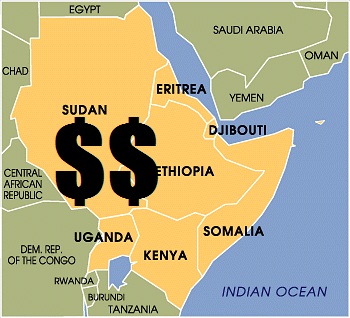
  • The Horn Region of Africa includes the countries of Kenya, Ethiopia, Somalia, Djibouti,Uganda and Sudan.


  • UN Secretary-General Ban Ki-moon has called for urgent international efforts to assist in the region. He said the situation is rapidly deteriorating with an estimated 11.6 million people in need of humanitarian assistance.


LEARN MORE


Donate to the Canadian Red Cross.


Premier’s Media
Office: 416-314-8975


ontario.ca/premier-news

Disponible
en français


Creating Stability For Clean Energy Projects

CREATING STABILITY FOR CLEAN ENERGY PROJECTS

To maintain momentum and ensure Ontario remains competitive in North America’s emerging clean energy economy, the province is taking a number of actions to make it easier for energy developers and manufacturers to do business in the province.


These changes are part of ongoing efforts to provide stability and create jobs in Ontario’s clean energy sector and protect the health and safety of Ontarians and the environment.


To date more than 20,000 clean energy jobs have been created in Ontario, and the province is on track to create 50,000 by 2012.


Changes to Feed in Tariff (FIT) Contract Terms


A new process is being introduced to help provide stability for developers to move clean energy projects forward. FIT contract holders with projects seeking project financing and a manufacturing partner now have the opportunity to request the Ontario Power Authority (OPA) to waive its termination rights if they meet certain conditions. This means:

  • Large developers must submit a Domestic Content Plan and have it approved by the OPA by December 31, 2011. As well they must submit evidence of an agreement to purchase equipment by December 31, 2011.


  • For medium sized projects, a Domestic Content Plan must be submitted by December 31, 2011.


  • Developers of clean energy programs that do not require Domestic Content plans — hydro, biogas, landfill gas and biomass — may also request that the OPA waive its termination rights.


This will give clean energy developers more stability in planning and more flexibility to obtain financing and place orders for equipment.


Developers still need to obtain regulatory approvals, provide a completed Financing Plan, and documentation related to completed grid impact assessments, as well as pay the required security, before they are able to move to the construction phase.


Improving the Renewable Energy Approval Process


The Renewable Energy Approval (REA) is a single approval that integrates environmental and health and safety matters.
The purpose of the REA is to avoid duplication, set clear, upfront provincial rules and encourage the development of more clean energy projects. The rules ensure all clean energy projects built in Ontario are subject to the same requirements to protect human health and the environment. The province has made a number of improvements to streamline the process even further.


The Ministry of the Environment has reduced the amount of time it takes for the initial screening review of application from 90 days to 40 days by:

  • Establishing a dedicated REA team focused only on the management and review of REA applications.


  • Holding over 250 pre-consultation meetings with proponents to ensure awareness of REA requirements. Key documents and resources related to the process are available on a dedicated      business website for easy access.


These process improvements will be further enhanced by:


  • The release of a new Technical Guide to Renewable Energy Approvals to help renewable energy developers meet the requirements of the Renewable Energy Approvals regulation (O. Reg. 359/09).


    • This will provide clear guidance on how to prepare the required technical and scientific reports as well as conduct more effective consultations with municipalities, the public and Aboriginal communities.


  • Releasing an aboriginal consultation guide for proponents that has been developed by consulting with technical experts within key First Nations organizations and other ministries. The draft is now posted for broader consultation.


The Ministry of Natural Resources has also introduced a number of steps and new tools to save developers time:


  • Developing technical guidelines on protection of natural heritage and significant wildlife habitat that provide clear rules for the renewable energy industry.


  • Delivering intensive training sessions to more than 100 industry environmental consultants on implementing technical guidelines.


  • Releasing new tools, templates and resources to streamline processes for completing REA approval requirements, including rapid assessment tools for significant wildlife habitat and wetlands.


  • Focusing staff resources on reviewing and approving Feed-in Tariff projects, resulting approval of over 75 per cent of natural heritage assessments submitted to the ministry.


  • Establishing a regional team of specialists to focus on the new Bruce to Milton Feed-in-Tariff projects – developers will be contacted by the ministry within three weeks of receiving their FIT contracts to begin the regulatory review process.


In addition, the Ministry of Tourism and Culture considers the review of all REA heritage and archaeological assessment reports as a priority, with the highest focus on those projects with FIT contracts. That’s why the ministry will implement a 60-day service guarantee for written comments on final assessment reports. As well, this June the ministry posted an Information Bulletin on its website; it helps applicants navigate through meeting the cultural heritage requirements of the REA process by clarifying all requirements for proponents and provides a step-by-step outline of the process. This will help ensure applications are completed and improve the quality of self-assessments.


The ministry also:

  • Released Standards and Guidelines for Consultant Archaeologists (2011) and associated training for consultant archaeologists.
  • Is in the process of developing technical guidance for heritage consultants on conducting and preparing heritage assessments


Together these guidance materials will help lead to a more rapid review process.


Changes to Property Tax Treatment of Renewable Energy Facilities


Regulatory amendments are being proposed to Ontario Regulation 282/98 regarding the property tax treatment of renewable energy facilities.


The Assessment Act and Ontario Regulation 282/98 currently provide rules governing the property tax treatment of energy generation facilities; however, in some situations, these rules may not be sufficiently detailed to address issues relating to emerging types of energy installations.


The objective of the proposed regulatory amendments is to provide clarity and certainty to property owners, municipalities and the Municipal Property Assessment Corporation, and to ensure that property tax does not act as a disincentive to energy generation, particularly small-scale generation by persons who are not ordinarily in the business of generation.


More information

Read more about Ontario’s Green Energy Act.


Read more about the Renewable Energy Approvals Process


Read the Minister of Energy’s Directive to the Ontario Power Authority


Read the Regulatory Registry posting of proposed changes to Property Tax Treatment of Renewable Energy Facilities.


To Learn more about renewable energy in Ontario visit  http://www.ontario.ca/renewableenergy


Andrew Block, Minister’s Office, 416-327-6747Paul Gerard, Communications Branch, 416-326-7226

ontario.ca/energy-news

Disponible en français