What Is Missoku?
Missoku is a traditional Japanese breathing practice rooted in Zen philosophy, emphasizing slow, intentional breaths to cultivate calm, focus, and inner awareness. This article explores its origins, cultural significance, and practical steps for integrating Missoku into modern life.
Akikazu Nakamura began his professional journey as a quantum chemist, having graduated from the Department of Applied Chemistry at Yokohama National University. However, it wasn’t long until he turned to the shakuhachi for his future career.
Akikazu studied under numerous shakuhachi masters, including Katsuya Yokohama. He then went on to study composition and jazz theory at Berklee College of Music, USA, graduating summa cum laude. He finished his tertiary studies at the New England Conservatory of Music as a scholarship student in the Master of Music Composition and the Third Stream program.
His compositions are diverse and include orchestral music, choral music, chamber music, big band music, and traditional Japanese music.
He has established a performance method that makes full use of overtones, multiphonics, the traditional Japanese breathing technique of ‘Missoku’, and his own originally developed method of circular breathing, which involves exhaling and inhaling at the same time.
The Zen Origins of Missoku
ミソク
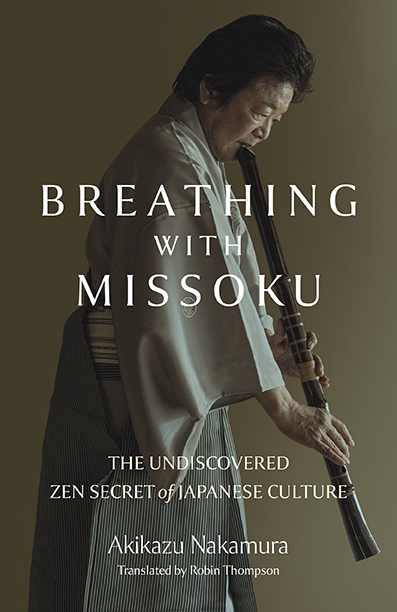
While staying true to the traditions of the Komusō monks and collecting, analyzing, and performing their repertoire, he also performs rock, jazz and classical music using a (previously unknown to the English-speaking world) Japanese Zen breathing technique of Missoku. Realizing that others will benefit from this technique and use it to pave a path towards a peaceful and mindful life, he has shared this zen secret of Japanese culture in this comprehensive book.
Final Thoughts: Rediscovering a Cultural Treasure
The interest in all things Japan, as well as the increasing effort to center both physical and mental health as a core value of any flourishing society, leads to the nexus explored in this book, Missoku, a unique breathing method that has been handed down through Japanese Zen tradition.
Missoku is a form of breathing in which the pelvis is tilted and the abdomen is in an expanded state. It’s proven to be effective in sports, martial arts, dance, theatre, and playing musical instruments. The benefits to overall health and stamina are bountiful. One incentive includes an increase in respiration capacity, which in turn stimulates the brain, balances autonomic nerves, and improves immune defenses.
People Also Ask
Q: Is Missoku the same as meditation?
No. Missoku is a breathing technique that can be used within meditation but also stands alone as a physical and mental discipline.
Q: How often should I practice Missoku?
Beginners can start with 5–10 minutes daily, gradually increasing as comfort grows.
Q: Is Missoku used in martial arts?
Yes. Many Japanese martial traditions incorporate controlled breathing to enhance focus, timing, and calmness.
Q: Can Missoku help with stress?
Yes. Slow, intentional breathing activates the parasympathetic nervous system, reducing stress and improving emotional regulation.
Why Missoku Matters in Modern Life
Missoku is a lesser‑known Japanese breathing discipline connected to Zen Buddhism and traditional arts such as tea ceremony, martial arts, and calligraphy. It teaches practitioners to synchronize breath with movement and awareness, promoting emotional regulation, clarity, and a grounded sense of presence. The article explains the cultural roots of Missoku, how it differs from Western breathwork, and why it remains an overlooked but powerful tool for stress reduction and mindfulness.
For the Silo, Jarrod Barker.